
The 2CV Was a Shortage Made Into a Car. An EV Can't Inherit That
Citroën is teasing an electric 2CV concept for Paris. The original was the product of a design brief about potatoes, clogs and unpaved roads — and of a France that had almost no steel, no fuel and no money.
- Launch
- Paris Salon, 7 October 1948
- Engine
- 375 cc air-cooled flat-twin
- Power
- 9 hp (6.6 kW)
- Top speed
- 65 km/h (40 mph)
- Kerb weight
- ≈475–575 kg by version
- Saloon production
- 3,867,932 (1948–1990)
Citroën spent the past week running a teaser campaign called “Time 2 Meet Again,” drip-feeding fragments of a car it has already told us is coming: an electric 2CV. What the brand has actually committed to in public is narrow and worth separating from the pile of reporting around it. In May 2026, Citroën CEO Xavier Chardon confirmed the nameplate's return, said the car would be fully electric, built in Europe, and priced from below €15,000, with production starting in 2028. A concept previewing it is due at the Paris show, whose press day falls on 12 October before the doors open to the public on the 13th. Almost everything else in circulation — that it rides on a bespoke low-cost architecture referred to as E-Car, that it uses lithium iron phosphate cells, that it comes in under four metres long, that it is built at Pomigliano d'Arco in Italy — is reporting and executive briefing rather than a published specification. Range, power and battery size have not been announced at all.
"Nostalgia for nostalgia is not a silver bullet…what is more important is to understand the purpose of the car at that time." — Xavier Chardon, Citroën CEO, speaking to Auto Express
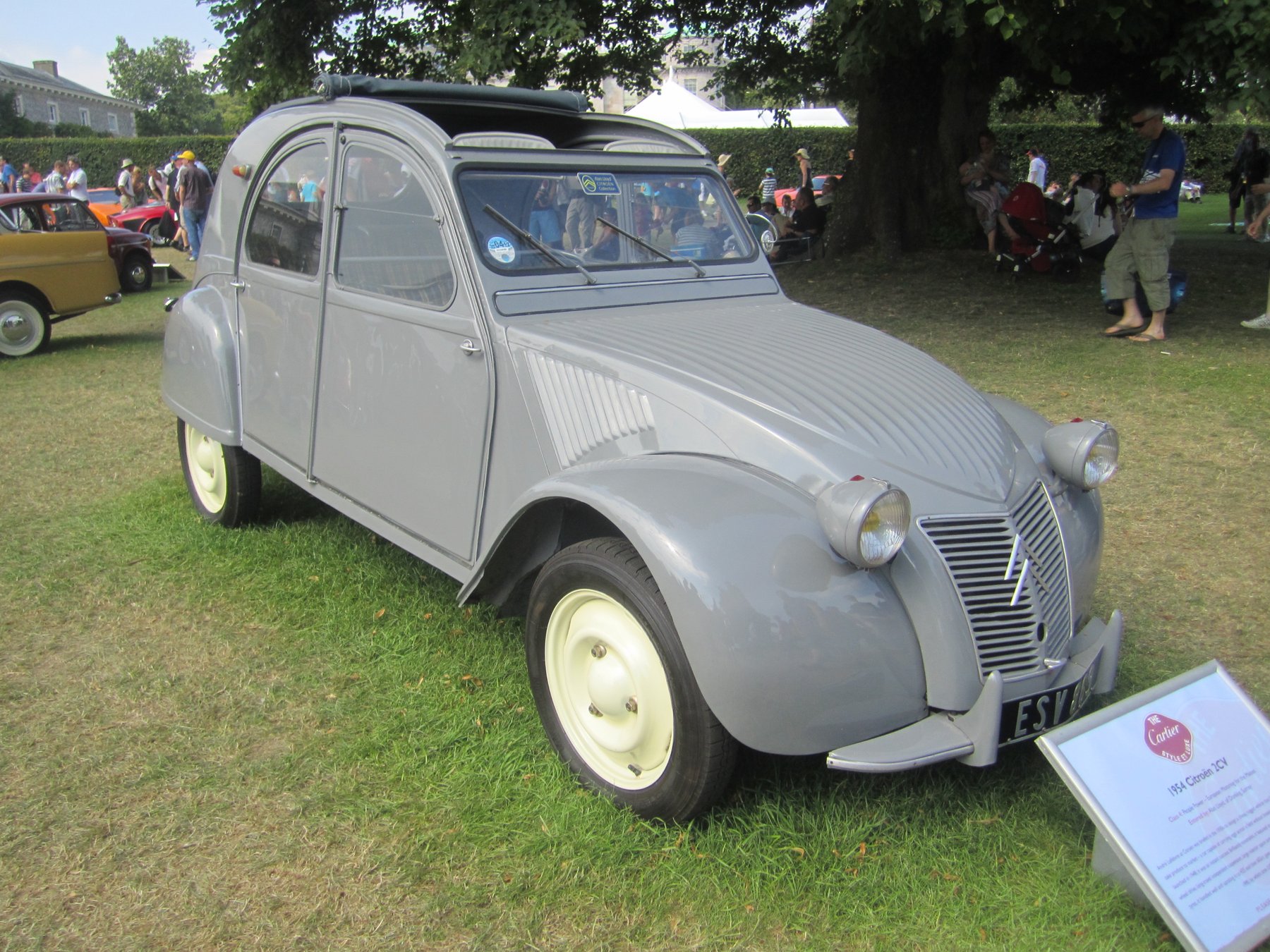
That is a perfectly respectable set of intentions. Whether it amounts to the same project as the original is a different question, and answering it honestly means being specific about what the 2CV actually was, because the car has been flattened by nostalgia into a cheerful tin snail with a canvas roof. It was not a lifestyle object. It was a response to material scarcity so severe that the engineering decisions read today as almost punitive.
The programme began in 1936 as the TPV — Toute Petite Voiture, “very small car” — under Pierre-Jules Boulanger, who ran Citroën after Michelin took the company over. The brief he set is one of the most quoted documents in car design, and it genuinely does contain the farmers and the clogs: the French text preserved in the French-language record describes a four-seat “bicycle” capable of carrying two cultivateurs en sabots and fifty kilos of potatoes, at 60 to 65 km/h, on three litres of petrol per hundred kilometres. The companion requirement — that it cross a freshly ploughed field with a basket of eggs aboard without breaking any — is attested too, though it is worth flagging that the retellings disagree on the trimmings. Some sources put the eggs on the passenger seat, others on the back seat; some give the target speed as 50 km/h rather than 60. The substance survives the discrepancies. The spec was written around a rural France where most roads were not paved and most farm households had no car at all.
The credits get conflated constantly, so: Boulanger set the brief and then policed it, running a department whose job was to take weight out of individual components. André Lefèbvre, a former Grand Prix designer whose speciality was keeping tyres in contact with the road, led the engineering. Flaminio Bertoni — the sculptor behind the Traction Avant and later the DS — restyled the body in 1944, when the post-war cost of aluminium forced a switch to steel. Walter Becchia designed the air-cooled flat-twin, also in 1944, replacing the water-cooled prototype engine, and talked Boulanger into a four-speed gearbox by presenting the top gear as an overdrive. The suspension was Alphonse Forceau's work, later modified by Marcel Chinon. No one person designed the 2CV, and the man whose name people reach for first, Bertoni, arrived late and styled it rather than engineered it.
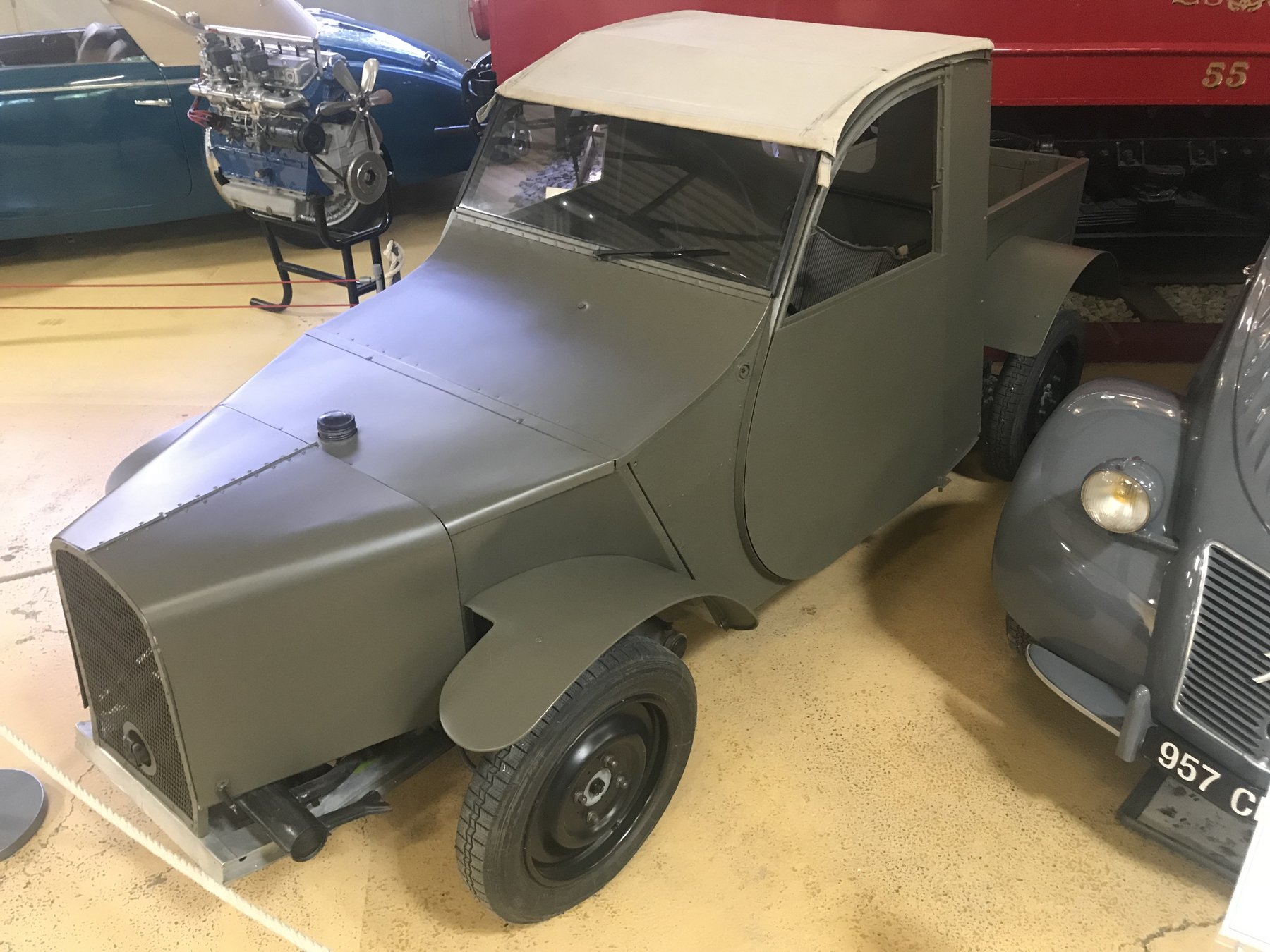
Forty-seven technically distinct prototypes existed by 1939, and a pilot run of 250 cars was built that summer; the car received French market approval on 28 August 1939, four days before Germany invaded Poland. What followed is the part that gives the 2CV its mythology. Citroën hid the programme from the occupying authorities: TPVs were buried at secret locations, one was disguised as a pickup, and the rest were destroyed. For decades it was believed only two survived, until three more turned up in a barn in 1994. The car that eventually launched had been in development for twelve years, most of them in secret, and had been redesigned around whatever materials a bankrupt continent could still supply.
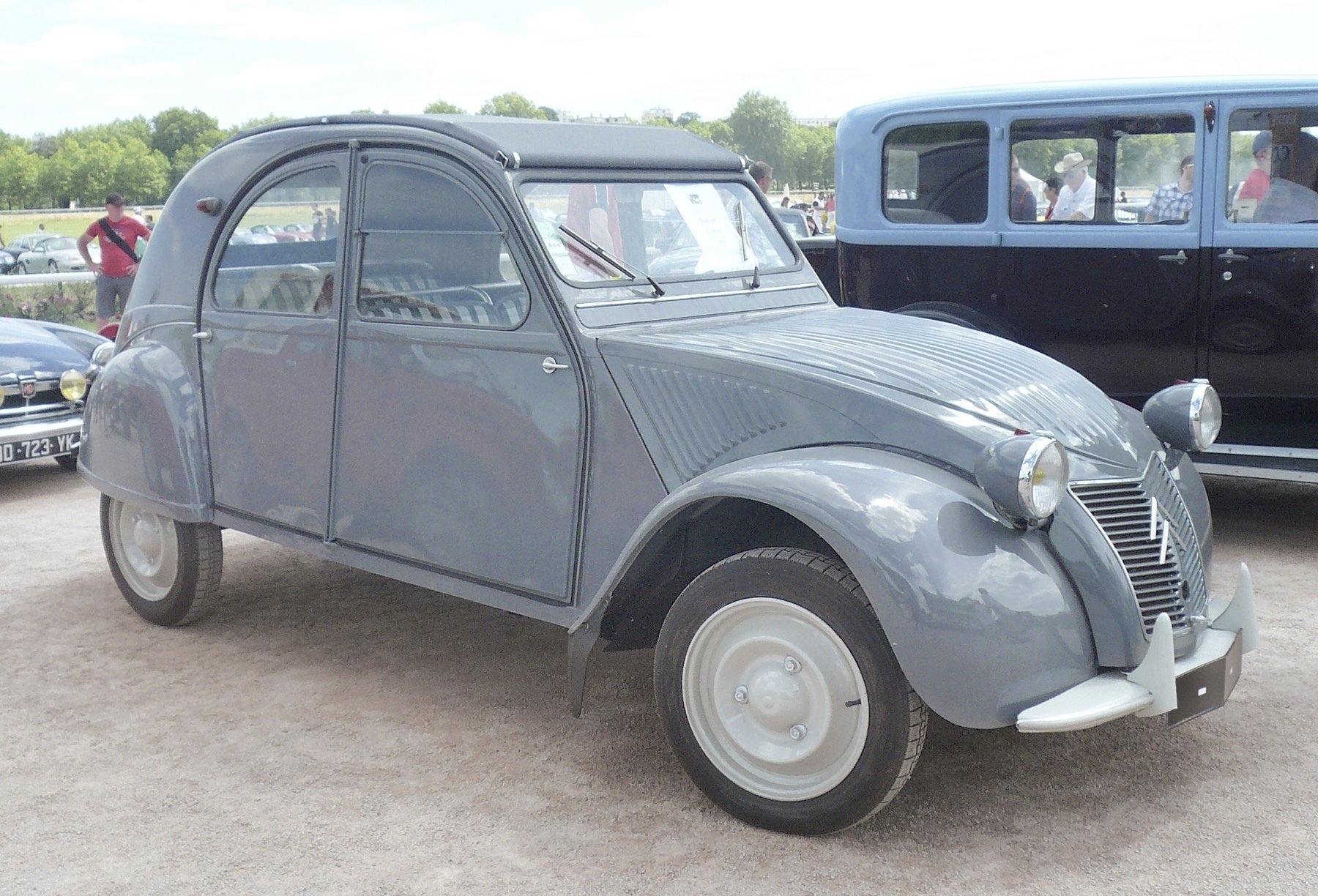
It was unveiled at the Paris Salon on 7 October 1948 and the press largely laughed. A British critic in Autocar described it as the work of a designer who had “kissed the lash of austerity with almost masochistic fervour.” An American journalist is said to have asked whether it came with a can opener. The buying public did not care. Citroën was swamped with orders at the show itself.
The specification explains both reactions. The Type A had a 375 cc air-cooled flat-twin making 9 hp, good for 65 km/h, in a car the spec tables put between roughly 475 and 575 kg depending on version. The name itself is a tax artefact: deux chevaux refers to two fiscal horsepower under the French vehicle taxation bands, not to anything the engine produced. The suspension is the piece of real engineering that makes the whole thing cohere. Front leading arms and rear trailing arms on each side were tied to one another through pull rods running into a horizontal cylinder containing coil springs, so a front wheel rising over a bump pre-loaded the rear corner behind it. The car pitched far less than its tiny wheelbase and soft rate suggested it should, and the wheels stayed on the ground over surfaces that would have had a conventionally sprung car skipping. That is why the eggs survive the ploughed field. It is not a party trick; it is the cheapest available answer to a problem that French roads posed and French buyers could not pay to solve any other way.
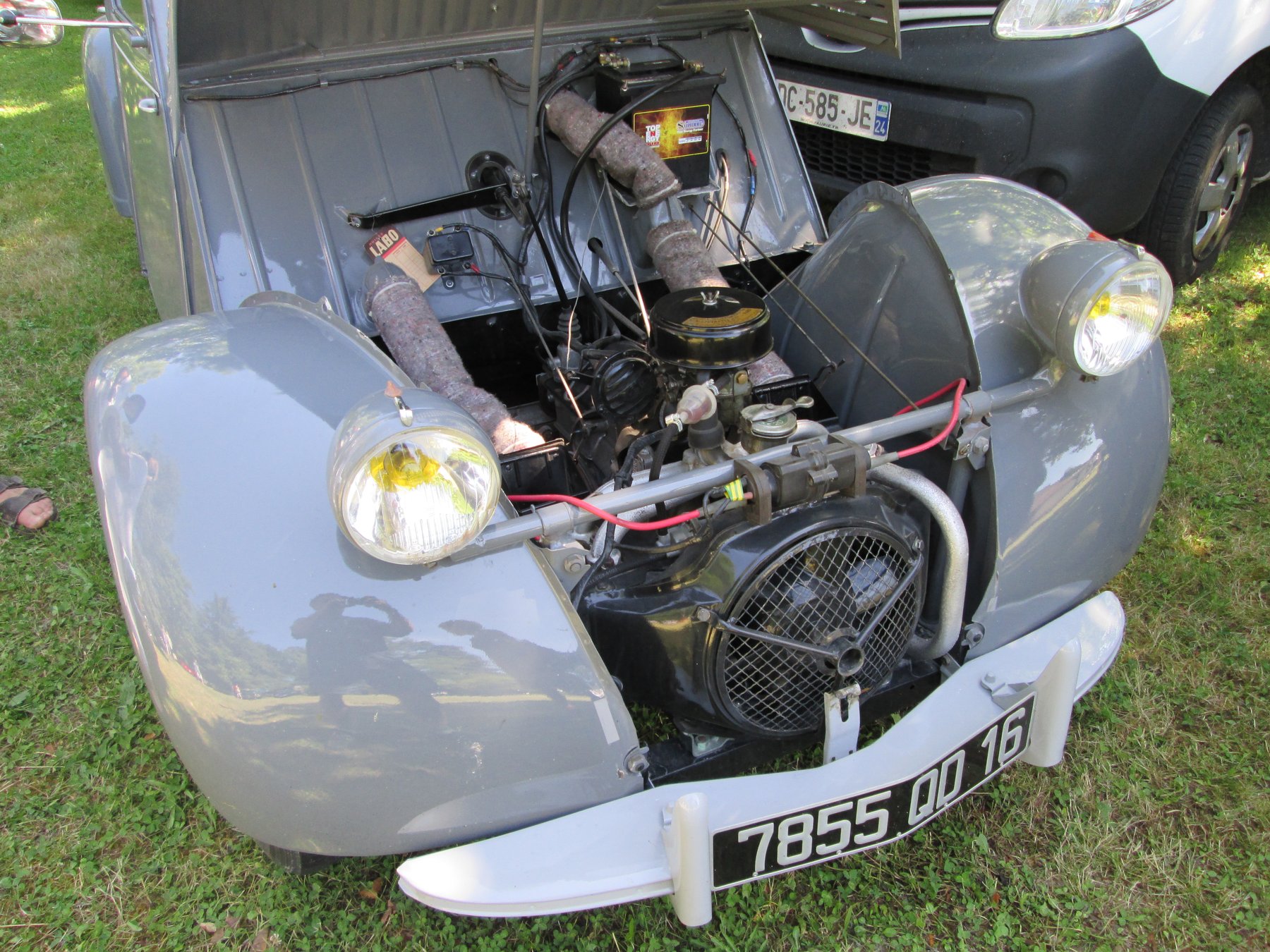
The social role was not incidental either. Early production ran at four cars a day, and waiting lists stretched to three to five years, long enough that a used 2CV could cost more than a new one simply because it existed now. Boulanger operated an allocation policy that pushed cars toward country vets, doctors, midwives, priests and small farmers — the people whose work the brief had been written around. The engine grew over the decades, to 425 cc in the mid-1950s and eventually to 602 cc, but it was never anything other than a small air-cooled twin. Citroën built 3,867,932 2CV saloons between 1948 and 1990, plus about 1.25 million fourgonnette vans, peaking at 163,143 cars in 1974. French assembly ended at Levallois-Perret in February 1988; the last car of all left Mangualde in Portugal on 27 July 1990.
Which brings the revival into focus. An electric car cannot be cheap the way a 375 cc flat-twin was cheap, because the battery sets a floor that no amount of design discipline gets under. The 2CV's minimalism was not a styling position — it was what a country with rationed steel, rationed fuel and no consumer credit could physically produce. Under €15,000 is genuinely aggressive for a new EV in Europe in 2028, and Chardon's framing of the problem is sound: he has argued that Europe is still missing around three million new-car buyers a year post-Covid, and that the hole is concentrated below the €15,000 line. But “cheap for an EV” and “cheap the way the 2CV was cheap” are different claims, and only the first one is on offer.
The fairer test is not price but subtraction. The original is remembered for what it did not have, and for the fact that the things it did have were there for a stated reason. Chardon has said the new car should not be over-engineered, and that he would rather pursue simple, intelligent solutions than technology as an end in itself — which, if it survives contact with a production programme, would be the authentic bit of inheritance. He has also said, more usefully than most executives discussing a revived badge, that nostalgia for nostalgia is not a silver bullet. On the evidence of the teaser frames so far — grooved bonnet, round lamps, an illuminated double chevron — the styling homage is locked in. What nobody can judge yet is whether the car underneath it has had anything genuinely taken out, or whether the 2CV name has been asked to do the work that the engineering used to do. A concept in October will not settle that. The 2028 production car's options list will.
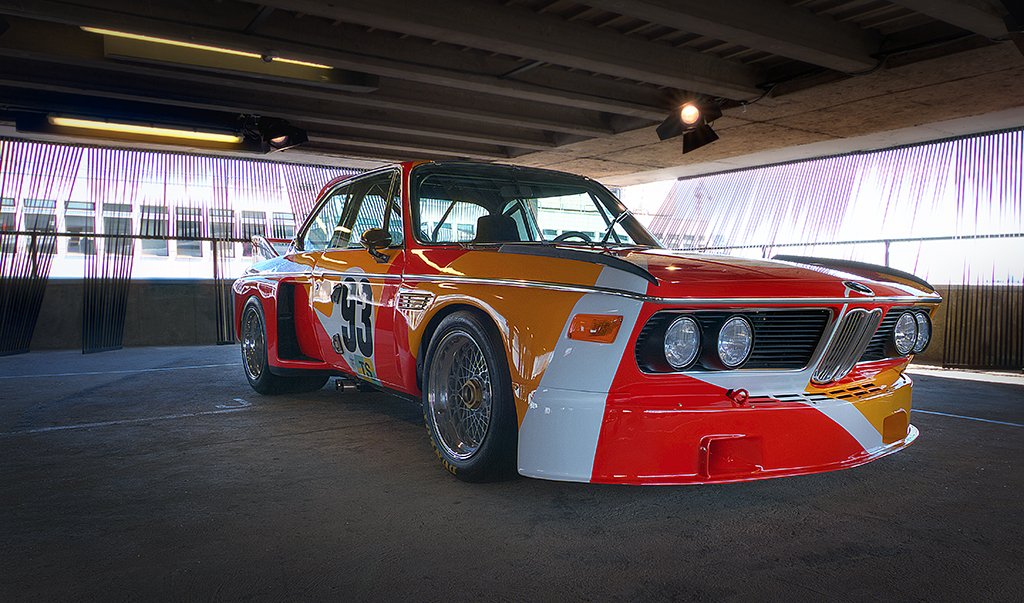
For the First Time, All 20 BMW Art Cars Are Under One Roof in Munich
A free exhibition at BMW Welt brings together five decades of the automaker's Art Car program, from Alexander Calder's 1975 Le Mans racer to Julie Mehretu's 2024 hypercar.

RADwood Brings Its '80s and '90s Car Show Back to Tacoma, This Time Free to Spectators
The traveling nostalgia show that turned Fox-body Mustangs and Radwood-era Japanese coupes into concours material returned to Griot's Garage in Tacoma on July 18, with Hagerty video host Jason Cammisa as the marquee guest.
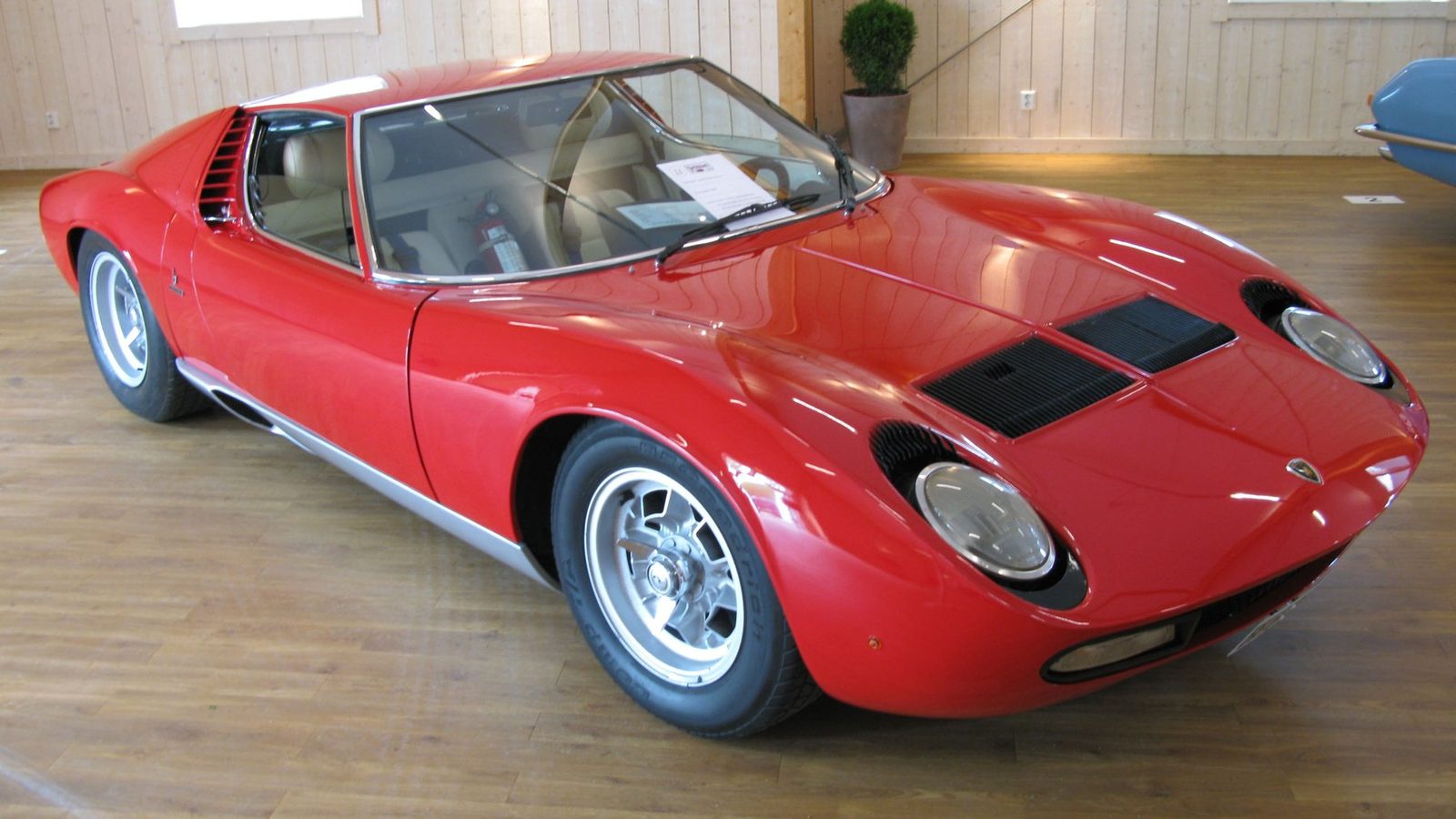
Lamborghini Will Gather Over 40 Miuras on Pebble Beach's 3rd Fairway for the Car's 60th Birthday
For the first time in the Concours d'Elegance's history, a fairway at Pebble Beach Golf Links will be opened to a single-marque tribute, as Lamborghini assembles what it calls the largest gathering of Miuras ever staged.