
Two Digger Engines and 406 MPH: Andy Green Has a Third Record
The JCB Hydromax averaged 406.320 mph at Bonneville on a pair of hydrogen-burning excavator engines, more than doubling a hydrogen combustion mark that had stood since 2004.
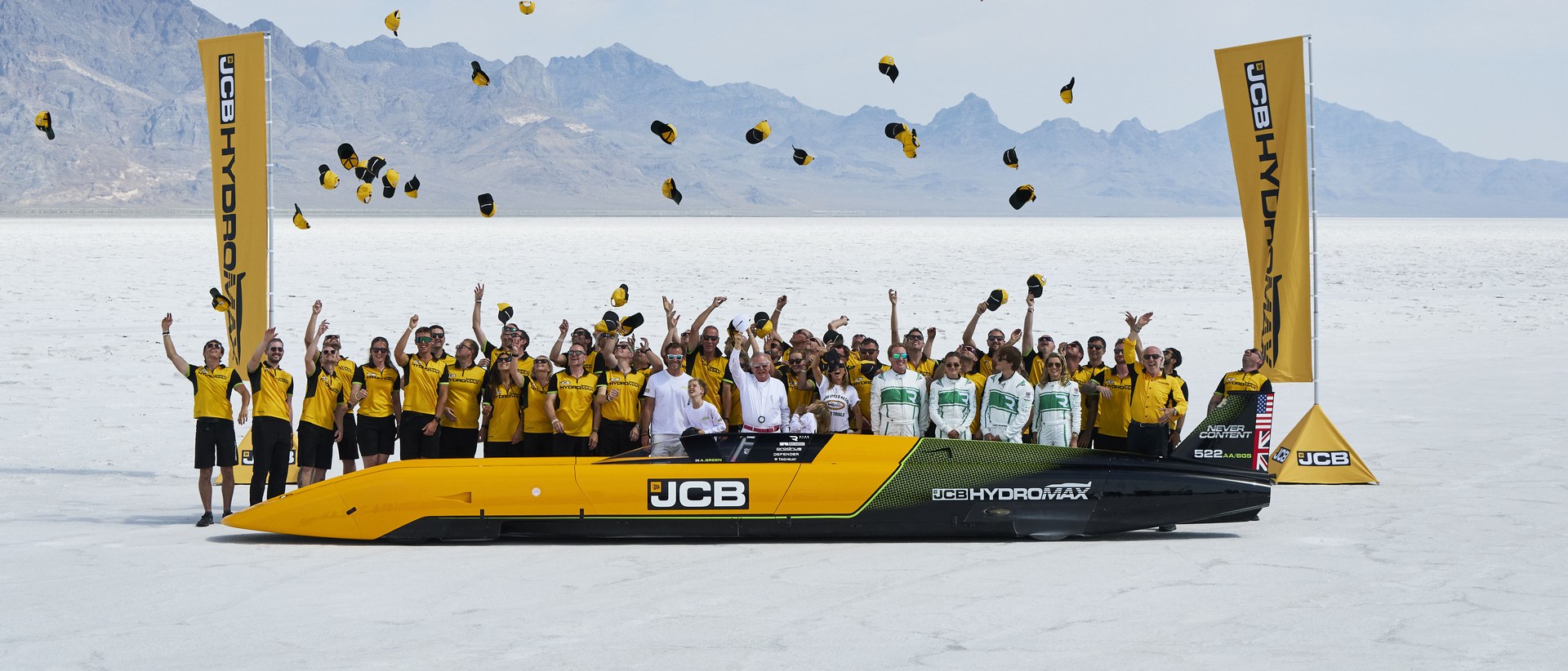
On August 11, a 32-foot yellow streamliner ran twice across the Bonneville Salt Flats and averaged 406.320 mph. The engines that got it there are the same ones JCB bolts into excavators.
The car is the JCB Hydromax, the driver was Wing Commander Andy Green OBE, and the number is now the FIA world land speed record for a hydrogen-powered vehicle — Category A, Group XIV, Class 7, taken with a flying start. The first pass registered 400.623 mph. The return run, which under FIA rules has to be completed inside a set window so that wind and slope cancel out, came back at 412.135 mph. The average of the two is the record.
What that average replaces is the interesting part. The standing FIA mark for a hydrogen internal combustion vehicle was 185.5 mph, set by the BMW H2R in 2004 and untouched for 22 years. The Hydromax did not improve on it so much as leave it behind, more than doubling it in a single morning. JCB says the run also clears the figures on record for hydrogen fuel-cell cars, which sit at 303 mph.
Underneath the bodywork are two of JCB's production hydrogen engines: four cylinders each, 4.8 liters each, mounted on their sides and fed by single-stage turbochargers with their own intercoolers and radiators. In the machines they were designed for, those units are rated at 75 bhp. Reworked for the salt with help from the British engineering consultancy Ricardo, each one makes roughly 800 bhp, for a combined output JCB puts at just under 1,600 bhp. That is more than ten times the rated output of the engine you would find in a digger on a building site this afternoon.
The rest of the car came from Prodrive, the Banbury firm best known for running rally and touring car programmes. Prodrive developed the tubular chassis, the multi-link suspension and the carbon composite driver's cell, and handled final integration and validation in the UK before the team shipped out to Utah. Goodyear supplied bespoke tires rated well beyond anything the company's previous JCB record car needed. Each engine drives through its own transmission and final drive, making the Hydromax four-wheel drive, and the whole thing weighs somewhere around 2.6 tonnes fully fueled and crewed.
This was the second record of the week. Days earlier, at the Southern California Timing Association's Speed Week on the same salt, the Hydromax averaged 368.347 mph in the AA/BGS Blown Gas Streamliner class — 367.141 mph out, 369.554 mph back — beating the 348.342 mph the Spectre Streamliner set in that class in 2010. Then the team came back for the FIA-sanctioned attempt and found another 38 mph.
For Green, this is a third distinct record on a résumé that did not need padding. In October 1997 he drove ThrustSSC to 763.035 mph in Nevada's Black Rock Desert and became the only person to break the sound barrier on land, a mark that still stands. In August 2006, at Bonneville, he took the JCB Dieselmax to 350.092 mph and set the diesel land speed record. Twenty years on, same company, same salt, different fuel.
"Twenty years ago we came to Bonneville with JCB Dieselmax and showed what British engineering could do with diesel power," said JCB chairman Lord Bamford, who led the project. "Today we have done it again — this time with engines powered by hydrogen." Green's assessment of the car was shorter: "stable, strong and fast."
The engineering claim JCB is actually making here is narrower and more useful than the headline speed. Hydrogen combustion has spent two decades being treated as the also-ran to fuel cells, and the company's point is that a production-based piston engine — not a bespoke laboratory one-off — can be pushed to the front of the class. Burning hydrogen instead of diesel puts no carbon dioxide out of the tailpipe, though burning any fuel in air can still produce nitrogen oxides, which is why hydrogen engines get built with combustion and aftertreatment strategies aimed squarely at that problem.
None of which is what you think about watching a 32-foot streamliner disappear across a dry lakebed at 412 mph. The record is the record. That it was set on engines designed to dig holes is the part worth keeping.
Portland Reopened IndyCar's Oldest Argument: What a Lapped Car Owes the Leader
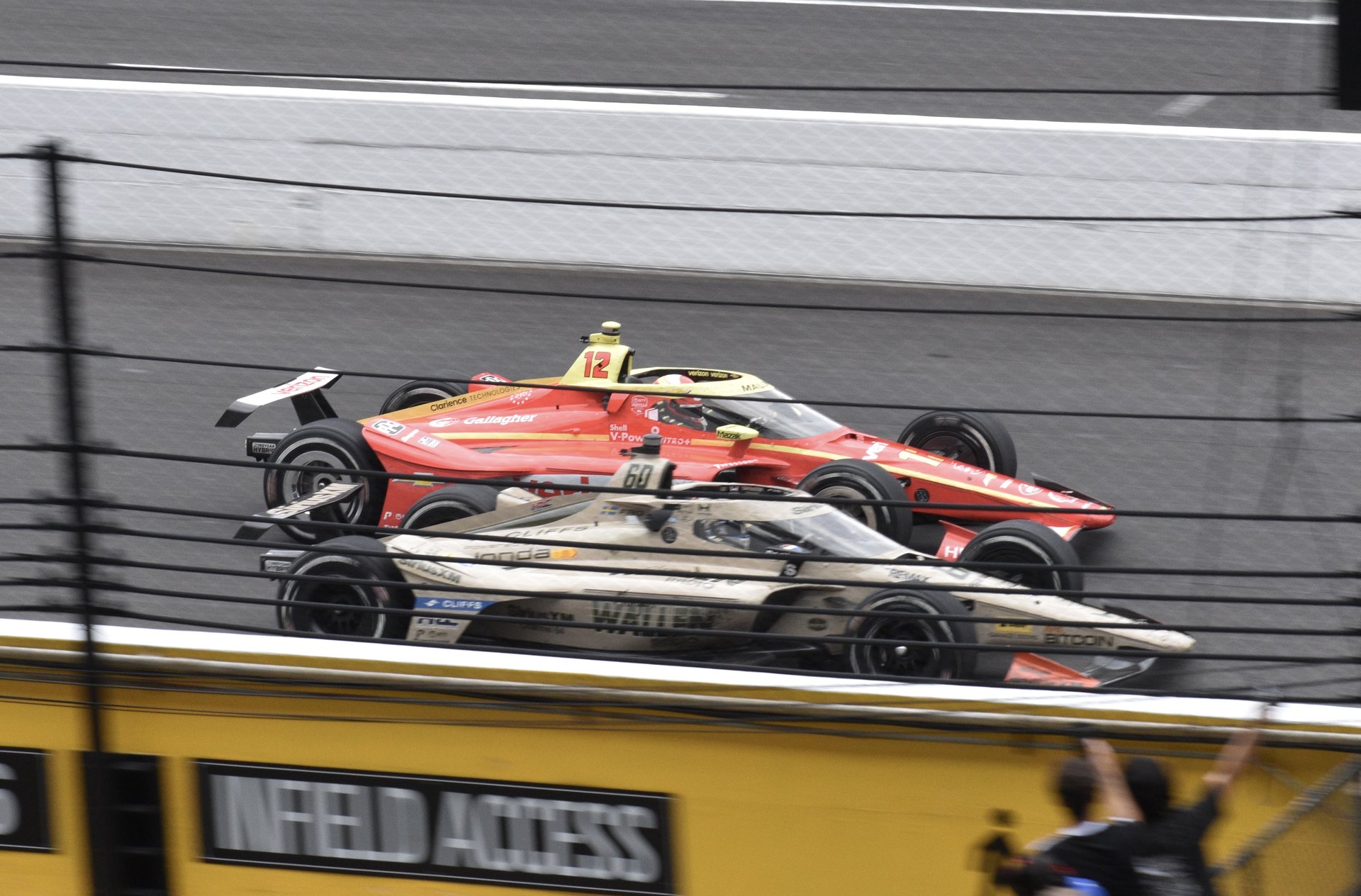
Felix Rosenqvist and Will Power came off the podium asking for a real blue-flag rule. Alex Palou, who won the race, and his strategist made the case that the rule is fine as long as everyone lives under the same one.
Ty Gibbs Waited 131 Starts for a First Cup Win. The Second One Took Four Months.
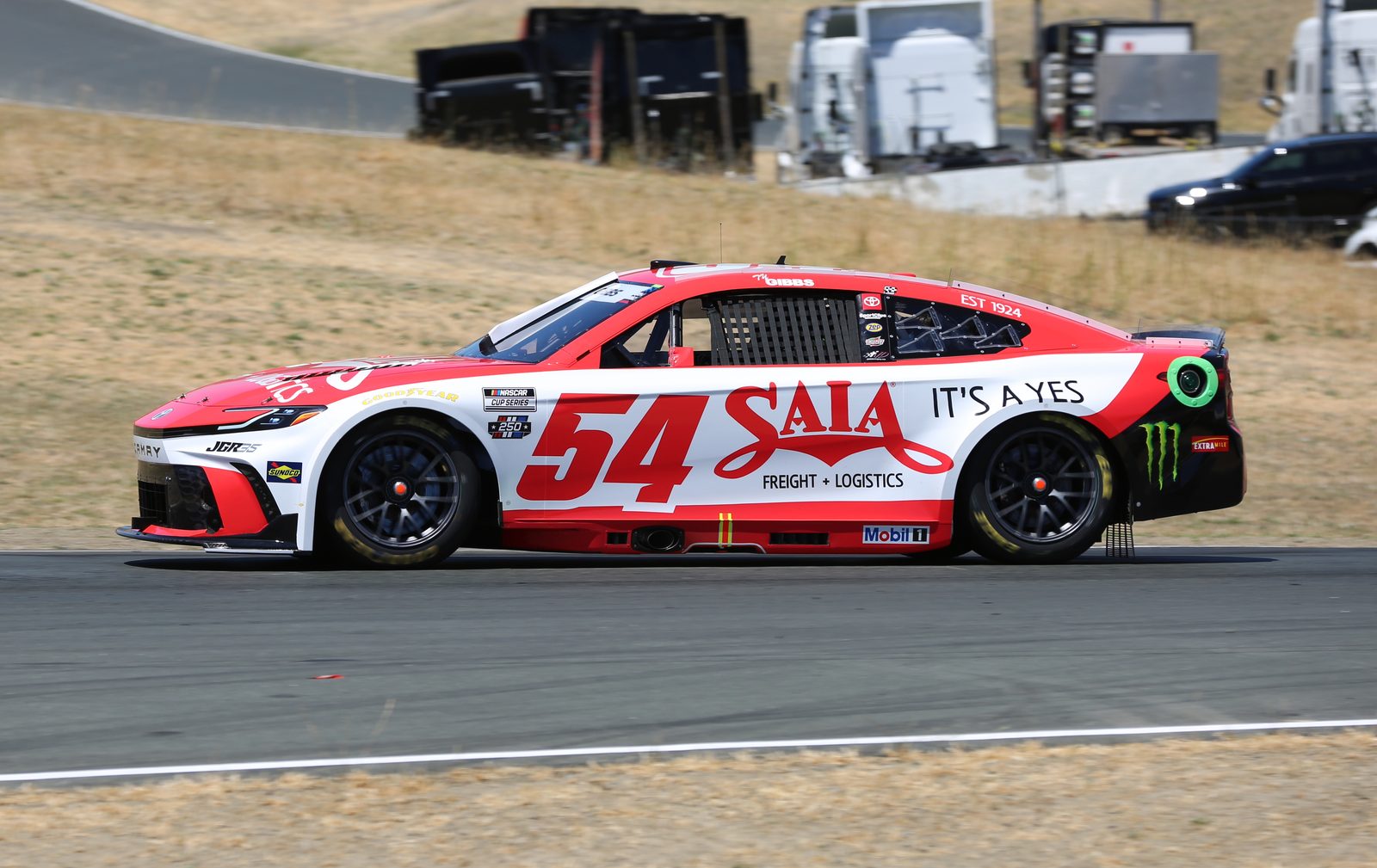
At Iowa, Gibbs took the final stage and held off Joe Gibbs Racing teammate Christopher Bell, turning a career that had produced nothing into two wins in one season.
Bearman Says Hamilton's Ferrari Revival Complicates His Own Title Dream
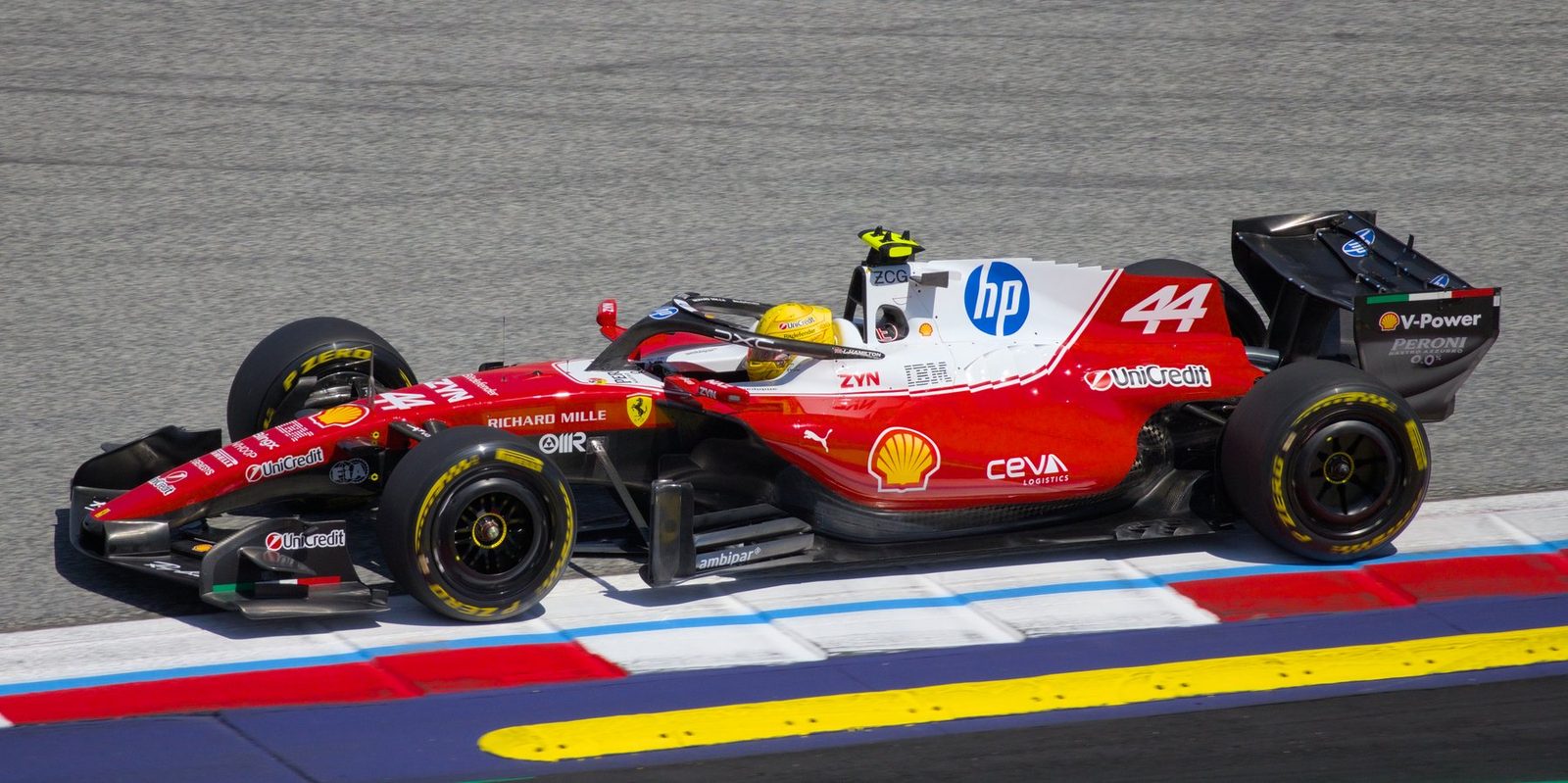
The Haas driver says he is in no rush for a Maranello seat, but admits Lewis Hamilton's turnaround season has changed the picture for any young Briton hoping to wear red.