

A 268-Year-Old Essay on Taste Explains Why Car Critics and Car Buyers Disagree So Much
David Hume never saw a car in his life, but 'Of the Standard of Taste' is basically a users' manual for the gap between what the enthusiast press loves and what actually sells.
In 1757, the Scottish philosopher David Hume published an essay trying to settle an argument that's still running in every comment section under every car review ever published: when two people disagree about whether something is good, is one of them just wrong? Hume's answer, in "Of the Standard of Taste," is annoyingly reasonable — yes and no, and the interesting part is figuring out which.
Hume starts by conceding the obvious: taste is subjective. Beauty isn't a property sitting inside an object waiting to be discovered, the way mass or horsepower is; it's a sentiment produced in the person experiencing it, and in that narrow sense, no one's reaction is technically "wrong." But Hume immediately points out that nobody actually lives as if this were true. Everyone treats some critics as worth listening to and dismisses others, and everyone would laugh at a claim that a random Ogilvie poem belongs in the same conversation as Milton. So if all sentiment is equally valid in theory, why does everyone act, in practice, like some judgments are simply better than others?
His answer is the "ideal critic" — someone whose verdict is worth more not because they're allowed to overrule your personal reaction, but because they're better equipped to have the right one. Hume lists five qualities: delicacy of sentiment, the ability to notice small details and distinguish them, the way a trained taster can pick out one ingredient in a dish a novice would just call "good"; practice, from doing the thing over and over until snap judgments get reliable; comparison, from having enough range to know what's actually rare versus what just seems impressive in isolation; freedom from prejudice, judging the thing on its own terms rather than through a grudge or a fashion; and good sense, understanding what a work is trying to do well enough to judge whether it succeeded on its own terms rather than someone else's.
He illustrates the point with a story lifted from Don Quixote: two of Sancho Panza's kinsmen, both famous in their village for their palates, are asked to judge a cask of supposedly excellent wine. One says it's good but tastes a hint of leather; the other agrees it's good but detects iron. The rest of the tasting party laughs them off the podium — until the cask is drained and an old key, tied to a leather thong, turns up at the bottom. The joke Hume is making is precise: delicacy of sentiment isn't snobbery invented to sound impressive, it's a real capacity to perceive something that's actually there, which everyone else missed only because they weren't paying close enough attention.
Swap wine casks for cars and the whole essay reads like it was written for the automotive press. A trained road tester picking up a fraction of a second of extra body roll through a specific corner, or the difference between a hydraulic and electric power-steering rack, isn't performing connoisseurship for its own sake — that's delicacy of sentiment doing exactly what Hume describes, catching a leather thong the rest of us would've swallowed without noticing. Practice is a magazine tester driving hundreds of cars a year, back to back, until the difference between merely good and genuinely excellent stops being a guess. Comparison is why a reviewer who's driven both a Miata and a Radical is a better judge of either than someone who's driven only one. Freedom from prejudice is judging a minivan by what a minivan is supposed to do instead of docking it points for not being a sports car. And good sense is understanding that a Miata and an F-150 are answering completely different questions, so scoring them on the same rubric is a category error, not a controversial opinion.
The friction shows up the second you compare what wins critical praise to what actually sells. The Mazda MX-5 Miata has been named to Car and Driver's 10Best list 19 times, tied for the fifth-most all-time — about as close to Hume's "joint verdict of true judges" as the car world produces. It also sold roughly 7,500 to 8,700 units a year in the US over the past couple of seasons. The Ford F-Series, meanwhile, has been America's best-selling vehicle outright for 44 consecutive years and its best-selling truck for 49, moving 828,832 trucks in 2025 alone — about a hundred Miatas for every F-Series, give or take. Hume would say this isn't actually a contradiction. Popularity answers a different question than his essay is asking. The F-Series wins because it solves problems for the largest number of people; the Miata wins critical consensus because a small number of people who've spent their careers developing delicacy of sentiment about how cars communicate through a steering wheel agree it does that job about as well as it can be done. Neither number cancels the other out — they're measuring different things, and Hume's whole point is that conflating them is the actual mistake, not disagreeing about which one matters more.
Where the essay gets genuinely useful is its account of how bad initial judgments get corrected — because it explains why some cars improve their reputation for decades after launch, without a single bolt on the car changing. The Chevrolet Corvair is the clean example: its reputation was flattened in the 1960s largely on the strength of Ralph Nader's "Unsafe at Any Speed," and it took decades of hindsight, later safety analysis, and a cooling of the specific controversy that produced the original verdict before its rear-engine layout and genuinely unusual engineering got evaluated on their own terms. The BMW M1 is a gentler version of the same story — a commercial and critical shrug when regulatory changes killed its racing program and its styling confused contemporary buyers, and a blue-chip classic now that the noise around its 1978 launch has faded. Hume's essay predicts exactly this pattern: freedom from prejudice is the hardest of his five qualities to have in the moment, because the moment is precisely when prejudice — fashion, controversy, a bad launch, a media pile-on — is loudest. It's only with distance, once the noise fades and the object can finally be judged on what it actually is, that verdicts stabilize into something closer to the true one. That's not relativism. It's just an honest description of how long good judgment sometimes takes to arrive.

For the First Time, All 20 BMW Art Cars Are Under One Roof in Munich
A free exhibition at BMW Welt brings together five decades of the automaker's Art Car program, from Alexander Calder's 1975 Le Mans racer to Julie Mehretu's 2024 hypercar.

RADwood Brings Its '80s and '90s Car Show Back to Tacoma, This Time Free to Spectators
The traveling nostalgia show that turned Fox-body Mustangs and Radwood-era Japanese coupes into concours material returned to Griot's Garage in Tacoma on July 18, with Hagerty video host Jason Cammisa as the marquee guest.
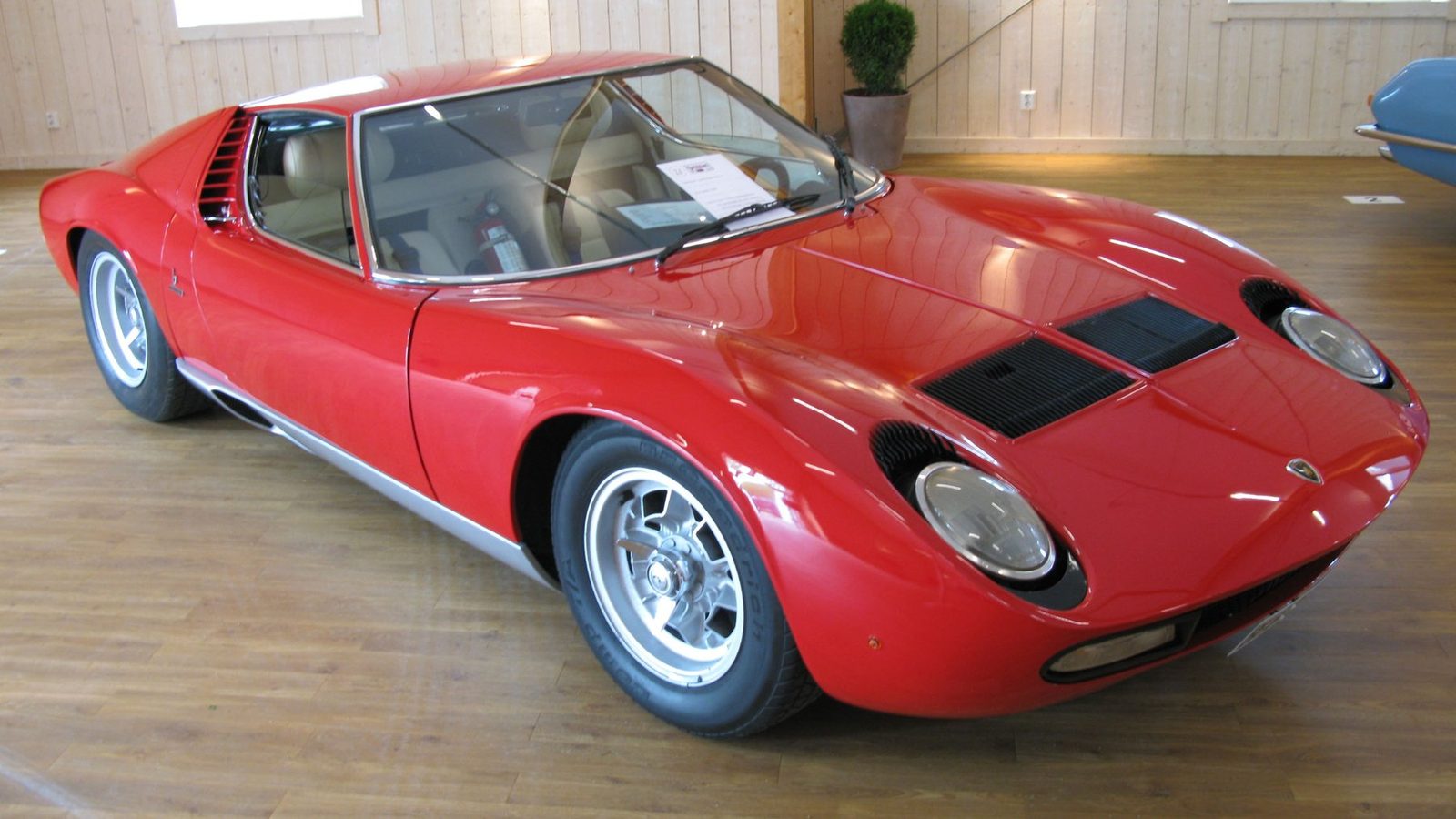
Lamborghini Will Gather Over 40 Miuras on Pebble Beach's 3rd Fairway for the Car's 60th Birthday
For the first time in the Concours d'Elegance's history, a fairway at Pebble Beach Golf Links will be opened to a single-marque tribute, as Lamborghini assembles what it calls the largest gathering of Miuras ever staged.