
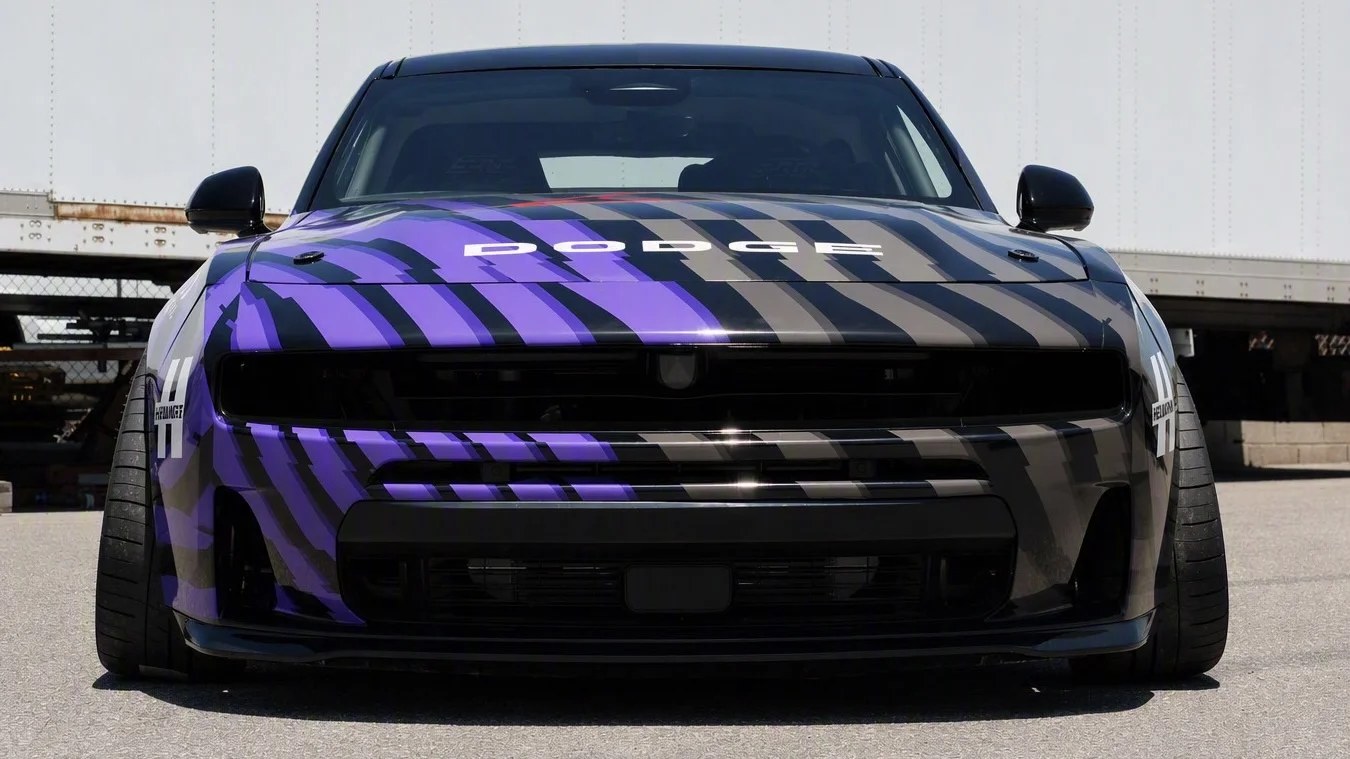
Dodge Gave the Six-Cylinder Charger a Clutch Pedal. It Took a Drift Build to Do It.
Two 750-horsepower Chargers built with Hemmings in 60 days are the first manually shifted SIXPACK cars Dodge has shown — and one of them is a four-door built to carry passengers sideways.
The production Dodge Charger Scat Pack is an all-wheel-drive automatic. It makes 550 horsepower and 531 lb-ft from a twin-turbocharged 3.0-liter inline-six Dodge calls SIXPACK H.O., runs 0-60 mph in 3.9 seconds, and has a button that sends all of its torque to the rear wheels. What it does not have, and has never been offered with, is a clutch pedal.
The two cars Dodge rolled out at M1 Concourse in Pontiac, Michigan on August 7 do. They are the first manually shifted SIXPACK-powered Chargers the company has shown, and they exist because a drift build was the excuse to make them.
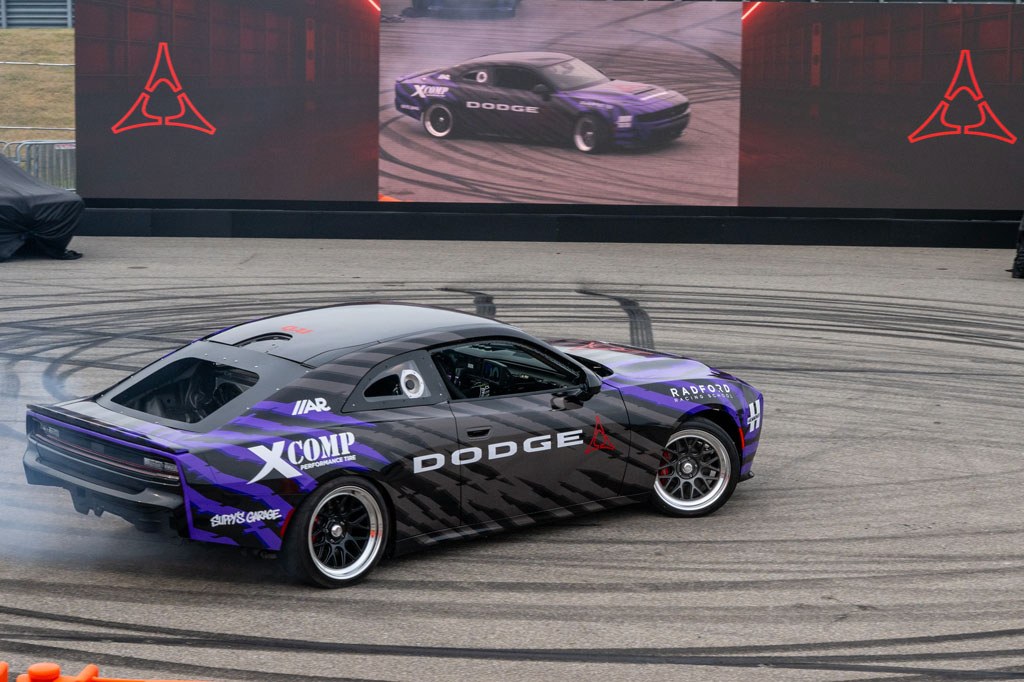
There are two of them, developed and built in 60 days with Hemmings and builder-fabricator Suppy Wejpanich of Suppy's Garage. The two-door Charger BOOST Coupe is the outright performance car. The four-door Charger RPM — for Rapid People Mover — is engineered specifically to carry passengers through drift demonstrations, which is a polite way of describing a 750-horsepower taxi that only travels sideways. Professional drifters Corey "The Boss" Hosford and Micah Diaz slid both of them around the venue during the press reveal, a day before Roadkill Nights Powered by Dodge opened to the public.
Both make a conservatively estimated 750 horsepower, and they get there by different routes. The BOOST Coupe throws away the factory twin-turbo arrangement for a high-output single-turbo configuration from Turbosmart. The RPM keeps two turbos but runs a heavily modified Turbosmart system. Both burn C16 race fuel, both run MoTeC engine management with 12-inch digital displays, and both carry rear-mounted cooling packages — moved to the back for weight distribution and thermal headroom, which is the kind of change you make when a car is going to spend its life at full lock and full throttle at the same time.
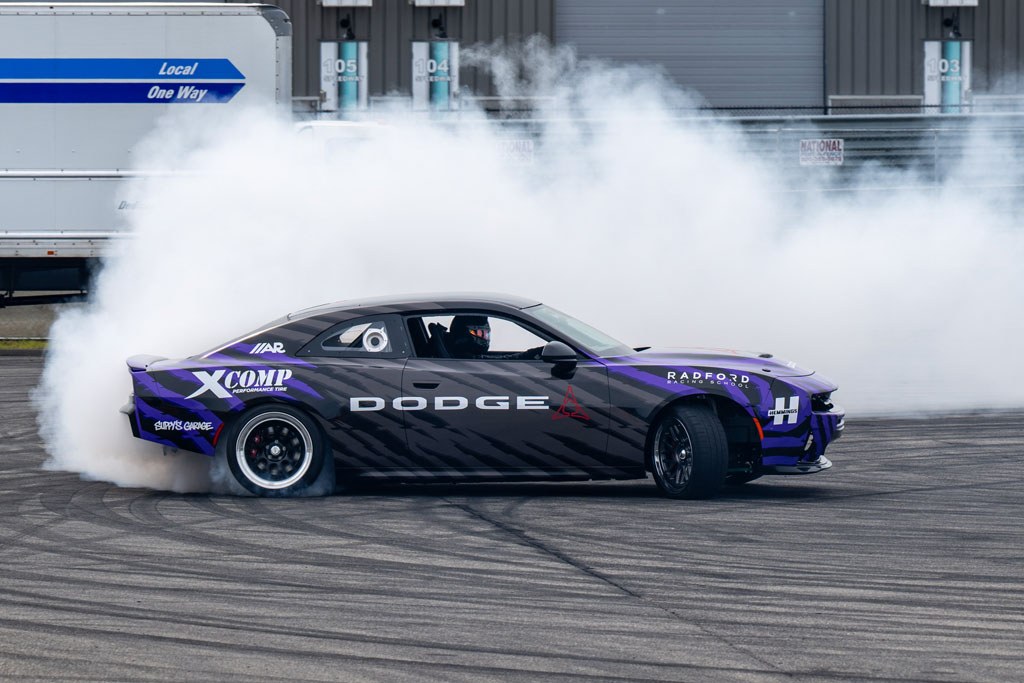
The drivetrain conversion is the real work. The team engineered custom bellhousings, modified the driveline, and turned the production all-wheel-drive automatic layout into a dedicated rear-drive manual package: competition-spec gearbox, custom clutch assembly, heavy-duty driveshafts, competition axles and hubs, and a Bulldog quick-change rear differential so gear ratios can be swapped between runs. Driver controls include a custom three-pedal clutch system, a one-off hydraulic handbrake, and a drift-spec master cylinder and brake system. Suspension and steering geometry are purpose-built for maximum angle, and the fenders are widened front and rear specifically to give the front tires somewhere to go.
Inside, the production interior is gone entirely — full roll cage, FIA-style containment seats, multi-point harnesses, and, in the company's own phrasing, a steering wheel, three pedals and a stick shift. Outside, there is a one-off hood with integrated vented exhaust outlets, a hand-fabricated rear wing, custom taillight assemblies, American Racing competition wheels and X-Comp HP tires. The four-door's dual-mode exhaust vents tire smoke out through hood-mounted blow-off valves, which serves no engineering purpose and is obviously the best detail on the car.
Both wear graphics derived from the new Charger's Purple Haze paint, with "Rapid People Mover" across the RPM's roof.
The origin story, per Dodge, is a media drive in Death Valley. "Like a lot of great automotive ideas, this one started while we were driving," said Mike Musto, Hemmings' Director of Programming. "The more Matt and I talked about the SIXPACK engine, the AWD system and the car's ability to operate in rear-wheel-drive mode, the more the idea took shape. At one point we stopped asking, 'What if?', and started asking, 'Why not?'"
The Matt in question is Dodge CEO Matt McAlear, who framed the point of the exercise plainly. "The new Charger gives Dodge enthusiasts a platform they can make their own, and these two custom drift machines show how far that performance foundation can go," he said. "Built from production-based Chargers, these 750-horsepower professional drift cars put the platform's strength, flexibility and performance capability on full display."
That is a fair reading of what the cars demonstrate, and it also sidesteps the question the enthusiast internet asked within about ten minutes of the reveal. A muscle car that lost its V8 and arrived only as an all-wheel-drive automatic spent its launch year absorbing a specific complaint. Dodge's answer, so far, is a pair of one-off show cars that prove the platform will accept a clutch — not a production order form. Beyond the engine internals, the body panels and the windshield, nearly every component on these two was modified or fabricated from scratch, which is a long way from a factory option box.
The cars are not one-weekend props, at least. A nine-part video series following the build is running on Hemmings' YouTube channel, and the pair are booked to appear at Gridlife at Laguna Seca on September 18-20 and at FuelFest at Firebird Motorsports Park in Arizona on December 5, hauled between events by a Ram 3500.
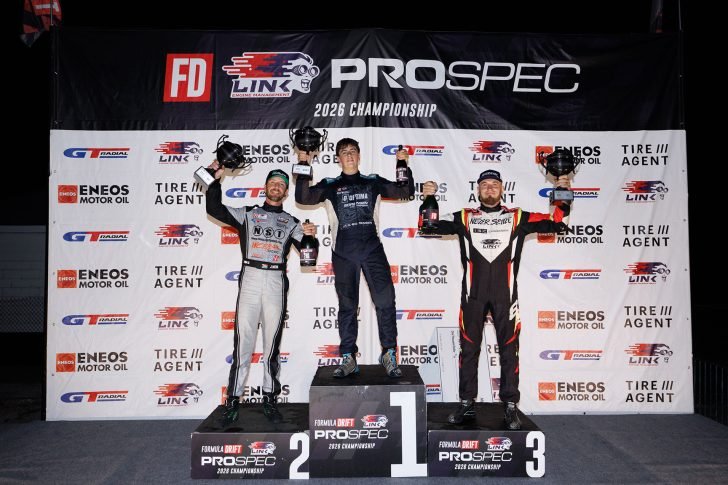
At 14, Camren Sorensen Becomes Formula Drift's Youngest-Ever Winner in Indianapolis
Sorensen topped the PROSPEC podium at Indianapolis Raceway Park, beating his own sister in the Top 8 along the way, on a weekend the PRO main event was wiped out by flooding.
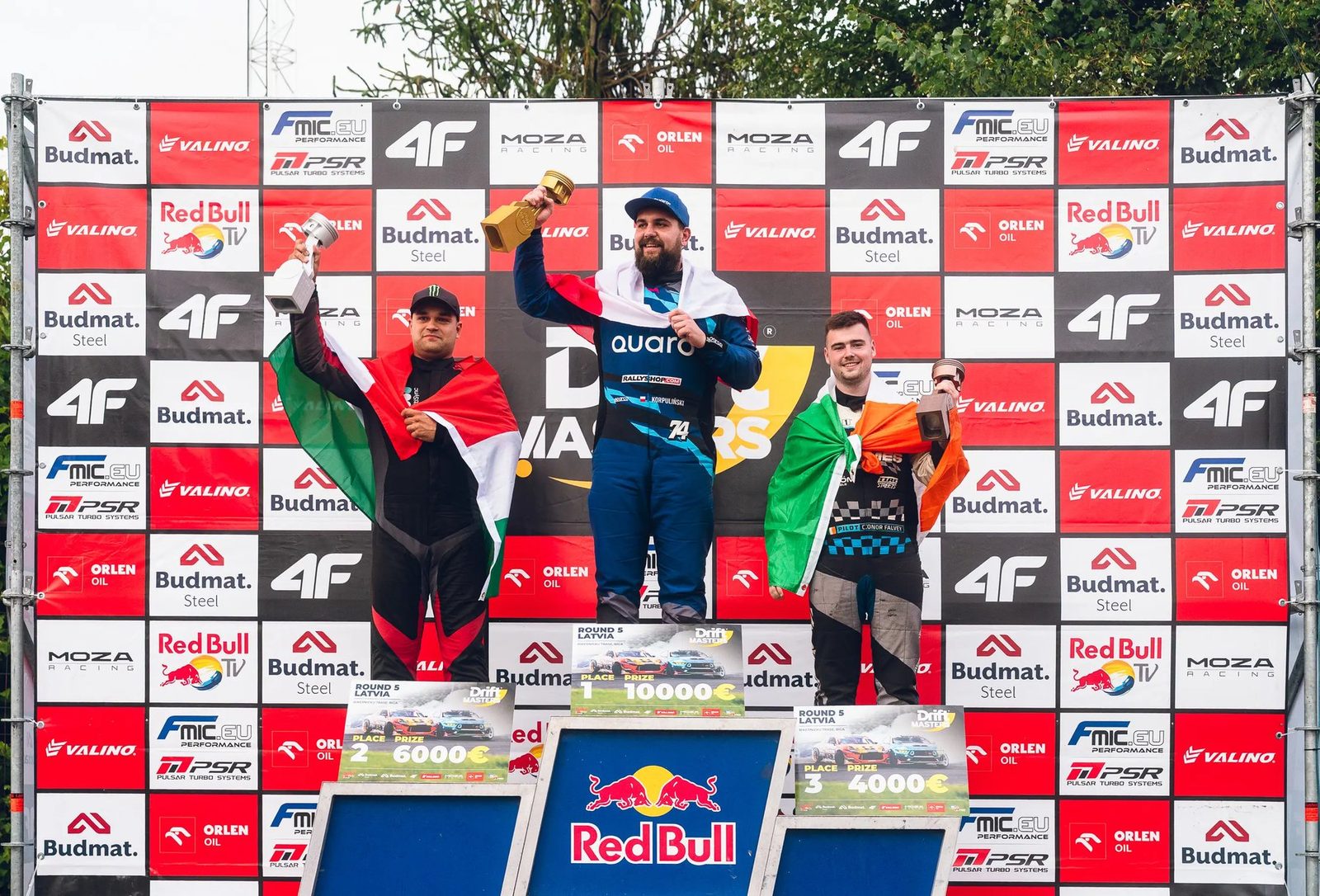
Paweł Korpuliński Wins Drift Masters Round 5 in Riga, Extends Championship Lead
The Polish driver beat breakout finalist Kevin Piskolty at Bikernieku Trase to open a 52-point gap atop the 2026 Drift Masters European Championship standings.
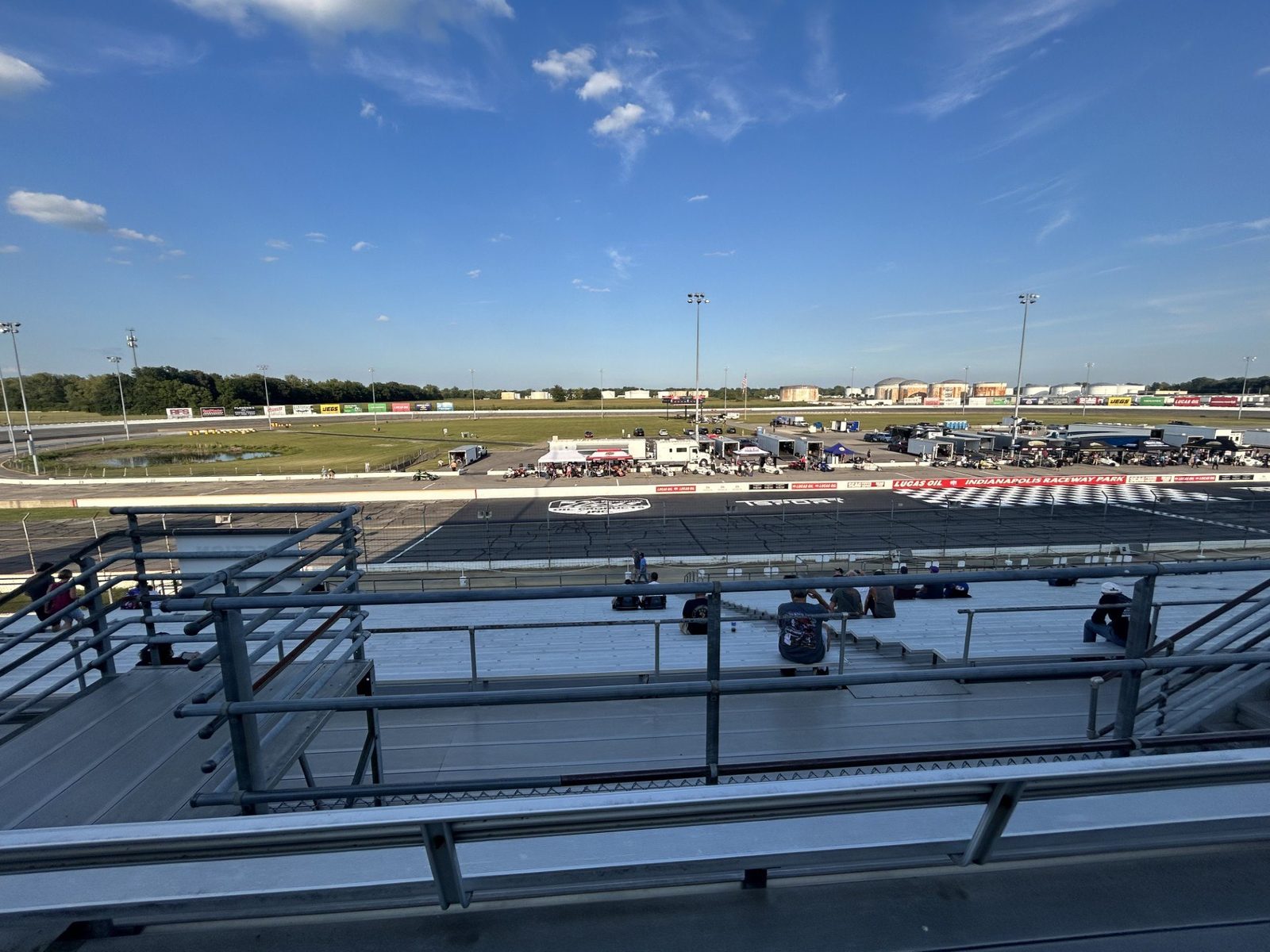
Formula Drift's Indianapolis Debut Ends Early — Storms Cancel the PRO Round for the First Time in Series History
Round 5 was supposed to be Lucas Oil Indianapolis Raceway Park's first taste of Formula Drift competition. Instead, severe storms, lightning, and flooding forced a grandstand evacuation and, after five hours of trying to save the track, the first PRO Championship cancellation in the series' 23-year history.