
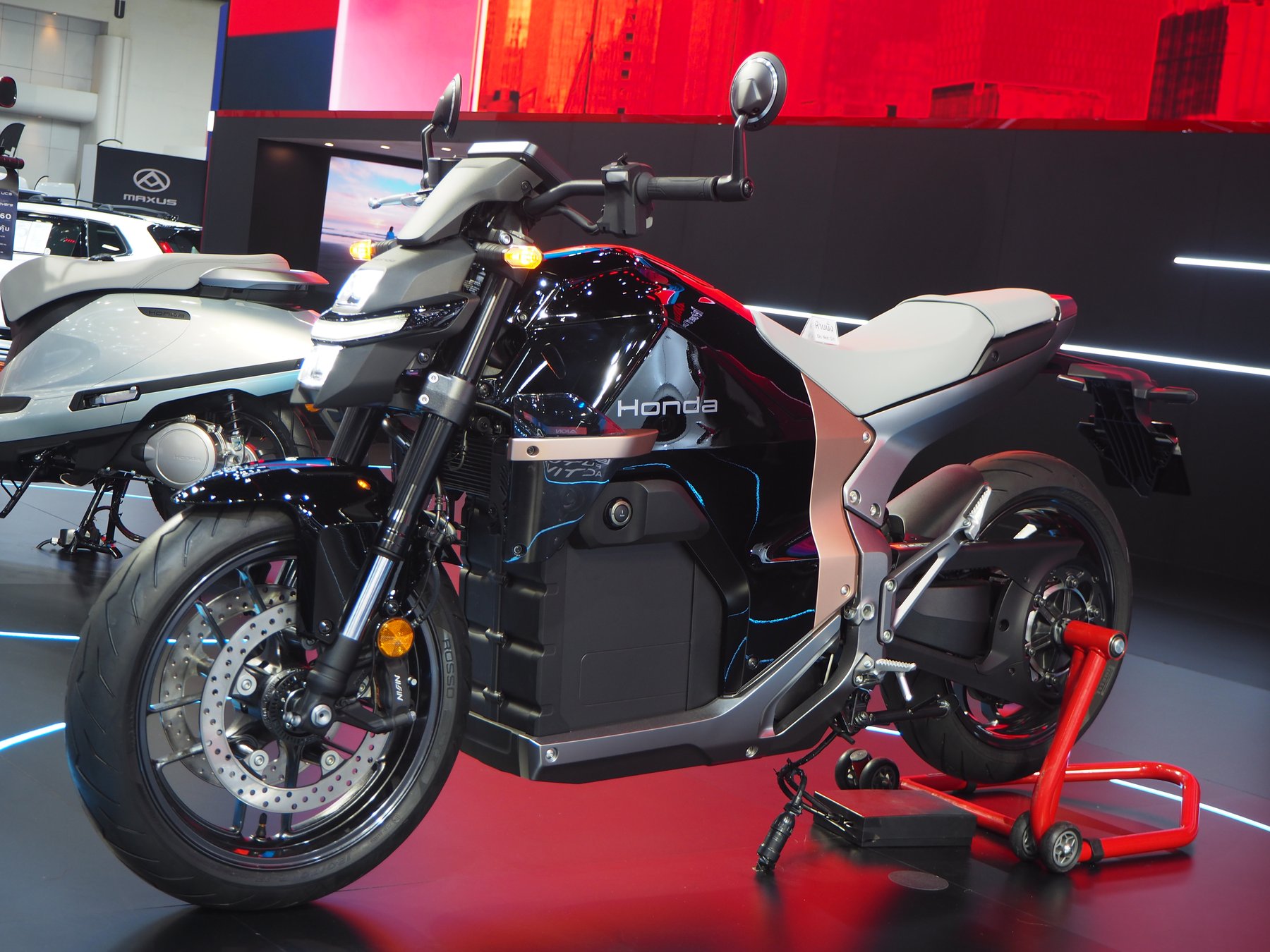
Honda's First Real Electric Motorcycle Carries 9.3 kWh. Here's What That Actually Buys You.
The WN7 is in European dealers now at £12,999, with a peak of 50 kW, a battery case that doubles as the frame, and a claimed 140 km. Honda built the bike well. The arithmetic is the hard part.
- Peak power
- 50 kW (67 hp)
- Rated power
- 18 kW (UNECE continuous)
- Torque
- 100 Nm
- Battery
- 9.3 kWh fixed lithium-ion
- Range
- 140 km / 87 mi (WMTC)
- Kerb weight
- 217.5 kg
- Seat height
- 800 mm
- Price
- £12,999 / €14,780
Honda's first full-size electric motorcycle has been sitting in European showrooms since June, and it is a far more serious machine than the electric two-wheelers Honda has sold up to now, all of which were scooters. The WN7 costs £12,999 in the UK and starts at €14,780 in Germany. It makes 50 kW at peak and 100 Nm of torque, it uses the cast aluminium case of its battery as the motorcycle's main structure, and it charges on the same CCS2 plug as a car. It also carries a 9.3 kWh battery, which is the single number that governs everything else about it, and the one Honda was slowest to publish.
"A motorcycle still runs on two wheels. Accelerating, braking and cornering — those core dynamics don't change." — Masatsugu Tanaka, Large Project Leader, Honda
The name is not a model code in the usual Honda sense. Per Honda's own announcement on 16 September 2025, the W stands for the development concept "Be the Wind," the N for Naked, and the 7 denotes the output class. The bike was shown publicly for the first time at EICMA in Milan that November, after being previewed a year earlier at the same show as the EV Fun Concept. That concept, announced on 5 November 2024, was billed as Honda's first electric sports model, promised "a cruising range of over 100km or more," and was scheduled to go on sale in 2025. Production did start late in 2025; bikes did not reach European dealerships until June 2026. Europe is the market — Honda has not announced a US launch.
The powertrain figures need unpacking, because the headline number and the legal number are not the same. Honda quotes a peak of 50 kW "with a UNECE certified constant rotational power of 18kW." European licence categories are homologated on that certified continuous rating, not on the peak, which is why a bike that briefly makes the equivalent of 67 hp sits comfortably inside the A2 bracket. There is also a genuinely restricted version for A1 riders: 11 kW rated, 11.2 kW peak, which — as BikeSocial's Ben Purvis points out — is "the same as pretty much any 125cc combustion engine bike." Top speed on the 18 kW machine is 129 km/h, or 80 mph, and Purvis notes it drops to 78.9 mph as a continuous maximum. The A1 version tops out at 120 km/h.
The chassis is the most interesting engineering on the bike, and it is not a gimmick. There is no conventional frame: Honda describes the layout as a frameless chassis in which the cast aluminium battery casing is the main structure and a stressed member, which is how it recovers the packaging space a frame would otherwise occupy. An aluminium cantilever Pro-Arm single-sided swingarm carries a belt final drive. Suspension is Showa — 43 mm upside-down forks and a 41 mm monoshock, 120 mm of travel at each end, with preload the only rear adjustment. Brakes are Nissin, twin 296 mm discs up front and a 256 mm rear, with cornering ABS fed by an IMU. Seat height is 800 mm, wheelbase 1,480 mm, kerb weight 217.5 kg, wheels 17-inch at both ends on 120/70 and 150/60 rubber. Riding modes are STANDARD, SPORT, RAIN and ECON, with regenerative deceleration adjustable across four settings, and there is a five-inch TFT with Honda's RoadSync connectivity. It won a Gold award at the iF Design Awards and a Red Dot "Best of the Best" in 2026. None of this is a first attempt.
Which brings us to the problem that electric motorcycles have and electric cars mostly don't. A car can hide 60 or 80 kWh under the floor without anyone noticing, pushes a reasonably slippery shape through the air, and belongs to someone who is comfortable leaving it parked for six hours. A motorcycle has no floor, no boot, no bonnet, and a rider sitting in clean air acting as the largest single contributor to drag. Worse, the baseline it is measured against is a petrol bike that refuels in about three minutes and then goes another 150 miles. Every electric motorcycle launched so far has had to answer that, and most have answered it badly. The WN7's answer is more honest than most, but it is still an answer with limits.
Start with the range. Honda's homologated figure is 140 km, or 87 miles, on the WMTC mode 2-2 cycle for the 18 kW version, and 153 km on WMTC 2-1 for the 11 kW A1 bike. That is already better than the "over 130 km (83 miles)" Honda quoted in its September 2025 announcement, so the production number moved the right way. But Honda's own figures don't quite reconcile: 9.3 kWh over 140 km works out to roughly 66 Wh/km, while the European press release lists energy consumption at 81 Wh/km. The usual explanation for a gap like that is that consumption is measured at the wall socket and includes charging losses while range is measured from the pack, which would imply something in the region of 80 percent charger-to-wheel efficiency. Honda does not spell it out, and until it does, that is an inference rather than a fact. Either way, the honest reading of 87 miles on a test cycle is that a rider doing 70 mph on a motorway, into wind, will see a good deal less — and on a bike whose continuous top speed is 78.9 mph, motorway riding is already close to the ceiling. One more piece of arithmetic worth having in mind: 9.3 kWh drawn at the full 50 kW peak is gone in about eleven minutes. Nobody rides that way, but it is a useful illustration of how much of this bike's character lives in short bursts rather than sustained output.
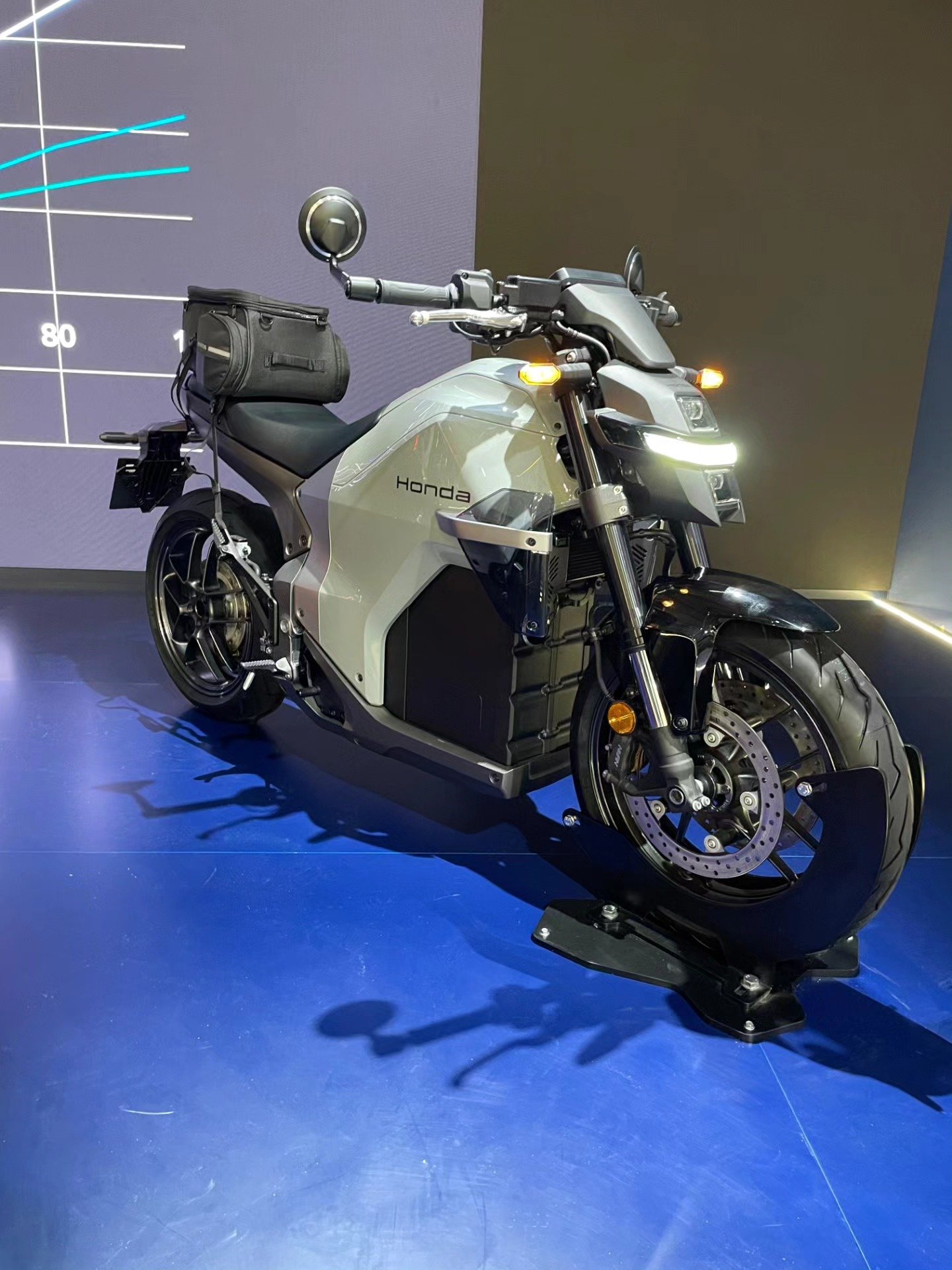
Charging is where the WN7 does the most to close the gap, and it deserves credit for it. Fitting an automotive CCS2 socket to a motorcycle is a real decision with real packaging and cost consequences, and it means a 20-to-80 percent top-up in about 30 minutes on a DC rapid charger — roughly 55 miles of range added, by BikeSocial's reckoning. At home, a 6 kVA wallbox does zero to full in 2.4 hours; a standard domestic socket takes about 5.5 hours. BikeSocial estimates a full home charge at around £1 on an off-peak tariff versus about £8 on a public rapid unit. Those are genuinely good running costs. They are also, still, 30 minutes of standing at a charger to buy 55 miles, against three minutes at a pump to buy 150. CCS2 narrows the gap; it does not close it.
Honda has been here before in a different vehicle class, and the result is instructive. The Honda e city car ran a 35.5 kWh pack for a claimed range of around 220 km, was widely admired on design grounds, and was killed off in January 2024 after roughly 12,500 global sales across three years — short range and price being the recurring complaints. The WN7's pack is about a quarter of the size of the car's and delivers roughly 64 percent of the range, which is a real compliment to how efficiently a motorcycle moves a person. It is also the exact trap: being efficient per kilometre doesn't help when the absolute energy you can carry is this small. And at £12,999 the WN7 is not priced like a commuter. As Carscoops noted, it undercuts a Harley-Davidson LiveWire One in Europe by precisely €10 — €14,780 against €14,790 — which tells you both that Honda has priced to the market and that the market it has priced into is one where even Harley's electric arm has slashed prices from well north of €30,000.
Strategically, the WN7 is Honda's first fixed-battery full-size electric motorcycle and the opening of its European FUN-model electrification, sitting above a scooter line built around the swappable Mobile Power Pack e:. That line now includes the EM1 e: and CUV e:, the ICON e: for Indonesia and Vietnam, and the ACTIVA e: and fixed-battery QC1 launched for India in November 2024. The corporate framing around it has been ambitious: roughly 30 electric models globally by 2030, four million electric motorcycles sold annually by that year, about ¥500 billion of investment through the financial year ending March 2031, a dedicated electric motorcycle plant in India from 2028, and carbon neutrality across Honda's products by the 2040s. Thirteen of those 30 models had been introduced as of the January 2025 motorcycle business briefing.
What is worth noticing is how much quieter the targets got. At Honda's business briefing on 14 May 2026, the company's line on electric motorcycles was that it will "closely monitor changes in customer demand and environmental regulations in each country and take a flexible and agile approach to product launches and establishment of production operations" — no fresh unit targets, no new model counts, and a capacity plan for India built around growing conventional motorcycle output from 6.25 million to roughly eight million units by 2028. That is a company hedging, and it is not an unreasonable thing to do given what the WN7's numbers actually say. The bike itself is good: well packaged, properly braked and suspended, cleverly structured, and sensibly charged. What it is not is a replacement for a petrol middleweight, and Honda's development leader Masatsugu Tanaka has been careful not to claim otherwise. Buy it as a fast, quiet, cheap-to-run bike for a 50-mile day and it makes sense. Buy it expecting a petrol middleweight that happens to plug in, and the battery will tell you otherwise before lunchtime.
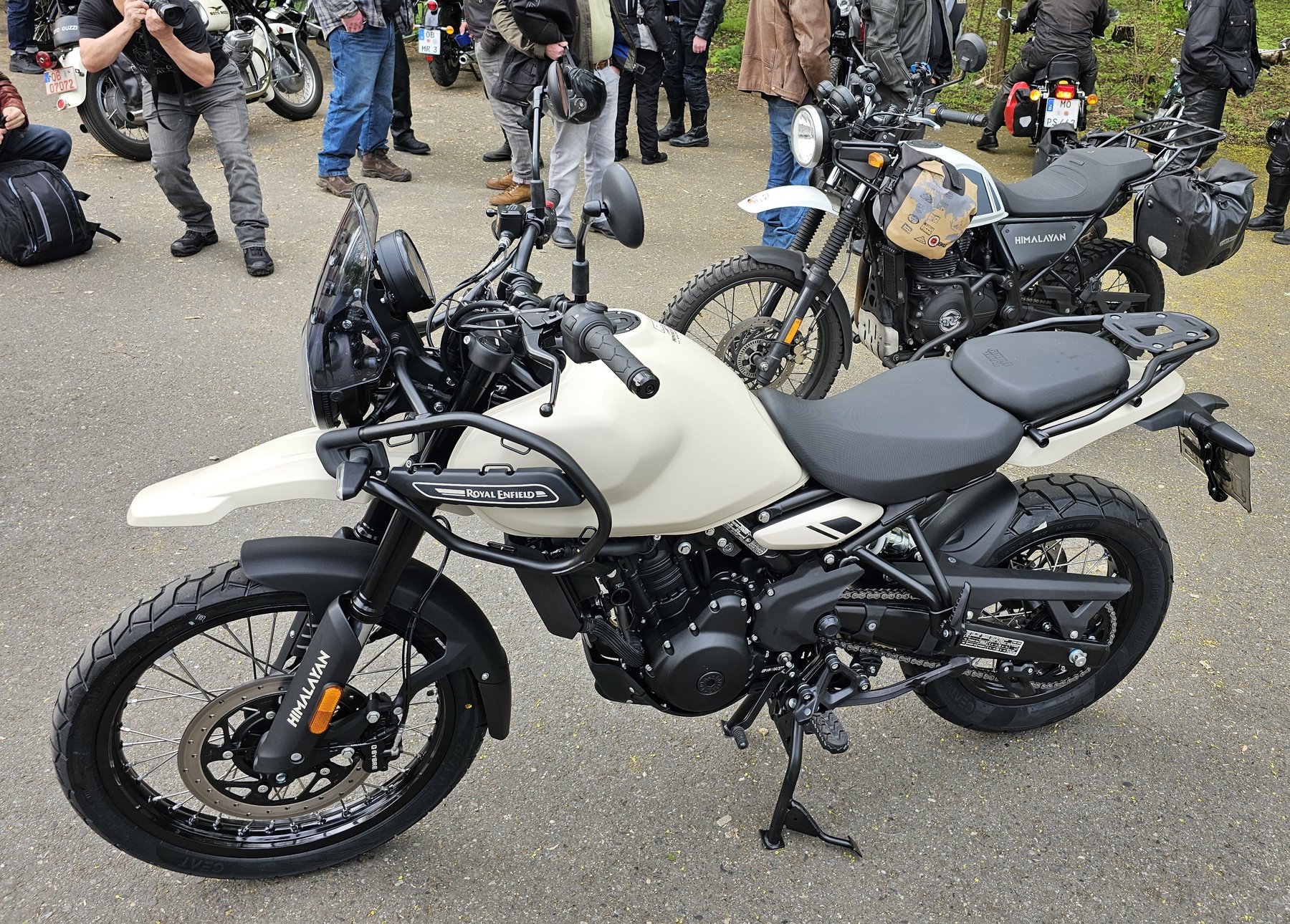
Royal Enfield's Himalayan 750: What's Actually Confirmed, and What's Still Just a Spy Shot
Undisguised bikes badged “750” have been filmed in Uttarakhand, and EICMA opens in a month. But Royal Enfield still hasn't published a single number for this motorcycle — and the 60 hp figure doing the rounds is an estimate, not a spec.
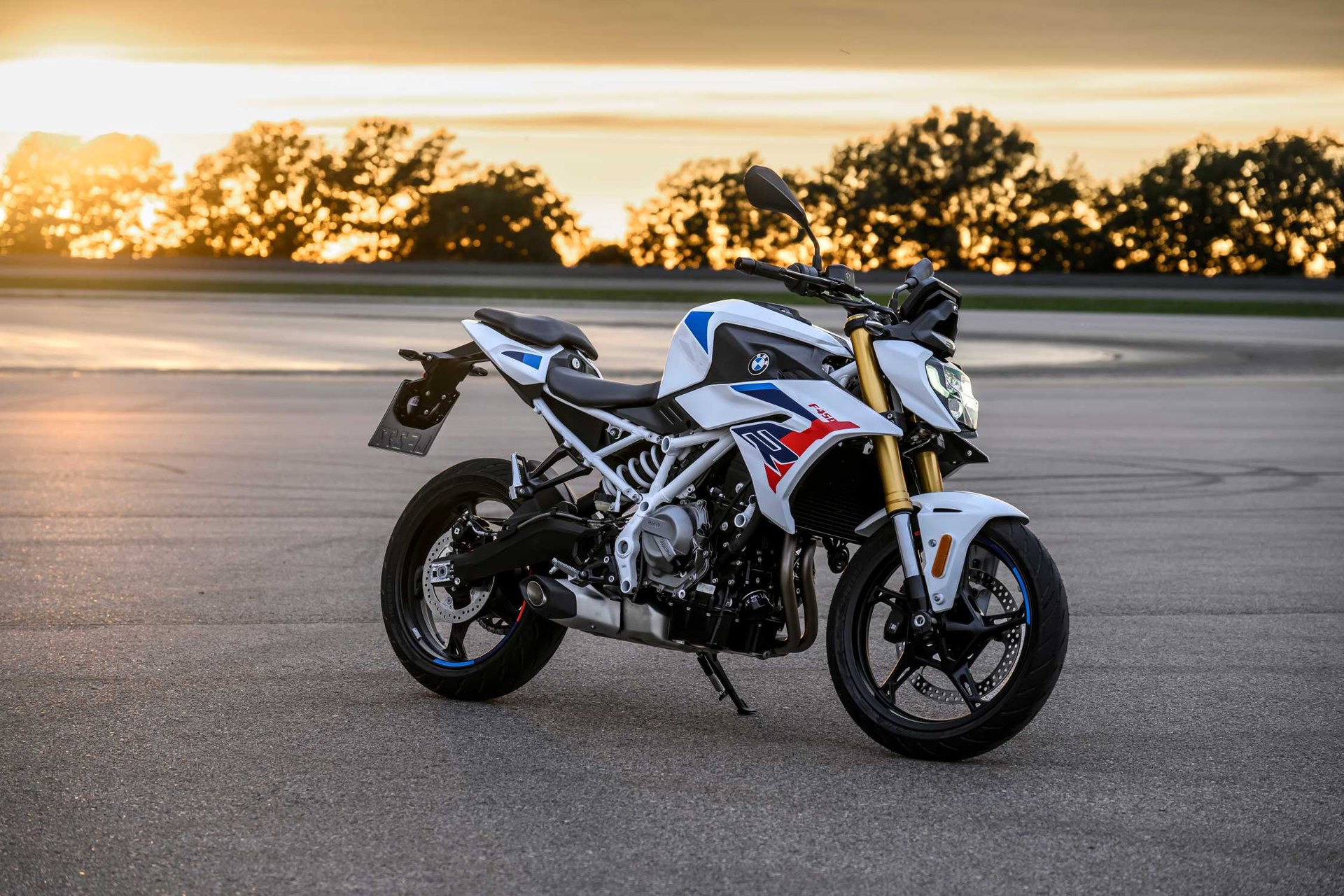
BMW Built the F 450 R Exactly to the A2 Ceiling
48 hp and 175 kg is not a coincidence. Europe's A2 licence caps power at 35 kW and power-to-weight at 0.2 kW/kg, which means a full-power A2 bike has to weigh at least 175 kg — and BMW's new naked twin lands on both numbers.
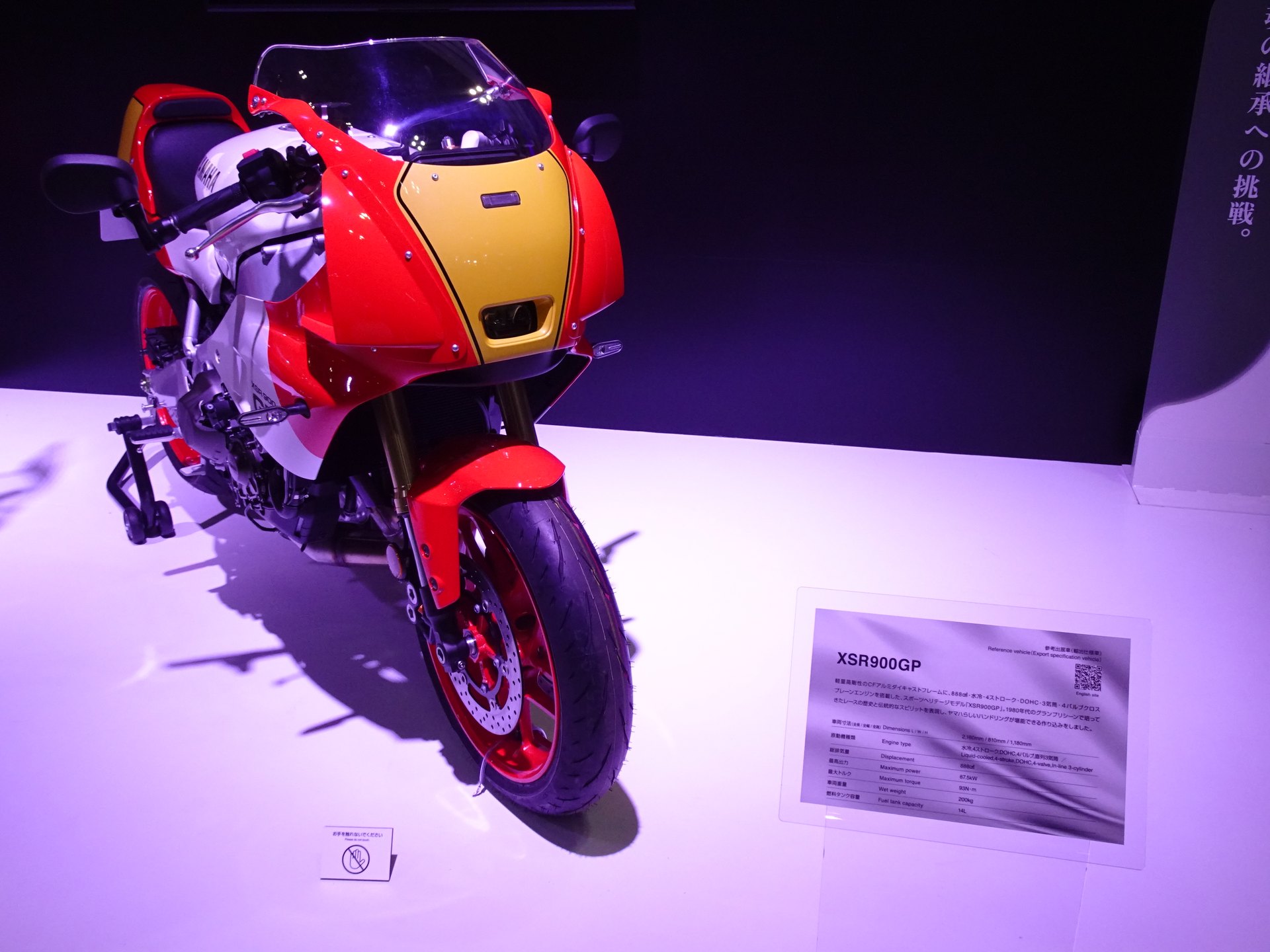
The XSR900 GP Is Finally Coming to America, and a Smog Filing Gave It Away
A California Air Resources Board executive order dated August 3 certifies Yamaha's half-faired, clip-on-barred 890cc triple as a 2027 model — two years after Europe got it and with no announcement from Yamaha yet.