
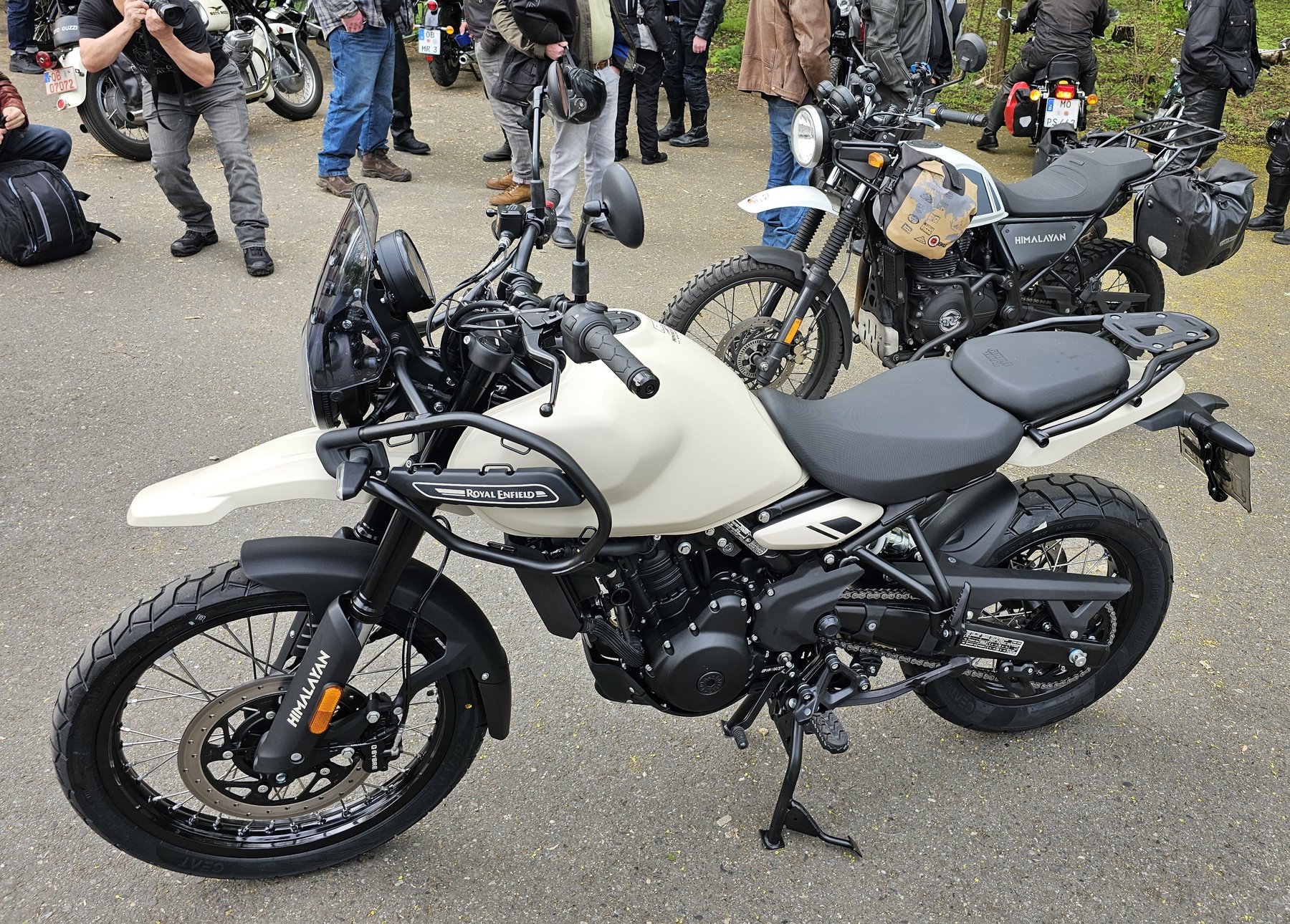
Royal Enfield's Himalayan 750: What's Actually Confirmed, and What's Still Just a Spy Shot
Undisguised bikes badged “750” have been filmed in Uttarakhand, and EICMA opens in a month. But Royal Enfield still hasn't published a single number for this motorcycle — and the 60 hp figure doing the rounds is an estimate, not a spec.
- Factory specs published
- None
- Badging seen
- “750” on side panels
- Wheels (spy shots)
- 19in front / 17in rear, alloy and cross-spoke
- Himalayan 450, for scale
- 452cc single, 40.02 PS, 196 kg kerb
- 650 twin, the reported donor
- 648cc, 46.8 hp @ 7,250 rpm, 52 Nm @ 5,250 rpm
- EICMA 2026
- Nov 3–4 press and trade, Nov 5–8 public, Fiera Milano Rho
Over the past week, undisguised Royal Enfield adventure bikes have been filmed on the road near Malari, in Uttarakhand, apparently for a television commercial — several machines, several colours, soft panniers strapped on, and “750” sitting on the side panels where a model designation goes. BikeWale, which has run three separate sets of these images, counts enough distinct paint schemes to suggest a production colour palette rather than a test fleet. EICMA opens its press and trade days in Milan on 3 November and its public days on 5–8 November. The timing is not subtle.
“I think we may have to wait ’til up to the next EICMA. It’s a concept and we have to test it.” — B Govindarajan, Royal Enfield CEO, speaking to MCN at EICMA 2025
What is worth being precise about is how much of this is actually confirmed, because the gap between “Royal Enfield has shown us this motorcycle” and “Royal Enfield has told us anything about this motorcycle” is unusually wide. The company has displayed the bike twice in public. At EICMA 2025 it put a prototype on the stand with a “Testing in Progress” tag and released no specification at all. Then, on the second day of its inaugural Himalayan Basecamp event in Leh, Ladakh, on 4–6 September this year, it wheeled the prototype out again and parked it alongside a Himalayan 411, a 440 and a 450 — a lineage display, not a technical briefing. As of today there is still no factory figure for displacement, power, torque, weight or price.
The CEO quote that gets cited as confirmation deserves the same scrutiny. Speaking to MCN at EICMA 2025, Royal Enfield CEO B Govindarajan said, “I think we may have to wait ’til up to the next EICMA. It’s a concept and we have to test it.” That is a man signalling a direction, not committing to a launch date. It has been widely reported since as the CEO confirming an EICMA 2026 debut, and the reporting is probably right about where this ends up — but the sentence itself contains “I think,” “may,” and “up to,” and it describes the bike as a concept. Treat it as a strong steer rather than a press release.
The engine is where the inference piles highest. Autocar India, inspecting the EICMA prototype on the stand, described a motor derived from the existing 648cc parallel twin with a larger block and head and modified crankcases, rather than a clean-sheet design; BikeWale reports it keeps the 270-degree crank and a six-speed box. Several outlets describe it as air- and oil-cooled, like the 650. “750” is what the side panel says, and nobody outside Chennai knows whether that rounds up, rounds down, or is exact. The 55–60 hp figure circulating is arithmetic, not measurement: the 648 makes 46.8 hp at 7,250 rpm and 52 Nm at 5,250 rpm, you add roughly a hundred cubic centimetres, and you land there. Estimates published around the EICMA prototype ran as low as 54 hp. If you have read that the Himalayan 750 makes 60 hp, you have read the optimistic end of a guess.
The chassis story is more solid, because hardware is visible in photographs in a way combustion isn't. Autocar reported a new frame and swingarm built around the bigger engine, with a monoshock replacing the twin shocks every other Royal Enfield twin uses — a first for the platform — fitted with a remote preload adjuster. The EICMA bike rolled on 19-inch front and 17-inch rear wheels shod in Vredestein Centauro dual-purpose rubber, 110/80-R19 and 150/70-R17. A production-ready machine photographed near Royal Enfield's UK Technology Centre in Leicestershire in August was running Showa inverted forks, twin front discs with ByBre calipers, 19-inch cast alloys on road-biased CEAT tyres, a higher-mounted exhaust, a fixed windscreen and a centre stand. Later sightings have shown both cast alloys and cross-spoke tubeless wheels, which usually means two variants.
The electronics claims — a round TFT with phone mirroring and Google Maps, ride-by-wire, traction control, switchable dual-channel ABS, riding modes, USB-C — all trace back to people photographing switchgear and instrument pods, not to a spec sheet. The most interesting of them is cruise control, which reporters have identified from markings on a right-hand switch cube and which would be the first time any Royal Enfield has offered it. That is a genuinely notable claim and it is entirely unconfirmed by the manufacturer. Worth holding loosely until somebody reads it off a brochure.
Where it sits in the range is clearer, and it is not where the name implies. The Himalayan 450 is an off-road-leaning adventure single: a 452cc liquid-cooled Sherpa 450, 40.02 PS at 8,000 rpm and 40 Nm at 5,500, a 21-inch front wheel, 200mm of travel at each end, 196kg kerb. Everything visible on the 750 points the other way — the smaller 19-inch front, road-biased tyres, a centre stand, a fairing, luggage mounts, a tall screen. This is a touring machine wearing Himalayan badges, closer in intent to a Norden or a Transalp than to the 450 it supposedly sits above. Royal Enfield has also been busy underneath: the Himalayan 440 launched on 4 September, using the Scram 440's 443cc air- and oil-cooled single making 25.4 bhp, which gives the company three Himalayans at three price points before the twin even arrives.
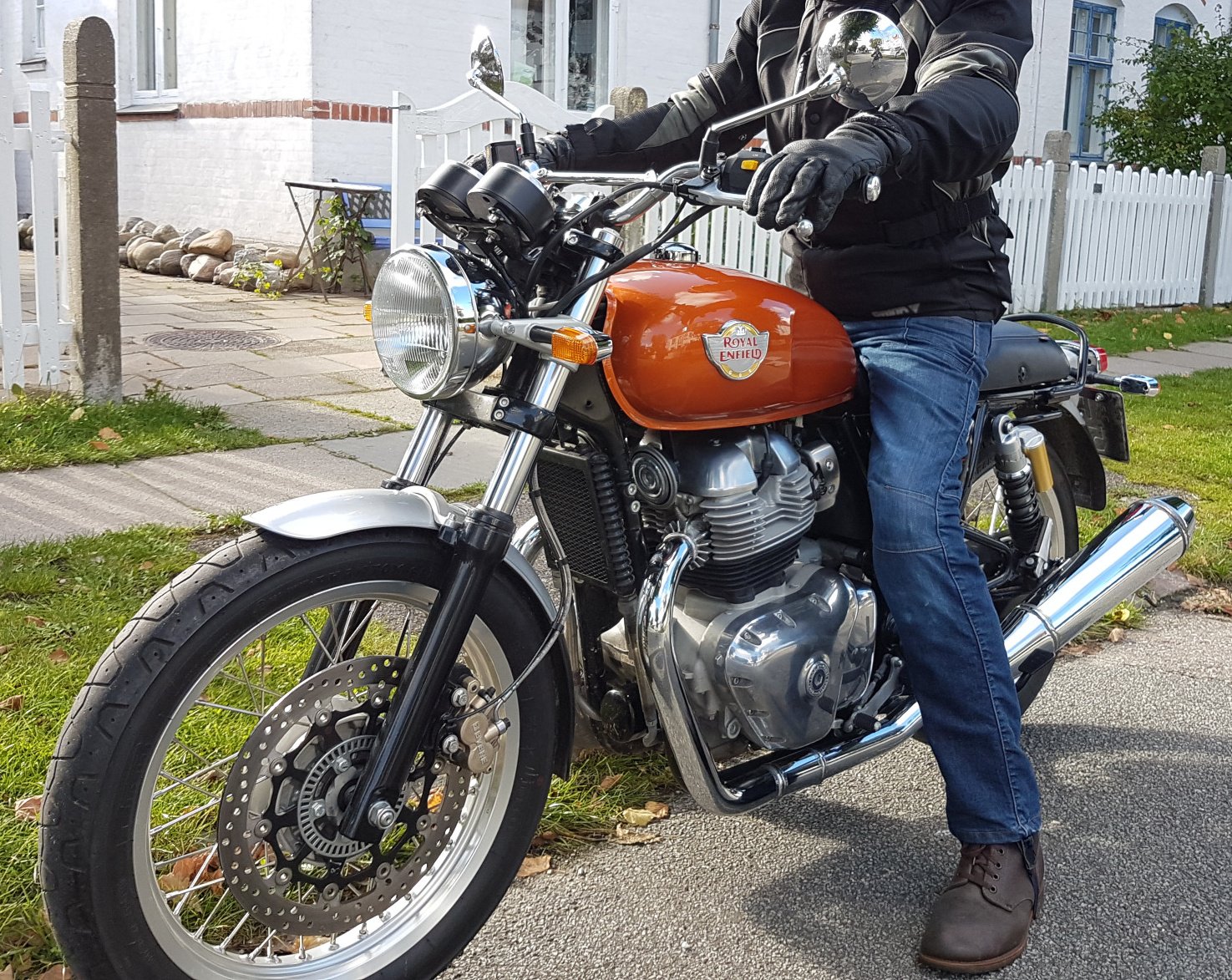
Taken with everything else, the move upmarket is real and sustained. The 648cc twin arrived in 2018 under the Interceptor 650 — sold as the INT 650 in the United States, because Honda owns the Interceptor name there — and the Continental GT 650, and the same engine now carries the Super Meteor 650, the Shotgun 650, the Classic 650 and the Bear 650 scrambler that landed in October 2024. In April this year the company launched the Flying Flea C6, its first production electric motorcycle. A 750-class twin would be the largest-displacement Royal Enfield of the modern era, though not the largest ever to wear the badge: the Redditch company's Series 1 Interceptor ran a 736cc parallel twin from 1962 to 1966.
The competitive maths explains why 55 hp is probably enough. A Yamaha Ténéré 700 makes around 74 hp from 689cc; a Honda XL750 Transalp makes 90 bhp at 9,500 rpm and 75 Nm. Royal Enfield is not going to beat either on output and does not appear to be trying. Indian outlets are estimating roughly ₹4.5–5 lakh ex-showroom, which would undercut both by a distance that makes the horsepower column largely academic. The company's entire modern record is built on selling competent, characterful hardware well below what the competition charges, and a torquey mid-size twin with cruise control and real luggage provision is exactly that bet applied to touring.
So: the motorcycle exists, it is undisguised, it is being filmed for advertising, and Royal Enfield has shown it to the public twice without telling anyone what is inside it. EICMA's halls open on 3 November, and the company's own Motoverse festival runs 27–29 November at Vagator in Goa, which is where an India launch would logically land. Between those two dates, every number in this article that currently carries the word “estimated” should become a real one. Until then, the honest version of the story is a confirmed bike with unconfirmed everything else — and that is still a more interesting position than most of what will be on the Milan stands.
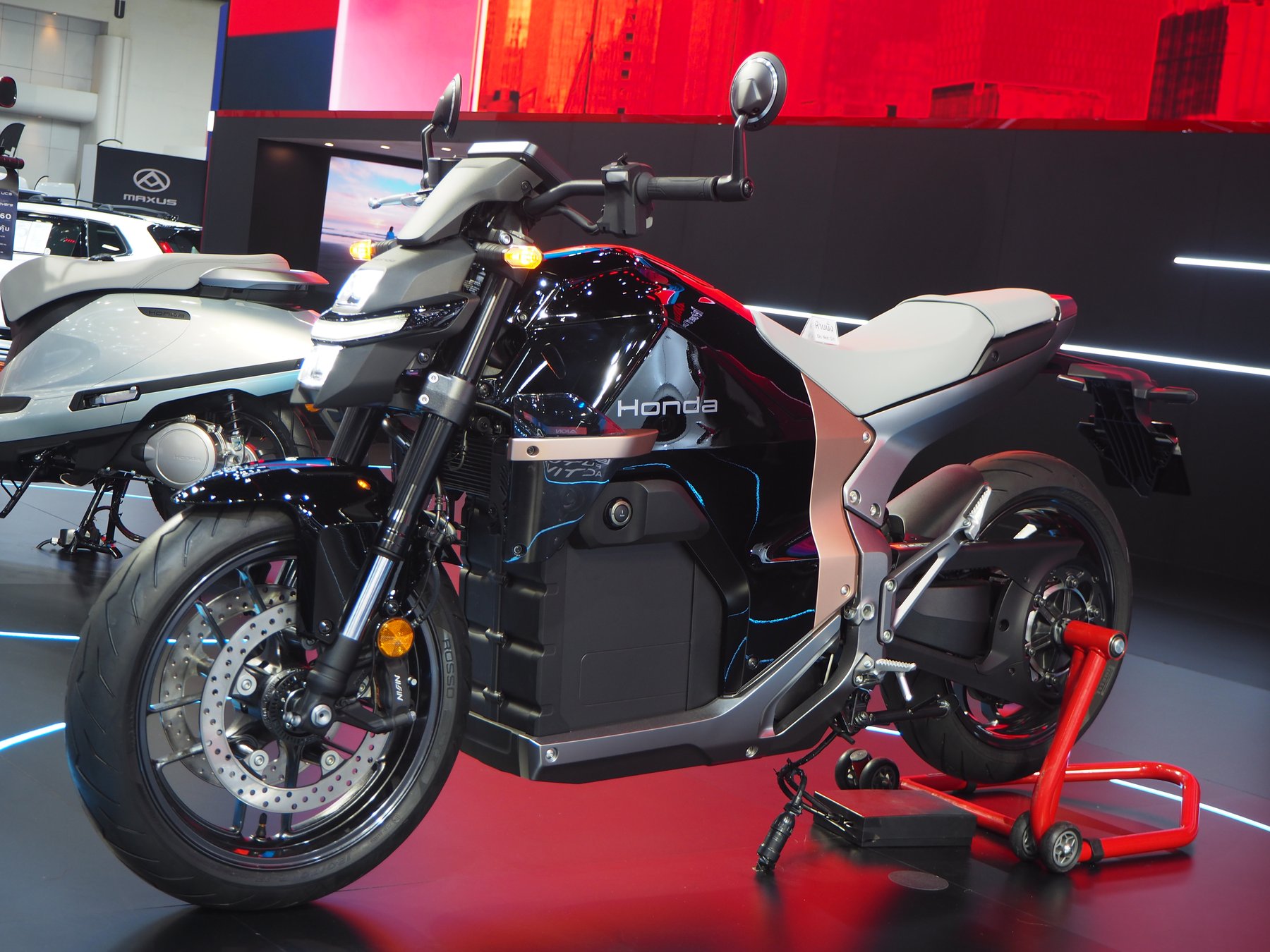
Honda's First Real Electric Motorcycle Carries 9.3 kWh. Here's What That Actually Buys You.
The WN7 is in European dealers now at £12,999, with a peak of 50 kW, a battery case that doubles as the frame, and a claimed 140 km. Honda built the bike well. The arithmetic is the hard part.
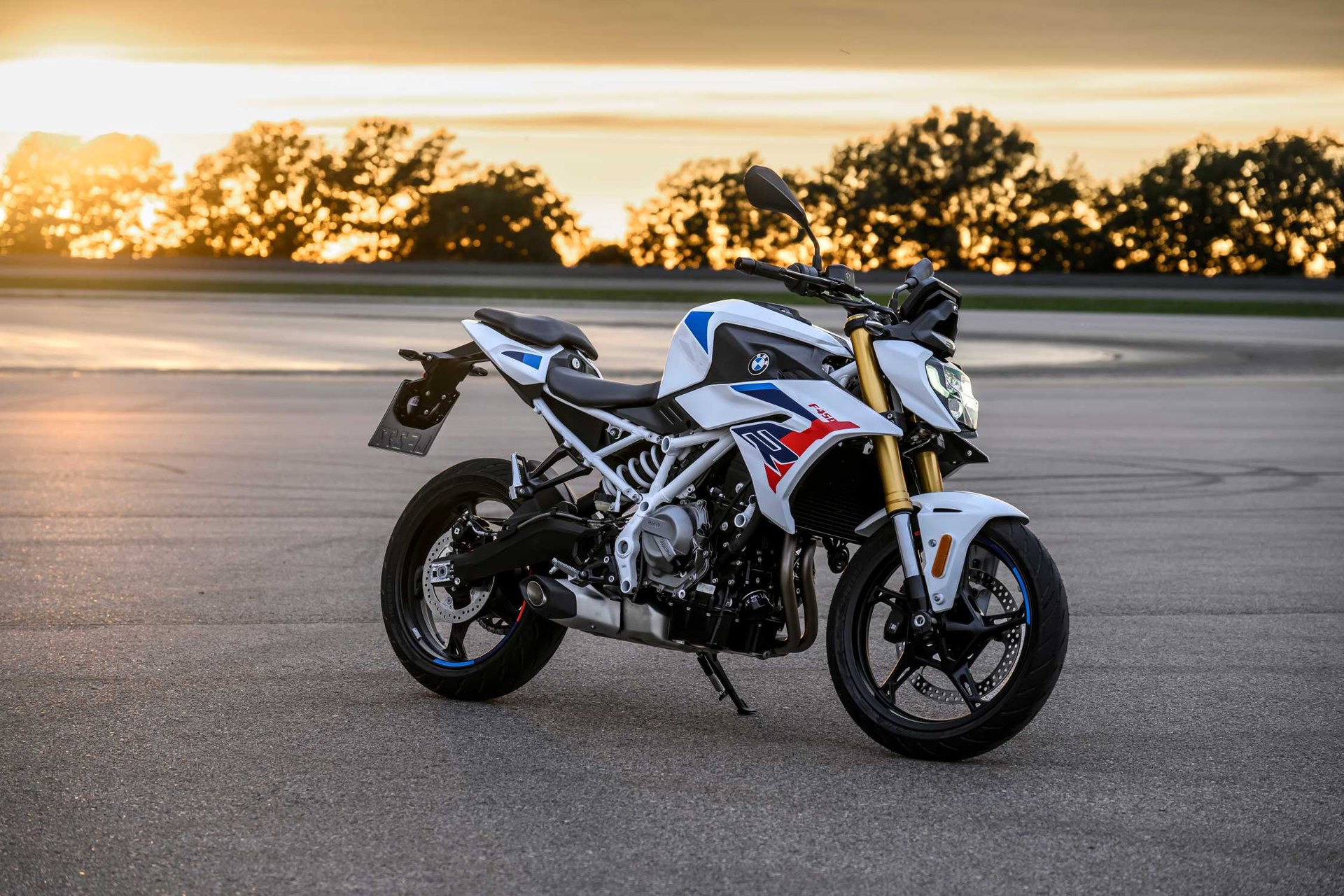
BMW Built the F 450 R Exactly to the A2 Ceiling
48 hp and 175 kg is not a coincidence. Europe's A2 licence caps power at 35 kW and power-to-weight at 0.2 kW/kg, which means a full-power A2 bike has to weigh at least 175 kg — and BMW's new naked twin lands on both numbers.
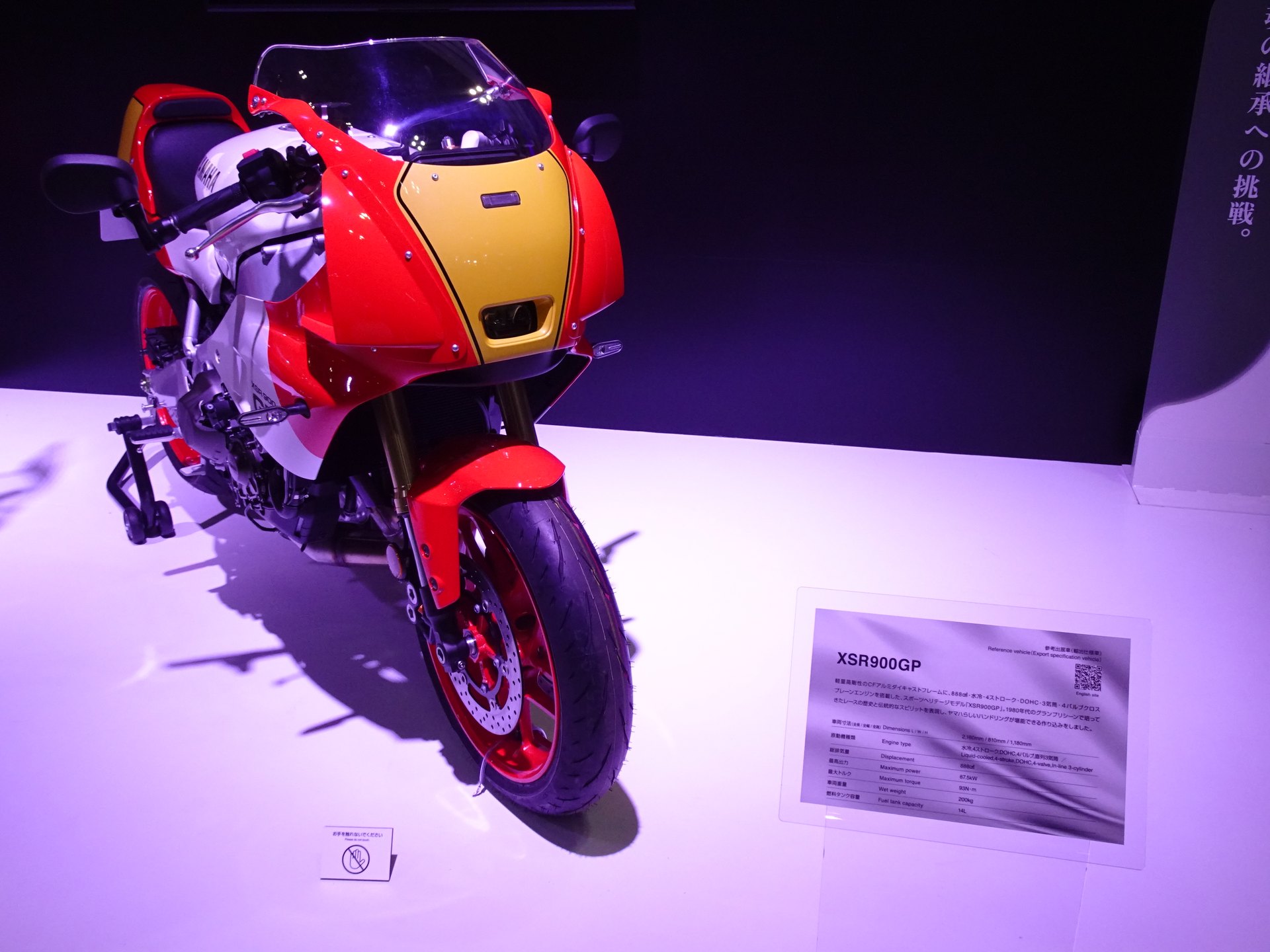
The XSR900 GP Is Finally Coming to America, and a Smog Filing Gave It Away
A California Air Resources Board executive order dated August 3 certifies Yamaha's half-faired, clip-on-barred 890cc triple as a 2027 model — two years after Europe got it and with no announcement from Yamaha yet.