
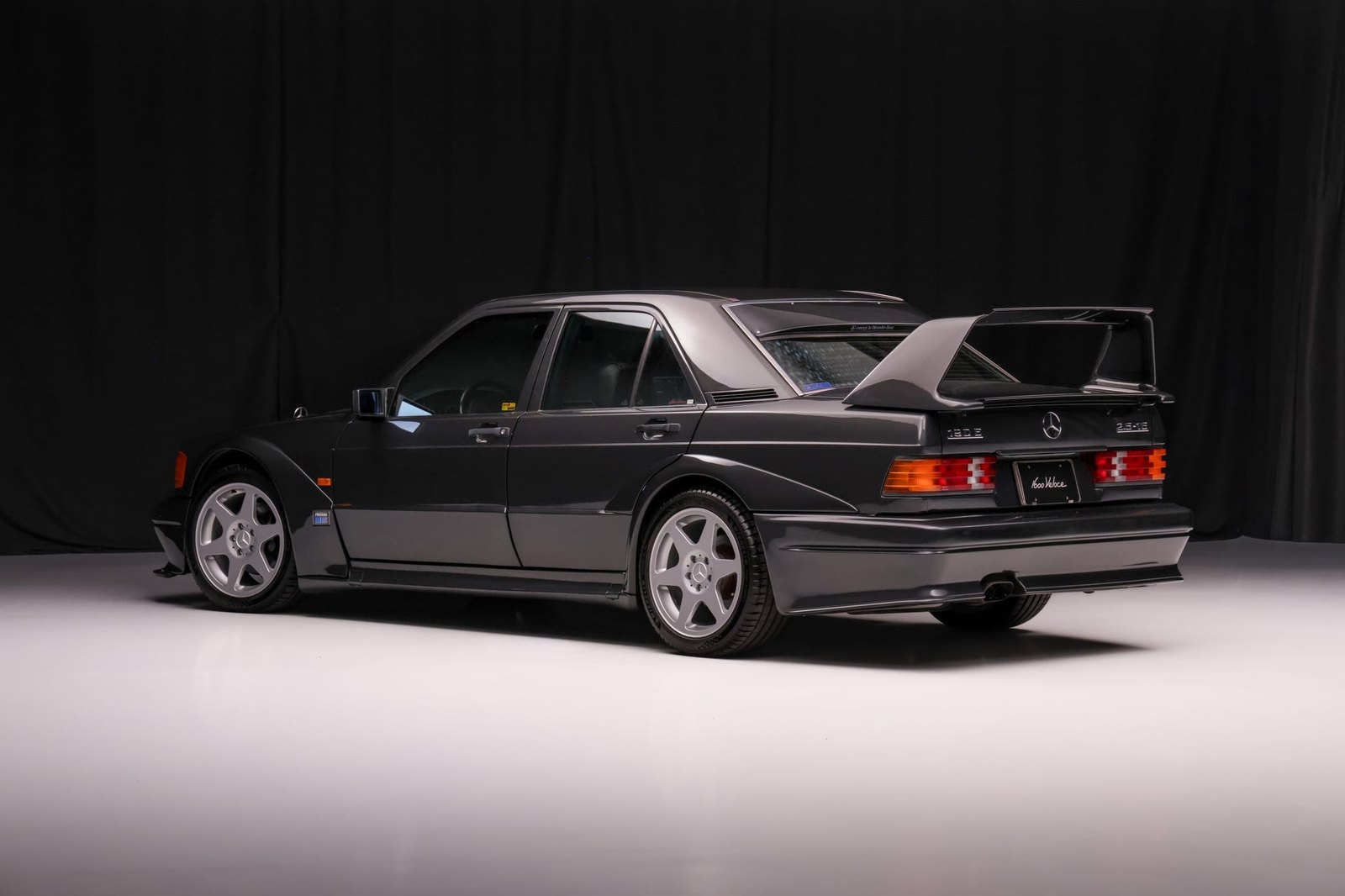
Market Find: A 190E Evolution II That Spent 36 Years in Japan — #448 of the 502 Mercedes Had to Build
Mercedes built exactly enough Evolution IIs to go touring car racing, and this one was delivered new in Japan and stayed there until it was exported this year. Bidding on Bring a Trailer sat at $201,000 with a week left to run.
There is a 1990 Mercedes-Benz 190E 2.5-16 Evolution II running on Bring a Trailer this week, chassis WDB2010361F742948, consigned by the dealer 1600Veloce through BaT's Local Partner program. The listing puts it at #448 of the 502 Evolution IIs built, shows roughly 49,000 kilometers — about 31,000 miles — and states that the car was imported to the United States this year after spending its entire life in Japan. As of Monday, August 10, bidding stood at $201,000, with the auction scheduled to close Monday, August 17.
The number 502 is the whole reason this car exists in the shape it does. Germany's DTM required a manufacturer to build 500 road-going examples before a body and engine package could be raced, and at the end of the 1980s Mercedes was on the wrong end of that arms race. BMW's E30 M3 had taken the 1989 drivers' title, and for 1990 Munich answered with the M3 Sport Evolution, 600 cars built between December 1989 and March 1990. Mercedes' reply was a second Evolution of the 190E, shown at the Geneva Motor Show in March 1990 and built in a single short burst that spring. It listed at DM 136,720, roughly €69,000 in today's currency terms, and the run was reportedly spoken for before the covers came off in Geneva.
What that money bought, above everything else, was aerodynamics. Mercedes handed the bodywork to Professor Richard Eppler at the University of Stuttgart, and what came back is the reason people still stop mid-sentence when one drives past: boxed fender flares, a front splitter, a rear window spoiler, and an adjustable rear wing tall enough to read as a prank. It was not one. Wind tunnel work put the finished car at a 0.29 drag coefficient against roughly 0.33 for a standard 190E, with downforce going up rather than down — a combination that is hard to achieve and harder to achieve while looking like this. BMW's R&D chief Wolfgang Reitzle is widely quoted from the unveiling saying the laws of aerodynamics must be different in Munich than in Stuttgart. The line has followed the car for 36 years, and it gets less funny the longer you look at the numbers.
Underneath is the Cosworth-developed 2.5-liter sixteen-valve four, given a larger bore and shorter stroke than the standard 2.5-16 unit, and fitted from the factory with the AMG PowerPack that had been a DM 18,000 option on the first Evolution: revised camshafts, throttle body, intake, engine management and exhaust. Rated output was 235 PS — 232 horsepower — at 7,200 rpm, with 245 Nm, or 181 lb-ft, at 5,000. Drive goes to the rear wheels through a dogleg Getrag five-speed and a limited-slip differential. None of that is a large number now, and it was not really the point then. The point was a homologated shell AMG could take racing.
The racing payoff took two seasons to arrive. Audi's Frank Biela won the 1991 DTM title in a V8 quattro, finishing ahead of Mercedes-mounted Klaus Ludwig and Hans-Joachim Stuck. In 1992 the AMG-Mercedes cars won 16 of the championship's 24 races, and Ludwig, carrying number 3, took the drivers' championship — his second DTM title, and the first for Mercedes-Benz.
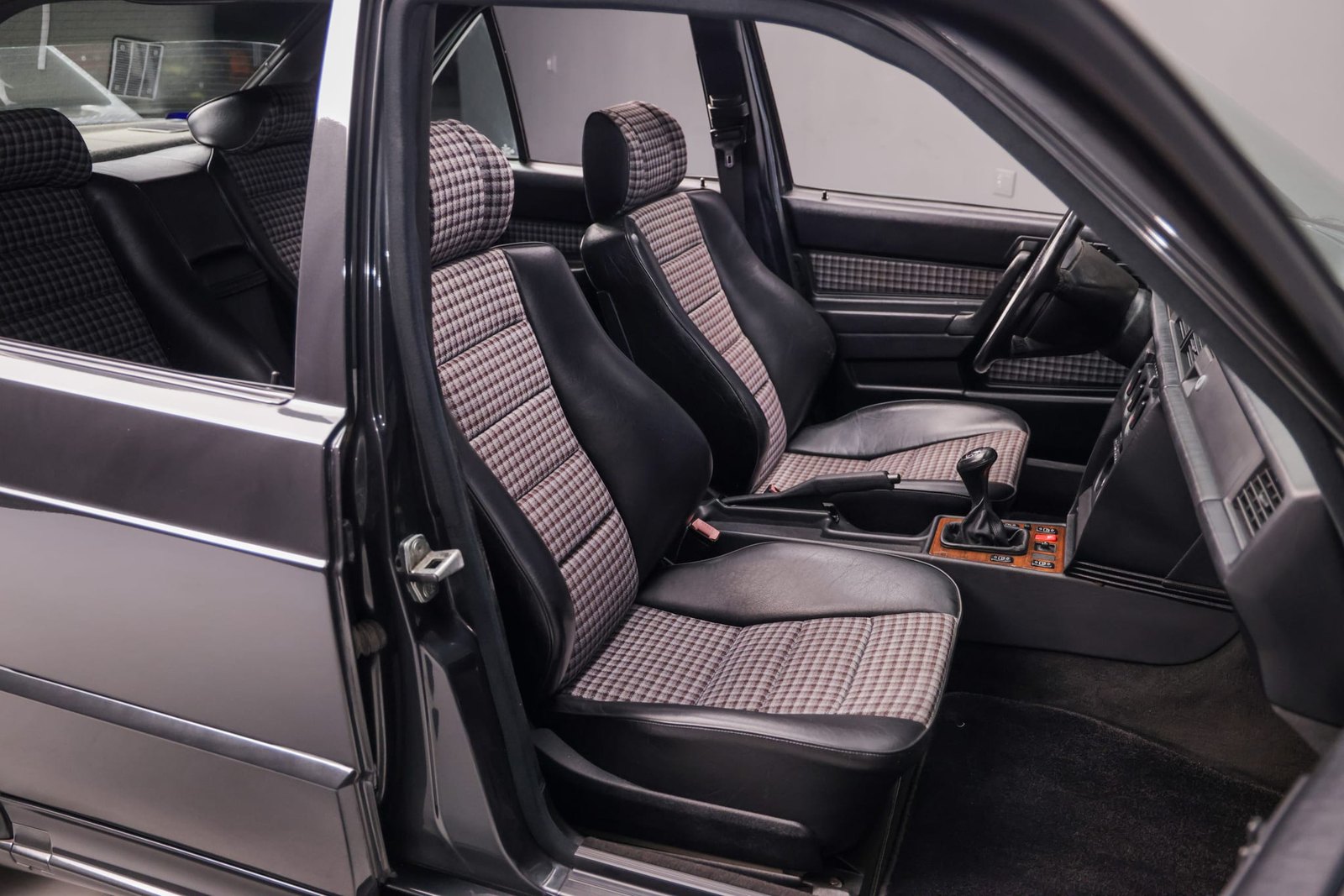
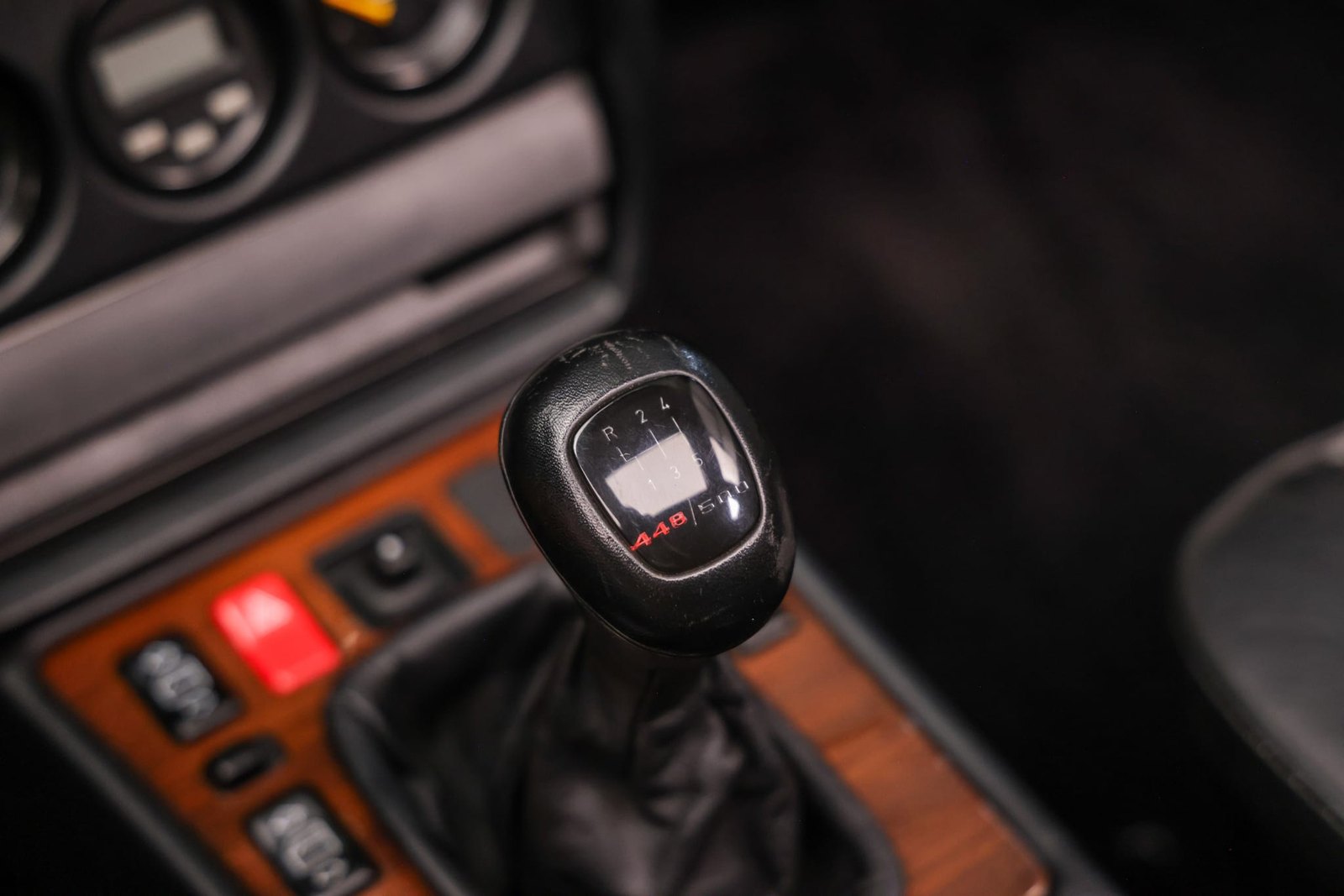
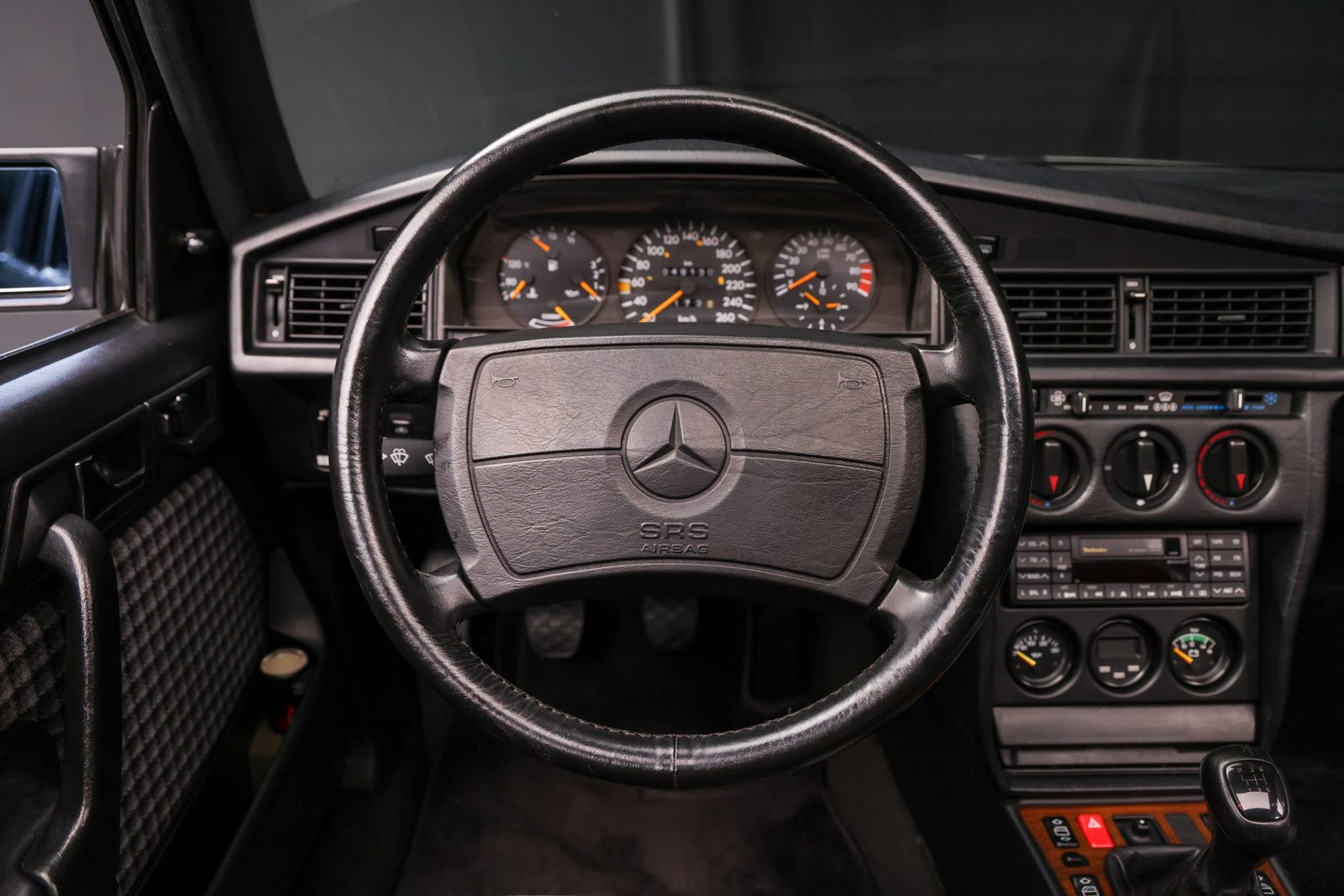
What makes this specific car worth a second look is where it has been. The seller states it was a Japanese-market delivery, sold new in Japan and kept there until this year's export, and there is a physical tell: the amber side-marker lights set into the front fenders just above the blue "evolution II" badge, which the seller describes as a Japanese-mandated item fitted from new rather than a later addition. The Evolution II was built only in left-hand drive, and this one is, with the 260-km/h speedometer and the auxiliary oil-temperature and voltage gauges low in the center stack. The shift knob carries a small plaque reading 448 over 500 — the 500-car homologation batch — while total production is recorded at 502, the last two finished in Astral Silver rather than the Blue Black Metallic that every other Evolution II wore.
The listing is also straightforward about what is not factory, which matters more on a car like this than on almost anything else. The Evolution II left Stuttgart with Mercedes' SLS hydropneumatic self-leveling suspension, adjustable for ride height from inside the cabin. This one now runs Yellow Speed Racing coilovers, with the SLS system looped out of the circuit. Asked directly in the comments whether the original springs and dampers come with the car, the seller said they do not. The seller also says the coilovers are the only modification, that the 17-inch wheels are the original Mercedes items, that the data card shows the drivetrain matches, and that paint-meter readings indicate blends on a few panels with no damage found on inspection. History is dealer records and stamped service books from Japan — more than a lot of freshly landed imports carry, and less than a car in this price bracket ideally arrives with.
Which leaves the money as the open question. Evolution IIs trade across a wide band: RM Sotheby's sold #168 of 502, showing under 39,350 kilometers, for $329,500 at Monterey in August 2024, while CLASSIC.COM's tracked results put the model's high-water mark at $544,000, set at RM Sotheby's Las Vegas sale in November 2023. Against that, $201,000 with a week still to run reads less like a verdict than an opening position. The two things most likely to move it are the same two the comment section keeps circling: how much credit buyers give a car that sat in one market for 36 years with paperwork to show for it, and how much they take back for a self-leveling system that is no longer leveling anything.
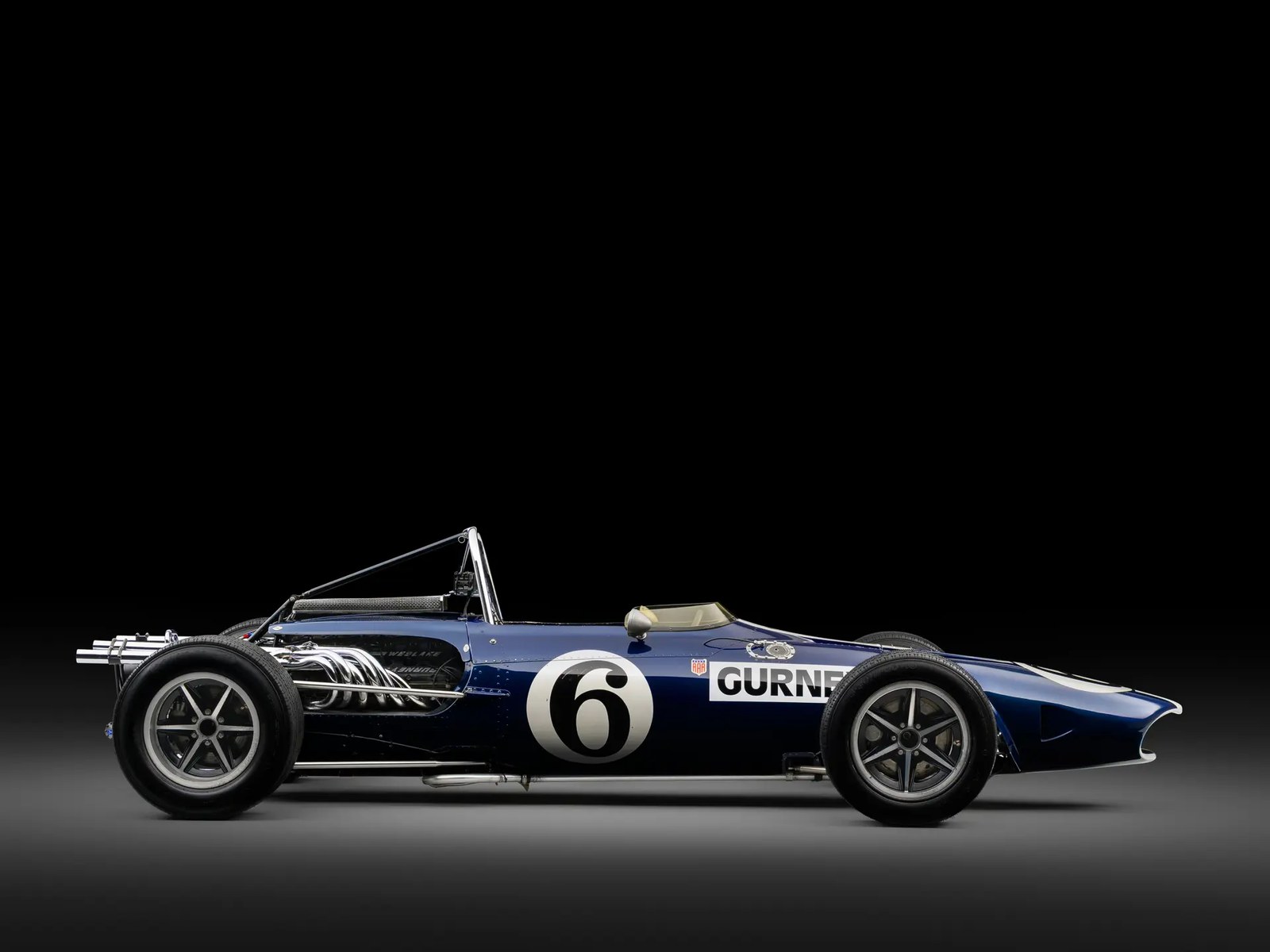
Market Find: An AAR Eagle Mk I With a Gurney-Weslake V-12 — Chassis 103, and the Race It Didn't Win
RM Sotheby's has the third of four Eagle Formula 1 cars in its Sealed September sale at a $7–9 million estimate. It is not the car that won at Spa. Understanding why that matters is most of the story.
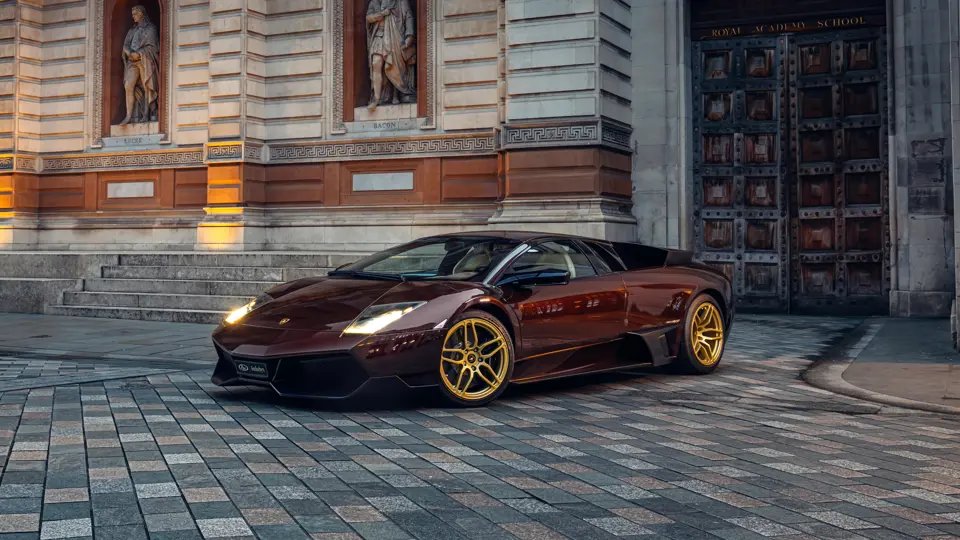
Market Find: The Last Manual V12 Lamborghini Heads to Sealed Bidding
A one-off, gated-manual Murciélago LP 670-4 SV finished in a color no other example wears is up for sealed bidding at RM Sotheby's, with the closest thing to a factory guarantee that no more like it are coming.
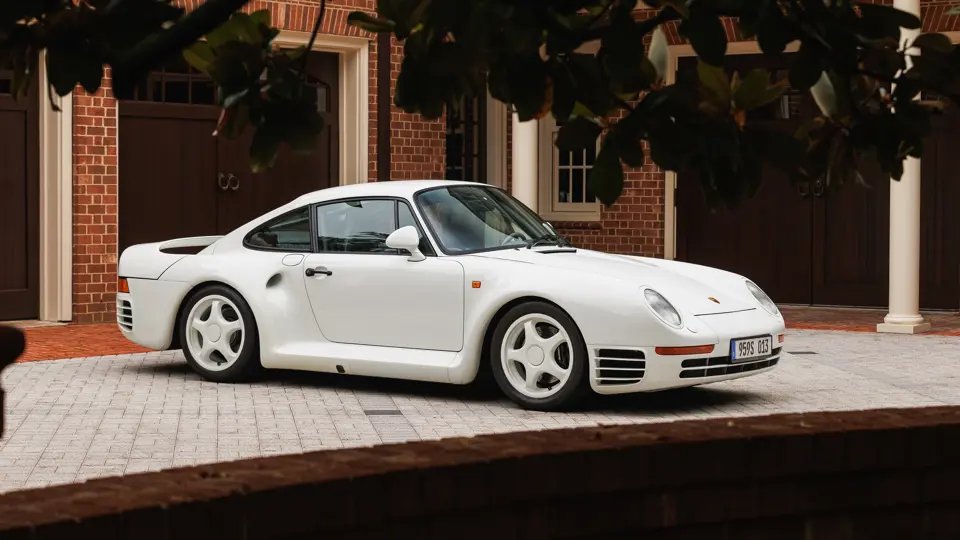
Market Find: Nick Heidfeld's Ultra-Rare Porsche 959 Sport Heads to Monterey
One of just 29 959 Sport examples built, and one of only two finished with factory air conditioning, this Grand Prix White coupe carries a $5 million to $6 million estimate at RM Sotheby's Monterey sale.