
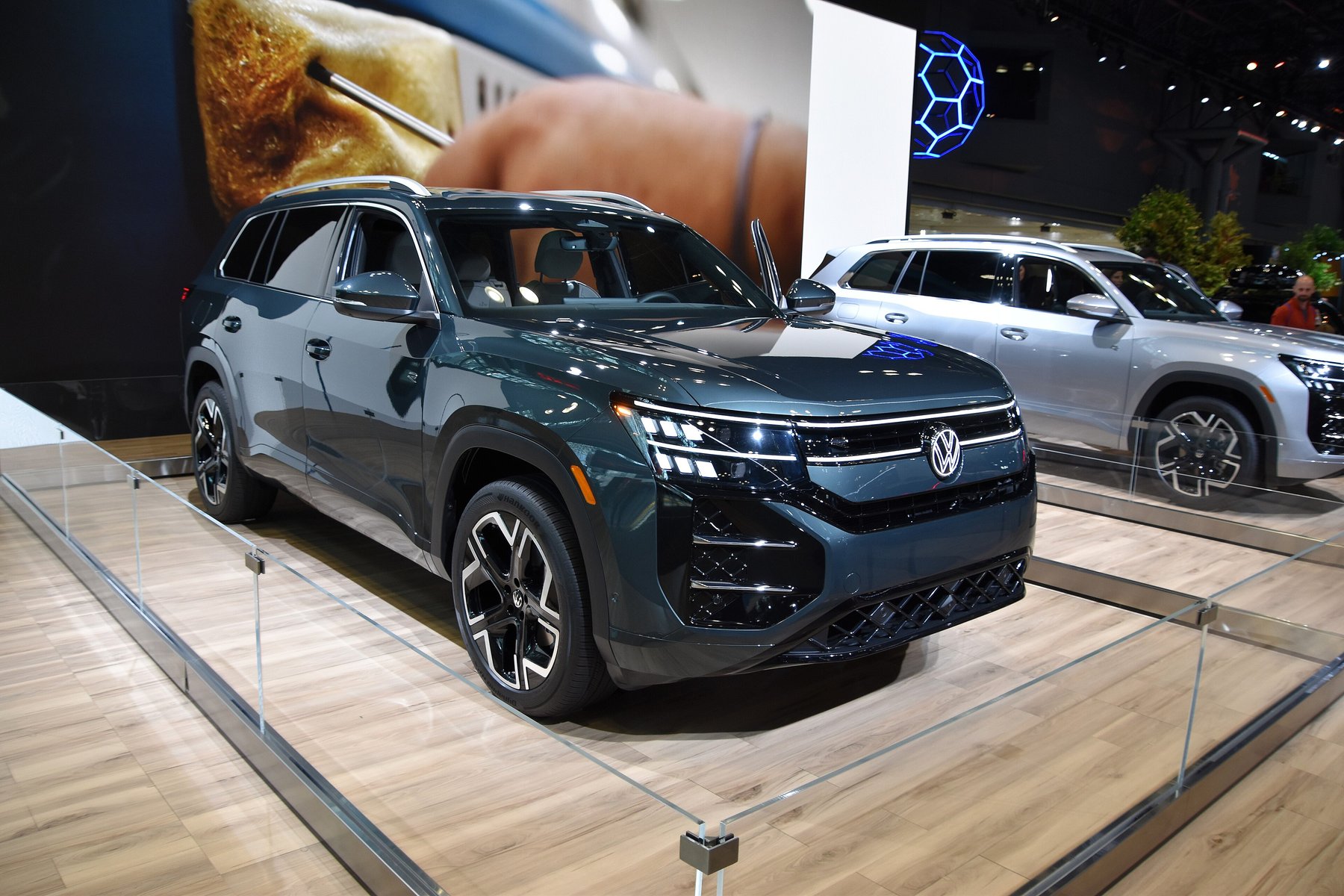
The 2027 VW Atlas Lands This Month With 13 More Horsepower — and 15 lb-ft Less Torque
Volkswagen's second-generation three-row is better equipped, better looking and up to $2,350 dearer before you tick a single box. The headline power figure is real; the number underneath it went the other way.
- Engine
- 2.0L EA888 evo5 turbo I4
- Output
- 282 hp / 258 lb-ft
- Drivetrain
- 8-speed automatic, FWD or 4Motion AWD
- EPA FWD
- 22/29/25 mpg
- EPA 4Motion
- 20/27/23 mpg
- Max towing
- 5,000 lb (factory hitch)
- Seats
- 7 (6 with captain's chairs)
- Base price
- $43,135 incl. $1,525 destination
- Top trim
- $58,135 incl. destination
The second-generation Volkswagen Atlas reaches American dealerships this month, and it is a genuine redesign rather than a nose job: new sheet metal front to back, a completely reworked cabin, a four-trim lineup that replaces the old five, and a revised 2.0-liter engine that Volkswagen is calling the most powerful ever fitted to an Atlas. Assembly started this past summer at the Chattanooga plant, and VW's own release from late September said the car would be in showrooms “next month.” Pricing, announced on July 20, opens at $41,610 for a front-drive SE and $43,610 with 4Motion all-wheel drive, with destination for every model set at $1,525 — $43,135 out the door at the bottom of the range.
"The all-new 2027 Atlas brings more of what matters: a stronger design, smarter technology, increased power, and a premium feel where it matters most." — Kjell Gruner, president and CEO, Volkswagen of America
The engine is where the story gets more interesting than the press kit suggests. The new EA888 evo5 2.0-liter turbo four makes 282 horsepower and 258 lb-ft of torque. The outgoing evo4 version of the same engine, per Volkswagen's own 2026 Atlas release, made 269 horsepower and 273 lb-ft. So the second-generation Atlas gains 13 horsepower and gives back 15 lb-ft. VW is loud about the first number and silent about the second, which is a slightly odd way to market a 5,000-pound-rated family hauler where mid-range pull is what you actually feel loading three rows and a trailer onto a highway on-ramp. The towing figure itself is unchanged at 5,000 pounds with the factory-installed hitch, and VW says payload carries over too, so nothing has been given up on paper — but the shape of the torque curve, and whether the eight-speed automatic masks the deficit, is a question nobody can answer until the first drive reviews land.
The money has moved too. Walk the 2027 range with destination included and it reads $43,135 for the SE in front-drive and $45,135 with 4Motion; $47,135 and $49,135 for the SE w/Technology; $53,635 for the SEL R-Line and $58,135 for the SEL Premium R-Line, the top two trims being all-wheel drive only. Against the 2026 car — $39,310 for an SE FWD and $41,210 for an SE 4Motion, on a $1,475 destination charge — that is $2,300 more in sticker and $2,350 more at the bottom line, because the destination fee went up $50 as well. The AWD SE is up $2,400 before freight. These are not catastrophic increases for a full generational change, but they do push the Atlas's entry point past a number that used to start with a three.
Some of that is paid back in standard kit, and the SE in particular is a much better-equipped car than it was. Real wood décor and 10-color ambient lighting are now standard on every trim. So are a power liftgate, rear sunshades, front and rear Park Distance Control, three-zone Climatronic climate control, heated and ventilated front seats, a heated steering wheel, a 10.25-inch Digital Cockpit Pro cluster, a 12.9-inch center screen, seven USB-C ports and a console that charges two phones side by side on Qi2 15W pads. A seventh airbag, mounted between the front occupants, is new. The compression of the lineup is the less flattering half of that trade: the 2026 car offered SE, SE w/Technology, Peak Edition, SEL and SEL Premium R-Line, while 2027 offers SE, SE w/Technology, SEL R-Line and SEL Premium R-Line. The Peak Edition and the plain SEL are gone, and R-Line styling is no longer a choice on the top two trims — it is the only way to buy them.
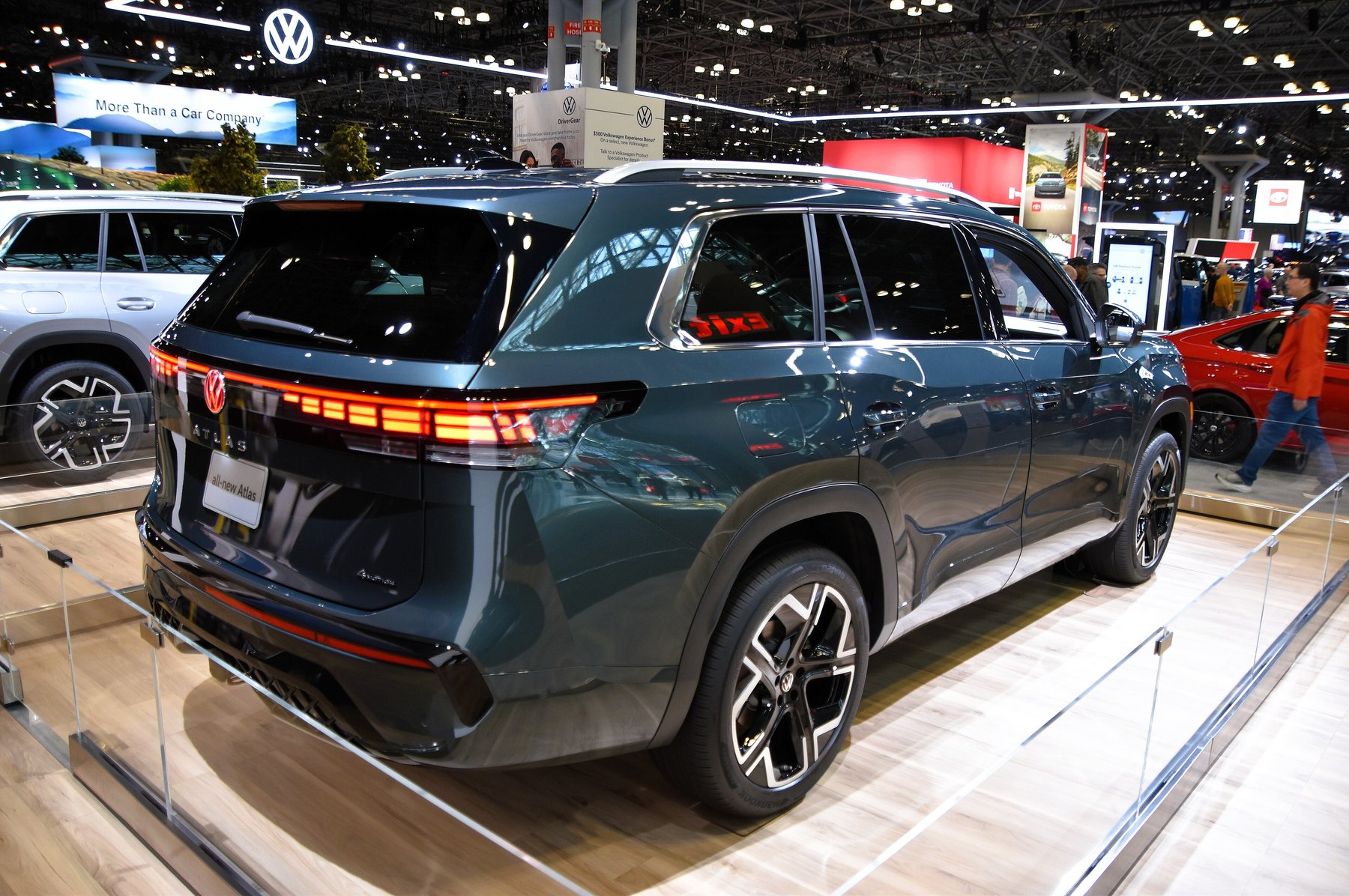
Underneath, the changes are more modest than “all-new” implies. Volkswagen describes the platform as an upgraded MQB evo architecture, and the dimensional brief is deliberately conservative: the car is about an inch longer than the 200.7-inch outgoing Atlas, with width, height and wheelbase all carried over, specifically so the third row and cargo bay don't shrink. Cars.com, in its write-up of the unveiling, characterized it as a heavily modified version of the existing Atlas platform with some suspension hardware carrying over. That is not a criticism so much as a description of what a mainstream three-row redesign looks like in 2026 — the money went into sheet metal, electronics and the interior. The gear selector has moved to the steering column to free up the console, a new Driver Experience Dial handles volume, drive modes and VW's lighting-and-audio “Atmospheres” presets, and everything above the base SE gets a 15-inch infotainment screen.
The efficiency claim holds up, but it is worth reading the fine print. EPA figures published on fueleconomy.gov put the 2027 Atlas at 22/29/25 mpg city/highway/combined in front-drive and 20/27/23 with 4Motion. The 2026 car managed 20/27/23 in front-drive and, with all-wheel drive, 20/26/22 on the SE and SE w/Technology and 19/25/21 on the heavier, 21-inch-wheeled Peak Edition, SEL and SEL Premium R-Line. Front-drive buyers therefore pick up a clean two mpg across the board. All-wheel-drive buyers — which is most of the Atlas's reason for existing in the snow belt — gain one highway and one combined mpg over the equivalent 2026 SE, and two over the old top trims. Real, but thin.
There is still no electrified Atlas, and there won't be for a while. Volkswagen's reveal release states plainly that a hybrid variant is planned to arrive with the midcycle refresh, which in practice means a three-row family SUV launching at the end of 2026 with a single gasoline four-cylinder and nothing else on the menu. For a segment where hybrid take rates have become the competitive battleground, launching a clean-sheet generation without one and then waiting for the facelift is a choice that will either look patient or look late, depending on how the next three years go.
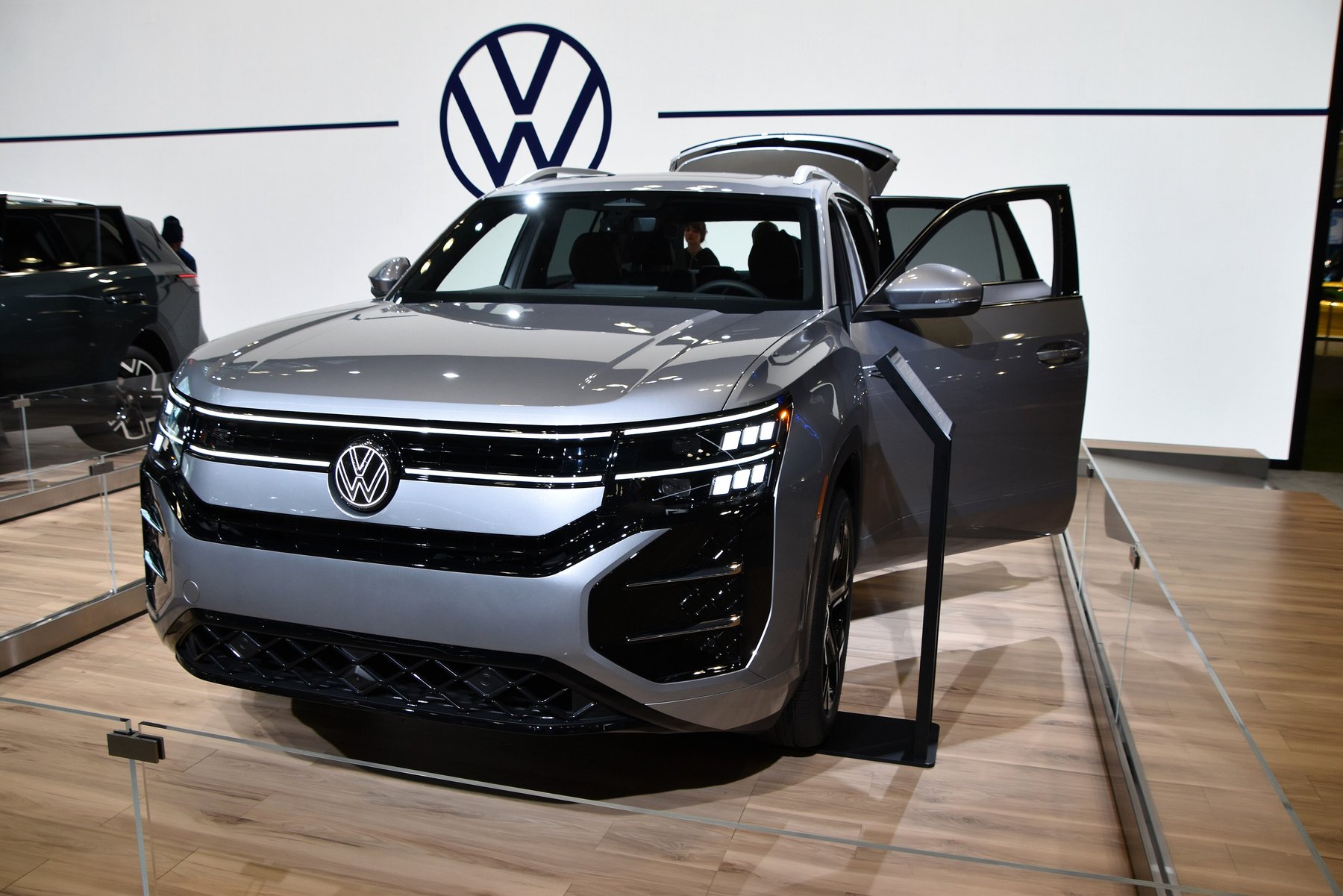
The stakes behind all this are larger than one model line. Volkswagen's own figures put the Atlas and the five-seat Atlas Cross Sport at roughly 30% of the brand's U.S. sales in 2025. Chattanooga has built more than a million of them since the first Atlas rolled off the line in December 2016, an arrival that prompted a $900 million expansion of the plant and now supports around 4,000 employees. “Starting assembly of the all-new 2027 Atlas is an exciting milestone for our Chattanooga team,” said Henning Habicht, head of Volkswagen Chattanooga Operations, at a start-of-production event in September. The complicating detail, reported by Automotive News and picked up by Autoblog, is that company insiders expect the redesigned car to earn roughly $5,000 per vehicle against about $10,000 for its predecessor, largely because of the higher-grade components that make the new interior feel the way it does. That lands at an awkward moment: the VW Group cut its 2026 profit outlook to no more than 1%, down from a prior range of 4% to 5.5%.
One last thing worth flagging, because it is circulating widely: at least one widely-shared launch-calendar roundup lists October 16 as the first dealer-delivery date for the 2027 Atlas. That date does not appear in any Volkswagen press release we could find — VW has said only “this fall” and then “next month,” and Autoblog's reporting puts deliveries in October without naming a day. Treat the 16th as a dealer-schedule rumor until a VW communication says otherwise. What is solid: the three-row Atlas comes first, and buyers waiting on the lower-roofed five-seat Cross Sport have been told to expect it in the first quarter of 2027.
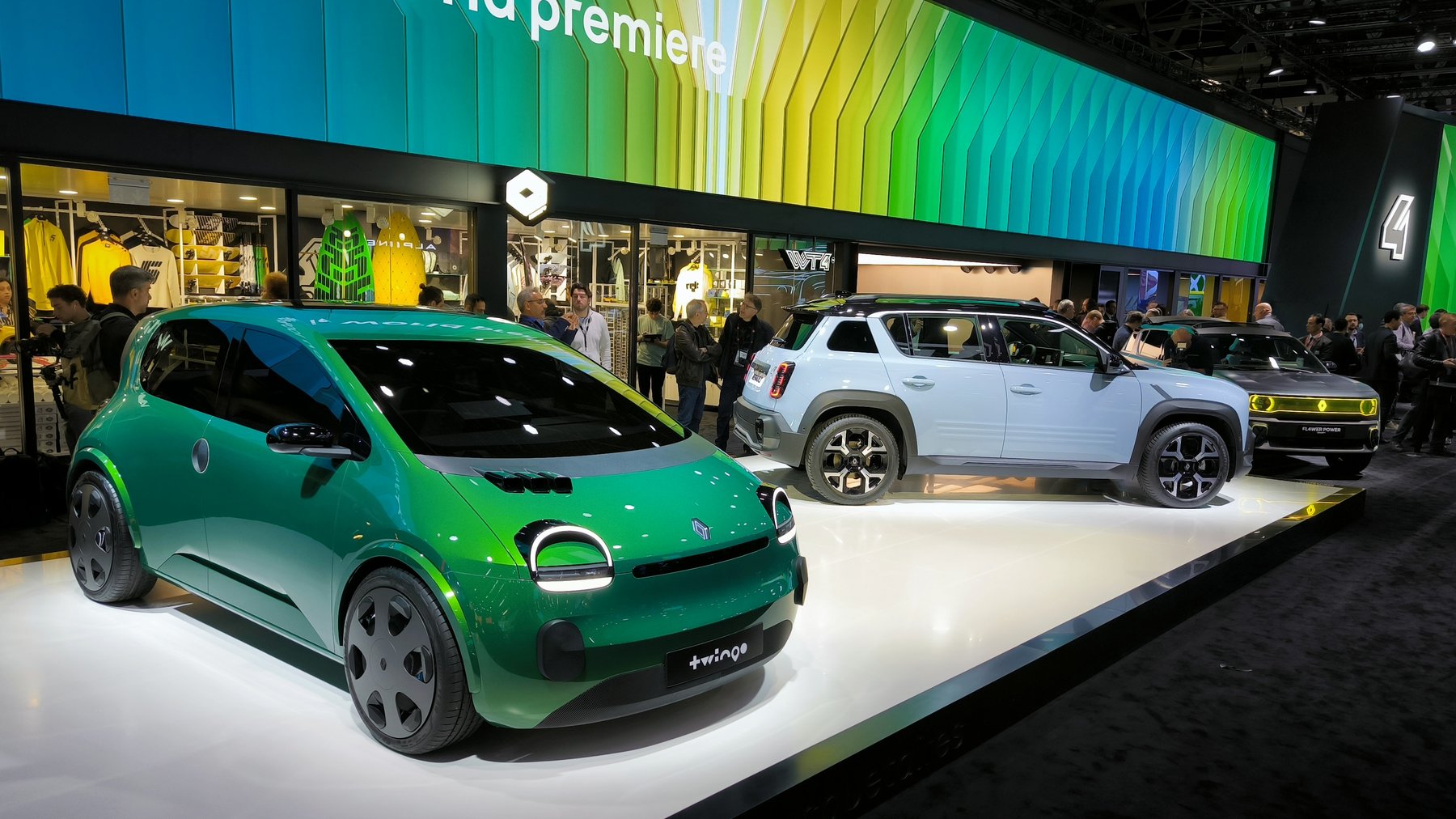
Paris Reopens With 60-Plus Brands, a Third of Them Chinese
The 91st Mondial de l'Auto runs 12–18 October at Porte de Versailles. The headline car is a €15,000 electric 2CV concept, the biggest contingent is Chinese, and BMW isn't coming.
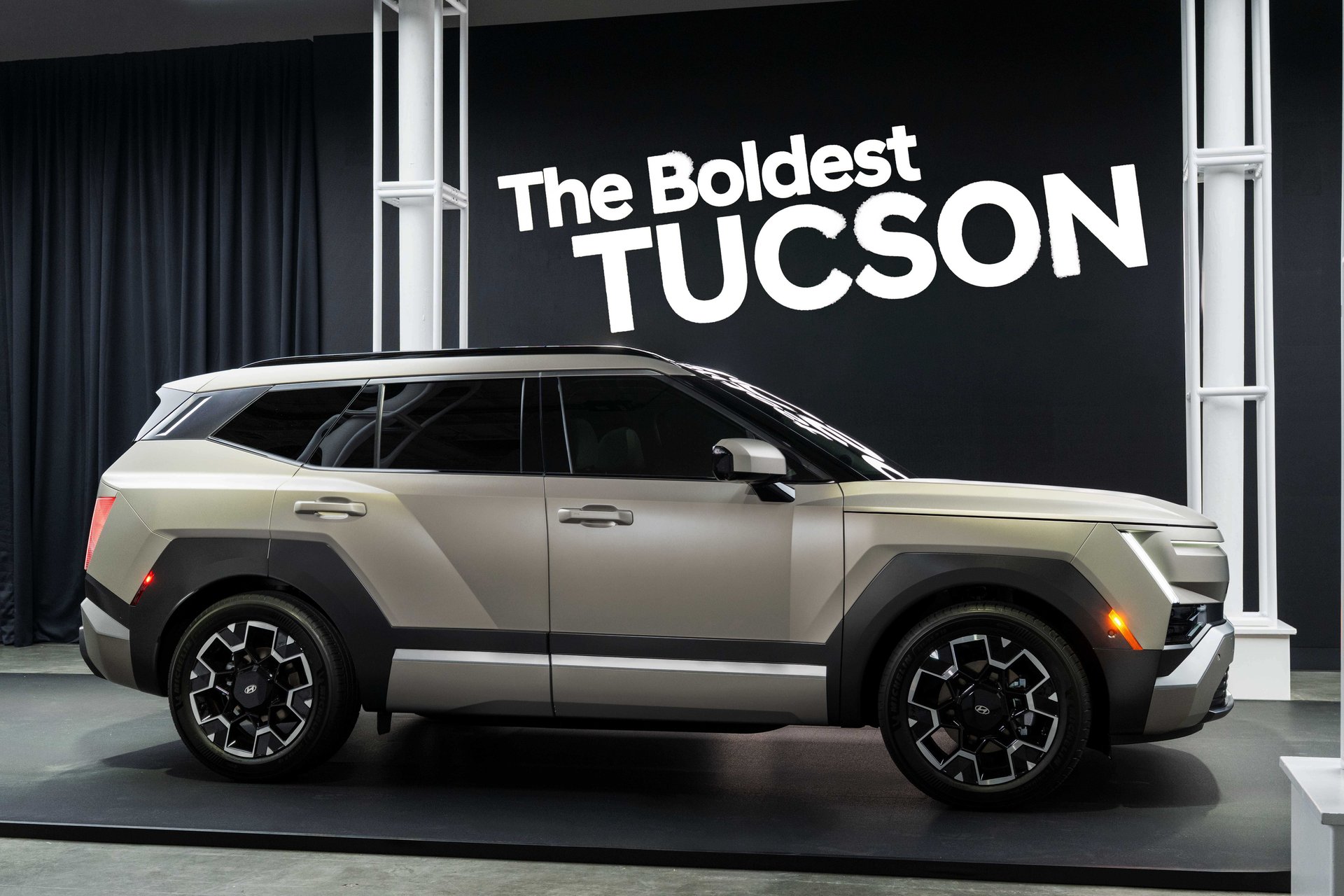
Hyundai Made the Tucson Square
The all-new Tucson arrived in New York under a design language Hyundai calls "Art of Steel": bigger in every direction, boxy, and with an XRT PRO that gets 210 mm of ground clearance and recovery hooks.
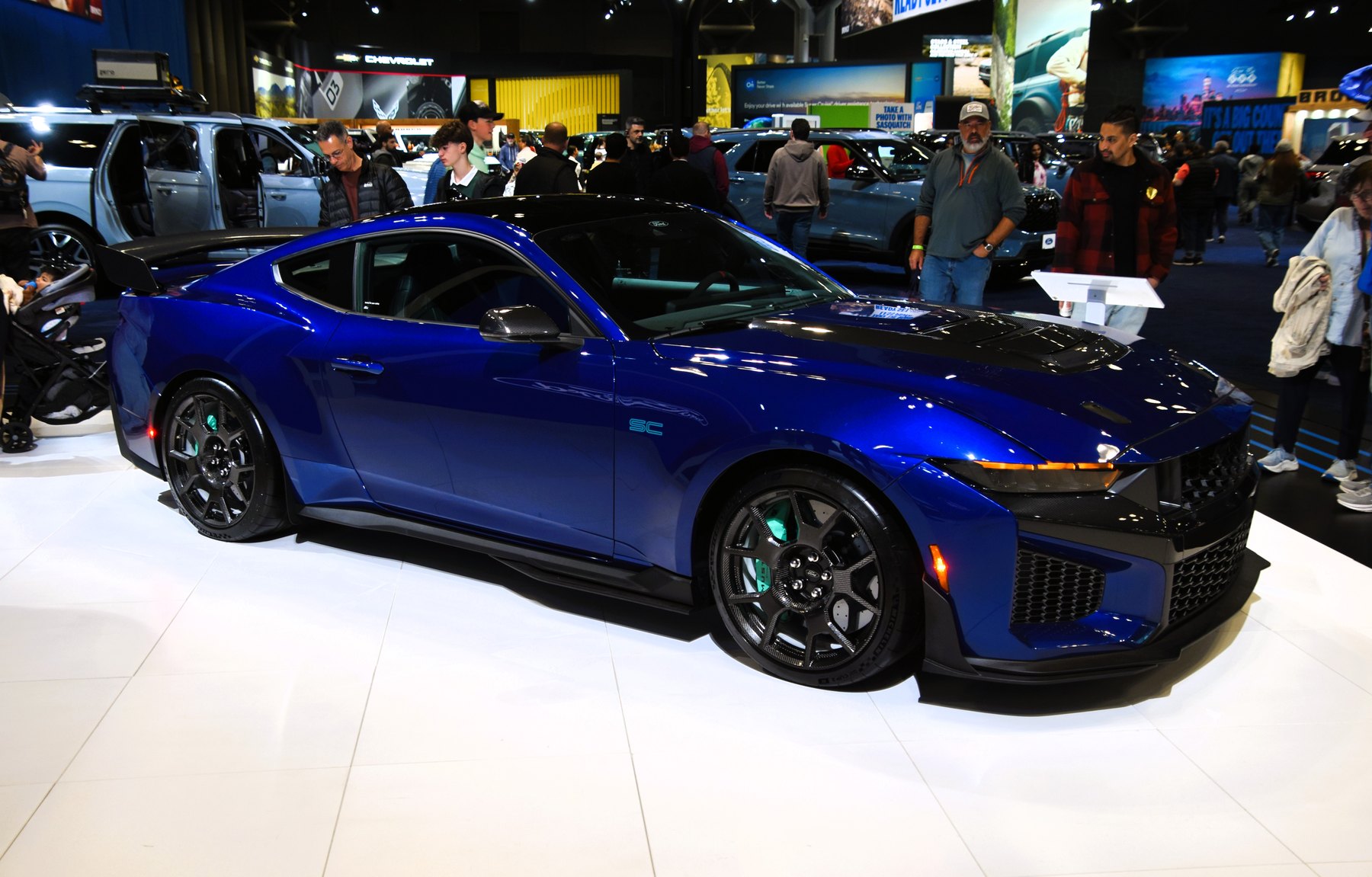
795 Horsepower, No Shelby Badge, No Manual — and the Only Thing Reviewers Could Agree to Hate Is the Center Console
The Dark Horse SC makes 35 more horsepower than the GT500 it replaces and costs a third of what a GTD does. Then you put your elbow down and touch the plastic.