
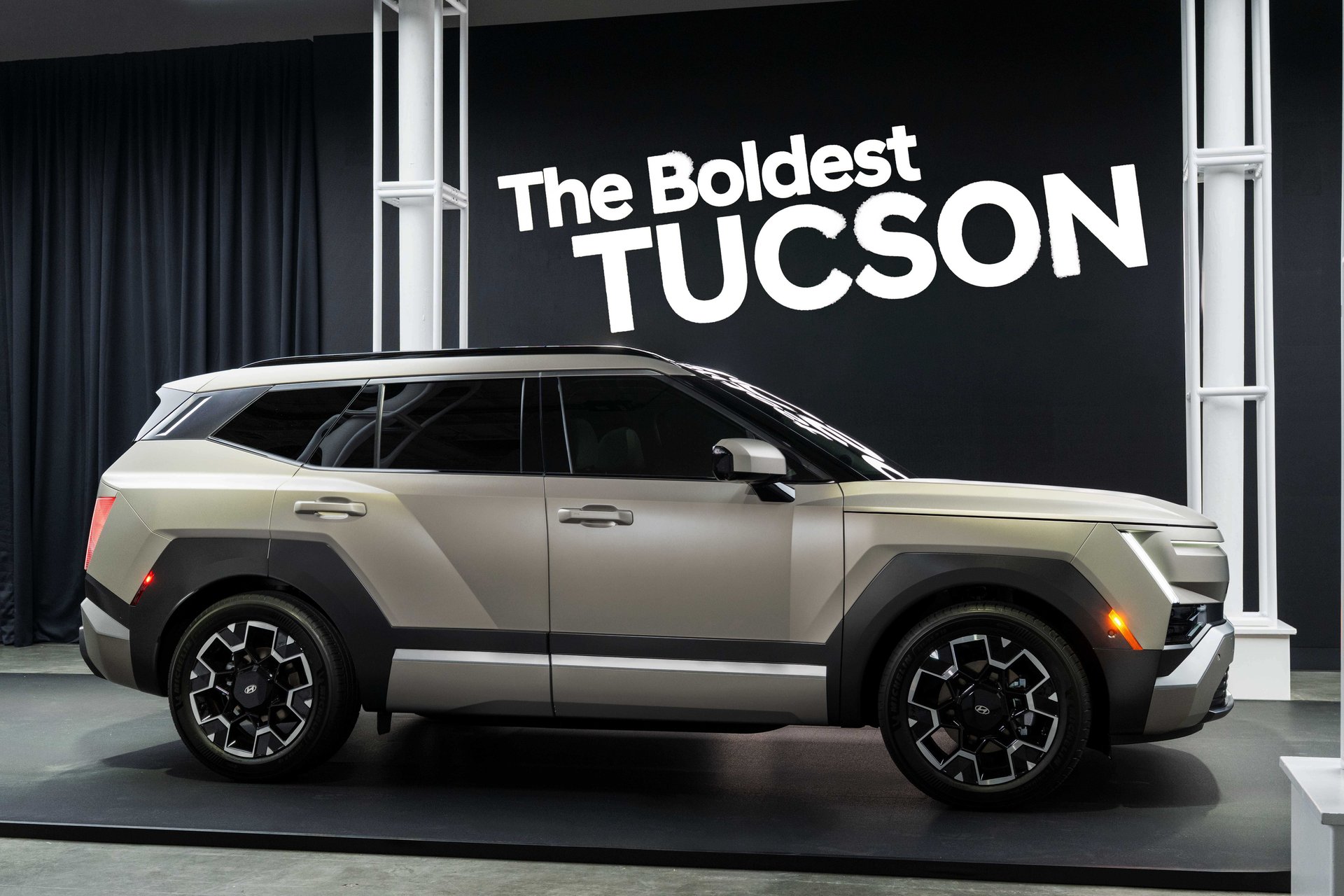
Hyundai Made the Tucson Square
The all-new Tucson arrived in New York under a design language Hyundai calls "Art of Steel": bigger in every direction, boxy, and with an XRT PRO that gets 210 mm of ground clearance and recovery hooks.
Hyundai revealed the all-new Tucson on 1 October, outdoors in New York with the Manhattan skyline behind it, and the headline is visible from across the room: the curves are gone. The outgoing car was all creased, swooping surfacing. This one is upright, slab-sided and square-shouldered, and Hyundai has a name for it — "Art of Steel," a design language built around pronounced, muscular fenders set against deliberately restrained door surfaces.
It is also bigger in every direction. The long-wheelbase car measures 4,700 mm long (up 60 mm), 1,905 mm wide (up 40 mm) and 1,685 mm tall (up 20 mm, or 1,700 mm with the roof rack), on a 2,785 mm wheelbase that has grown 30 mm. Front overhang is 915 mm, rear overhang 1,000 mm, and the largest tyre fitment is a 235/50R20 inside wheels offered from 17 to 20 inches. Ground clearance is 180 mm as standard.
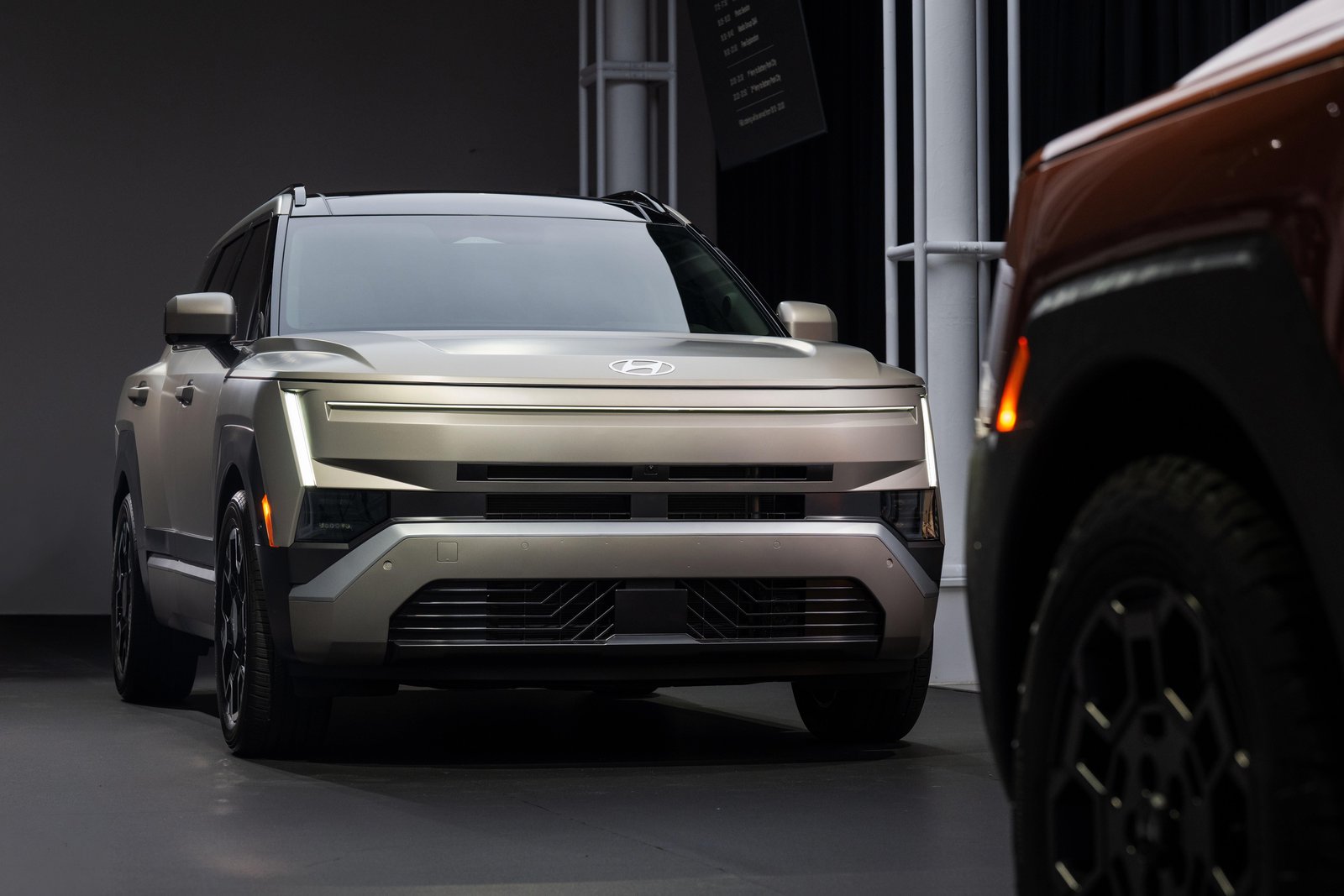
The lighting is doing a lot of the design work. Hyundai calls the front signature H-Edge lighting, combining indirect centre lighting with edge lighting to make the car read wider, and the rear units Prism Rear Lamps. Available on the short-wheelbase car is Micro Pixel Lighting, which uses 25,600 individual LED pixels to do precision beam patterns, rain guidance and welcome animations. Standard headlamps are a two-in-one LED module; LED taillamps are standard across the range.
Powertrains split three ways. The combustion cars use a 1.6 T-GDI or a 2.0 MPI, quoted at 150 to 193 ps in Korean spec and 184 hp in US spec, with 19.6 to 27.0 kgf·m (141.8 to 195.3 lb-ft) of torque and an eight-speed automatic behind the 1.6T. The hybrid pairs a 13 kW P1 motor with a 47.7 kW P2 unit for 236 to 245 ps in Korea or 233 hp in the US, 279.9 lb-ft, a targeted 42 mpg and a claimed 0-60 mph in 8.5 seconds. The plug-in hybrid runs a 1.6-litre turbo with a 13 kW P1 and a 79 kW P2 motor for 292 ps and 38.7 kgf·m, an estimated 81 km of electric range, and a 7.2 kW onboard charger.
North American hybrid buyers get a towing figure worth noting: up to 3,000 pounds, a 1,000-pound increase over the previous car. European ratings climb too, by up to 350 kg on the combustion model, 260 kg on the hybrid and 450 kg on the plug-in.
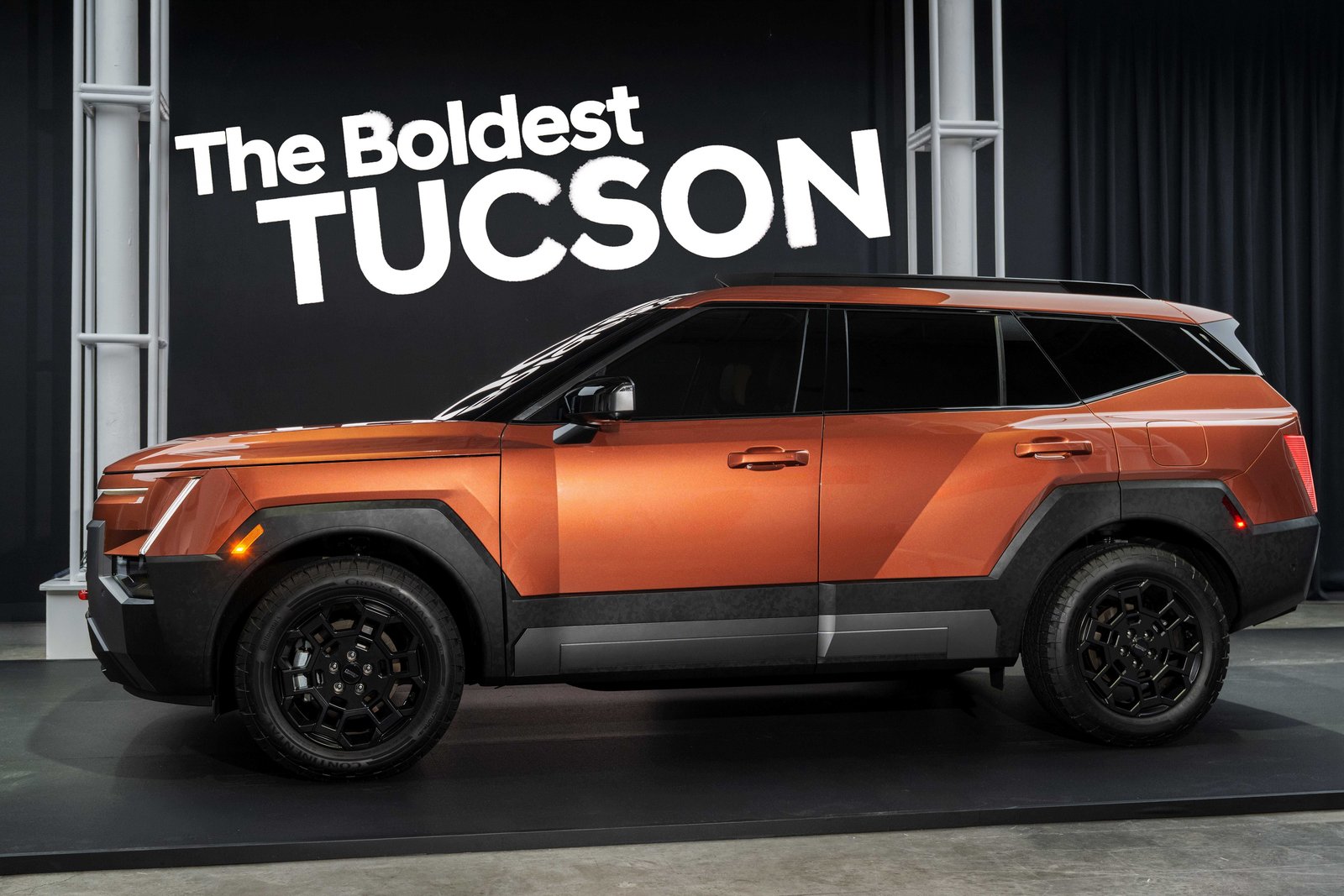
The rugged trims are where the new shape pays off. The XRT adds fascia-extending front cladding and extended black wheel-arch wraps with a forged-carbon-inspired motif, plus bumper and skid-plate detailing. The XRT PRO goes further: all-wheel drive, all-terrain tyres, front recovery hooks, sharper approach and departure angles, and 210 mm of ground clearance, 30 mm more than standard. It also debuts Hyundai's first Smart Terrain Assist, which reads traction and slip in real time and reports a green, orange or red "stuck score," alongside a Target Speed Control that manages throttle and brakes between 2 and 25 km/h so the driver only has to steer.
Inside, the instrument panel is split into two layers — a horizontal upper shelf for visual calm, a deep open tray underneath for storage — and Hyundai has kept physical buttons for HVAC and audio below the centre screen. Infotainment is Pleos Connect, built on Android Automotive OS, with a 17-inch or 12.9-inch main touchscreen plus a 9.9-inch slim display above the column, and an in-car agentic assistant called Gleo AI. Gear selection moves to a column-mounted shift-by-wire stalk. Cargo volume is quoted at 41.7 cubic feet (1,067 litres, domestic SAE), rear legroom at 1,064 mm, and the doors now open to 83 degrees rather than 73.
There is a long tail of smaller engineering claims: dual 15 W Qi 2.0 wireless charging pads, 100 W USB-C on the seat backs, a Multi-Air climate system that routes conditioned air through main, multi and floor vents to kill direct airflow, and an available 13.5-volt metal-coated heated glass that Hyundai says clears ice in 15 minutes and rejects 60 percent of solar energy in summer.
"Millions of families around the world count on the Hyundai TUCSON, and this is the best one we have ever built," said José Muñoz, President and CEO of Hyundai Motor Company, who added that the car "opens the most ambitious product offensive in our history, including more than 100 new and refreshed vehicles globally by 2030 — 58 in North America alone."
Context for the confidence: the Tucson has been on sale since 2004 and has passed 11.1 million cumulative global sales, with the US accounting for roughly 20 percent of that and hybrids making up 31 percent of American Tucson sales in 2025. The new car launches in Korea later this year, with North America, Europe and other markets following in 2027. A sport-flavoured variant is due at the Paris Motor Show on 12 October.
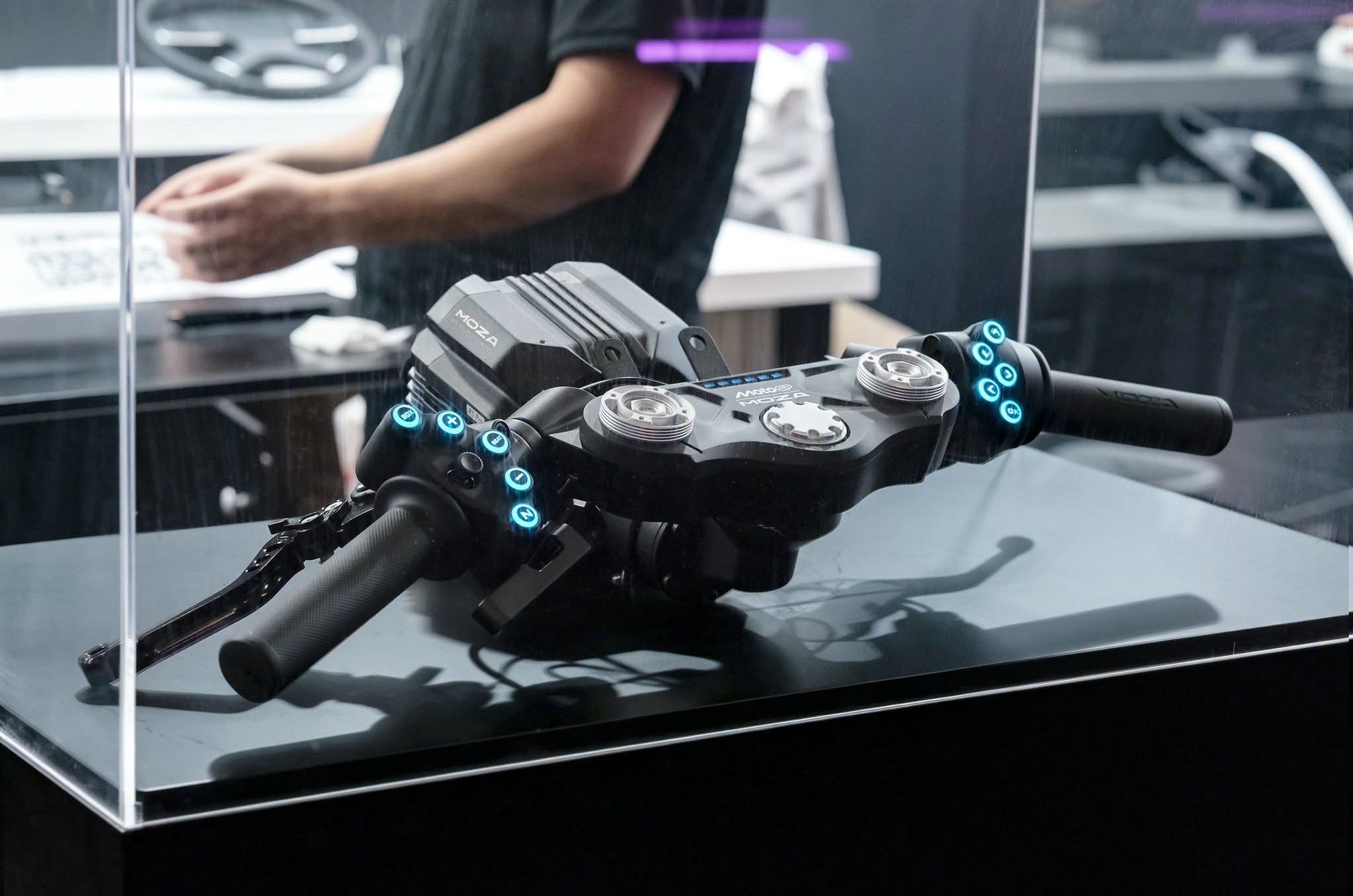
MOZA Brought Four Licensed Wheels to Gamescom. The Thing Worth Watching Was the Handlebar.
Porsche, Ford and two Mercedes wheels made the headlines in Cologne. But the MotoGP-licensed handlebar is the only piece doing something MOZA has never done before — and almost nothing shown has a price.
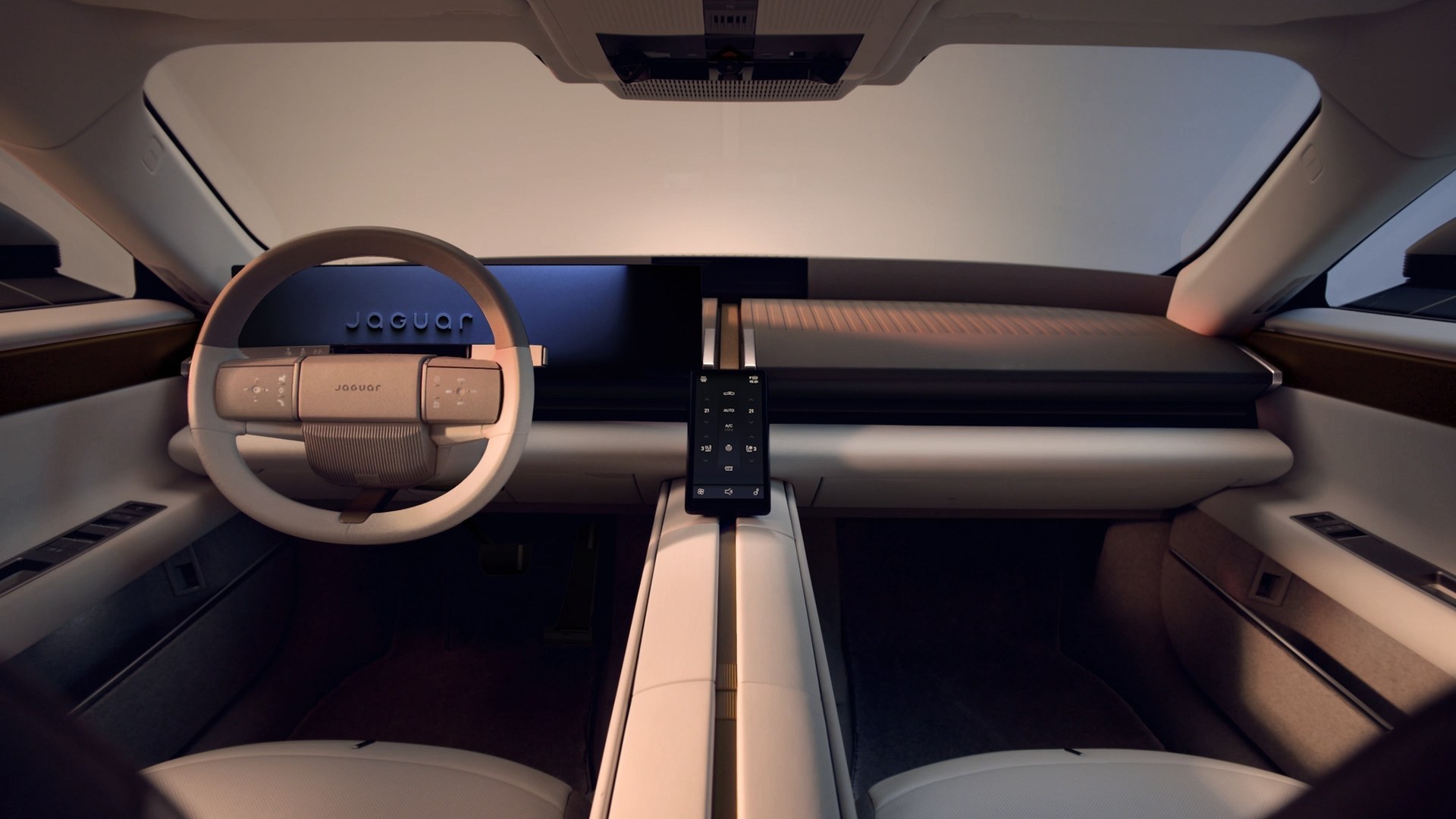
Jaguar Split the Type 01's Cabin Down the Middle
The first interior images of Jaguar's electric four-door GT show a brass-finished spine running end to end, four separate seats, and a dashboard designed to hide most of its technology.
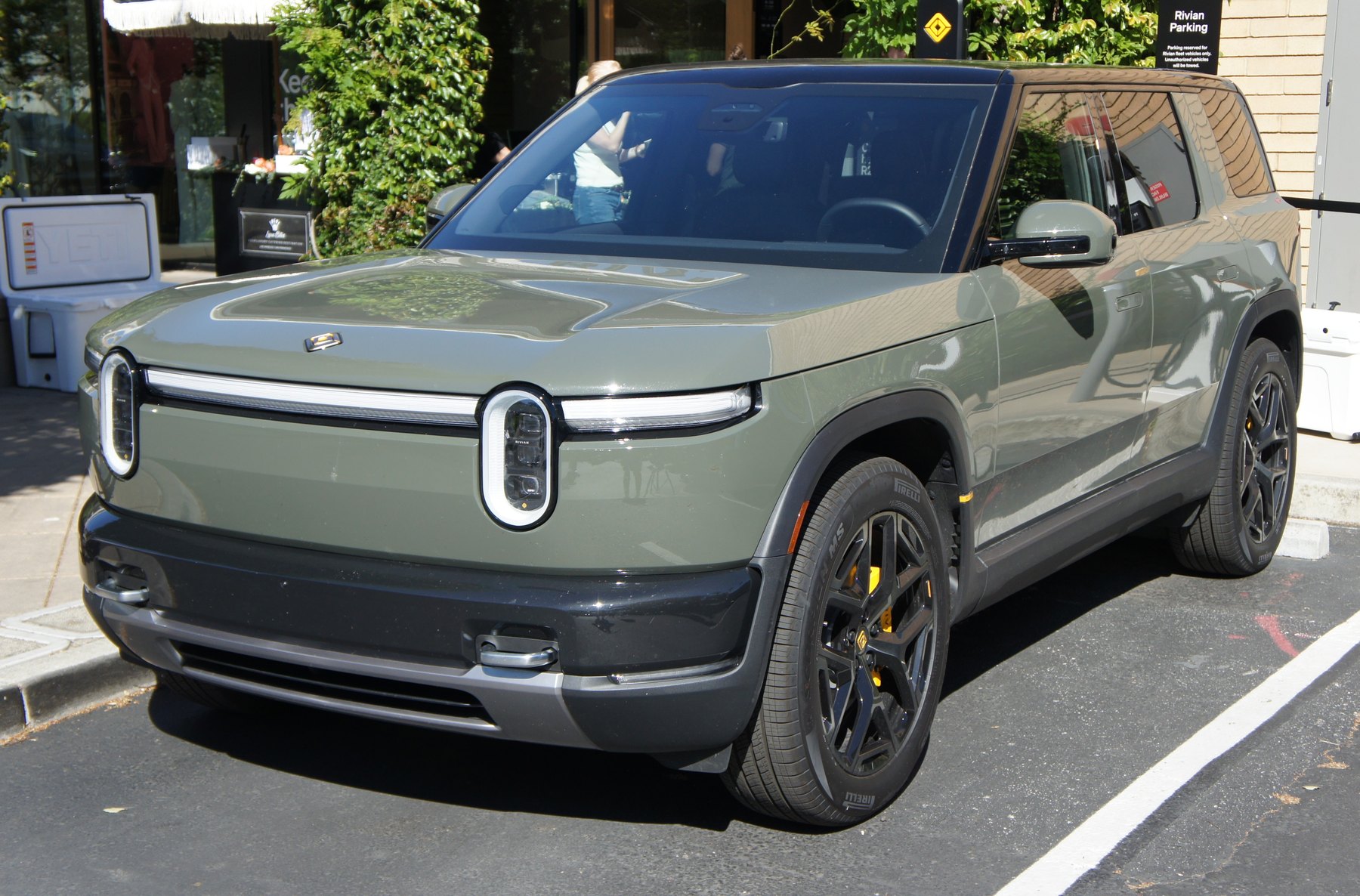
Everybody Loved the Rivian R2. Nobody Has Driven the One That Actually Matters.
The reviews that landed on June 9 were close to unanimous — and every single one of them was of a $57,990 Performance. The $44,990 version Rivian's whole future is riding on doesn't show up until 2027.