
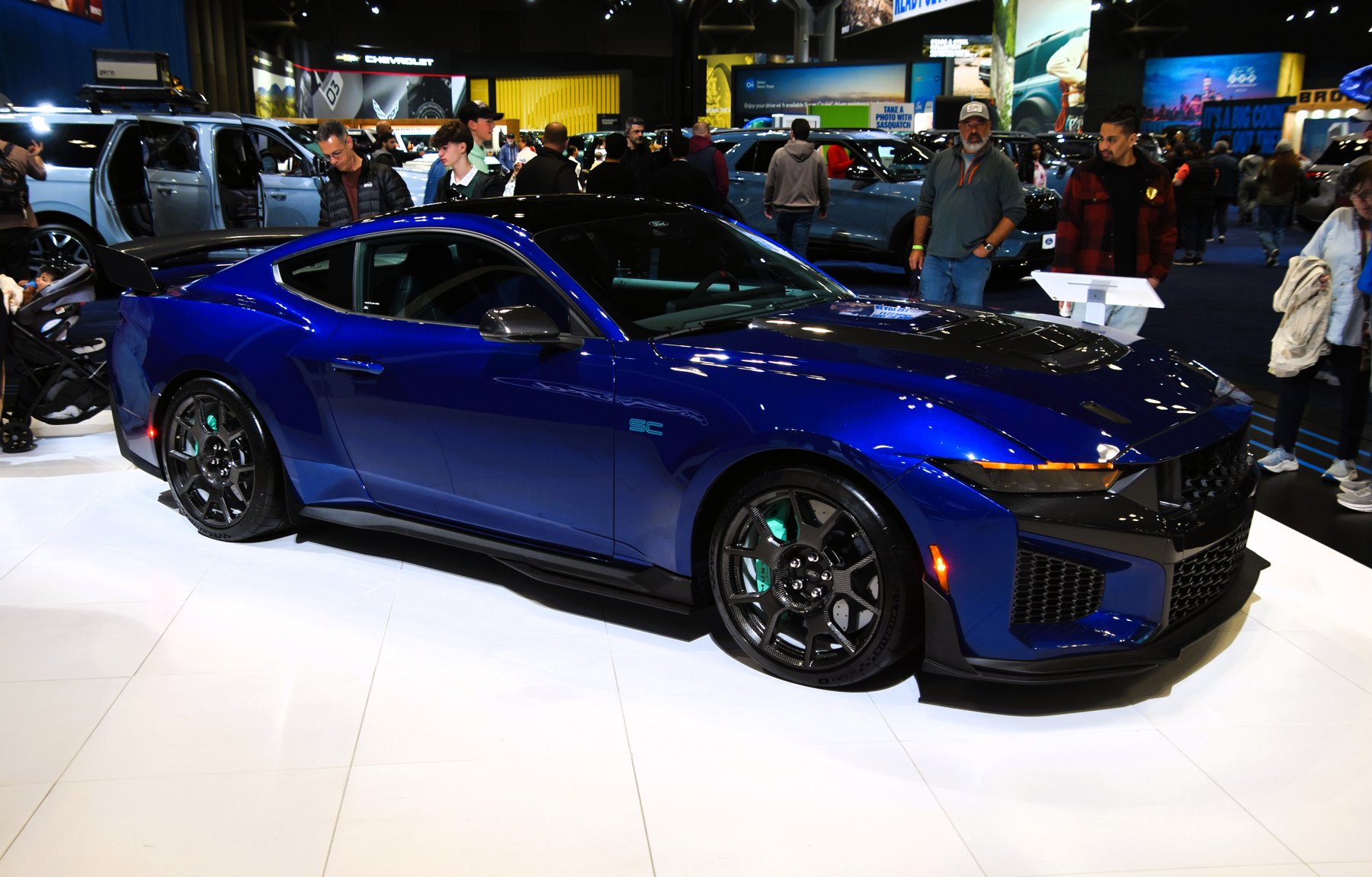
795 Horsepower, No Shelby Badge, No Manual — and the Only Thing Reviewers Could Agree to Hate Is the Center Console
The Dark Horse SC makes 35 more horsepower than the GT500 it replaces and costs a third of what a GTD does. Then you put your elbow down and touch the plastic.
For four model years there has been a hole in the Mustang range roughly the size of a supercharger. At the bottom of the serious end sits the Dark Horse, 500 horsepower and 418 lb-ft from the best naturally aspirated Coyote Ford has built, with a six-speed manual as standard equipment. At the very top sits the GTD, 815 horsepower, a race car with a license plate, and a price that starts around $318,760 and requires Ford to decide it likes you. In between: nothing, since the Shelby GT500 went away after 2022.
The Dark Horse SC is the thing that goes in the middle, and the numbers are not subtle. Ford unveiled it on 15 January 2026, opened order banks on 20 April, and rates it at 795 horsepower and 660 lb-ft of torque from a hand-assembled 5.2-liter supercharged Predator V8 — the same engine family as the GTD, built one at a time by a single technician at Ford's Dearborn Engine plant. It goes to the rear wheels through a Tremec seven-speed dual-clutch and an electronically controlled Torsen limited-slip differential.
Hold that against the car it replaces. The 2020-2022 Shelby GT500 made 760 horsepower and 625 lb-ft. The SC is up exactly 35 on both counts. It also lands 20 horsepower short of a GTD that costs roughly three times as much, which is either an indictment of the GTD's pricing or a very loud argument for the SC, depending on which one you were planning to buy.
Now, the complaint. There is no manual transmission, and a reliable portion of the internet has decided this is a betrayal. It is worth being precise about what is actually being betrayed here, because the GT500 did not offer a manual either — it was seven-speed dual-clutch only, and that was in 2020. The car that has a stick is the regular Dark Horse, which still does. Nobody took anything away. The honest version of the complaint is "I wish Ford had done something it has never once done with a supercharged Mustang of this output," which is a fine thing to wish for and a strange thing to be angry about.
The outlets that actually drove it on Napa's mountain roads and at Sonoma Raceway in late September came back with numbers and, more interestingly, near-total agreement. The Drive's Byron Hurd ran a 10.947-second quarter-mile at 131.74 mph and quoted an estimated 3.2-second 0-60 and a 180-plus-mph top end; CarBuzz's Brett T. Evans recorded a 10.754 and put 0-60 closer to 3.0. Hurd scored it 9.5 out of 10 and summarized it as "This thing kicks ass, full stop," which is not the sort of line a reviewer writes about a car he is being polite to.
The hardware underneath is where the money visibly went. The latest-generation MagneRide dampers come in two tunings depending on whether you tick the Track Pack. Standard brakes are iron, six-piston front and four-piston rear; the Track Pack swaps in 16.5-inch Brembo carbon-ceramic front rotors and 14.6-inch rears, 20-inch carbon fiber wheels, Michelin Pilot Sport Cup 2 R tires (305/30R20 front, 315/30R20 rear), a rear seat delete, teal caliper and interior accents, and roughly 150 pounds off a car that otherwise weighs about 4,263 pounds. There is also a track-focused Variable Traction Control system, and a new aluminum hood with a carbon fiber vent that Ford claims makes 2.5 times the downforce of a standard Dark Horse with the rain tray removed.
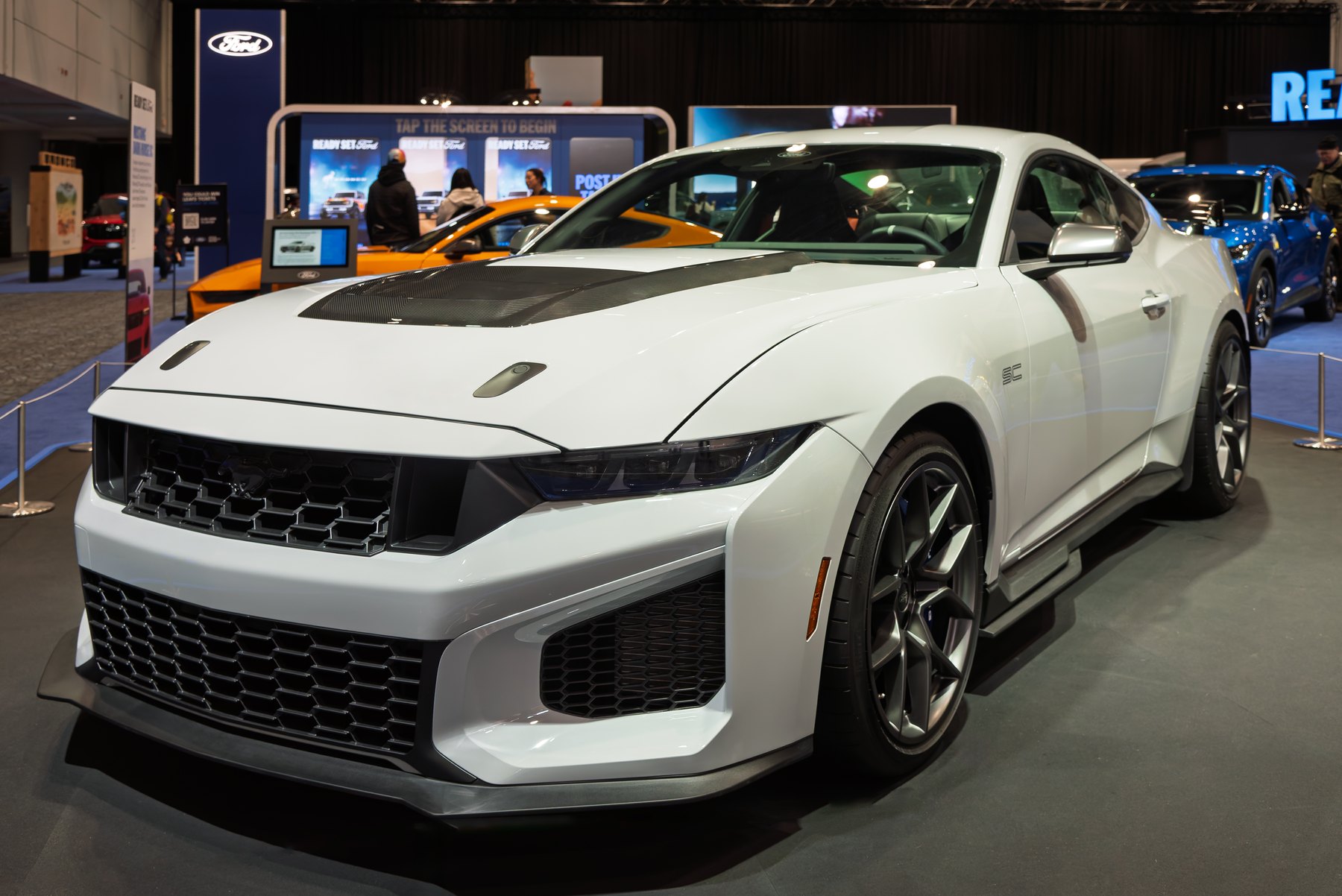
"Our goal was to bring the exact tech transfer and lessons learned from our most grueling endurance races directly to our road cars, giving our customers a true taste of what our race teams experience on the track," said Mark Rushbrook, Global Director of Ford Racing. Normally that sentence is corporate wallpaper. In this case the reviewers more or less corroborated it, and specifically on the one axis that matters for a 795-horsepower rear-drive car: it is not trying to kill you. Evans described gaining confidence lap after lap, writing that "I could feel myself improving on each lap, gaining confidence that the car would be able to handle everything I could throw at it and more." Hagerty's verdict landed in the same place, praising the engine, the brakes and the forgiving track manners. Hurd's observation is the one worth stealing: "The SC feels smaller than it is—a rarer and rarer sensation these days."
And then every single one of them walked into the same wall. The interior. CarBuzz: "The same natty plastic center console that feels cheap in a $40,000 EcoBoost is borderline inexcusable in a car that costs triple that price." The Drive: "if you look anywhere inside the cabin except the dash, it's a lightly reskinned S550." Cars.com's Aaron Bragman, who scored the car 7.5 overall but only 6 out of 10 on value, said it "feels like a $50,000 GT with some colored seat belts." Hagerty's single listed low was the faux interior materials. Four outlets, one complaint, no dissent.
Here is what nobody seems willing to say plainly: this is the cheapest problem on the entire car to fix, and Ford keeps not fixing it. Carbon-ceramic brakes and a hand-built supercharged V8 are hard. Not putting plastic shift paddles and fake carbon fiber next to the real carbon fiber in a six-figure car is a purchase-order decision. The chassis engineering here is genuinely world-class. The cabin is a rental-fleet Mustang that someone threw teal seat belts at, and at $103,490 before destination it is the one thing standing between this car and an unqualified recommendation.
About that price. Ford confirmed a $103,490 base MSRP; with destination and the $3,000 gas guzzler tax, real-world stickers land around $108,085. The Track Pack adds $36,500, taking it to roughly $139,990, and a Track Pack Special Edition goes to $170,970. That $36,500 is a used Mustang GT's worth of brakes, wheels, tires and a deleted back seat, and it is worth noting that Bragman's 7.5-out-of-10 verdict came on a $119,075 car without the Track Pack at all — which rather suggests the base configuration, iron brakes and all, is the one that makes sense unless your weekends involve a timing beacon.
The verdict: Ford has built the best Mustang it has ever sold and declined to put a Shelby badge on it, which turns out to be a confidence move rather than a cost-cutting one. It is 20 horsepower off a $318,760 GTD. It is 35 up on the GT500 that enthusiasts still talk about in reverent tones. It is reportedly friendlier at the limit than either. Buy the base car, spend the Track Pack money on tires and track days, and make your peace with the center console — because on current evidence, it is the only part of this car anyone is going to apologize for.
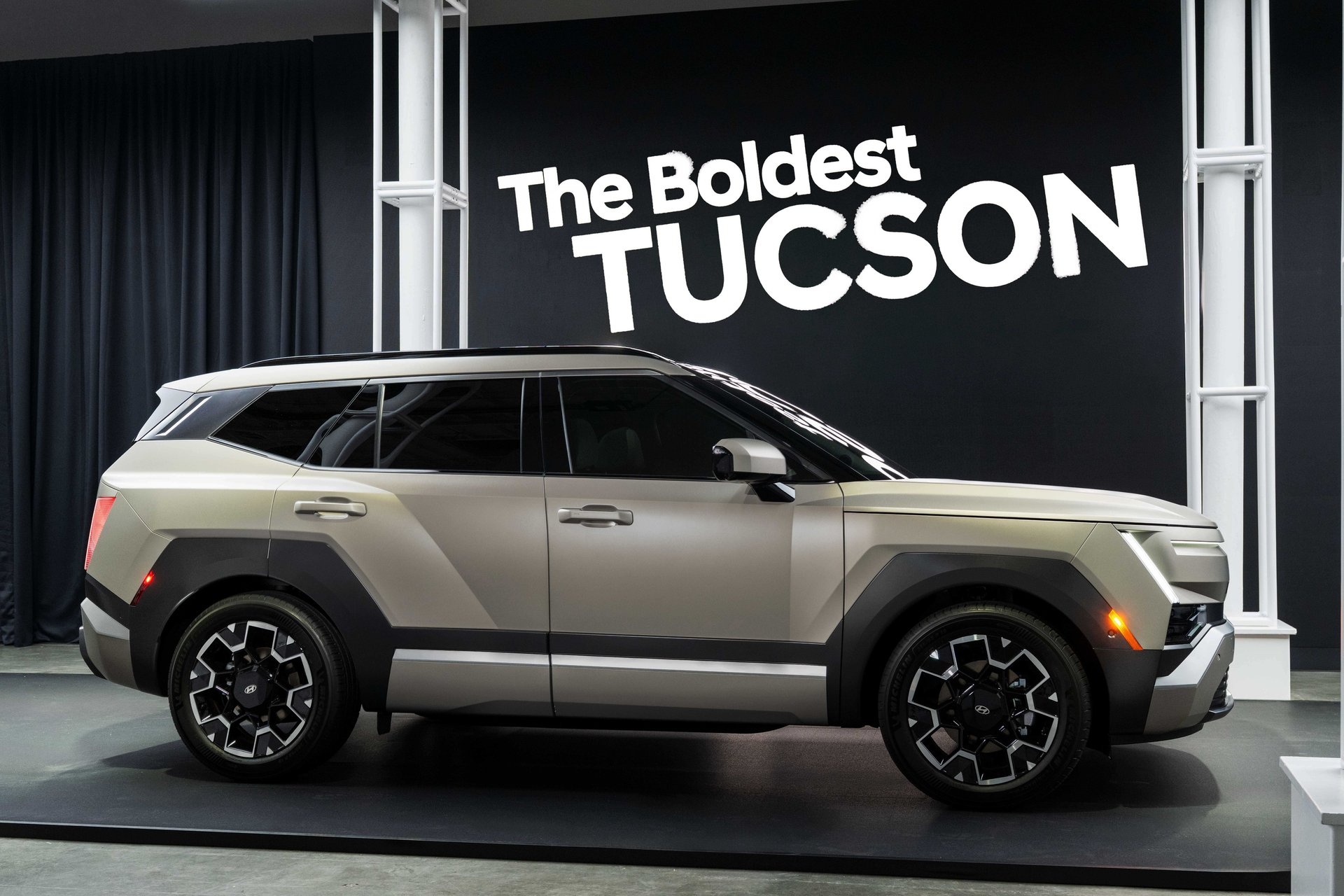
Hyundai Made the Tucson Square
The all-new Tucson arrived in New York under a design language Hyundai calls "Art of Steel": bigger in every direction, boxy, and with an XRT PRO that gets 210 mm of ground clearance and recovery hooks.
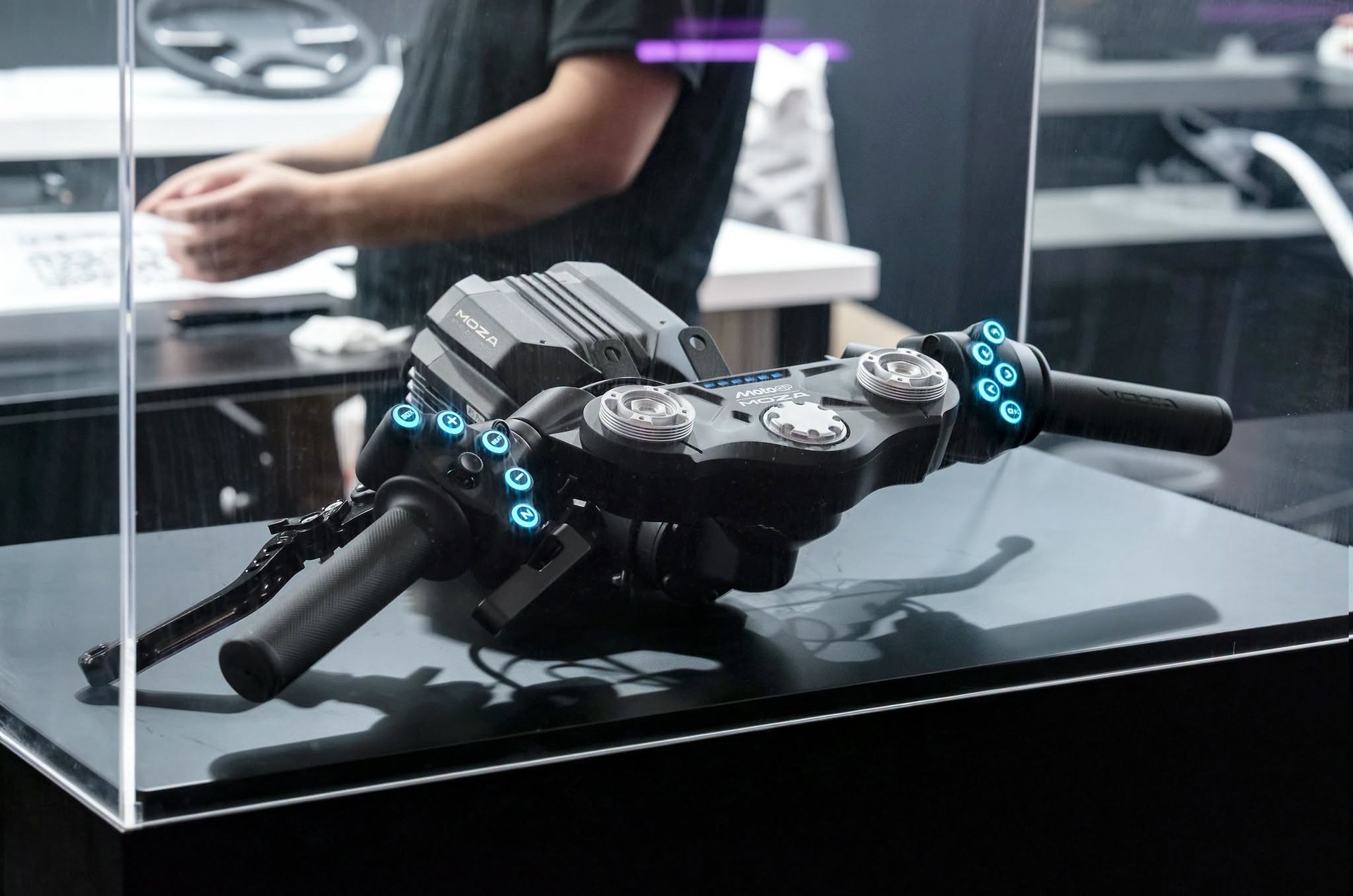
MOZA Brought Four Licensed Wheels to Gamescom. The Thing Worth Watching Was the Handlebar.
Porsche, Ford and two Mercedes wheels made the headlines in Cologne. But the MotoGP-licensed handlebar is the only piece doing something MOZA has never done before — and almost nothing shown has a price.
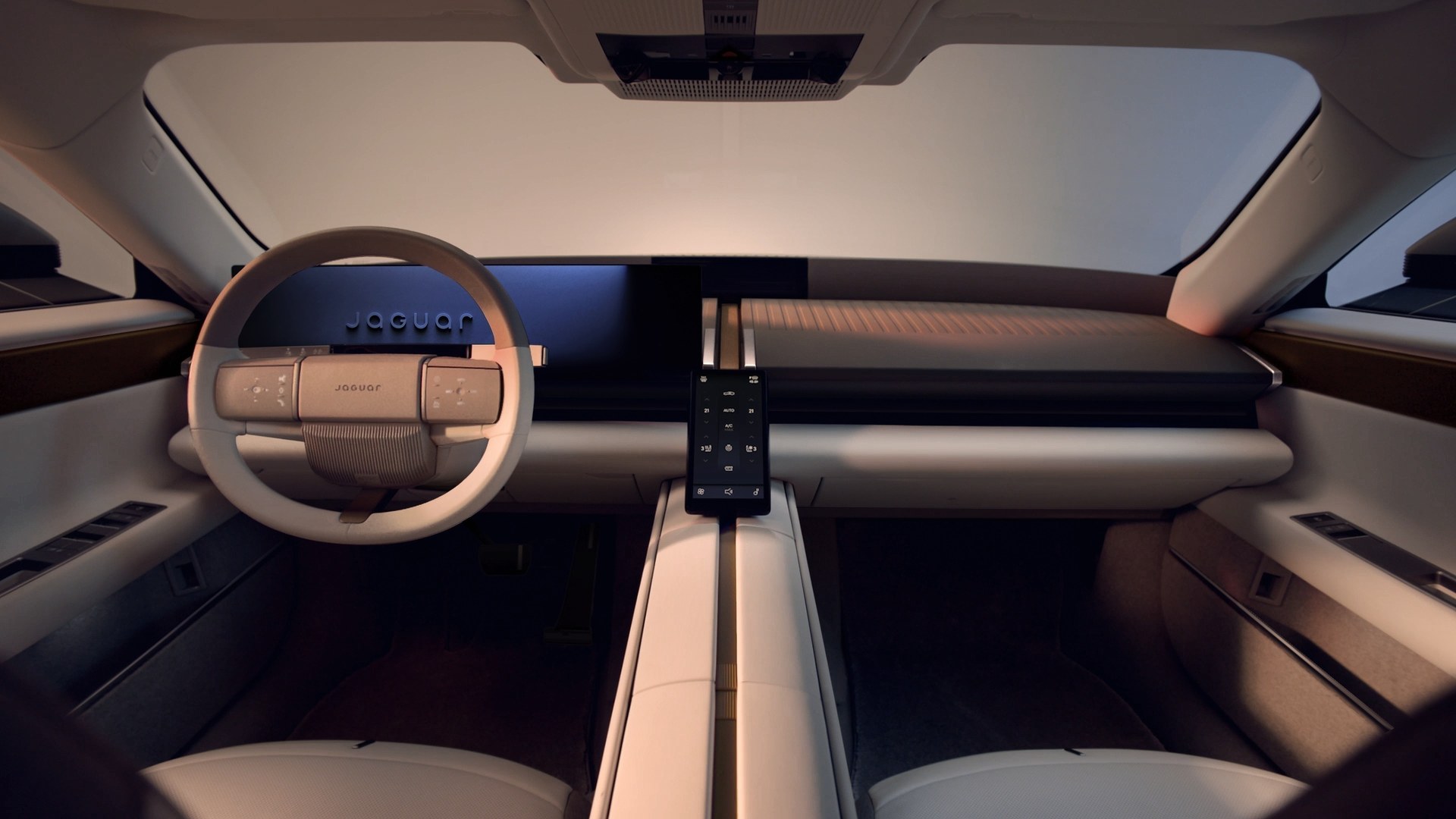
Jaguar Split the Type 01's Cabin Down the Middle
The first interior images of Jaguar's electric four-door GT show a brass-finished spine running end to end, four separate seats, and a dashboard designed to hide most of its technology.