

The New Fuel Economy Rule Asks Less of 2031 Than the Fleet Already Delivered in 2024
NHTSA's final CAFE rule sets a 34.9 mpg fleet target for model year 2031. The agency's own analysis says the 2024 fleet hit 35.4. Twenty-six states, cities and counties filed suit three days after it landed in the Federal Register.
- MY2031 fleet target
- 34.9 mpg
- Passenger cars
- 40.2 mpg
- Light trucks
- 26.4 mpg
- Standards it replaces (MY2031)
- 49.3 mpg
- Civil penalty for missing it
- $0
- Federal Register
- Sept 30, 2026
- Effective
- Nov 30, 2026
NHTSA published its final rule rewriting Corporate Average Fuel Economy standards for model years 2022 through 2031 in the Federal Register on September 30, two days after Transportation Secretary Sean P. Duffy released it under the banner “Freedom Means Affordable Cars.” Formally it is the Safer Affordable Fuel-Efficient Vehicles Rule III, and it takes effect November 30. The headline number: a projected industry-wide fleet average of 34.9 mpg in model year 2031, built from 40.2 mpg for passenger automobiles and 26.4 mpg for non-passenger automobiles — the regulatory category that holds most SUVs and every pickup.
"NHTSA made the right call to better align fuel economy standards with the law and current market conditions." — John Bozzella, Alliance for Automotive Innovation
Set that against what it replaces. In the final rule's own comparison tables, the standards being undone would have required 65.8 mpg for passenger cars, 45.4 mpg for light trucks, and 49.3 mpg fleet-wide in 2031. (The more widely quoted figure for the Biden-era rule is 50.4 mpg, which is what NHTSA itself projected when it finalized those standards in June 2024; the small gap comes from the agency re-running its baseline. The direction is not in dispute.) Those standards tightened 2% a year. The new ones tighten 0.90% a year for cars and 0.51% a year for trucks through 2029, then go slack: in model year 2030 the passenger standard drops 0.3% and the non-passenger standard drops 14.4%, before both tick up 1% for 2031.
The most quotable fact in the whole filing is the one the plaintiffs lead with. By NHTSA's own analysis, the US new-vehicle fleet averaged 35.4 mpg in model year 2024. The rule's target for 2031 is 34.9. The agency is, on its own numbers, writing a standard for seven model years out that the industry cleared two years ago. That sounds more damning than it is in one narrow sense — CAFE figures are unadjusted laboratory test values, not window-sticker numbers, and the achieved 2024 average includes the imputed fuel economy of electric vehicles, which the new rule deliberately strips out of its forward-looking baseline. But that exclusion is precisely the fight. NHTSA has counted existing EVs and plug-in hybrids in the baseline fleet since at least 2012; the new rule drops them on what the agency describes as a changed interpretation of ambiguous statutory provisions, and builds its targets from gasoline, diesel and conventional hybrids alone.
There is a larger thing buried behind all of this, and it is not an mpg number at all. The civil penalty for missing a CAFE standard is currently zero dollars. Section 40006 of the One Big Beautiful Bill Act, enacted July 4, 2025, reset the maximum penalty to $0.00. As recently as 2024 the rate was $17 per vehicle for each tenth of an mpg a manufacturer fell short, and between model years 2011 and 2020 automakers paid more than $1.1 billion in CAFE fines. The standards still exist, compliance is still calculated, and missing them still costs nothing. Whatever the number in 2031 turns out to be, it is a target without a stick.
The compliance plumbing changed too, and this part will shape product planning more than the fleet average will. Inter-manufacturer trading of CAFE credits earned from model year 2028 onward is eliminated; credits banked through 2027 stay tradeable for five model years after they are earned. That matters because credit trading is how EV-heavy manufacturers have monetized their efficiency and how everyone else has bought their way out of a shortfall. Separately, beginning in model year 2030, the rule removes the criterion that lets a vehicle with three or more rows of seating fold its way into light-truck classification — future classification turns on things like approach angle and running clearance, or demonstrated payload and towing capability. Three-row crossovers built on car platforms, the Kia Telluride and Toyota Grand Highlander and Chevrolet Traverse among them, would have to meet the far stricter passenger-car standard instead of the truck one.
On October 2, California Attorney General Rob Bonta led a coalition of 26 states, cities and counties into the US Court of Appeals for the First Circuit with a petition for review. The state plaintiffs are Arizona, Colorado, Connecticut, Delaware, Hawai'i, Illinois, Maine, Maryland, Massachusetts, Michigan, Minnesota, New Jersey, New Mexico, New York, North Carolina, Oregon, Rhode Island, Vermont, Washington, Wisconsin and the District of Columbia alongside California; Chicago, Denver, New York City and San Francisco joined as municipalities. The legal theory runs on two tracks: that the rule violates the Energy Policy and Conservation Act, which directs NHTSA to set standards at the maximum feasible level after balancing technological feasibility, economic practicability, the need to conserve energy, and the effect of other motor vehicle standards; and that it is arbitrary and capricious under the Administrative Procedure Act. The states' sharpest argument is the baseline one — that excluding EVs that already exist and already sell distorts the starting point of the entire analysis. “The Trump Administration is attempting to gut fuel economy standards and force Americans to spend billions more on gas,” Bonta said.
A second petition landed the same day. The Sierra Club, Public Citizen, Environmental Defense Fund, Conservation Law Foundation and the Center for Biological Diversity's Climate Law Institute filed against Duffy and NHTSA Administrator Jonathan Morrison, with NRDC filing in the Second Circuit in New York. Their cost case leans on the agency's own regulatory impact analysis, which projects that the average new-car buyer will pay more than $1,600 in additional fuel costs over the life of the vehicle — NRDC puts the figure at $1,624 — and that Americans will burn roughly 122 billion more gallons of gasoline by 2050. DOT's counter-numbers point the other way: the department says the rule cuts about $1,300 from the average new-vehicle price and saves $138 billion over five years. Both sets of figures can be true at once. One is the sticker, the other is the pump, and which one you care about depends mostly on how long you keep the car.
The industry's own trade body is satisfied. “We're still reviewing the final rule, but NHTSA made the right call to better align fuel economy standards with the law and current market conditions,” said John Bozzella, president and CEO of the Alliance for Automotive Innovation, on the day the rule was released, calling it “an appropriate course correction” and arguing that the previous standards “effectively required a switchover to electric vehicles that was out of step with market realities and customer demand.” It is worth remembering that this is the second half of a symmetrical fight: in July 2024, 26 states led by Kentucky and West Virginia filed in the Sixth Circuit to vacate the Biden rule as exceeding NHTSA's statutory authority. The composition of the coalition flipped. The complaint — that the agency went past what Congress authorized — did not.
For anyone buying a car, the practical read is less dramatic than the litigation. Nothing on a 2027 showroom floor changes next week; product cycles are locked years out, every automaker still sells into California and the European market and both of those are stricter than this, and the gasoline cars on sale today already clear the 2031 target. What a weaker CAFE curve really removes is pressure at the margin — the reason to spend money on an eight-speed instead of a six, on cylinder deactivation, on a hybrid version of a truck nobody asked for. That pressure produced a lot of genuinely good engineering over the last fifteen years, and it also produced a lot of three-cylinder turbos nobody loves. The classification change is the piece actually worth watching: if three-row crossovers lose their truck exemption in 2030, that is a real constraint on the single most profitable shape in the American market, and it will outlive whatever the First Circuit decides. Petitioners had until November 30 to get into court. They took three days.
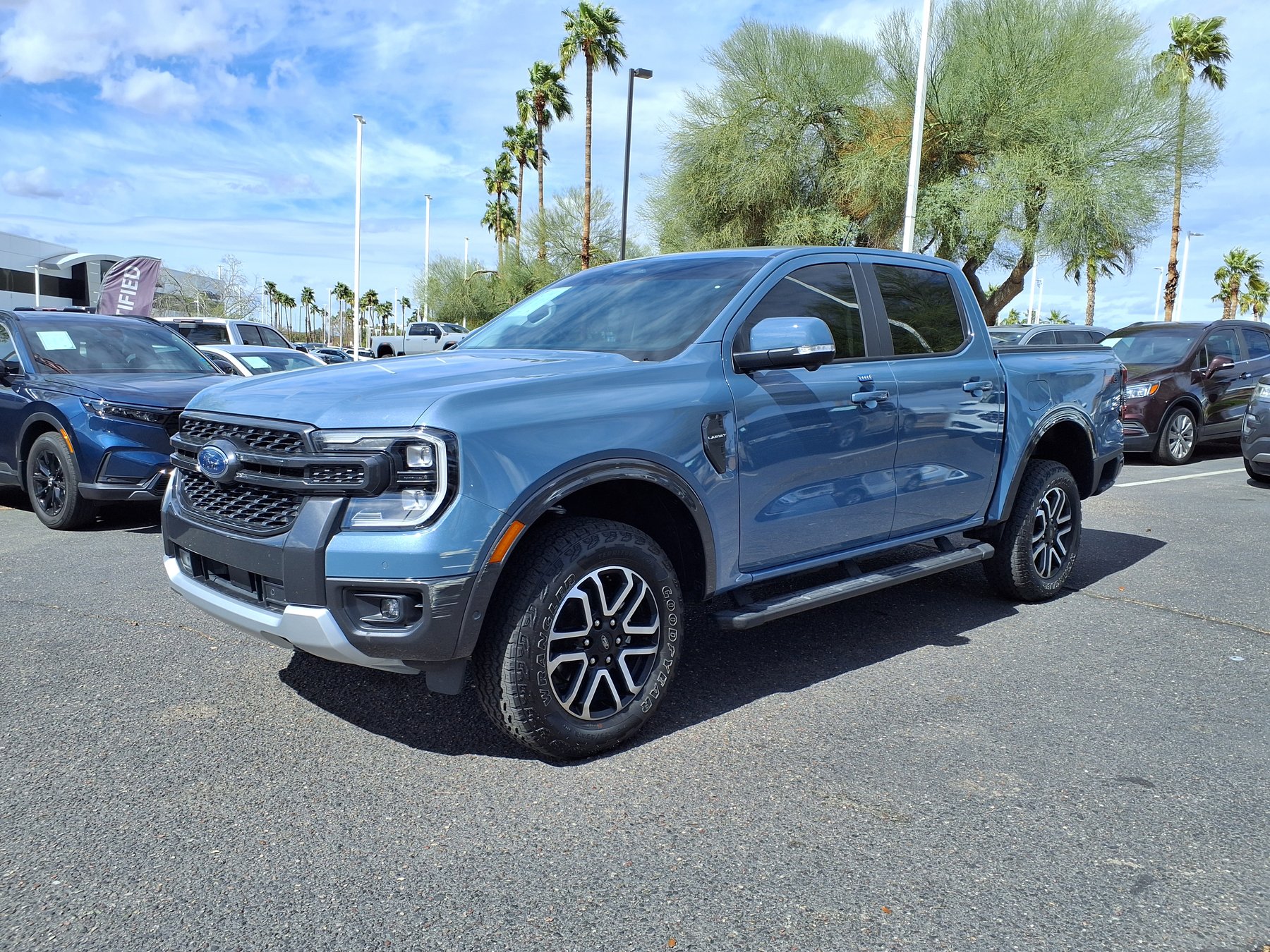
Ford Says a Suspected Counterfeit Capacitor Is Blanking Ranger Screens — and There's No Fix Yet
11,405 2026 Rangers can lose their center display entirely, taking the backup camera with it. Ford's own filing calls the part potentially counterfeit, and the remedy column still says the parts don't exist.

Land Rover Lost the Photos, So It's Recalling the Cars
NHTSA campaign 26V613 covers rear subframes that can crack on the 626-hp Range Rover Sport SV. The revealing part isn't the cracks JLR found — it's the cars whose factory inspection images it can no longer retrieve.
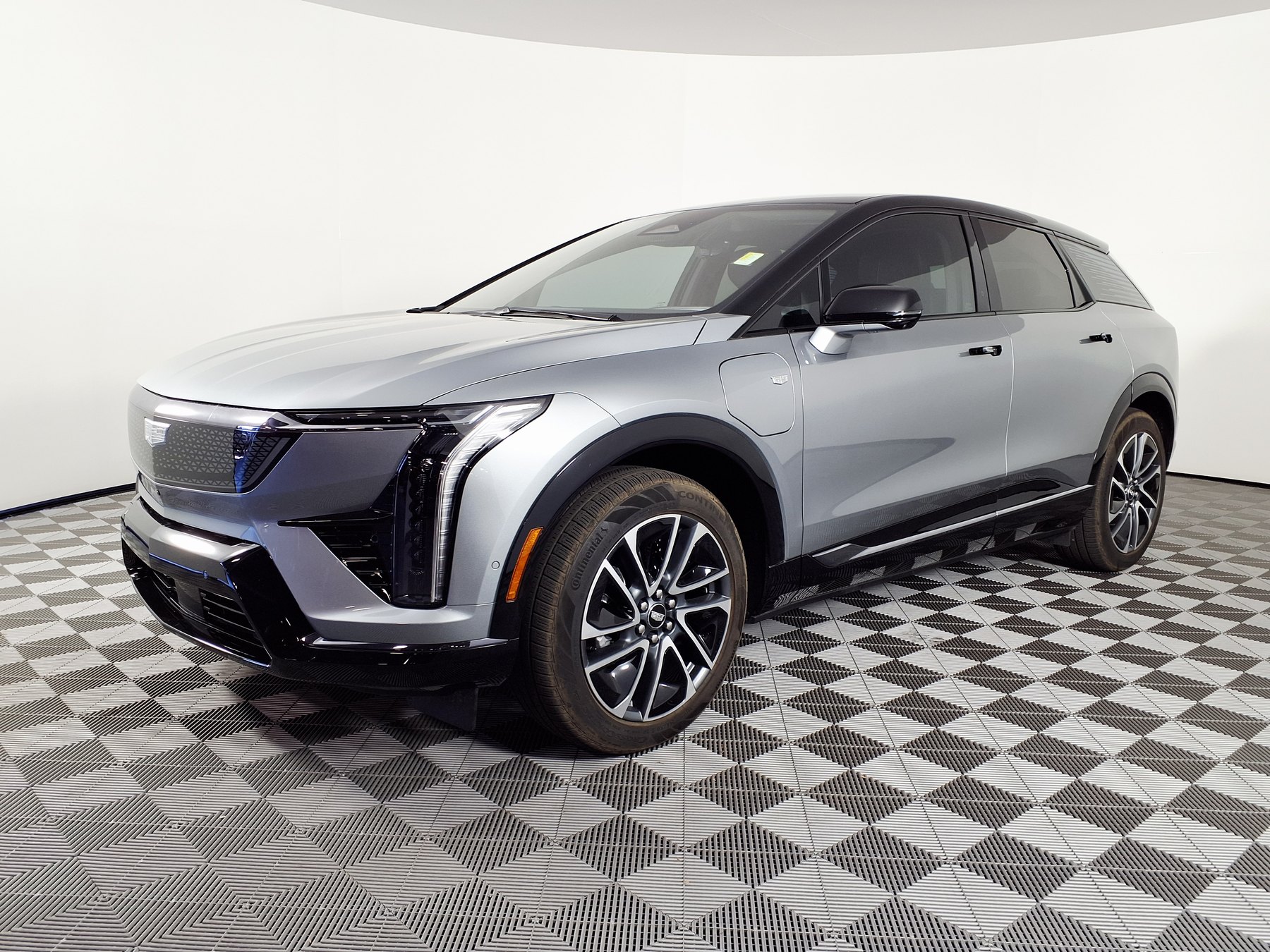
Cadillac Recalls 29,347 Optiqs Over the Last Half-Inch of Glass
Close the Optiq's front windows from the key fob and the anti-pinch system may miss an obstruction in the final 13 millimetres of travel. NHTSA campaign 26V612000; the fix is a software update, some of it over the air.