

Land Rover Lost the Photos, So It's Recalling the Cars
NHTSA campaign 26V613 covers rear subframes that can crack on the 626-hp Range Rover Sport SV. The revealing part isn't the cracks JLR found — it's the cars whose factory inspection images it can no longer retrieve.
- Engine
- 4.4L twin-turbo V8 MHEV
- Output
- 635 PS (626 hp)
- Torque
- 750 Nm certified (800 Nm launch)
- 0-60 mph
- 3.6 sec
- Top speed
- 180 mph
- Recalled part
- Rear subframe M8E2-5K091-BD
Jaguar Land Rover North America filed a Part 573 safety recall report with NHTSA on September 24 covering 2024–2026 Range Rover Sports whose rear subframes may be cracked. The agency logged it as campaign 26V613000 under the component heading STRUCTURE:FRAME AND MEMBERS; JLR is running it internally as two campaigns, D165 and D166. Every affected car was built at the Solihull Vehicle Assembly Plant between October 3, 2023 and May 22, 2026. The recalled part is a single casting, number M8E2-5K091-BD, supplied by Gestamp Assembly of Newton Aycliffe in County Durham as the Tier 1 and Linamar Casting as the Tier 2.
"A crack on the rear subframe can compromise the structural integrity of the vehicle and can increase the risk of occupant injury in the event of a crash." — Jaguar Land Rover North America, Part 573 Safety Recall Report 26V613
There is a genuine discrepancy in the paperwork that nobody seems to have flagged. JLR's own Part 573 report gives the population as 873 vehicles, and says it twice — once in the population box and again in plain prose, "873 Land Rover Range Rover vehicles in the United States and Federalized Territories." NHTSA's public recall database, queried against the same campaign number, returns 1,073. Every outlet that has covered this took the 873 figure from the PDF. Neither number is obviously wrong, and a 200-car gap on a recall this small is not a rounding error. Until one of the two records is corrected, treat the size of this campaign as approximate.
What is not approximate is which part is cracking, and that deserves more than a recital of the filing. A rear subframe is not trim and it is not a bracket. It is a structural cradle that bolts to the underside of the body and acts as the single mounting point for almost everything happening at the back axle: the suspension control arms, the spring and damper mounts, the rear differential, and on a car with rear-wheel steering, that actuator too. Build the rear suspension onto a subframe rather than directly onto the body and you get better isolation, easier assembly, and a stiffer, more predictable geometry. You also concentrate every load the rear tires generate into one component.
Think about what passes through that casting. Cornering force at the contact patch becomes a lateral load fed up through the control arms into the subframe's mounting nodes. Braking torque tries to rotate the hub carrier and reacts through those same arms. Acceleration thrust comes out of the differential, which is itself hanging off the subframe. All of it is ultimately handed to the body through four bushed mounts. A crack at a node — the junction where arms and mounts meet, which is exactly where the filing locates the problem — doesn't simply weaken the part. It changes the stiffness of a load path, and a load path that flexes differently under load is a suspension geometry that moves differently under load. That is why NHTSA's consequence wording has two halves rather than one: a cracked subframe "may have reduced structural integrity, increasing the risk of injury during a crash," and separately "may also diminish handling and control, increasing the risk of a crash." JLR's own language adds the part that matters most over time, noting that a crack "could propagate and cause a deterioration in design strength." Cracks in a cyclically loaded structural member do not stay the size they started.
The origin is a manufacturing defect, not a design or durability failure, and the chronology is specific about it. On June 4, 2026, a forging defect turned up in a rear subframe at the supplier and the part was quarantined. The review that followed found something more awkward than a single bad casting: because the final machining operation was expected to cut material away from the affected area anyway, cracks on that node were not being reliably caught by the manual quality inspection that followed. The process had a blind spot built into it. JLR says the issue was cut off in supplier production in June 2026 after end-of-line checks were upgraded to include high-resolution imagery, and that replacement subframes come from a supplier validation process that has since been tightened.
Then comes the part that actually explains the shape of this recall. Having found the defect, JLR went back through the factory imaging archive — thousands of photographs normally shot for dimensional analysis rather than crack detection — and inspected them by hand through early September. When the results reached the company's Product Safety and Compliance Committee on September 4, the finding was twofold: a small number of cars were known to have subframes with small visible cracks, and a considerably larger number had subframes whose production images could not be retrieved at all, lost to what the filing calls "system storage errors over time." That is why there are two recall numbers. D165 covers cars known to have a crack, which go straight to a replacement subframe. D166 covers cars JLR simply cannot clear on the evidence, which get a physical inspection first and a replacement only if a crack is found. The company is recalling a population it cannot prove is healthy, which is the right call and an unusually candid thing to put in writing.
Worth noting too that the defect description in JLR's filing names "Range Rover Sport SV vehicles" specifically, while NHTSA's public-facing summary says only "certain 2024-2026 Range Rover Sport vehicles" with no trim qualifier. The SV reading is the more plausible one: a few hundred to a thousand cars spread across a thirty-one-month production window is nowhere near standard Sport volume, and it fits the output of a low-volume flagship. If you own a V6 or P400 Sport, the VIN lookup is still the only answer that counts, but the filing's own wording points at the SV.
That flagship is the 4.4-litre twin-turbo mild-hybrid V8 car, rated by JLR at 635 PS — 626 hp — and 750 Nm certified, rising to 800 Nm with Dynamic Launch Mode, good for 0–60 mph in 3.6 seconds and 180 mph. Its chassis is the interesting bit here. The SV's 6D Dynamics setup combines hydraulically interlinked dampers with height-adjustable air springs and pitch control, and in JLR's own words it "removes the need for conventional anti-roll bars," with the company claiming over 1.1 g of lateral grip on all-season tires, a 22 percent gain on the old SVR. It is a tempting connection to draw, and it should be resisted: nothing in the filing attributes these cracks to cornering loads, suspension architecture, or anything the car does on the road. The cracks were forged in. The SV's relevance is that it is the variant built with this particular supplier's part, not that it broke its own subframe.
Two fields on the Part 573 form are conspicuously blank, and both are worth knowing about. "Description of the cause" is empty, with the actual explanation buried in the chronology instead. So is "Identification of any warning that can occur," which is the honest answer rather than an oversight — there is no sensor watching the rear subframe and no dashboard light for this. A crack propagating in a structural casting under the floor announces itself to the driver either not at all or as a vague change in how the back axle behaves, long after an inspection would have caught it. One more quirk: JLR entered the estimated percentage with the defect as 100 percent, which reads alarmingly but is a filing convention for a population defined as suspect, not a claim that every one of these cars is cracked. The chronology says plainly that only a small number are known to have visible cracks.
The practical timeline is unusual in one respect. Dealers were notified on October 8. Owners get interim letters on or before November 20 — and those are warning letters, not repair notices, because the final remedy is not ready yet. The planned remedy owner notification date on the form is blank, and NHTSA's record confirms that "additional letters will be sent once the final remedy is available." In the meantime there is no park-it or park-outside advisory attached to this campaign, JLR reports no claims or field reports in the US, and no accidents, injuries, or fires. All work is free. Owners who want an answer before the mail arrives can run their VIN through NHTSA's recall lookup or call Land Rover customer service at 1-800-637-6837.
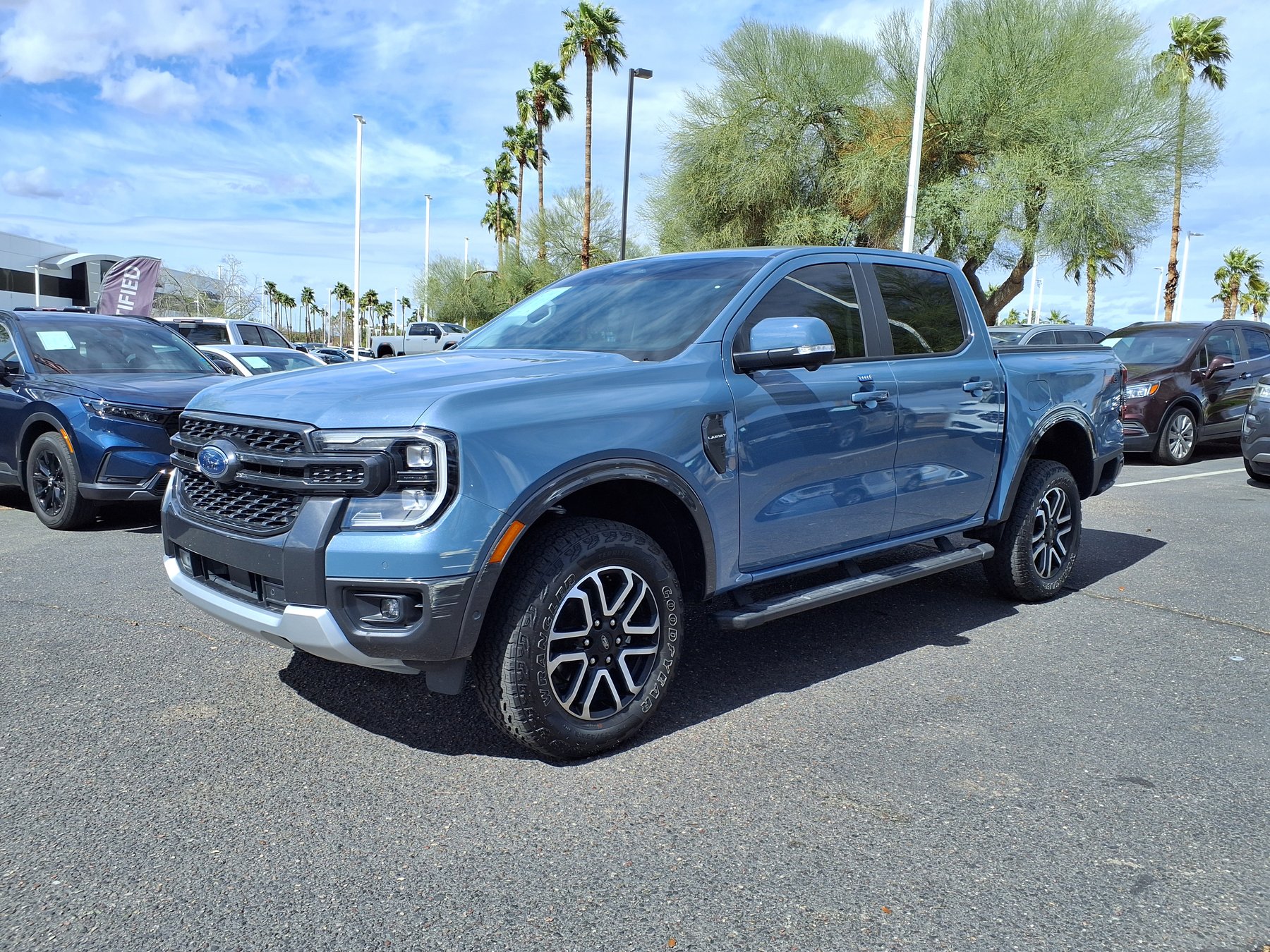
Ford Says a Suspected Counterfeit Capacitor Is Blanking Ranger Screens — and There's No Fix Yet
11,405 2026 Rangers can lose their center display entirely, taking the backup camera with it. Ford's own filing calls the part potentially counterfeit, and the remedy column still says the parts don't exist.
The New Fuel Economy Rule Asks Less of 2031 Than the Fleet Already Delivered in 2024
NHTSA's final CAFE rule sets a 34.9 mpg fleet target for model year 2031. The agency's own analysis says the 2024 fleet hit 35.4. Twenty-six states, cities and counties filed suit three days after it landed in the Federal Register.
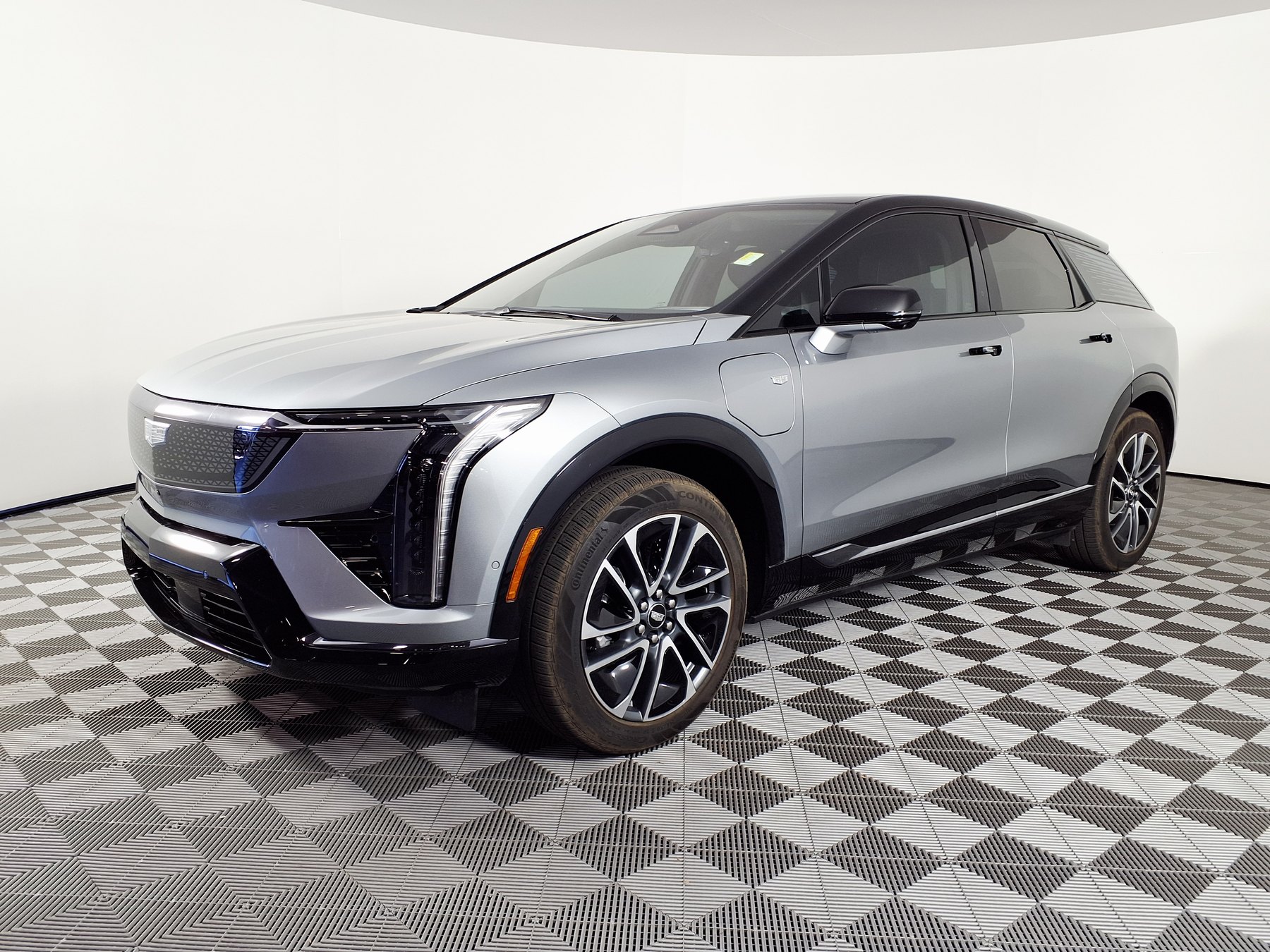
Cadillac Recalls 29,347 Optiqs Over the Last Half-Inch of Glass
Close the Optiq's front windows from the key fob and the anti-pinch system may miss an obstruction in the final 13 millimetres of travel. NHTSA campaign 26V612000; the fix is a software update, some of it over the air.