
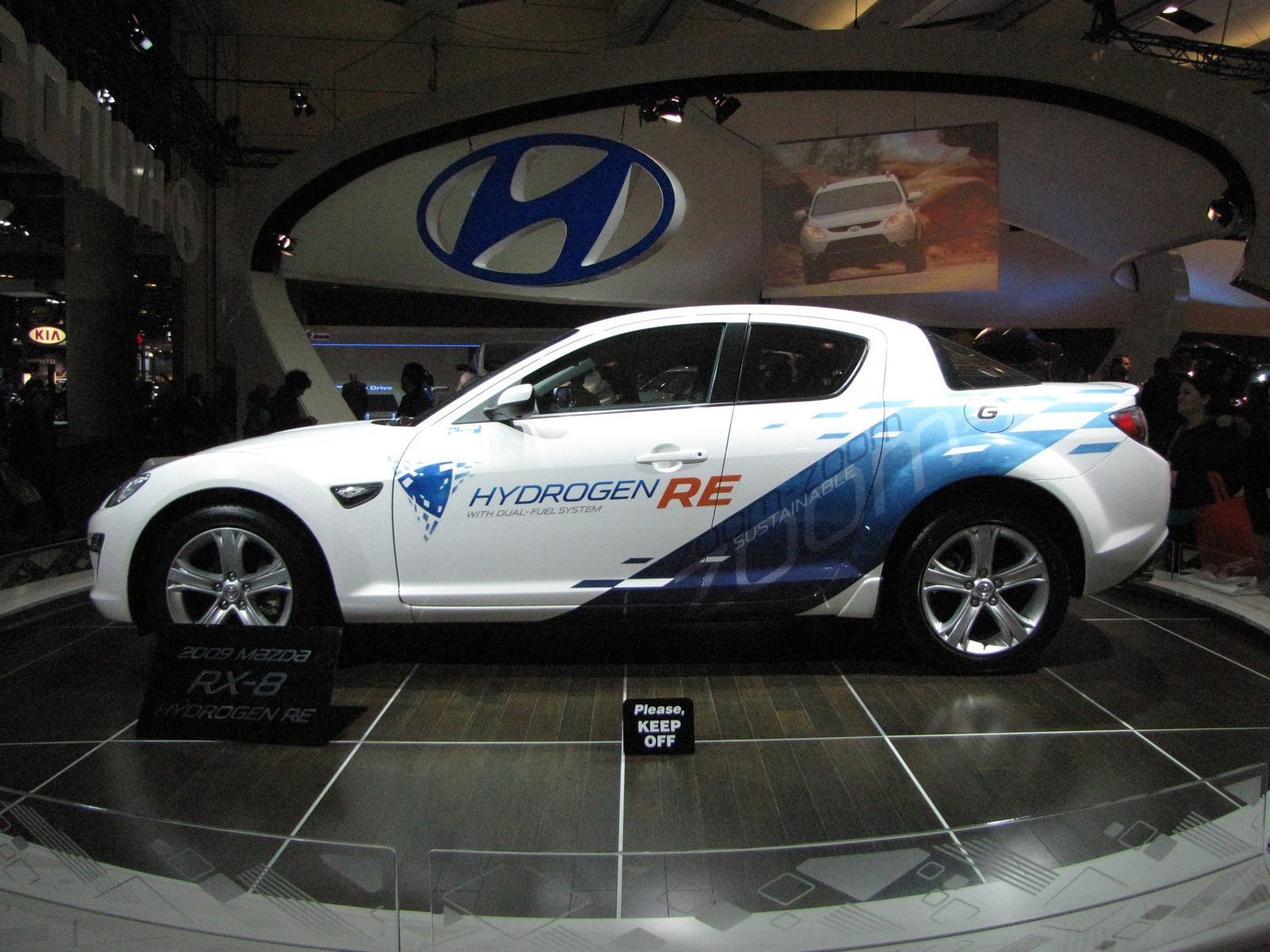
Mazda Actually Leased a Hydrogen-Burning RX-8, and the Engineering Behind It Still Holds Up
The RX-8 Hydrogen RE ran on gasoline or hydrogen at the flip of a switch, and the reason Mazda picked a rotary for the job says a lot about why the Wankel engine existed in the first place.
Most people who remember the Mazda RX-8 remember it as the last naturally aspirated rotary sports car Mazda sold before the RX-7 legacy quietly went dormant. Fewer people know that for about four years in the mid-2000s, Mazda actually leased out a version of that same car that could run on hydrogen — not a design study sitting on a motor show turntable, but a real, licensed, street-legal vehicle that government agencies and energy companies in Japan and Norway drove on public roads.
The car was called the RX-8 Hydrogen RE, and Mazda first showed it as a bi-fuel concept at the Tokyo Motor Show in October 2003. A year later, on October 27, 2004, Japan's Ministry of Land, Infrastructure and Transport approved it for public-road testing — official confirmation that this wasn't just a static display piece. Leasing began in February 2006, starting with two Japanese companies, the oil distributor Idemitsu and the industrial gas supplier Iwatani, at a reported ¥420,000 a month. The program eventually reached about eight lessees across Japanese government and private enterprise. In November 2007, Mazda announced it would send 30 more RX-8 Hydrogen REs to Norway as part of HyNor, that country's hydrogen highway infrastructure project, with deliveries beginning in 2008.
The engineering reason Mazda reached for a rotary instead of adapting a conventional piston engine is the more interesting part of the story. The RX-8 Hydrogen RE used a modified version of the car's 1.3-liter twin-rotor Renesis engine, converted to run on either gasoline or hydrogen at the flip of a switch in the cabin. In gasoline mode it made around 210 horsepower; switched to hydrogen, output dropped to roughly 109 horsepower, since hydrogen simply carries less energy per unit of volume than gasoline does. Range followed the same pattern — about 330 miles on a full 61-liter gasoline tank, versus roughly 60 miles on a 110-liter hydrogen tank pressurized to 350 bar and built from aluminum and carbon fiber to hold about 2.4 kilograms of hydrogen.
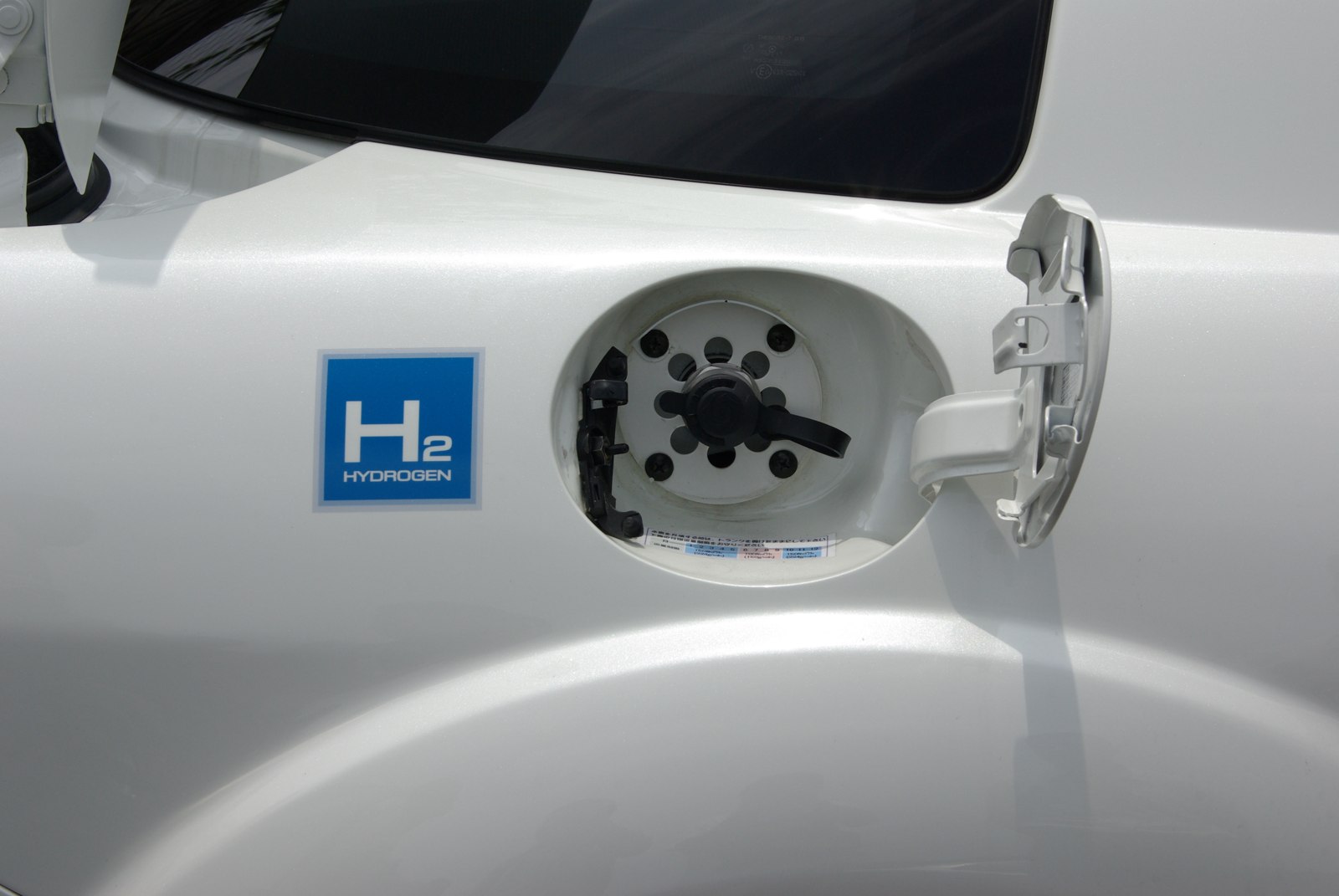
Hydrogen is notoriously difficult to burn cleanly in a normal piston engine, because it ignites easily and can pre-ignite or backfire when it comes into contact with hot surfaces inside a combustion chamber that's also handling intake air. A Wankel rotary sidesteps that problem almost by accident of its own layout: intake and combustion happen in physically separate sections of the same rotor housing as the rotor sweeps past them, rather than sharing one chamber the way a piston engine's intake valve and spark plug do. That keeps the intake side of the engine meaningfully cooler than the combustion side, which is exactly the condition hydrogen needs to avoid pre-ignition. Mazda engineered dual hydrogen injectors into each of the engine's two rotor housings — four injectors total — to directly inject gaseous hydrogen into the intake chambers, using more injectors than a gasoline setup would need simply because hydrogen's low density means a much larger volume has to be delivered for the same amount of energy.
None of this made the RX-8 Hydrogen RE a practical car — a 60-mile range and a fueling network that barely existed outside a handful of Japanese and Norwegian pilot sites saw to that. But it was a genuine, licensed, driven demonstration that the same rotary quirk that made Mazda's sports cars sound and rev like nothing else also made them unusually well suited to a fuel most other manufacturers still can't burn cleanly in an internal combustion engine at all.

Ford Ran the Timing Belt Through the Oil. Federal Investigators Say the Belt Is Now Starving the Engine.
A belt-in-oil drive is quieter and lower-friction than a chain. NHTSA's new engineering analysis says the 1.0-liter EcoBoost's belt sheds material that clogs the oil pump pickup — and that screen can't be cleaned without pulling the engine.
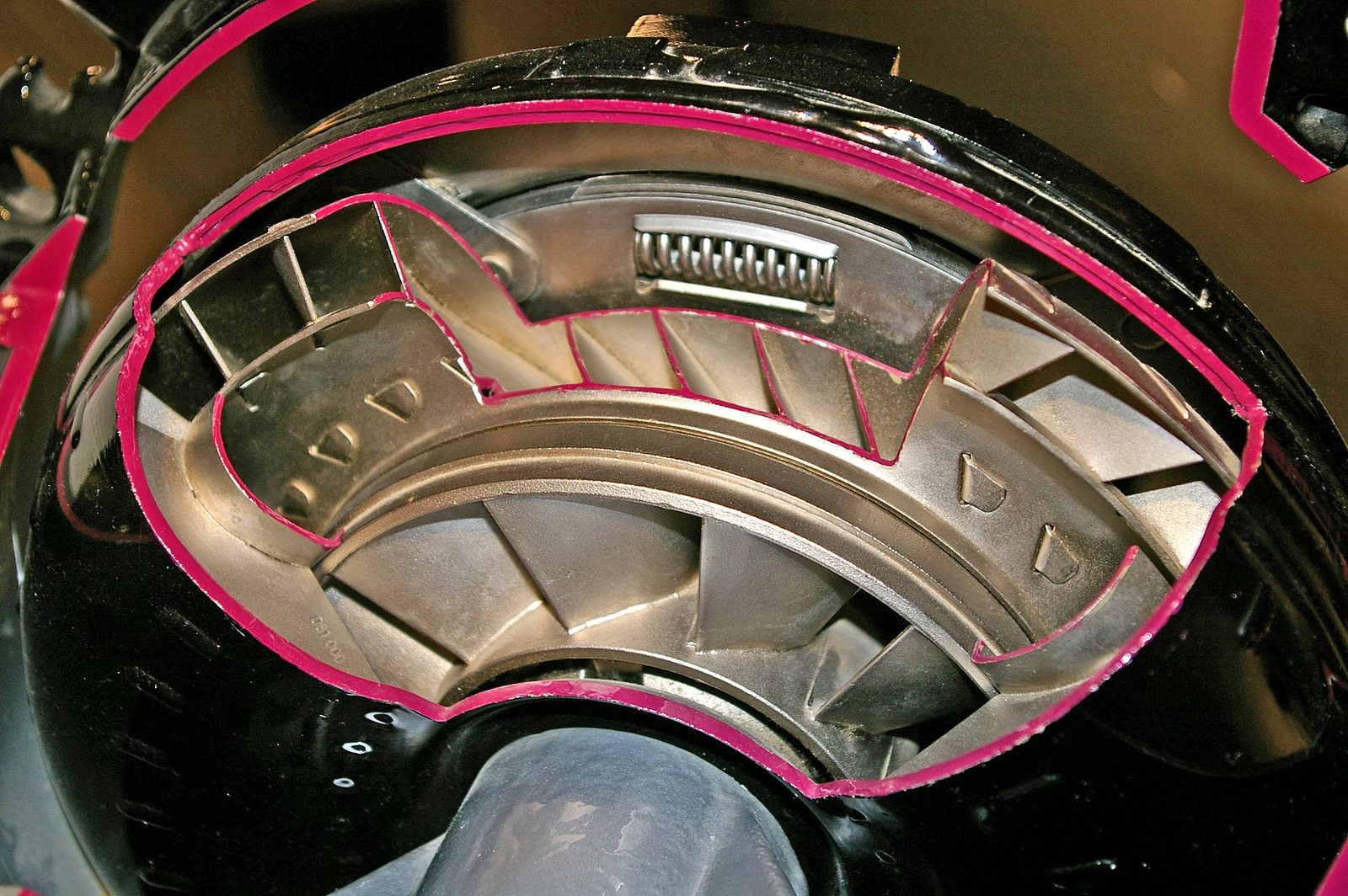
The Automatic's Oldest Trick: How a Torque Converter Multiplies Torque With No Gears
It has no gear teeth and nothing that meshes, yet a torque converter can roughly double engine torque off the line. The part doing the work is the one bolted to nothing at all.
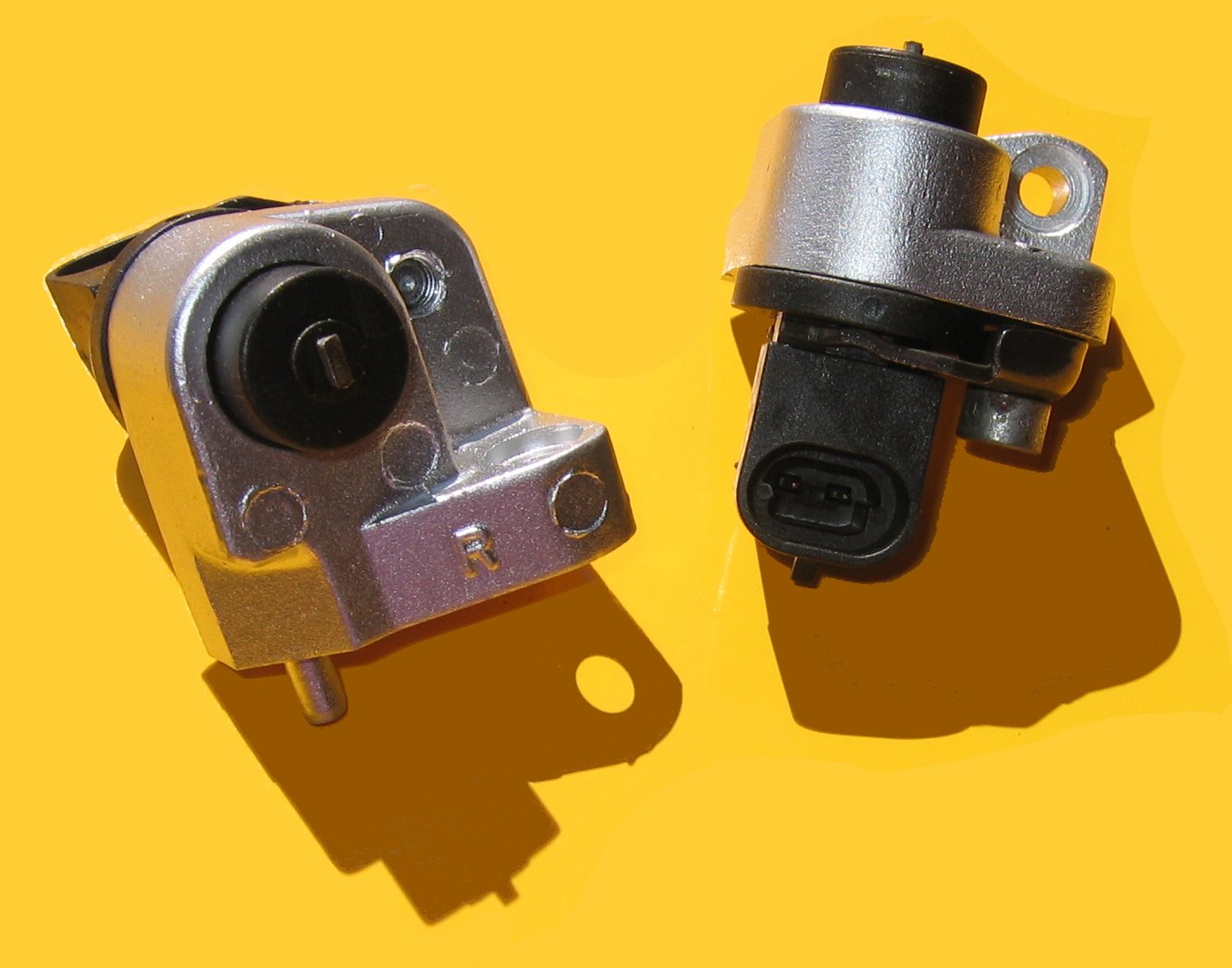
How Electronic Stability Control Reads a Slide and Corrects It Before the Driver Even Feels It
A network of wheel-speed, steering-angle, and yaw sensors checks the car's actual path against the driver's intended one many times a second — and brakes a single wheel to pull it back if the two disagree.