
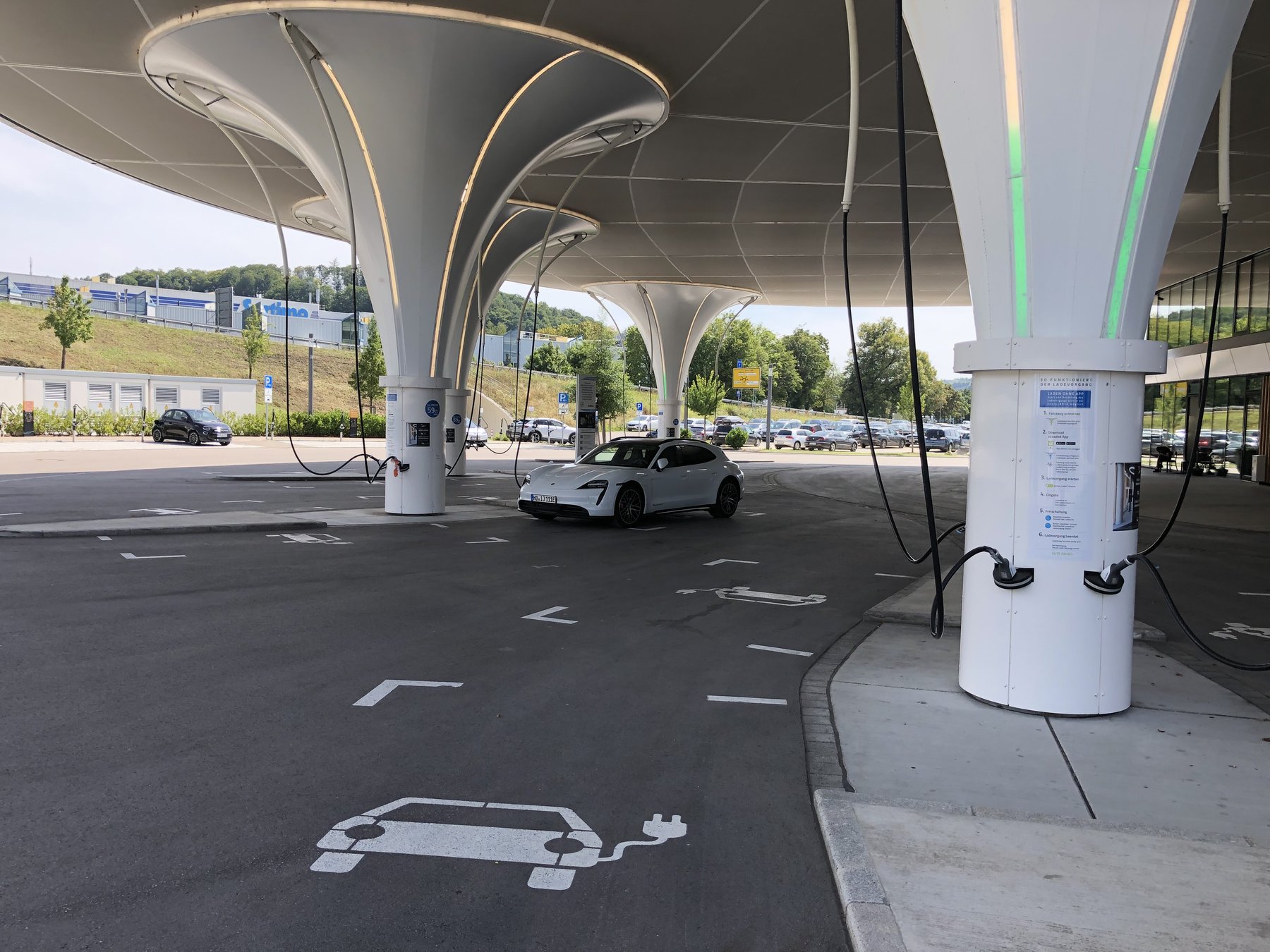
800 Volts Doesn't Make a Car Charge Faster. It Removes the Reason It Couldn't.
Double the pack voltage and you halve the current for the same power — and heat falls with the square of current. That's the entire trick. It still doesn't guarantee you a quick charge, and it quietly creates a compatibility problem nobody advertises.
- Porsche Taycan, 800V station
- 10–80% in 18 min, up to 320 kW
- Same Taycan, 400V station
- About 35 min, up to 150 kW
- Hyundai E-GMP (800V)
- To 80% in 18 min, manufacturer claim
- VW ID.7 Pro S (400V, 86 kWh)
- 10–80% in about 26 min, 200 kW
- CCS Combo 1 design envelope
- 200–920 V DC, up to 350 kW
Somewhere in the last few years, a number on a spec sheet that used to belong entirely to power-electronics engineers escaped into car advertising. An EV is now either an 800-volt car or a 400-volt car, and the second one is increasingly described — by manufacturers, by reviewers, by people in comment sections — as behind. It is worth being precise about what that number actually is, because the engineering reason it matters is real, the marketing version of it is oversold, and the practical catch attached to it almost never makes the brochure.
"At the same power output, half the cross-section of conventional 400-volt technology is sufficient for cables. In the Taycan, this saves around four kilograms in weight." — Porsche Newsroom, Taycan technical glossary
Start with the only two equations that matter. Electrical power is voltage multiplied by current, so if you want to push 300 kilowatts into a battery, you can do it with 750 amps at 400 volts or 375 amps at 800 volts. Identical power, half the current. The second equation is where the payoff lives: the power wasted as heat in any conductor is current squared times resistance. Halve the current and you don't halve the heat — you quarter it. Run that 300 kW through a charging path with, say, ten milliohms of total resistance (cable, connector contacts, vehicle busbar — the right order of magnitude, not a specific car), and the 400-volt version is dumping about 5.6 kilowatts into warming up copper. The 800-volt version loses about 1.4. Everything people like about 800-volt architectures descends from that one factor of four.
What it buys you is mostly subtraction. Thinner cable, smaller busbar, less copper, less of the cooling hardware whose only job is to carry away the heat the current made. Porsche, which built the Taycan around an 800-volt system, puts it plainly in its own technical glossary: at the same power output, half the cable cross-section of conventional 400-volt technology is enough, which in the Taycan saves around four kilograms. Four kilos is not a headline, but the weight is the least of it — thinner conductors are easier to route, the connectors run cooler, and the pack is less likely to hit a thermal ceiling that forces the charger to back off. That last point is the one that actually shows up on a road trip: not a higher peak, but a high rate the car can hold.
There's also a hard wall that voltage is simply the cleanest way around. SAE's CCS Combo 1 connector is specified for 200 to 920 volts DC and up to 350 kW, with a nominal current ceiling of 400 amps. Do the multiplication: at 400 amps, a 400-volt pack tops out somewhere near 160 kW. Give the same 400 amps to an 800-volt pack and you get roughly 320 kW out of identical hardware. Manufacturers do push current past the nominal figure — that's what liquid-cooled charging cables are for, and some commercial units are rated well above 400 amps — but every one of those amps has to be paid for with cooling plumbing in the cable and heat management at both ends. Raising voltage is the one lever that doesn't cost you anything thermally.
Which brings up the number you should stop shopping on. Peak kilowatts is a figure a car might touch for a minute or two near the bottom of the charge curve under ideal temperature conditions, and it tells you very little about how long you'll stand there. The P3 Charging Index, which measures vehicles across a 10 to 80 percent state-of-charge window precisely because peak power is "only achieved for a few minutes during the charging session," shows the gap concretely: in its 07/22 report a Porsche Taycan GTS peaked at 276 kW but averaged 227 kW across the window, a Kia EV6 peaked around 235 kW and averaged 203, and a Volkswagen ID.3 peaked at 103 kW and averaged 81. The honest number is the 10-80 time, or the average power behind it. A car that holds 200 kW beats a car that flashes 300 kW and then collapses, every single time.
The silicon question rides along with all of this. A traction inverter has to chop DC from the pack into AC for the motor, and the switching device doing the chopping has to block the full bus voltage with margin. Silicon IGBTs can be built to do that, but they switch comparatively slowly and carry a current tail when they turn off, and both of those cost you energy on every cycle — losses that scale with how hard and how fast you're switching. Silicon-carbide MOSFETs switch faster and cleaner, which is why they showed up in volume at the same moment 800-volt packs did. Bosch's fourth-generation inverter, offered in a 210–470 VDC version and a 360–920 VDC version, claims up to 99 percent efficiency using silicon carbide and up to six percent more vehicle range depending on use case, with roughly half the switching losses of a silicon IGBT. A 2020 IEEE Energy Conversion Congress paper modelled the split neatly: moving from a 400-volt to an 800-volt DC bus while keeping IGBTs bought about 1.2 percent more range, while an 800-volt bus with an all-SiC inverter bought 5.0 percent. The voltage alone is worth very little. The voltage plus the right semiconductor is worth something real.
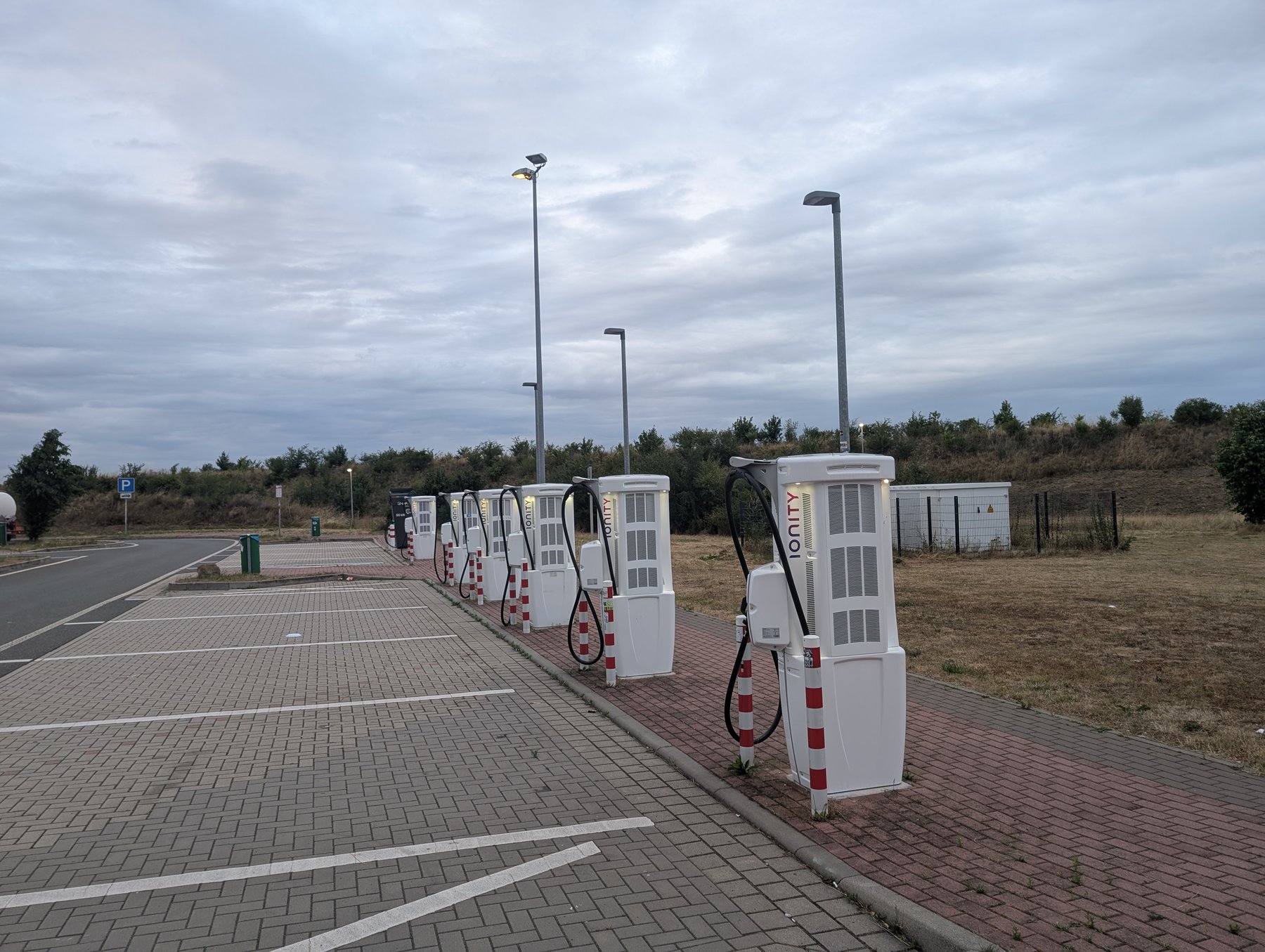
Now the part nobody puts on the window sticker. An 800-volt car still has to plug into whatever is actually installed by the roadside, and a great deal of that installed base is 400-volt or 500-volt-class hardware that physically cannot deliver 800 volts. Vicor, which builds power modules for exactly this problem, noted that as of 2020 only about 400 of roughly 40,000 European charging stations supported 800-volt vehicles — the ratio has improved since, but the shape of the problem hasn't. Tesla's own network is a useful marker: V3 posts were built around a roughly 500-volt, 250 kW envelope, and it took the V4 cabinet, which supports vehicle architectures from 400 all the way to 1,000 volts, to unlock 500 kW for an 800-volt car. If you own an 800-volt car and the only charger in town is a 500-volt unit, the architecture has bought you nothing by itself.
So 800-volt cars carry a workaround, and the workarounds are genuinely clever engineering. Porsche fits a Combined Booster Charger — a unit that replaced the old DC/DC converter and the first-generation high-voltage booster — and the published numbers show exactly what it costs: the current Taycan charges 10 to 80 percent in 18 minutes at an 800-volt station at up to 320 kW, but on a 400-volt charge point it is limited to 150 kW and takes about 35 minutes. Same car, same battery, roughly double the time, because of what it's plugged into. Hyundai took a different route with E-GMP, using the drive motor windings and the inverter itself as the boost converter rather than adding dedicated hardware — a world-first patented approach, by the company's own description, that lets the platform accept 400-volt charging with no adapter while offering 800-volt charging as standard and claiming up to 80 percent in 18 minutes. Both solutions work. Both exist only because the infrastructure didn't keep pace with the cars.
It's also worth saying clearly that pack voltage does not set the charging speed — it only removes one constraint on it. What actually governs how fast lithium ions can be stuffed into an anode is cell chemistry and temperature. Push the rate too hard, especially when the pack is cold, and lithium plates out as metal on the anode instead of intercalating into it, which is permanent capacity loss and a safety issue, so every battery management system in production throttles current to stay clear of it. That's why cars precondition their packs before a fast-charge stop, and why the same car charges dramatically slower on a winter morning. A 400-volt car with good cells and good thermal management will beat an 800-volt car with bad ones. Volkswagen's ID.7 Pro S is an MEB car on a 400-volt system, and VW publishes 200 kW peak and a 10-to-80 charge in about 26 minutes from an 86 kWh pack. That is not a car in trouble. It's worth adding that "800-volt" is a class label rather than a measurement anyway — Bosch's high-voltage inverter is specified across 360 to 920 volts, and the CCS connector is designed for 200 to 920, because a pack's actual voltage swings by hundreds of volts between empty and full.
The last thing higher voltage changes is who can safely touch it. Anything above 60 volts DC is already in lethal territory, and going to 800 makes the physics less forgiving in specific ways: arcs start more easily and are harder to extinguish than at 400, and the minimum spacing between conductors — both through air and across insulating surfaces — roughly doubles, with an 800-volt DC bus in automotive conditions typically needing creepage distances in the eight-millimetre range for basic insulation under IEC 60664-1. That ripples through connector design, contactor selection, fusing, and the tolerance for contamination and moisture over a fifteen-year service life. For an owner it mostly means the pool of independent shops qualified to open the orange-cabled parts of the car gets smaller, not larger.
None of which makes a 400-volt car obsolete. It makes it a different set of engineering trade-offs: cheaper, more compatible with the chargers that exist right now, more dependent on cell chemistry and cooling to deliver a good charge curve, and carrying a bit more copper around for life. The 800-volt car spends money on semiconductors and insulation up front to buy headroom it can only cash in where the infrastructure cooperates. Describing one as behind the other flattens all of that into a single number, which is exactly what spec sheets are for and exactly why they're a bad way to choose a car. Ask for the 10-to-80 time instead, and then ask what it was measured on.
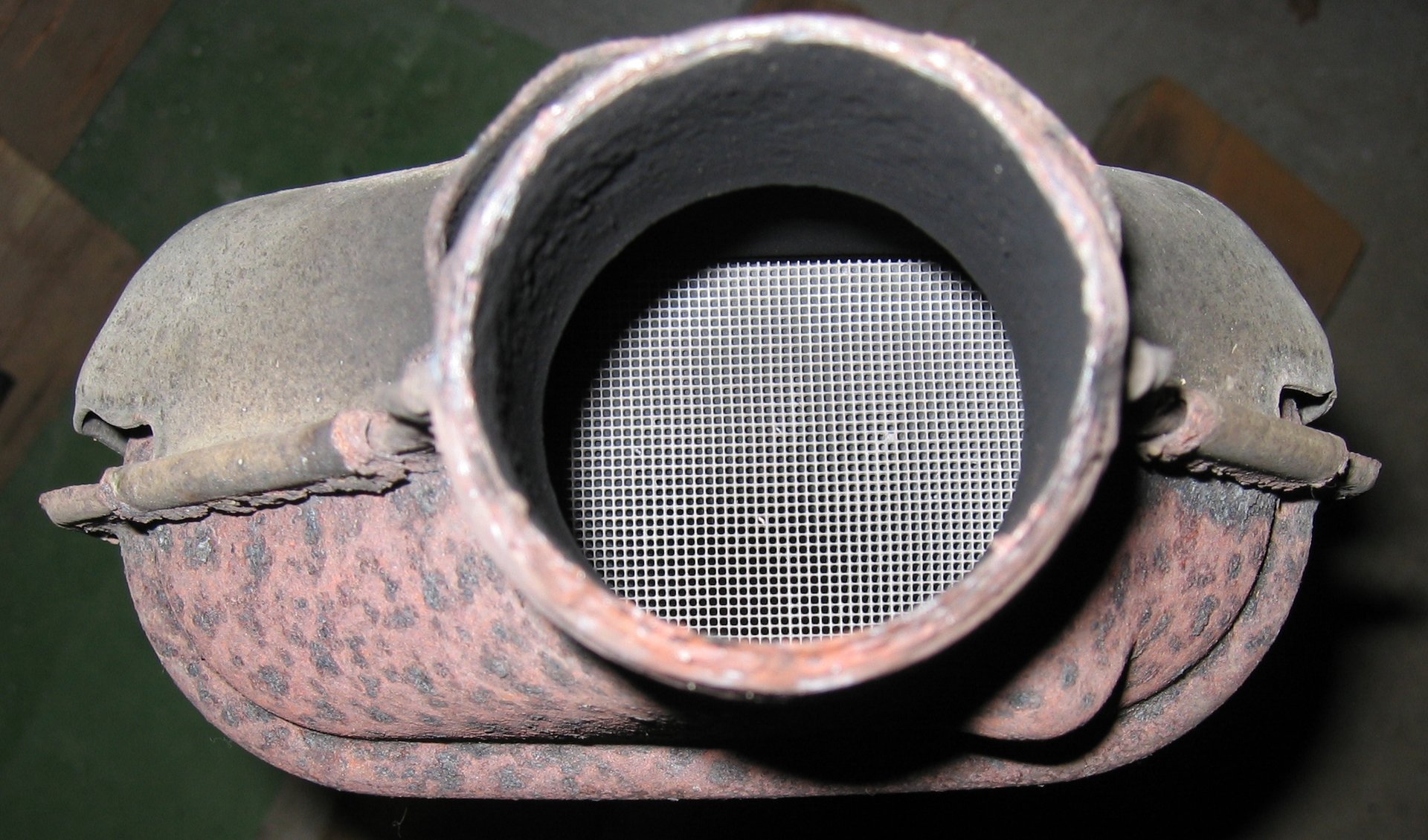
A Catalytic Converter Runs Two Opposite Reactions at Once, and Only Inside a Very Narrow Window
Burning carbon monoxide and unburnt fuel needs oxygen. Stripping nitrogen oxides back to nitrogen needs oxygen taken away. A three-way cat does both in the same brick, which is the whole reason closed-loop fuelling and the oxygen sensor exist.
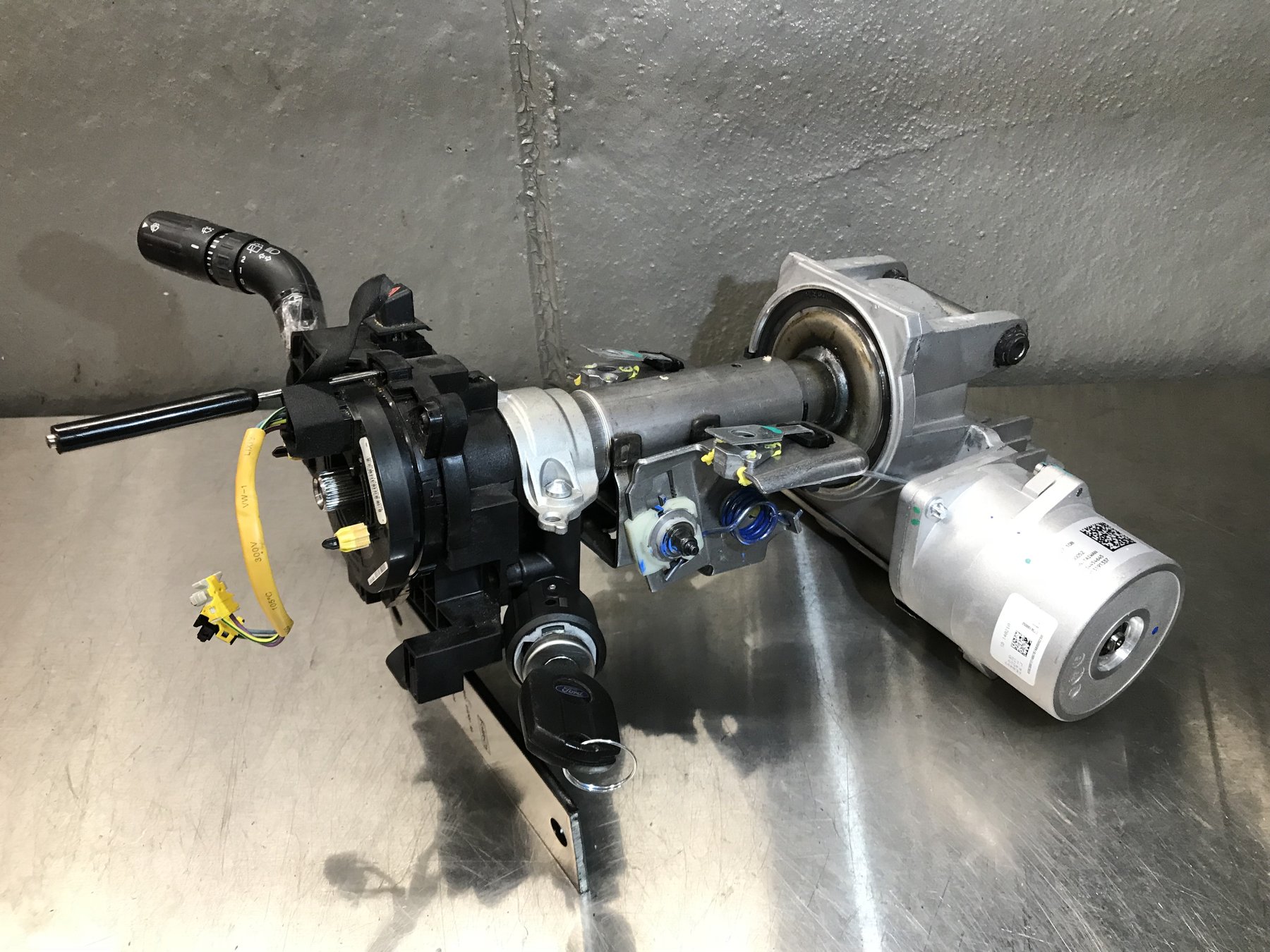
Electric Power Steering Won on Physics. The Missing Feel Was a Tuning Decision.
A hydraulic rack burns engine power whether you are steering or not, and it cannot steer itself — which is why it lost. But "no feel" is not an inevitable consequence of putting a motor in the loop. It is what happens when inertia, friction and software go unaddressed.
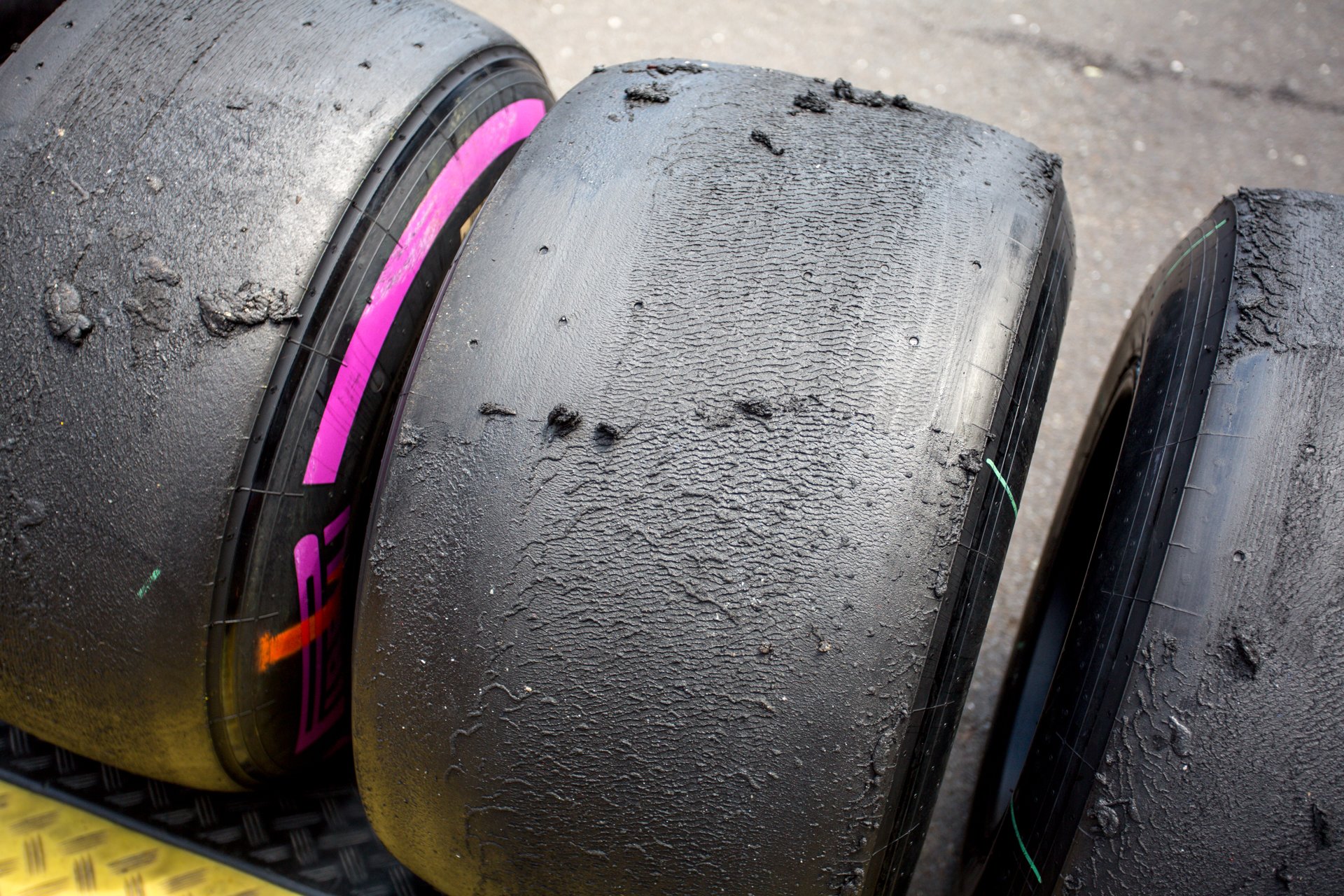
How a Tyre Actually Makes Grip
The textbook friction formula says grip ignores contact area and can’t exceed the load pressing down. Rubber breaks both rules, and understanding why explains almost everything a car does at the limit.