
How a Tyre Actually Makes Grip
The textbook friction formula says grip ignores contact area and can’t exceed the load pressing down. Rubber breaks both rules, and understanding why explains almost everything a car does at the limit.
- Reference footprint
- Goodyear Wrangler HT, LT235/85R16
- Vertical load
- 1,980 lb
- Inflation
- 44 psi
- Gross contact area
- ≈45 sq in
Open a physics textbook and friction looks like a solved problem. The force resisting sliding is a coefficient times the load pressing the surfaces together — F = μN — and two consequences fall straight out of it. Contact area doesn’t matter. And μ is a fixed property of the two materials in contact. Most of us also absorb a third idea somewhere along the way: that μ is a number smaller than one. All three are perfectly serviceable for a wooden block on a bench, and none of them survives contact with a tyre. Wikipedia’s own friction article, which is about as conservative a statement of the mainstream position as you can get, rejects the third outright, noting that rubber against other surfaces routinely lands somewhere between 1 and 2. A data table reproduced from Milliken and Milliken’s Race Car Vehicle Dynamics — the standard reference work on this subject — shows a racing tyre at 900 lbf of vertical load generating 1.10 times that load in lateral force. B.N.J. Persson’s tyre-dynamics modelling, built on a passenger-car tread compound rather than a slick, puts the peak of its braking curve at μ between 1.11 and 1.14. A tyre can pull harder sideways than the weight sitting on it, which under the schoolbook model is not supposed to be possible.
"Optimum grip is achieved when the tread temperature lies between 90 °C and 105 °C." — W.J. West & D.J.N. Limebeer, Optimal Tyre Management for a High-Performance Race Car
The reason is that rubber doesn’t make friction the way a sliding block does. It makes it two ways at once. The first is adhesion: at the microtexture scale, rubber and road form genuine molecular bonds, which then have to be sheared to break. That mechanism depends directly on the true area of contact, and work by Mohammad Al-Assi and Emad Kassem at the University of Idaho, who measured surface free energies of rubbers and aggregates and correlated them against measured friction, describes adhesion as the dominant component in dry conditions at low speed. The second is hysteresis. Road surfaces are rough, rubber is a viscoelastic solid, and as the tread flows down into and back out of every asperity it dissipates energy as heat rather than returning it — a loss that shows up as a retarding force. That component, the same work notes, takes over at higher speeds and in the wet, where a water film has already killed most of the adhesion. There is a third, smaller contribution from the rubber simply tearing itself apart, which is why a tyre that grips also wears.
Hysteresis is where the physics gets genuinely strange, because it means the grip depends on how fast you are sliding and how rough the road is, not just what the two materials are. Persson’s treatment makes this explicit: an asperity of diameter d, swept at sliding velocity v, excites the rubber at a frequency of roughly v/d, and the friction is large only if the compound’s loss tangent is large across that whole band of frequencies. Real tarmac presents a continuous spread of asperity sizes, so a tyre is being shaken across a wide frequency range at once. His modelling puts the macroasperity contact patches on a typical road surface at roughly 0.1 to 1 cm across, covering only something like 10 to 30 per cent of a tread block’s face. The contact patch, in other words, is mostly not in contact.
That same work is also the clearest statement of why the simple model fails. Because all that dissipated energy is deposited into tiny contact spots, those spots get hot — Persson calls it the flash temperature — and hot rubber has a different loss tangent, so its friction drops. A 10 °C rise can shift the loss spectrum by a full frequency decade. Crucially, the heating takes a finite sliding distance to develop, so the friction a tread block feels right now depends on everywhere it has already slid. Persson’s own worked example for a tread block on one asphalt surface spans more than a factor of three between its cold branch and its hot branch, on nothing but sliding history. There is no static-plus-kinetic pair of coefficients that captures that, and he says so directly: you cannot describe rubber friction with two numbers, or even with a function of the instantaneous sliding speed.
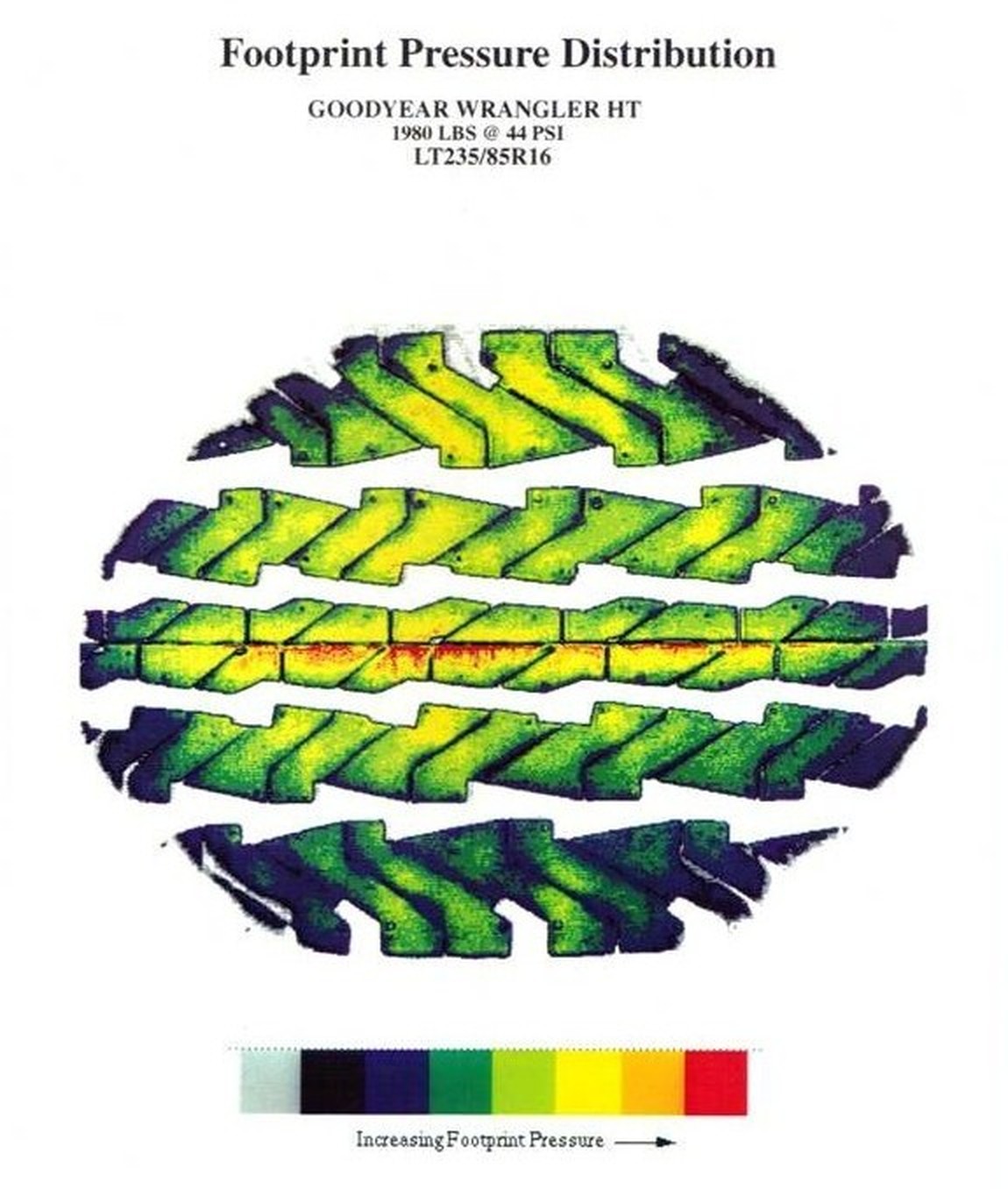
So much for the coefficient. The other half of F = μN is the load, and that leads straight to the contact patch. To a first approximation the patch area is just the vertical load divided by the inflation pressure, which is a satisfyingly blunt piece of arithmetic: a Goodyear Wrangler HT in LT235/85R16, carrying 1,980 lb at 44 psi, works out to 45 square inches — around 290 square centimetres, a shade under a sheet of A5 paper. The measured footprint pressure map for exactly that tyre at exactly that load and pressure, published by a tyre engineer under the handle CapriRacer, shows how rough that approximation really is. Pressure isn’t uniform across the patch; the centre rib runs noticeably higher than the shoulders, and the grooves between the tread blocks carry nothing at all. One published set of static contact-patch measurements found patch length shrinking with pressure only up to about 32 psi and then holding flat at 4.05 inches — proof that above a certain point the carcass and belt package, not the air inside, is what sets the shape.
Which is why the most common thing people believe about tyres — that a wider tyre has more grip because it has more rubber on the road — is, as stated, wrong. Hold load and pressure constant and the area is roughly fixed; make the tyre wider and you mostly just reshape the patch, trading length for width. The benefits of width are real but they arrive by a less obvious route. Spreading the same load over more rubber drops the contact pressure, and tyres make more grip per unit load at lower load. And a shorter patch means each tread block travels a shorter distance through the footprint before it exits, which Persson’s modelling says lets it stay on the high-friction cold branch to higher slip speeds before the flash temperature builds. Note what that is: an argument from a specific thermal model, not a universal law. The honest answer is that width helps, but not for the reason almost everyone gives.
The load-pressure relationship has a name — tyre load sensitivity — and it is the single most consequential tyre fact a driver can know. Maximum horizontal force rises with vertical load, but sub-linearly; the commonly quoted rule of thumb is that it goes roughly as load raised to a power somewhere in the 0.7 to 0.9 range. The Milliken table makes it concrete. At 900 lbf that tyre returns 1.10 times its load in lateral force; at 1,350 lbf, 1.08; at 1,800 lbf, only 0.97. Run the arithmetic on an axle. Two tyres evenly loaded at 1,350 lbf each make 2,916 lbf of lateral force between them. Transfer 450 lbf across that axle so one carries 1,800 and the other 900 — same total load on the axle — and you get 1,746 plus 990, or 2,736 lbf. Roughly six per cent of the axle’s grip has simply evaporated, because the outside tyre gains less than the inside tyre loses. That, and not some vaguer notion about the car leaning over, is the real reason weight transfer is expensive, and the real reason anti-roll bar and spring choices change the balance of a car.
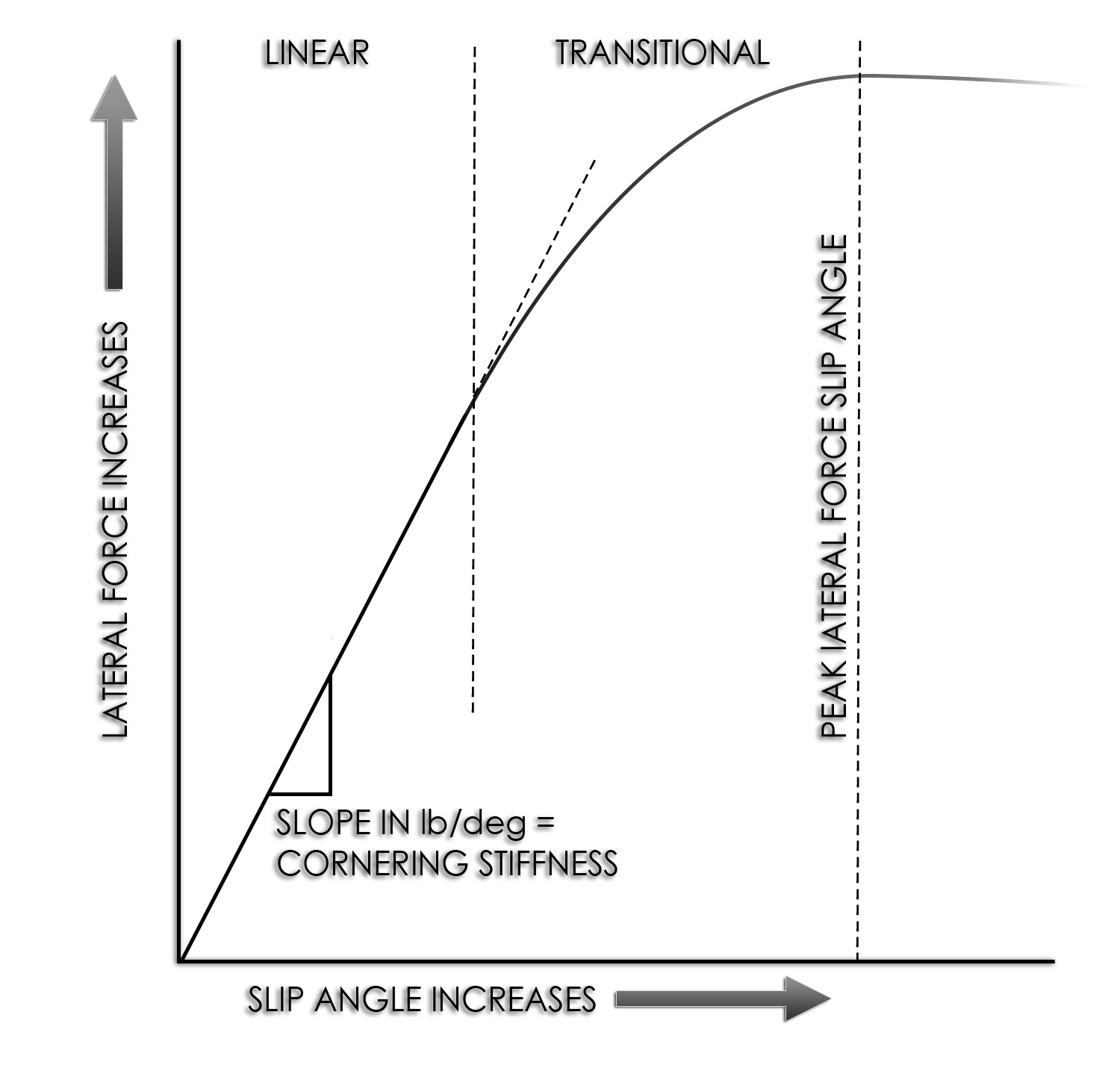
None of this force appears without deformation. A tyre doesn’t steer by pointing; it steers by being dragged slightly sideways of where it is aimed, so the tread rubber in the patch deflects laterally and pushes back. The angle between where the wheel points and where the contact patch is actually travelling is the slip angle, and it is not sliding — at small angles the rubber is stuck to the road and simply being sheared. The longitudinal equivalent is slip ratio, the mismatch between road speed and wheel circumferential speed, normalised by road speed; a wheel that is being braked turns slightly slower than the ground beneath it, and that difference is what generates stopping force. Both curves have the same shape, which is the shape every driver has felt without necessarily having a name for it: force climbs almost linearly at first, with a slope engineers call cornering stiffness, bends over through a transitional region, reaches a peak, and then falls away. Milliken’s data puts the peak lateral force for that tyre between 5.6 and 6.7 degrees of slip angle depending on load. Persson’s modelling puts the braking peak at a longitudinal slip of about 0.057. Both are specific to a compound and a surface rather than universal, but the shape is universal.
Everything to the right of that peak is the tyre giving grip back, which is why a car that is sliding is slower than a car that is on the edge of sliding, and why a locked wheel stops worse than a rotating one. It is also the entire reason ABS and traction control exist in the form they do. They are not trying to stop the wheel slipping — zero slip means zero force. They are trying to hold it at the top of the curve. Persson states the control objective about as plainly as it can be stated: raise the braking torque when slip is below the peak value, cut it when slip is above it. In his simulation the system hunts around that peak and the wheel edges toward locking three or four times a second. Where exactly that peak sits is surface-dependent, which is why production ABS calibrations quote a range rather than a number, and why the figures you find in the literature scatter across anything from a few per cent to around 30 depending on compound, road and how the authors defined the test.
Then there is the awkward matter of doing two things at once. Whatever the tyre’s total shear capability is, it has to be shared between braking or accelerating and cornering — the classic friction circle, sometimes called Kamm’s circle. A Chalmers thesis on real-time friction estimation makes the practical correction to the textbook version: in theory the limit is a circle, but tyres are not isotropic, and the measured boundary comes out as an ellipse rather than a circle. Persson’s combined-slip results show the same thing from the other side, with lateral grip at a given slip angle measurably lower once longitudinal slip is also present. This is not an abstraction. It is why trail braking has to be unwound as the steering goes on, why you cannot stand on the throttle at the apex, and why a mid-corner stab of brake pedal is the fastest route to the scenery.
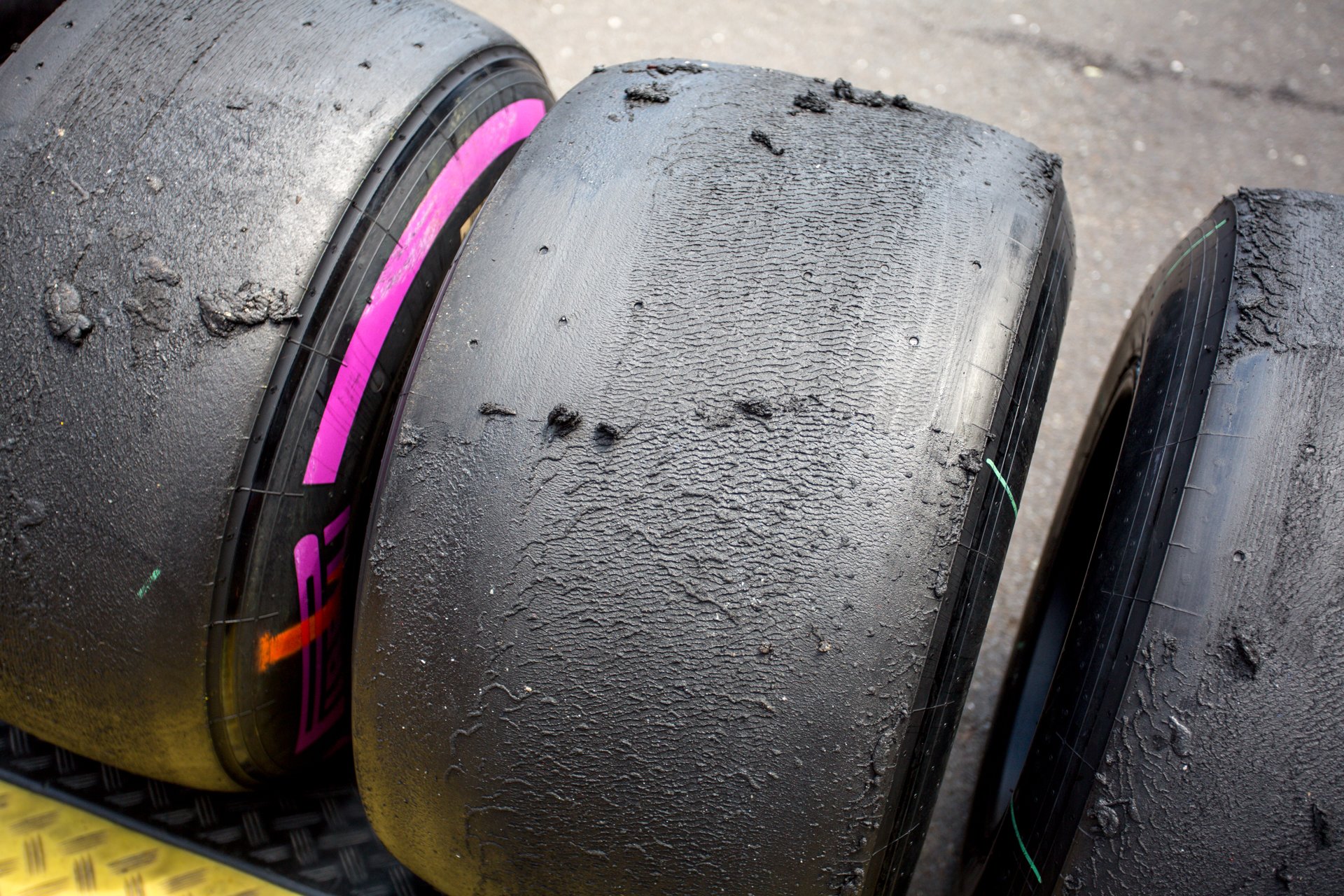
Finally, temperature and pressure — the two things you can actually change in a paddock. The temperature window is real and it is narrow. West and Limebeer, modelling tyre management for a race car at the University of Pretoria, put optimum grip for a super-soft compound between 90 °C and 105 °C, and are careful to add that the window varies between compounds. Below it the compound is too stiff to flow into the road’s microtexture and the hysteresis term never properly switches on; above it, Persson’s loss-tangent shift drags friction down, and West and Limebeer note that local hot spots start producing the blistering you can see on any badly abused slick. Pressure, meanwhile, is a shape control more than a grip control: raise it and the patch shrinks and crowns onto the centre rib, drop it and the patch spreads and loads up the shoulders, and the wear pattern tells you which mistake you made. Both are compound-specific, surface-specific and construction-specific, and anyone quoting you a universal number for either is selling something. The mechanisms generalise. The numbers never do.
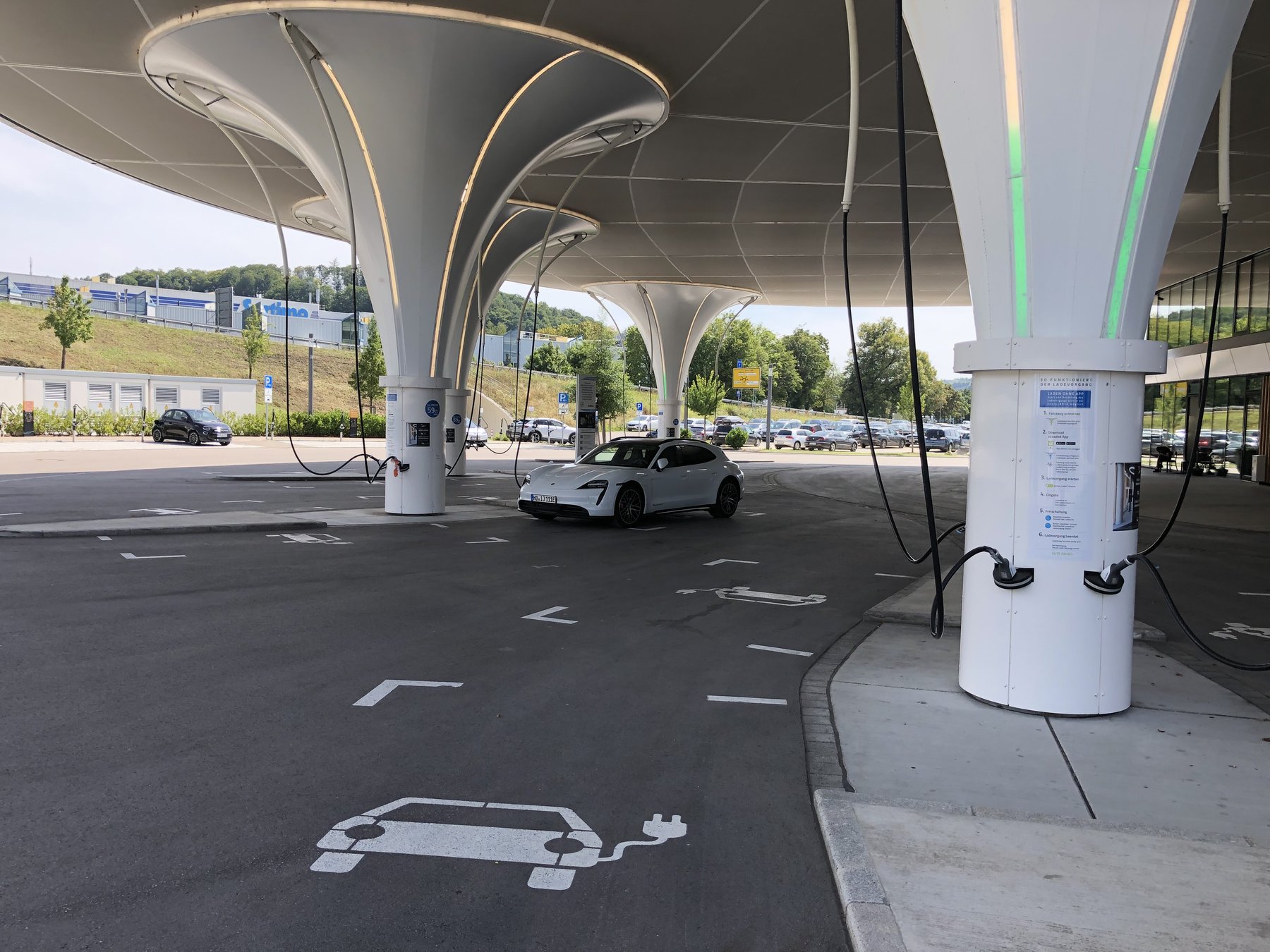
800 Volts Doesn't Make a Car Charge Faster. It Removes the Reason It Couldn't.
Double the pack voltage and you halve the current for the same power — and heat falls with the square of current. That's the entire trick. It still doesn't guarantee you a quick charge, and it quietly creates a compatibility problem nobody advertises.
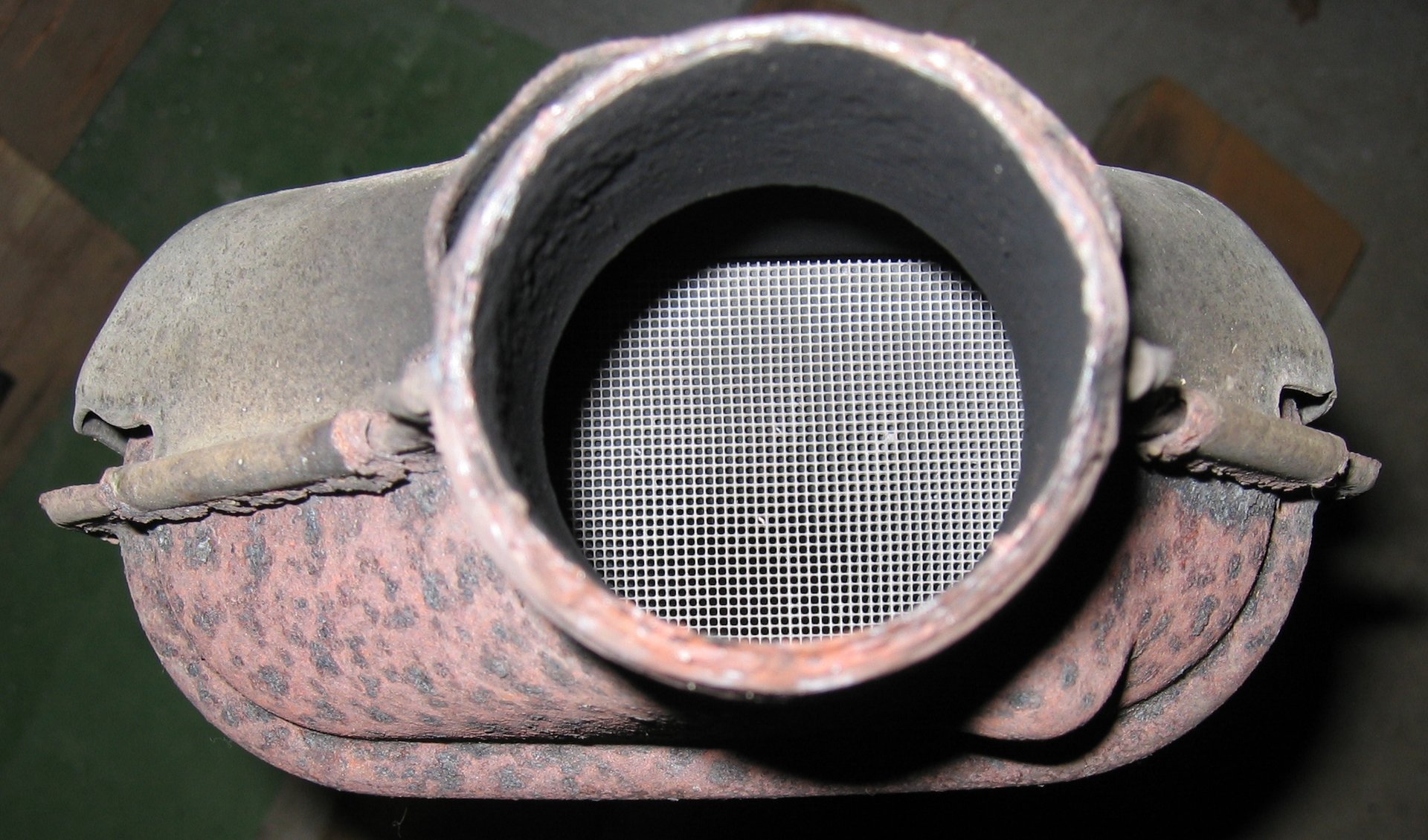
A Catalytic Converter Runs Two Opposite Reactions at Once, and Only Inside a Very Narrow Window
Burning carbon monoxide and unburnt fuel needs oxygen. Stripping nitrogen oxides back to nitrogen needs oxygen taken away. A three-way cat does both in the same brick, which is the whole reason closed-loop fuelling and the oxygen sensor exist.
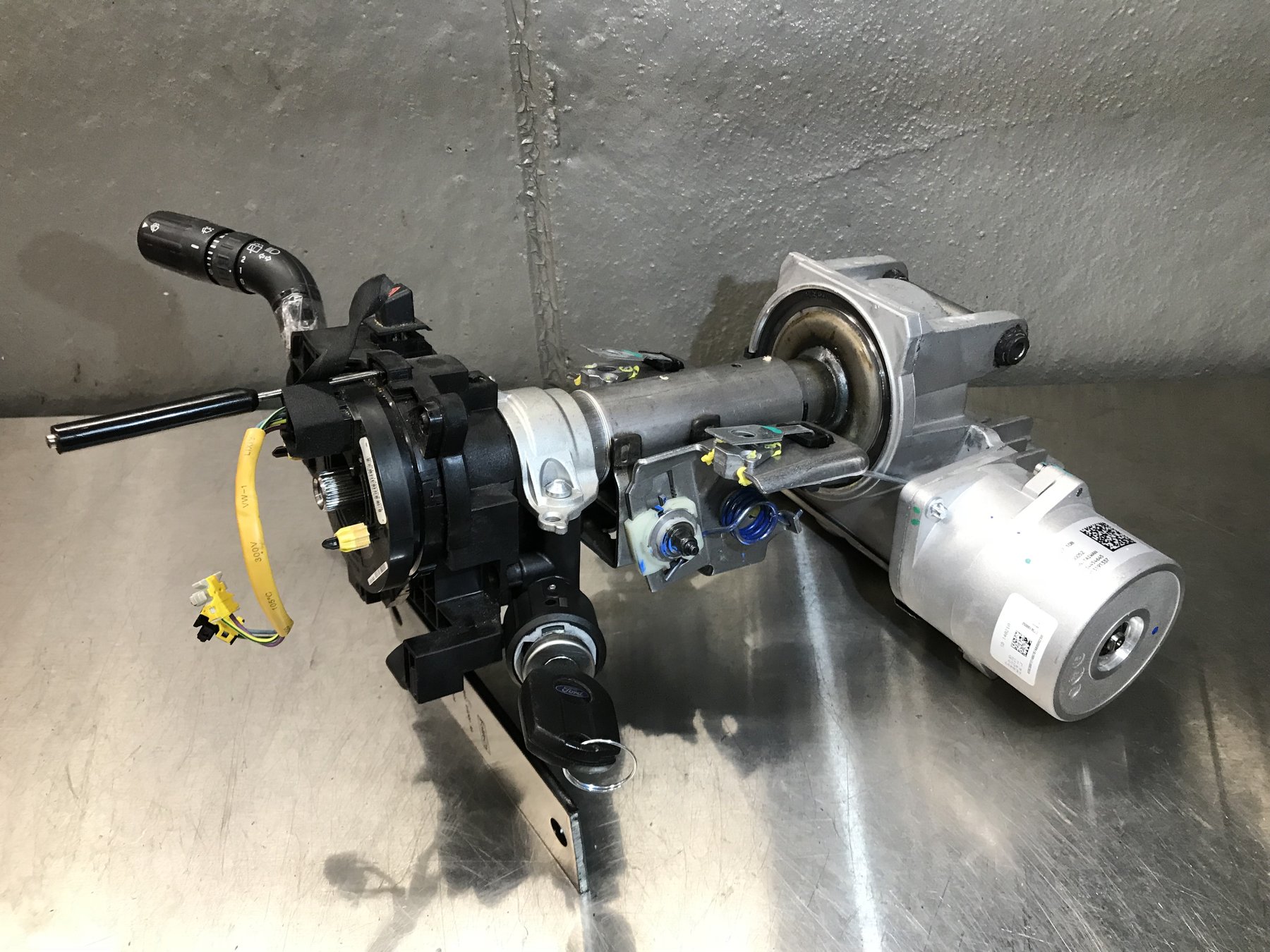
Electric Power Steering Won on Physics. The Missing Feel Was a Tuning Decision.
A hydraulic rack burns engine power whether you are steering or not, and it cannot steer itself — which is why it lost. But "no feel" is not an inevitable consequence of putting a motor in the loop. It is what happens when inertia, friction and software go unaddressed.