
Electric Power Steering Won on Physics. The Missing Feel Was a Tuning Decision.
A hydraulic rack burns engine power whether you are steering or not, and it cannot steer itself — which is why it lost. But "no feel" is not an inevitable consequence of putting a motor in the loop. It is what happens when inertia, friction and software go unaddressed.
- Bosch EPS motor range
- 2–8 Nm, 400–800 W
- Column-assist ceiling
- 1,000 kg steering axle load
- Dual-pinion ceiling
- 1,200 kg
- Belt/rack-drive ceiling
- 1,600 kg
- Energy use vs hydraulic
- −90% (Bosch, urban cycle)
- First production EPS
- Suzuki Cervo, March 1988
Every time a manufacturer swaps a hydraulic steering rack for an electric one, a reliable chorus goes up that the new car has "no feel," and a second chorus answers that this is nostalgia dressed up as engineering. Both choruses are partly wrong. Feedback through a steering wheel is a real, measurable torque signal with a known physical path, and an assist motor sitting in that path really can bury it. But nothing about an electric motor makes the burial mandatory. It is a hardware and software outcome, and the suppliers' own technical literature reads like a list of the things you have to get right to avoid it.
"Yes, the Cybertruck's steering feels video-gamey and artificial." — Maddox Kay, The Drive
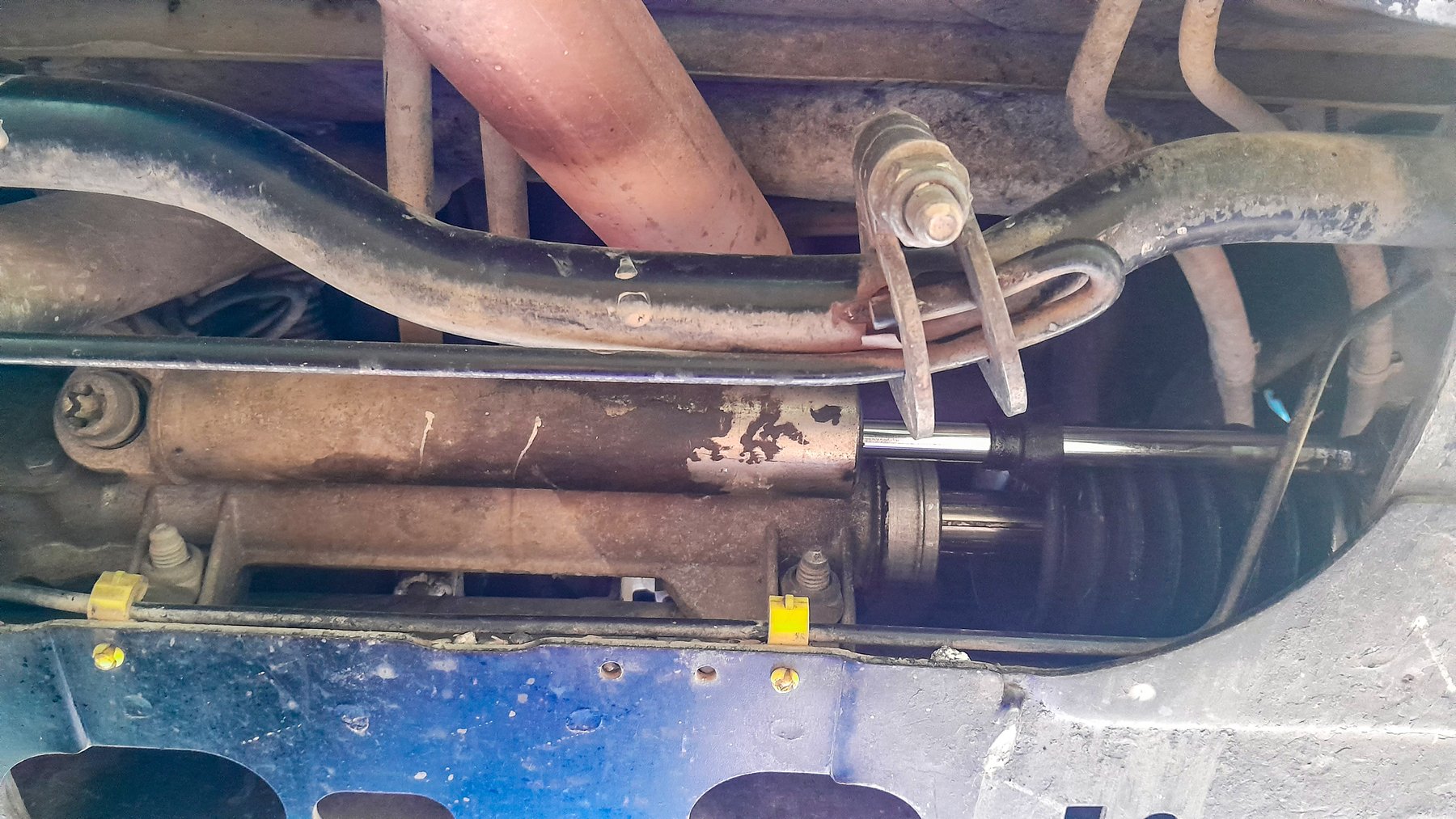
Start with what a hydraulic rack actually does, because the mechanism explains both its reputation and its downfall. A vane or gerotor pump is bolted to the engine and spun by the accessory belt. Down at the rack, your steering shaft does not connect rigidly to the pinion; it connects through a torsion bar inside a rotary valve. The valve is an inner input shaft running inside a close-fitting sleeve, both machined with longitudinal slots that form a ring of orifices. As the patent literature describing these valves puts it, the torsion bar "serves to urge the input-shaft and sleeve towards a neutral, centered condition when no power assistance is required." Apply torque at the wheel, the bar twists a degree or two, the orifices shift, and drilled passages route pump oil to the right-hand or left-hand chamber of the assist cylinder. Pressure lands on one side of the rack piston and shoves it. The harder you push, the more the bar twists, the more oil goes to the working side.
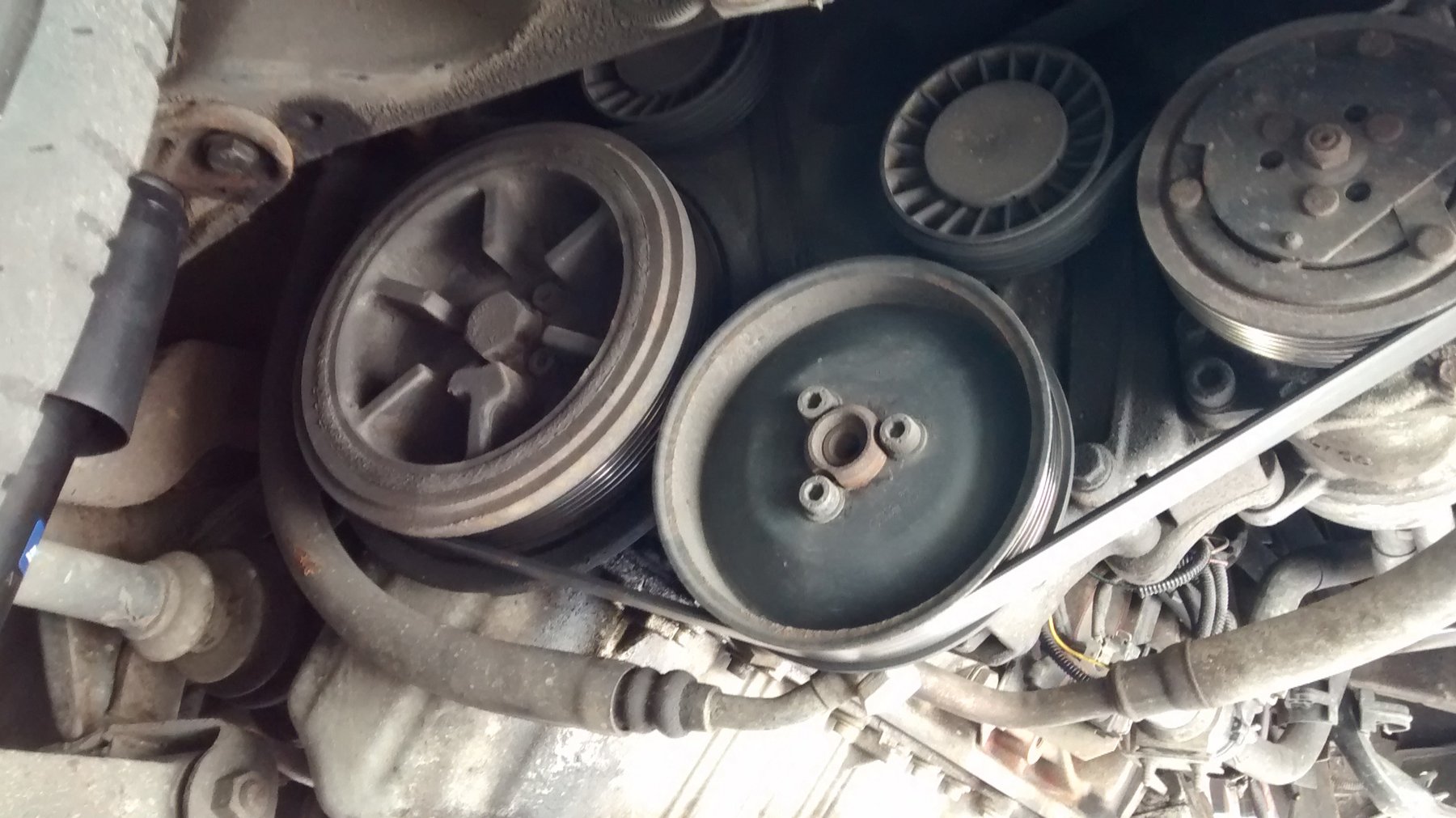
That is an elegant piece of mechanical logic, and it has one glaring problem: the pump does not know or care whether you are steering. It is geared to the crankshaft, so it spins on the motorway at a constant 70 mph just as hard as it does in a car park, and most of that flow gets dumped back to the reservoir through a restricting orifice and flow-control valve. Bosch quantifies the gap in its own Servolectric product sheets: compared with hydraulic steering, an electric system cuts steering energy consumption by 90 percent, which Bosch translates into a 10 percent reduction in fuel consumption and CO2 for a two-litre petrol car averaging 7.7 l/100 km in urban traffic. That is the whole case in one line. Add the fluid, the hoses, the cooler, the belt, the leaks and the engine-bay real estate the pump occupies, and the accountants were never going to lose this argument.
Honda made the enthusiast version of the argument early. Its own press material for the S2000 — a car with a 13.8:1 steering ratio and no reputation for numbness — says flatly that "in place of a conventional hydraulic system, with its hoses, fluid and power drain, the S2000 uses an electrically assisted power steering system." The genuine first, though, belongs to a kei car. JTEKT states in its corporate reporting that it was first in the world to develop and mass-produce EPS and that "in 1988, the first EPS was used in Cervo by Suzuki Motor Corporation"; Suzuki's own model history puts the launch in March 1988, as a ¥150,000 option on three Cervo trim levels. Thirty-eight years later JTEKT's forecast was that EPS would be fitted to more than 80 percent of all cars built.
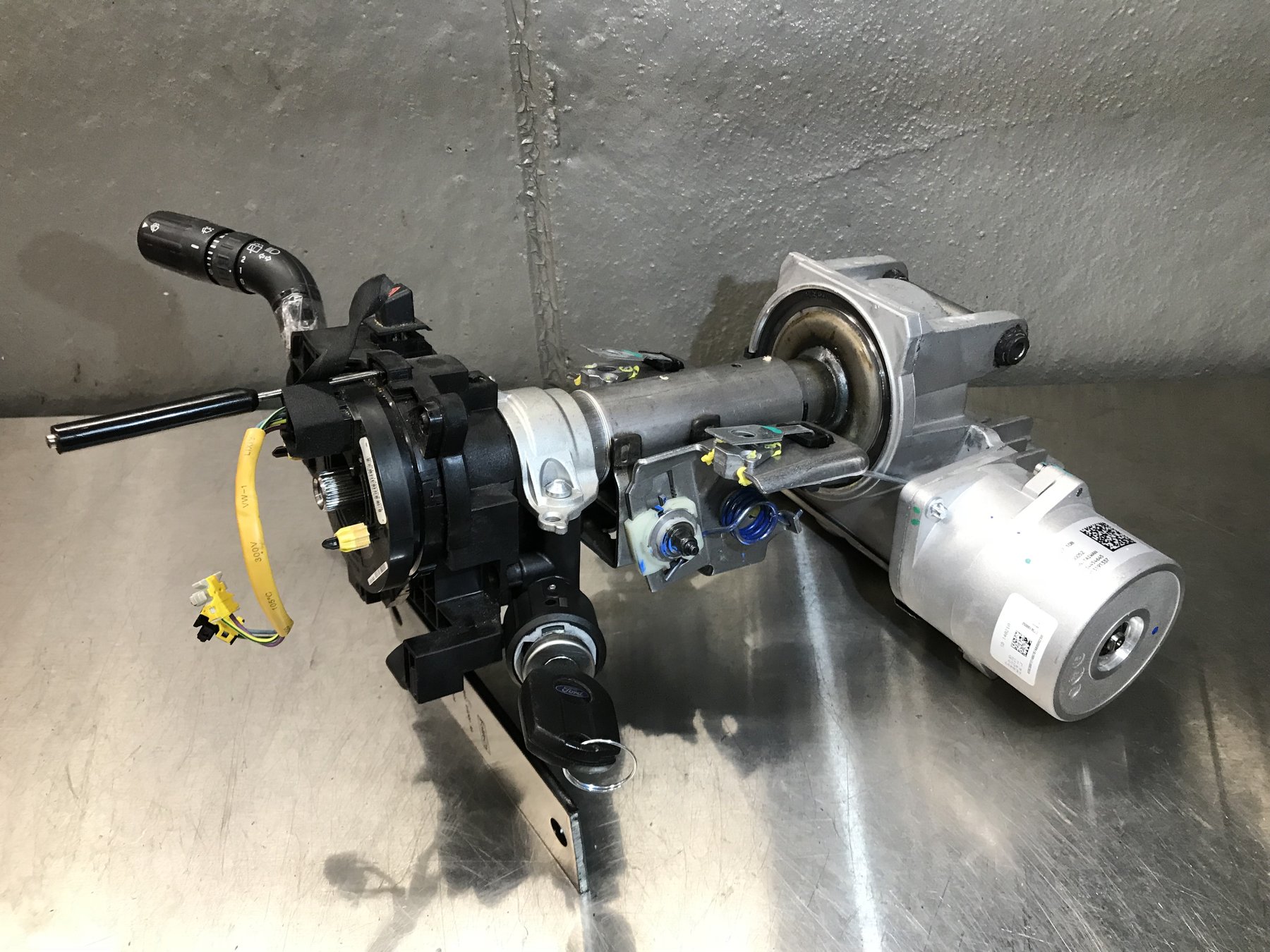
Mechanically, EPS keeps more of the hydraulic architecture than people assume. The torsion bar survives — it just stops being a valve spool and becomes a sensor. Twist it, measure the twist, and you have a direct reading of driver torque. An ECU takes that signal plus vehicle speed and commands a brushless motor; Bosch's range spans 2 to 8 Nm and 400 to 800 W, which it says "covers the requirements of all passenger cars and light commercial vehicles." The assist curve that used to be a consequence of valve porting and pump pressure is now a lookup table. Which is exactly why the same hardware, as Bosch notes, "can be adapted for various types of application" purely in software.
Where you put the motor is the real architectural decision, and it drives everything else. Column assist bolts the motor and a worm gear to the steering column itself, inside the cabin — cheapest, lightest, driest, and delivered to the line as one assembly. Bosch configures it up to a 1,000 kg steering axle load. The catch is that all the assist torque then has to travel down the intermediate shaft through its universal joints before it reaches the rack, and every bearing and joint in that run sits between the road and your hands. Pinion assist moves the motor down to the gearbox. The dual- or second-pinion layout adds a dedicated drive pinion so the sensor and the motor act at different points; Bosch rates it to 1,200 kg, says the drive pinion's ratio independence "paves the way for performance-optimized configuration," and claims system performance is increased by 10 to 15 percent over the single-pinion arrangement.
The heavy-duty answer is rack assist. Bosch's paraxial variant drives the rack directly through a toothed belt and a recirculating ball nut, is configured to 1,600 kg of steering axle load, and is sold for sports cars, the luxury class, SUVs and light commercials — and the headline product benefit Bosch lists for it is "high efficiency and low system friction." JTEKT says the same thing in different words about its rack-parallel EPS, which it put into mass production at its Hanazono plant in December 2016: the motor and ECU sit close to the front tyres, which brings "alleviation of motor power loss caused by friction" and "excellent steering performance." Note what both suppliers are implicitly conceding. The cheap architecture is the one with the most hardware between the contact patch and the driver.
The intermediate step, often forgotten, was electro-hydraulic: keep the whole hydraulic rack, but drive the pump with an electric motor instead of the crank. You recover most of the energy saving because the pump only works when asked, you decouple assist from engine speed, and you keep the hydraulic feel path intact. It is still a live product — JTEKT lists an electric-pump hydraulic type alongside its four electric architectures — and it is how heavy vehicles are getting there. Bosch's commercial-vehicle Servotwin pairs "a relatively small electric motor" with a hydraulic pump, in the words of Ulrich Bidlingmaier, its engineering manager for commercial vehicle steering, giving steering that is light at a standstill and "gradually stiffens as road speed increases."
But the decisive advantage of an electric system is not fuel. It is that an electric rack can steer the car on its own, and a hydraulic one structurally cannot. A rotary valve only opens when something twists the torsion bar, and the only thing that twists the torsion bar is the driver. There is no torque input for a computer to use. Bolt a motor on and you have, by definition, stopped having a purely hydraulic rack — which is precisely what JTEKT's own automated-driving roadmap shows for large vehicles, a steering actuator grafted onto hydraulic power steering. Bosch's Jason Roycht has called electric steering the "heart" of autonomous trucks because it "enables lateral control that will be added to already available adaptive cruise control with automatic braking." Lane keeping, lane centring, self-parking, evasive-steer support and every emergency intervention that moves the wheel without you: all of it needs a torque source the driver is not supplying. That, not economy, is why hydraulic steering is finished.
So to the feel question, honestly. What a driver calls feedback is a torque signal generated at the tyre. Because the tyre's lateral force acts behind the steering axis — displaced by the pneumatic trail within the contact patch and by the mechanical trail built in through caster — cornering produces a self-aligning torque that tries to straighten the wheels. That torque reacts through the tie rods, pushes the rack, turns the pinion and climbs the column to your palms. It is small, it is fast, and it rides on top of a much larger steady torque. Crucially, the thing a driver reads is not the magnitude of that torque but its changes: the slight lightening as the front tyres approach their limit, the texture of a surface change, the moment grip returns after a slide.
Now put a geared motor in that path. The rotor has inertia, and because it is reflected through a worm or belt reduction, it arrives at the steering wheel multiplied — early EPS was criticised for exactly this, an unnatural feel traceable to motor inertia. The gearset has friction and backlash. The motor itself produces torque ripple. Read Bosch's own spec sheets and you find these listed not as trivia but as the engineering problem: "low torque ripple" and "optimized noise performance" for the motors; a specially developed spring damper element to hold the worm and helical gear in mesh "without backlash throughout the steering gear's entire service life"; "low system friction" sold as the headline benefit of the rack-drive layout. Then, on top of the hardware, sits software. The ECU is not passing road torque through; it is synthesising the torque you feel from a torque-sensor reading and an assist map, plus damping, inertia compensation and active return-to-centre terms. Tune those to suppress kickback and harshness — which customers also complain about — and you can smother the information along with the noise.
None of that is a law of nature, and the proof is that the same suppliers market the opposite outcome using the same technology. Bosch sells "excellent steering feel and steering performance" as a product attribute of its EPS line, and offers four architectures precisely so a manufacturer can pay for a low-friction rack-drive unit instead of a column unit when the car warrants it. A numb electric car is a car where someone chose the cheap architecture, accepted an inertia and friction budget, and tuned the map for refinement. Those are decisions with price tags, not physics.
Which brings us to steer-by-wire, where the question stops being rhetorical. Infiniti shipped the first production road car with no normal mechanical path in the 2013 Q50: the wheel and rack were linked through a clutch that stayed open in use and snapped shut if a module flagged a fault or the engine stopped. Tesla went further with the Cybertruck. A teardown by Munro & Associates found two motors driving the sliding rack, each with its own sensor and a third acting as a tie-breaker if the two disagree, all on a 48-volt architecture — and no intermediate shaft at all. A dedicated force-feedback motor on the column manufactures the torque the driver feels. Lexus took the same route for the RZ's One Motion Grip, an option introduced for 2025 and not offered on US-spec cars at launch, tuned to need about 150 degrees of rotation from straight ahead to full lock. Lexus describes the result with unusual candour: feedback that "blocks out unwanted tyre and brake vibrations but communicates an accurate feel of the road surface."
The regulators had to move first. UN Regulation No. 79 records that "traditionally the major requirement has been that the main steering system contains a positive mechanical link between the steering control, normally the steering wheel, and the road wheels," and that after review "it will now be possible to have steering systems in which there is not any positive mechanical connection." The same regulation insists that a driver can always override an assistance function by deliberate action. Once the link is gone, every newton-metre at the rim is authored by someone, and the honest conclusion follows: steering feel was never a free gift from hydraulics. It was a side effect of a mechanism that happened to leak information upstream. Now it is a specification — which means it can be written well or badly, and the people complaining that it has been written badly are not imagining things.
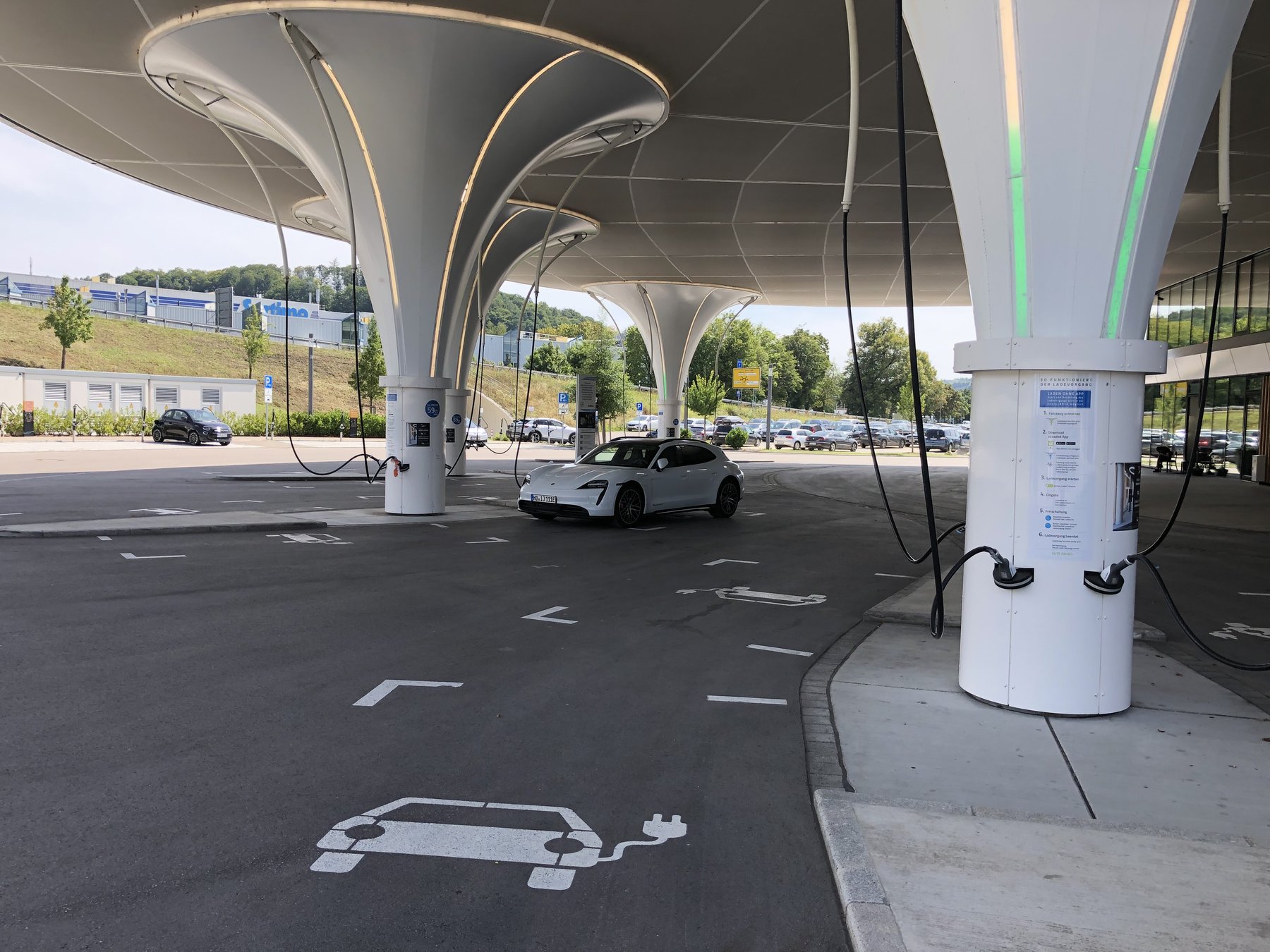
800 Volts Doesn't Make a Car Charge Faster. It Removes the Reason It Couldn't.
Double the pack voltage and you halve the current for the same power — and heat falls with the square of current. That's the entire trick. It still doesn't guarantee you a quick charge, and it quietly creates a compatibility problem nobody advertises.
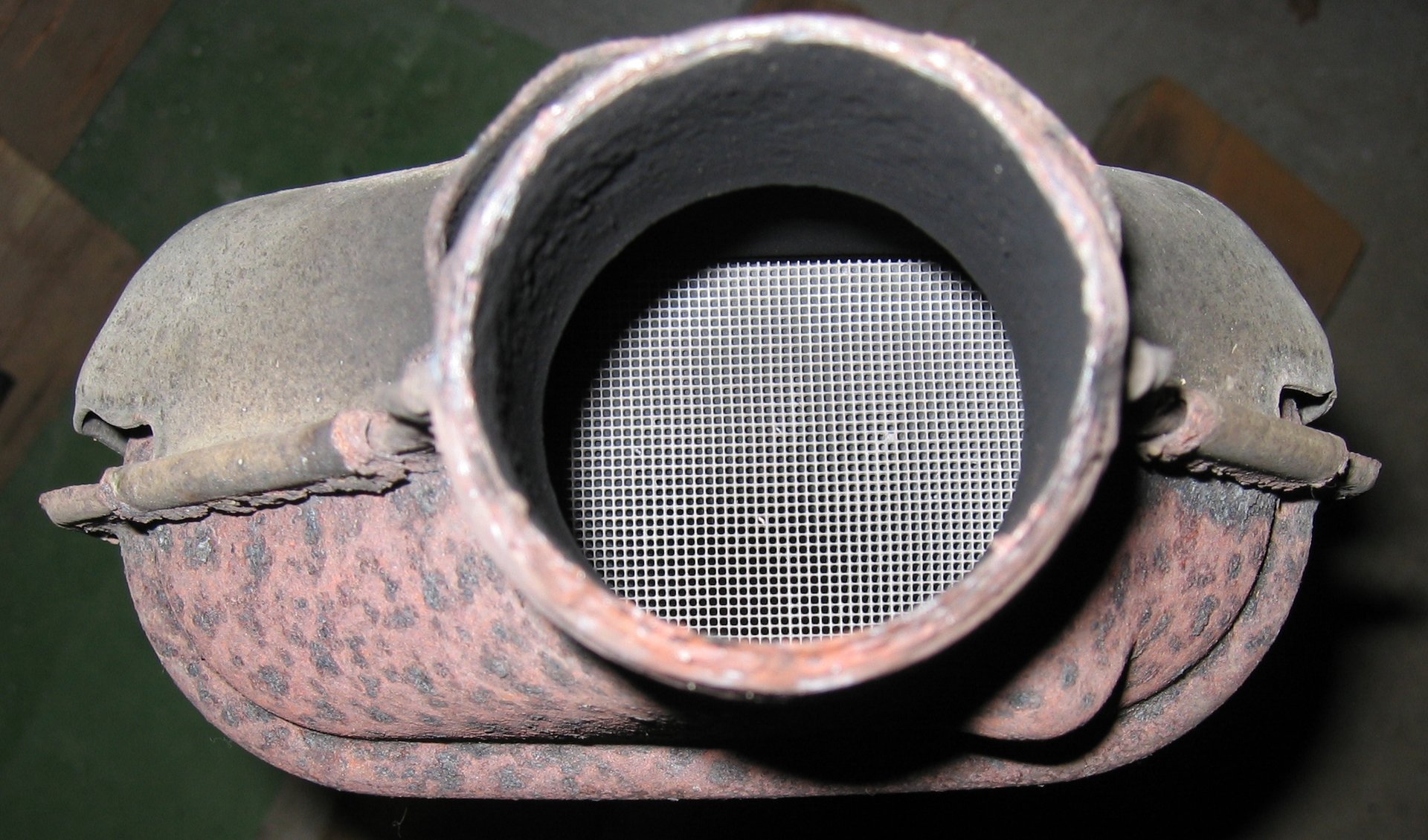
A Catalytic Converter Runs Two Opposite Reactions at Once, and Only Inside a Very Narrow Window
Burning carbon monoxide and unburnt fuel needs oxygen. Stripping nitrogen oxides back to nitrogen needs oxygen taken away. A three-way cat does both in the same brick, which is the whole reason closed-loop fuelling and the oxygen sensor exist.
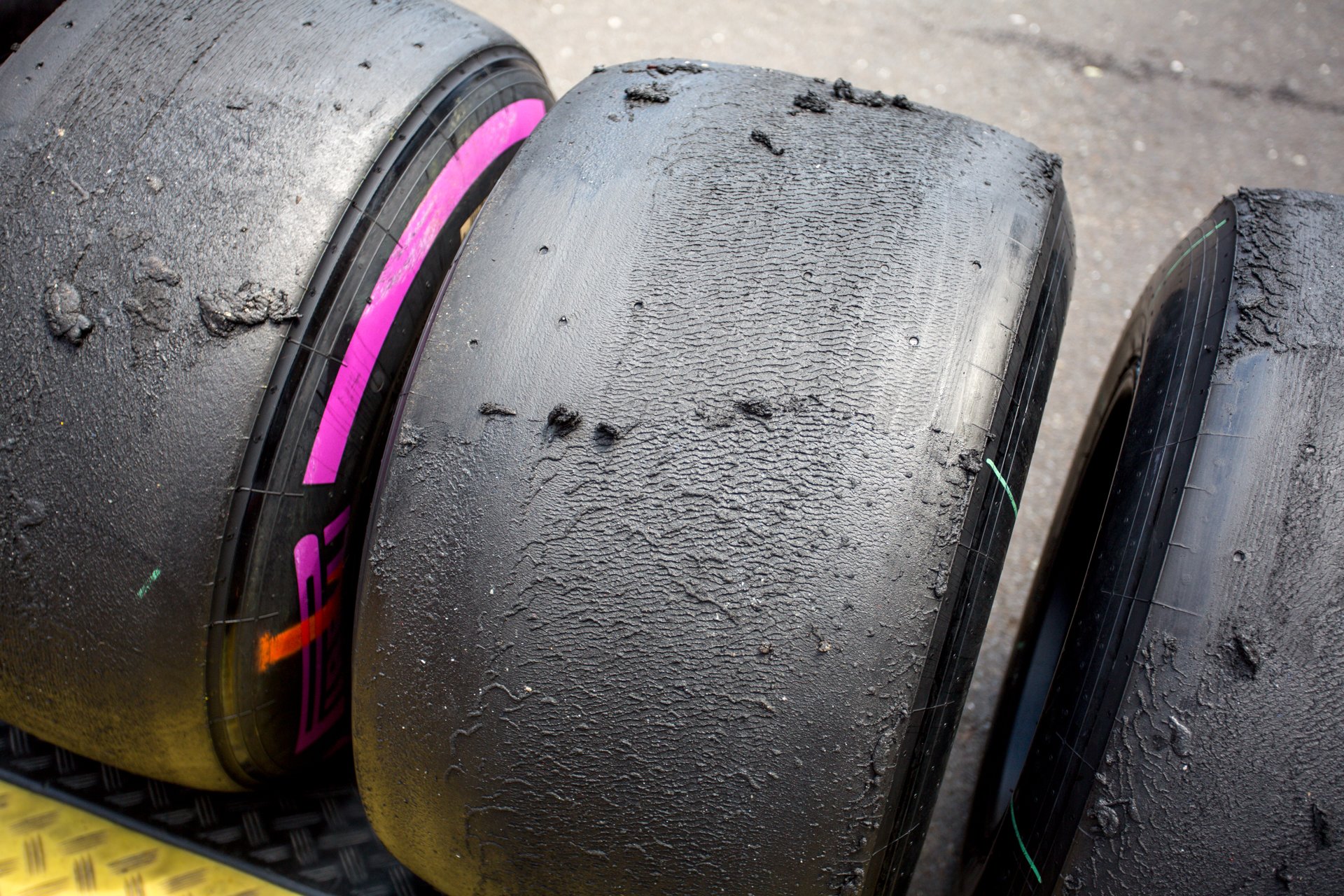
How a Tyre Actually Makes Grip
The textbook friction formula says grip ignores contact area and can’t exceed the load pressing down. Rubber breaks both rules, and understanding why explains almost everything a car does at the limit.