
Alfa Romeo's Cuorerosso Ends in a Flat Wall, and That Is the Cleverest Thing About It
The Paris concept is 4.7 metres long, seats four, has no B-pillar and claims a 0.28 drag coefficient. The trick responsible for a good part of that number was worked out in a Stuttgart wind tunnel in 1936.
- Model
- Alfa Romeo Cuorerosso concept
- Status
- Concept, not for production
- Revealed
- 2026 Paris Motor Show
- Length
- 4,700 mm
- Width
- 1,980 mm
- Height
- 1,331 mm
- Wheelbase
- 2,930 mm
- Stated weight
- 1,750 kg
- Drag coefficient
- 0.28
- Layout
- Four seats, four doors, no B-pillar, rear doors rear-hinged
- Powertrain shown
- 2.9-litre twin-turbo V6 full-hybrid
- Driveline
- Q4 all-wheel drive, torque converter, carbon-fibre driveshaft
- Paint
- Liquid Ink Red
- Design references
- Coda tronca tail, Trilobo front, Scudetto, teledial-pattern wheels, 33 Stradale dashboard
- Drive modes
- Cruise, Sport, Quadrifoglio
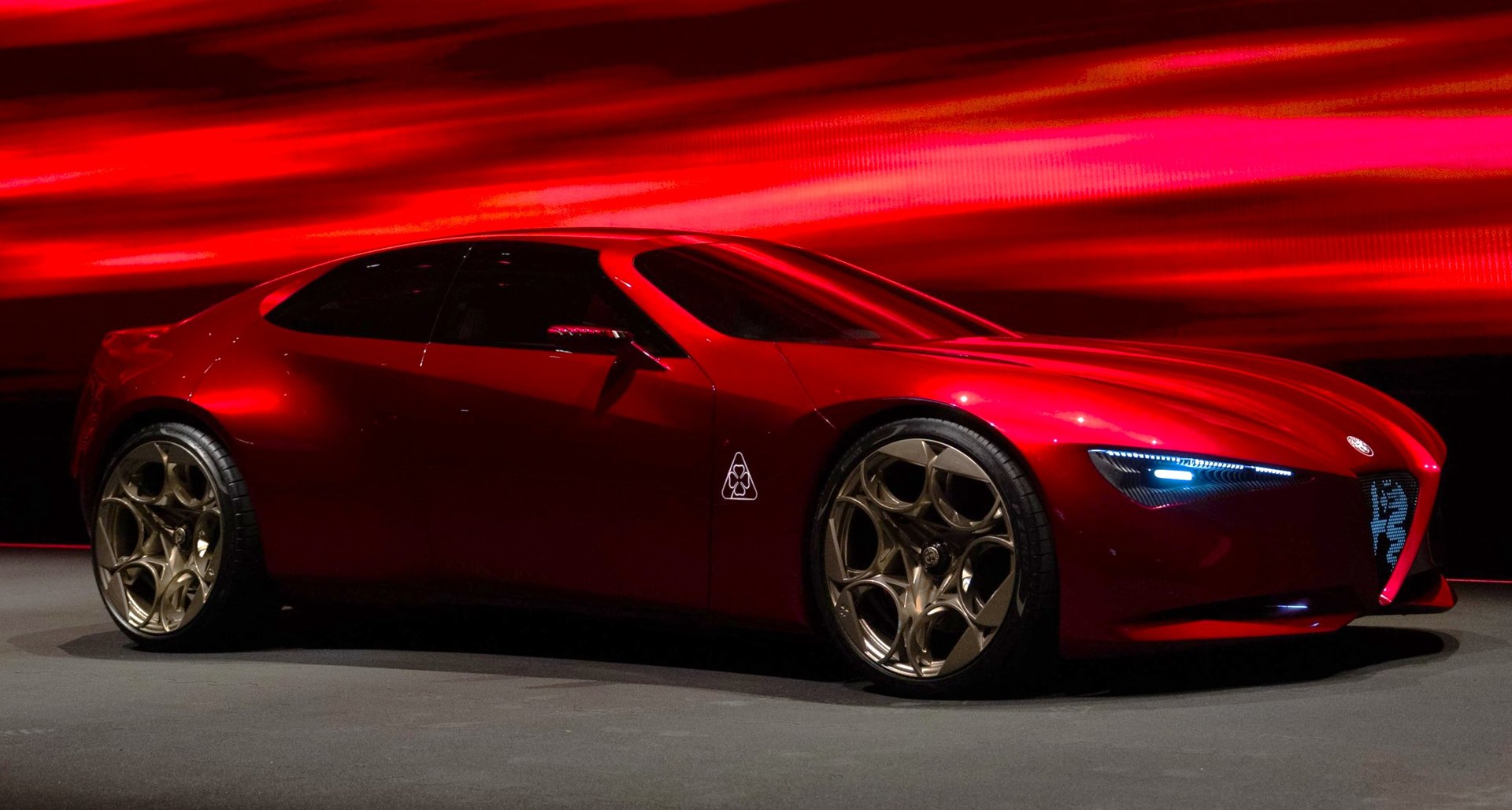
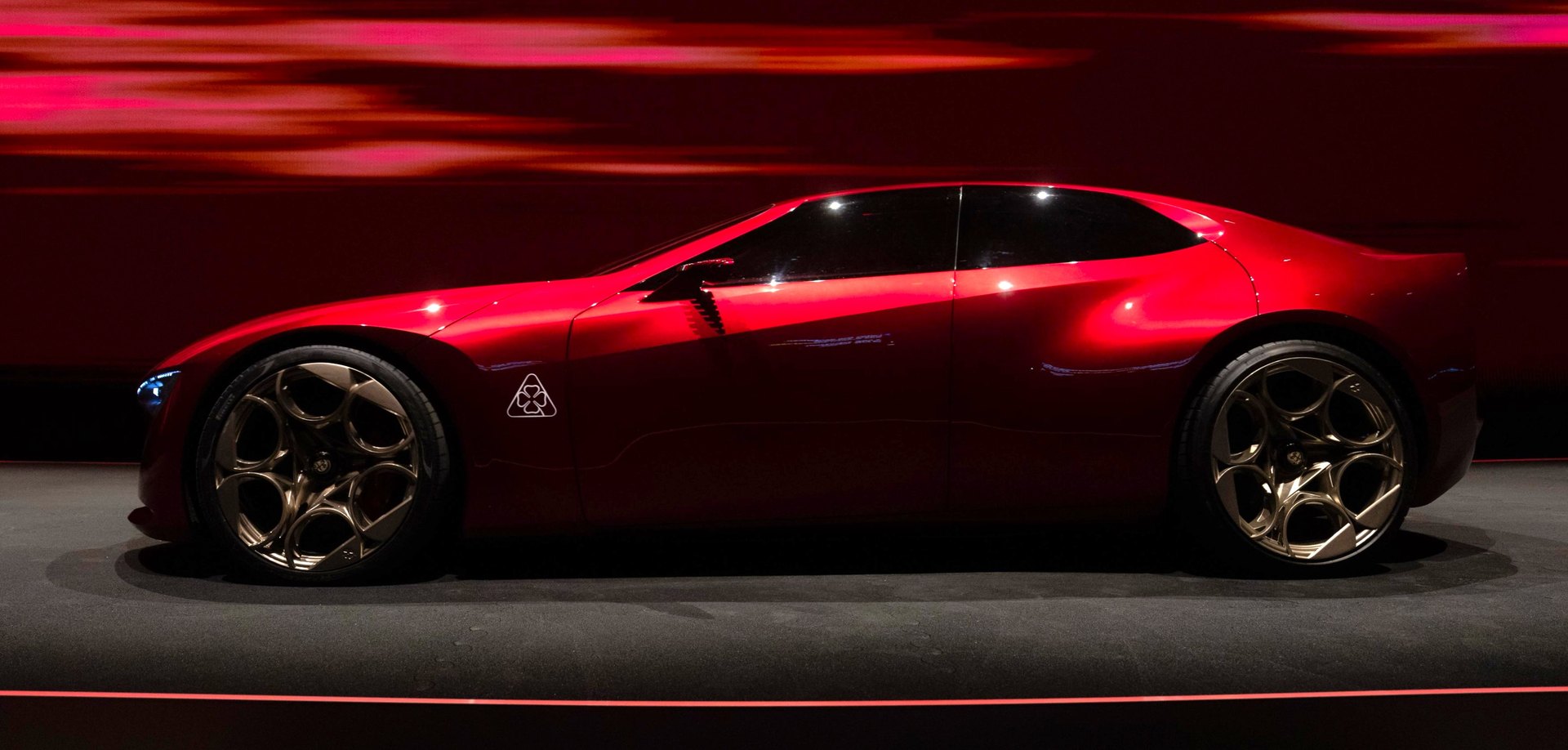
Alfa Romeo's stand at the Paris Motor Show this week is built around one red car, and the red car is called Cuorerosso — red heart. It is 4,700 mm long, 1,980 mm wide and 1,331 mm tall on a 2,930 mm wheelbase, with a stated weight of 1,750 kg. It seats four, in four individual seats, behind four doors with no B-pillar between them and the rear pair hinged at the back. Alfa is explicit that it is not a production car and not a preview of one specific production car; the word the company keeps using is manifesto.
Wunibald Kamm's point was that you do not need the back of the teardrop. You need the air to believe it is still there.
The number attached to it that is worth pausing on is 0.28. That is the claimed drag coefficient, and Alfa credits three things for it: the uninterrupted shape of the body, a diffuser set low into the bodywork, and the coda tronca — the truncated tail.
Coda tronca translates as cut-off tail, and what it describes is the oldest useful shortcut in road-car aerodynamics. The theoretically ideal low-drag body is something close to a teardrop: a rounded nose and a long, slowly tapering tail that lets the air close back behind it without separating into a turbulent, drag-producing wake. The problem is that the tail has to be absurdly long. Nobody wants to park it, nobody wants to build it, and structurally it is dead weight hanging off the back of the car.
Wunibald Kamm, working on vehicle shapes at Stuttgart in 1936, established that you can cut most of that tail off and keep most of the benefit. Truncate the body at roughly the point where its cross-section has fallen to about half the maximum, finish it in an abrupt vertical face, and the turbulent pocket that forms immediately behind that face does the job the missing bodywork would have done — the free-stream air flows past it as though the taper were still there, rather than curling in and dragging at the car. Kamm built a prototype on a BMW 328 in 1938 to prove the point; it recorded a drag coefficient of 0.25. Which is to say a German research car from before the Second World War measured lower than the 2026 Alfa Romeo on the Paris stand, though the two numbers come from very different eras of measurement and very different cars — the Alfa is nearly two metres wide and has to carry four people, bumpers, cooling and crash structure.
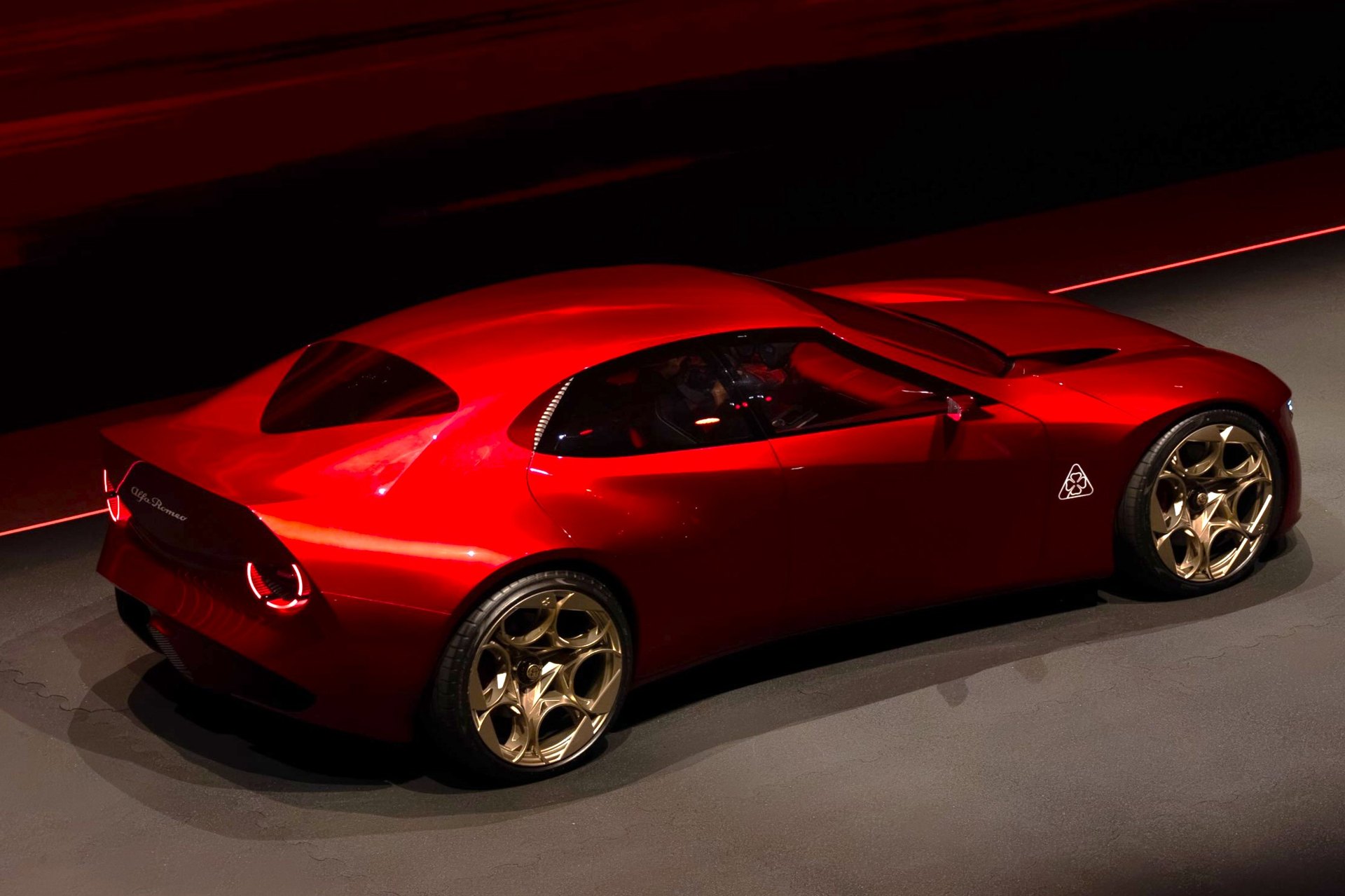
Alfa has particular standing to reach for the idea, because its own history with the cut-off tail is more than decorative. The last cars in the roughly 200-strong Giulietta Sprint Zagato run, built from 1961, wore a Kamm-tailed body with a panoramic rear window and became known as the SZ Coda Tronca — aluminium-bodied, Plexiglas-windowed, and built to be quicker down the straights than the rounded-tail cars it replaced rather than merely to look different from them. Zagato carried the treatment straight across to the Giulia TZ, launched in 1963. Both were racing answers to a racing problem. The Cuorerosso is a show car, but the shape it borrows was earned.
The rest of the exterior is Alfa working through its own vocabulary. The front is a reinterpretation of the Trilobo — the three-part face that pairs the central Scudetto shield with the two flanking intakes — with the shield carrying backlit triangular elements. The wheels take the telephone-dial pattern Alfa has used on and off for decades and redraw it. The paint is called Liquid Ink Red, and on the stand, under the lighting, it reads closer to lacquer than metallic.
What is shown underneath is the 2.9-litre twin-turbocharged V6 from the Giulia Quadrifoglio in full-hybrid form, driving through a torque converter and a Q4 all-wheel-drive system with a carbon-fibre driveshaft. Alfa frames the concept as a multi-energy exercise rather than a powertrain announcement — the proposition is that the architecture and the shape are meant to accept hybrid, plug-in hybrid or fully electric power, and the V6 in the show car is one of the options rather than the point. Santo Ficili, who runs both Alfa Romeo and Maserati, has pitched the car in exactly those terms: an identity carried forward into a range of different energy solutions.
Inside, the dashboard takes its cue from the 2023 33 Stradale. The instrument binnacle is called Cannocchiale Vivente — living telescope — and reconfigures between modes, nesting its two tubes into one. A screen Alfa calls the Magma Display sits on the centre tunnel and disappears into a dark panel when it is not lit. The steering is by wire with haptic feedback, there are three drive modes labelled Cruise, Sport and Quadrifoglio, and the materials brief leans on regenerated leather and lightweight fabrics. Treat all of that as concept-car furniture, which is what it is; the steer-by-wire and the vanishing screen are the sort of features that routinely do not survive contact with a homologation department.
Design is led by Alejandro Mesonero-Romanos, who joined Alfa Romeo from SEAT, and the Cuorerosso is the clearest statement of where he is taking the brand. Alfa has said the manifesto is meant to inform models up to roughly the concept's own 4.7-metre length, with Quadrifoglio variants in the picture, rather than to be built as it stands.
What makes it interesting is not the steer-by-wire or the disappearing display. It is that the single most consequential decision on the car — the thing doing real work on the drag figure — is a ninety-year-old piece of aerodynamic pragmatism, applied by a company that was racing it in 1961. Most concept cars are an argument about the future. This one quietly makes an argument about how little of the useful stuff is actually new.
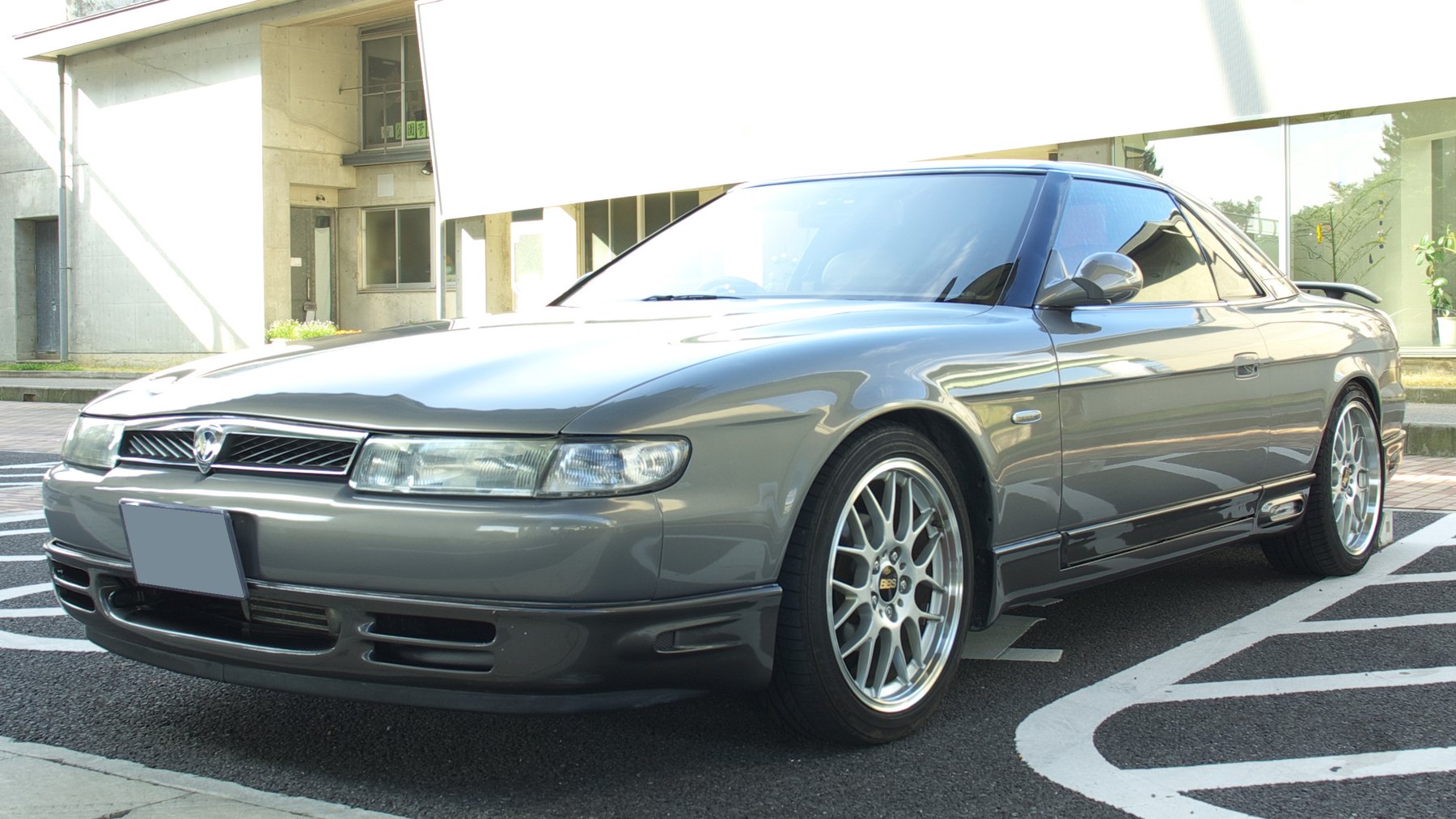
Mazda Built a Three-Rotor Coupe With Satellite Navigation in 1990. Japan's Economy Collapsed Two Months Later.
The Eunos Cosmo had the only triple-rotor engine Mazda ever sold, the first built-in GPS system in any production car, and an automatic gearbox. It was perfect, it was doomed, and almost nobody outside Japan has ever seen one.
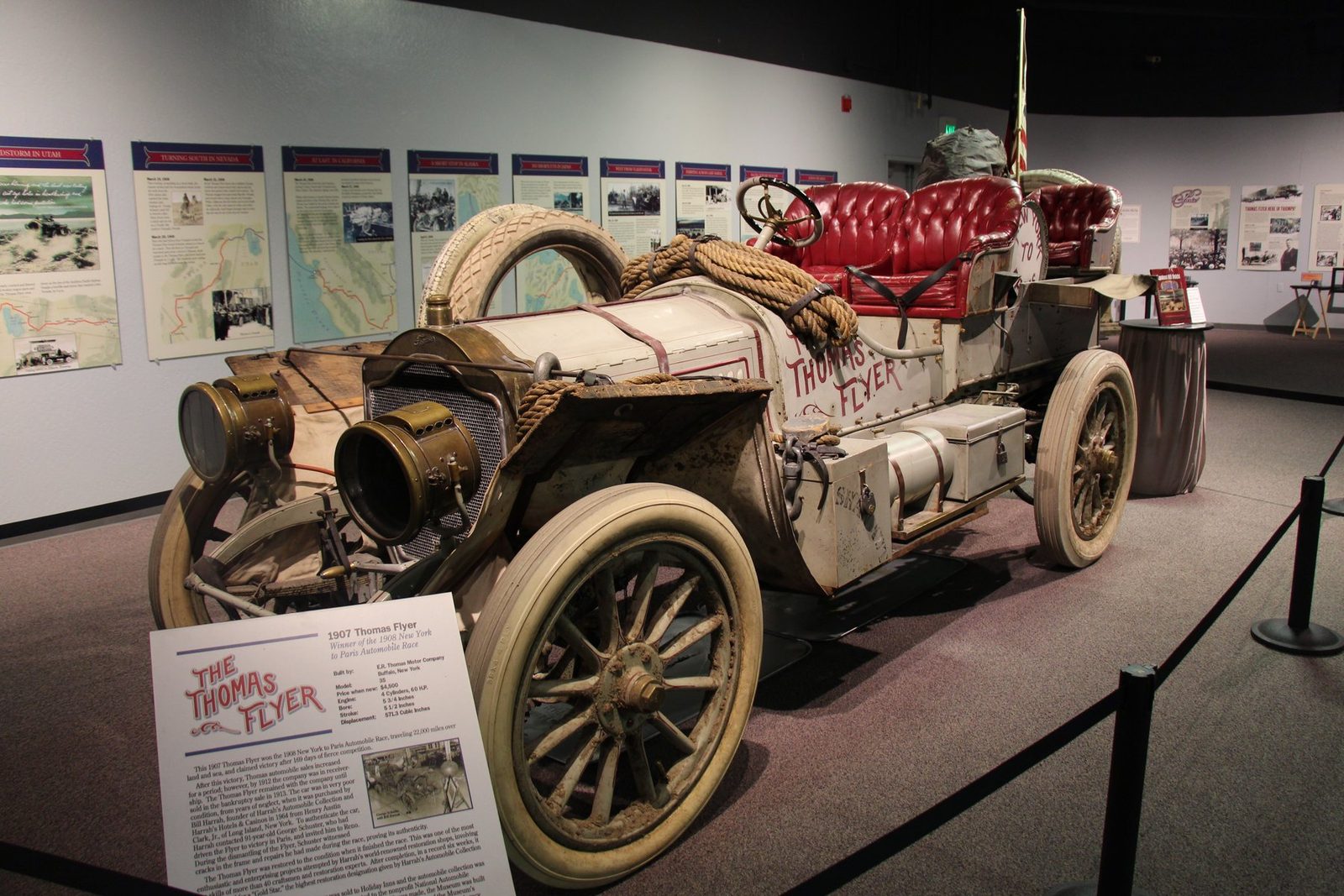
The Impossible Race: How a Buffalo-Built Car Won a Trip Around the World in 1908
Six cars from four nations set out from Times Square to drive to Paris — the long way, through Alaska, Japan, and Siberia. Only three finished, and the winner didn't cross the line first.
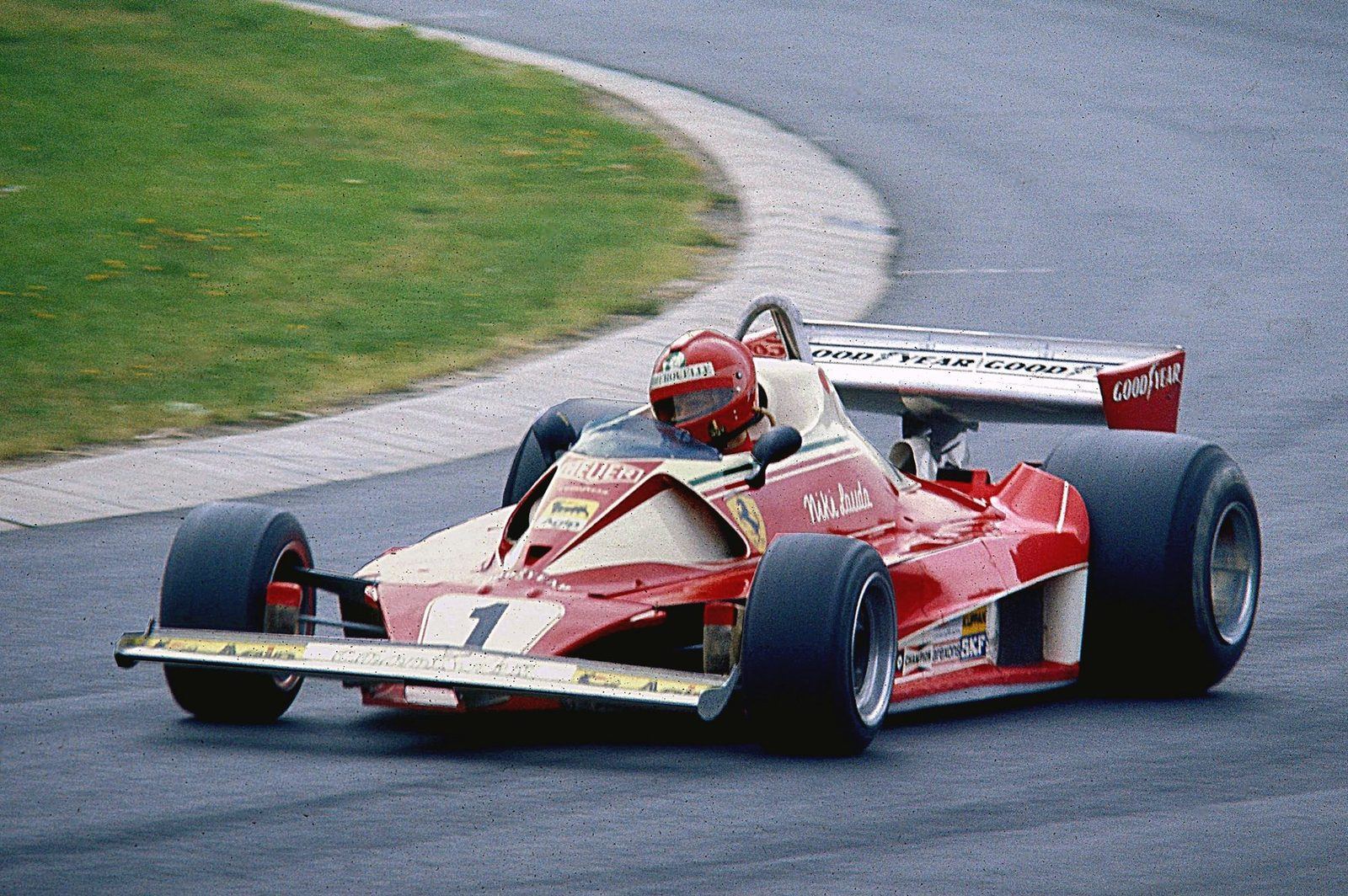
Fifty Years Since Bergwerk: The Crash That Ended Formula 1's Deadliest Circuit
On August 1, 1976, Niki Lauda's Ferrari caught fire on the Nürburgring Nordschleife. He survived, nearly won the title anyway, and the sport never raced a championship round on the full circuit again.