
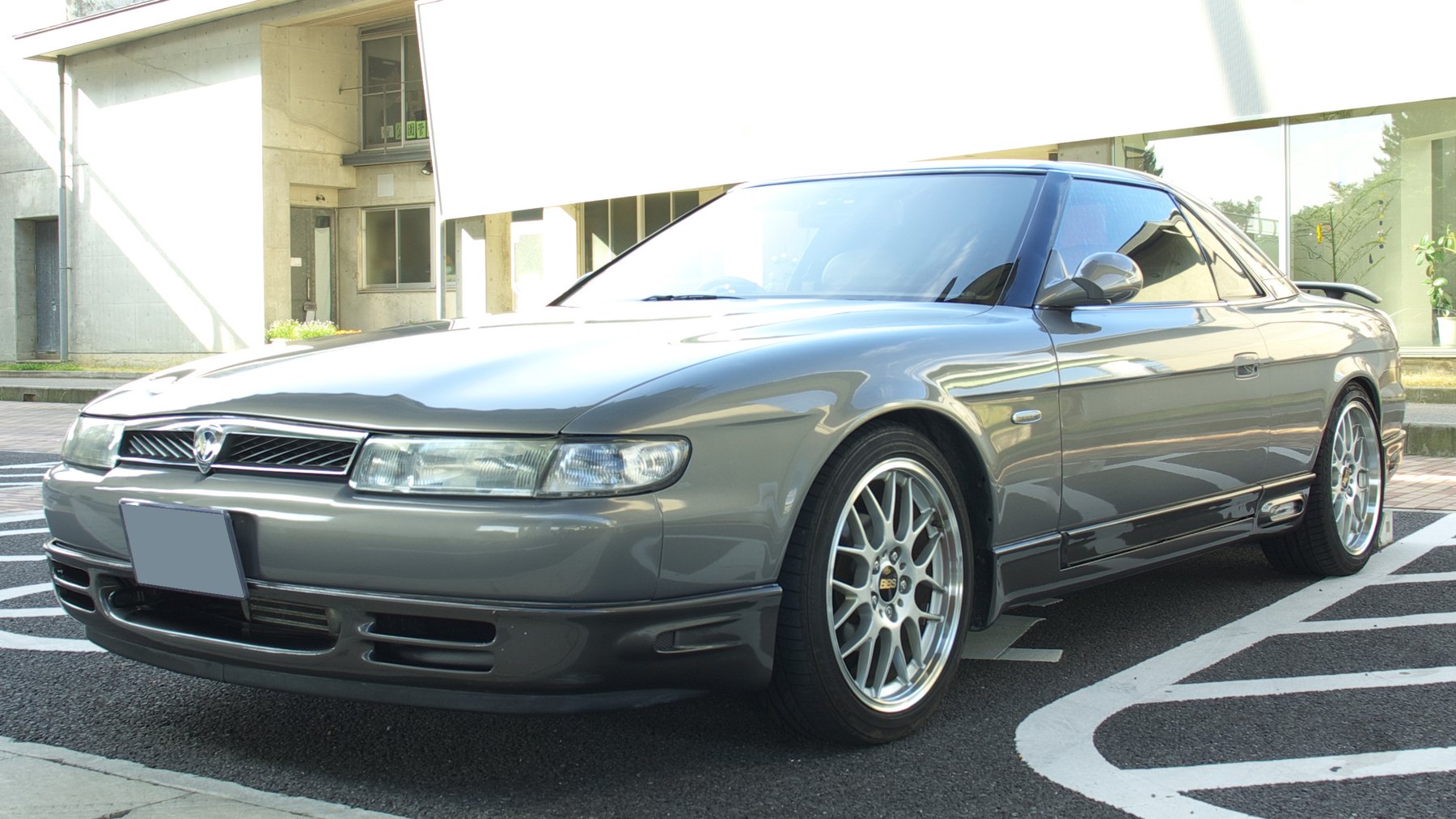
Mazda Built a Three-Rotor Coupe With Satellite Navigation in 1990. Japan's Economy Collapsed Two Months Later.
The Eunos Cosmo had the only triple-rotor engine Mazda ever sold, the first built-in GPS system in any production car, and an automatic gearbox. It was perfect, it was doomed, and almost nobody outside Japan has ever seen one.
- Engine
- 20B-REW 1,962cc Triple Rotor
- Output
- 280 PS / 41.0 kgf·m
- Gearbox
- 4-Speed Automatic (Only)
- Built
- 8,875 Total, 1990–1995
In February 1990, Mazda put a car on sale in Japan with a 1,962cc three-rotor Wankel engine, two sequential turbochargers, a colour CRT touchscreen running satellite navigation, and a four-speed automatic. Nothing about that sentence is a typo, and almost every clause in it was a world first or close to one. The car was called the Eunos Cosmo, it was sold in exactly one country, and if you have never seen one in person, that is because Mazda built 8,875 of them across five and a half years and then quietly stopped.
Mazda's own figure is 8,875 cars. It has never published how many got the third rotor.
This is the car that should be in every argument about Japan's bubble era, and instead it gets maybe one paragraph before everyone goes back to talking about the Supra.
Start with the engine, because it is the part that cannot be replicated. The 20B-REW is the only three-rotor engine Mazda ever put in a production car — three 654cc chambers, 1,962cc total, fed by a pair of Hitachi sequential twin turbos. Officially it made 280 PS, which tells you nothing at all, because 280 PS was the number every Japanese manufacturer printed on every fast car it sold under the gentlemen's agreement that capped advertised output. Torque was 41.0 kgf·m — about 297 lb-ft — arriving at 3,000 rpm, and that figure is the interesting one. Rotaries are not supposed to do that. The whole folk understanding of a Wankel is that it spins forever and makes nothing until it does, and here is one that hands you GT-car torque just off idle because there are three chambers firing instead of two and two turbos arranged so the small one is already working while the big one wakes up.
Those sequential turbos, incidentally, are themselves a landmark: the Cosmo's system was among the first series-production sequential twin-turbo setups sold by a Japanese manufacturer, arriving alongside the related arrangement on the 13B. The two-rotor 13B-RE was the cheaper engine and no embarrassment either — 230 PS and 30.0 kgf·m. The 20B just made the 13B look like the sensible choice, which it was, which is why most buyers took it.
Then there is the screen. The Cosmo's Car Communication System put a colour CRT touchscreen in the centre of the dash and used it to run climate control, the radio, a CD player, an NTSC television tuner, a car phone, and — this is the part that matters — GPS navigation. Not dead-reckoning. Not a CD-ROM map that guessed where you were from wheel sensors, which is what Toyota had been fitting to the Crown. Actual satellite positioning, in a car you could buy, in 1990, with a claimed accuracy of about 45 metres. Every touchscreen in every car you have sat in this decade traces back through a direct line to this one, and the thing it was first bolted into was a rotary coupe that Mazda sold fewer than nine thousand of.
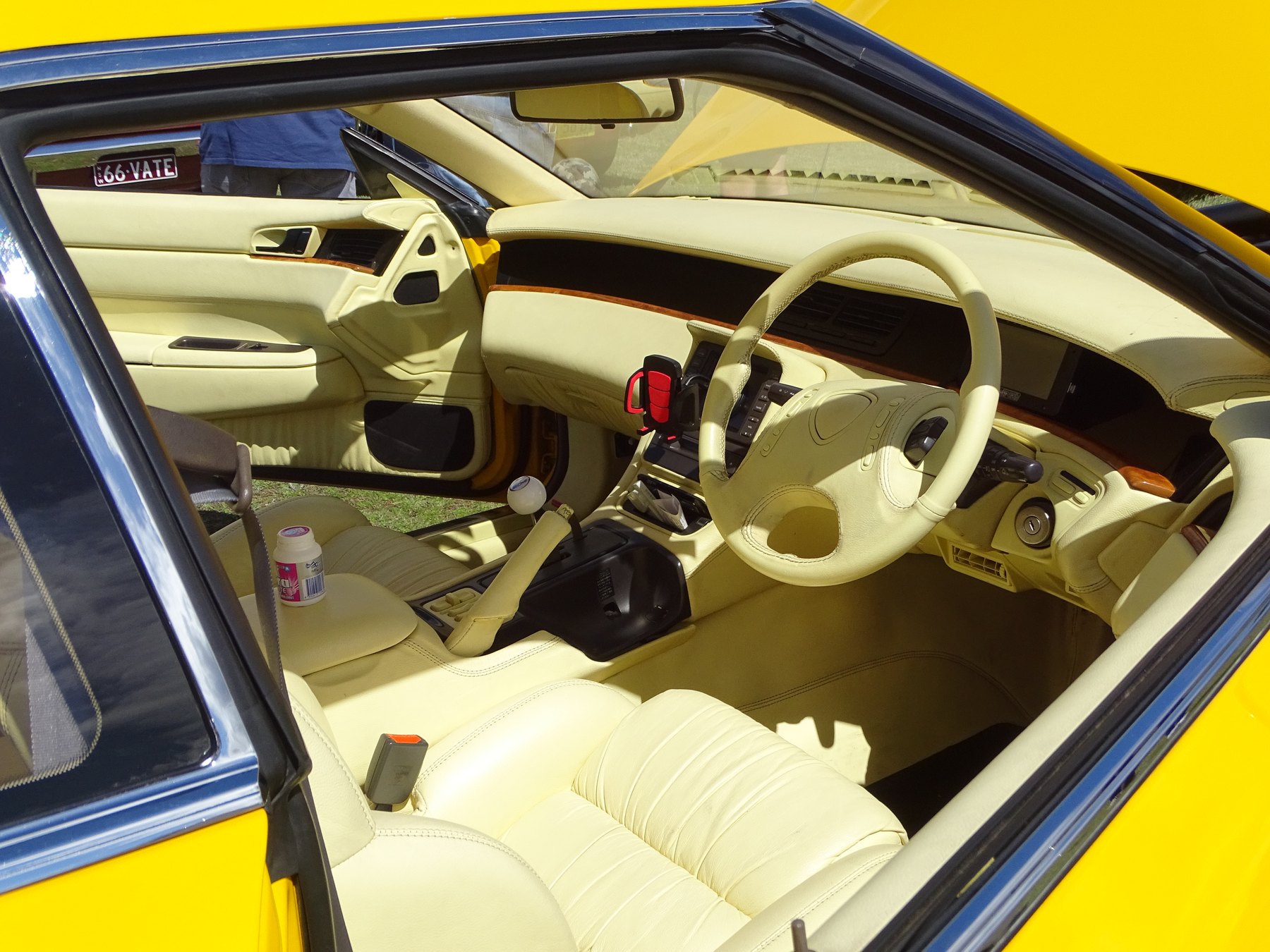
Now the part that gets the Cosmo left out of the canon: there was never a manual. Not as an option, not on one special trim, not for one model year. Four-speed automatic, every car, both engines, the whole production run. You can construct the business case easily enough — this was pitched as a luxury grand tourer, not a sports car, and in 1990 a Japanese flagship with three pedals would have read as cheap. It is still the single decision that keeps this car out of the conversation it deserves to be in, and it is why a 20B Cosmo in 2026 is worth a fraction of an FD RX-7 with an engine two-thirds the size.
The styling has aged better than almost anything else from its year. It is 4,815 mm long on a 2,750 mm wheelbase and only 1,305 mm tall, with frameless glass, a long flat deck and a nose that commits to nothing — no grille to speak of, no aggression, just a slim horizontal slot and the Eunos badge. It looks less like a 1990 Japanese coupe than like something drawn for 2005 by somebody who had only had 1990 described to them. Depending on trim it weighed between 1,490 and 1,640 kg, which is heavy for the era and explains a lot about why the torque figure mattered.
Here is the context that kills it. The Cosmo went on sale in February 1990. The Nikkei had peaked on the final trading day of 1989 and spent 1990 falling apart. The car was the halo product of Eunos, one of five separate sales channels Mazda had spun up — Eunos, ɛ̃fini, Autozam, the M2 sub-label, and a North American luxury brand called Amati — on a forecast of continued growth that evaporated roughly as the first Cosmos reached showrooms. Amati was cancelled in October 1992 without selling a single car. Eunos lasted until 1996. A ¥5.3 million Cosmo, which is roughly what a loaded 20B Type E cost, was a product designed for an economy that stopped existing between the design freeze and the launch.
Sales tell the story without commentary. The Cosmo moved 4,325 units in its first year and never came close again: 1,700 in 1991, 1,373 in 1992, 711 in 1993, 435 in 1994, 331 in its final part-year. That is not a car failing because it was bad. That is a car that was exactly as good as intended, arriving precisely as the customer base for ¥5 million rotary grand tourers evaporated.
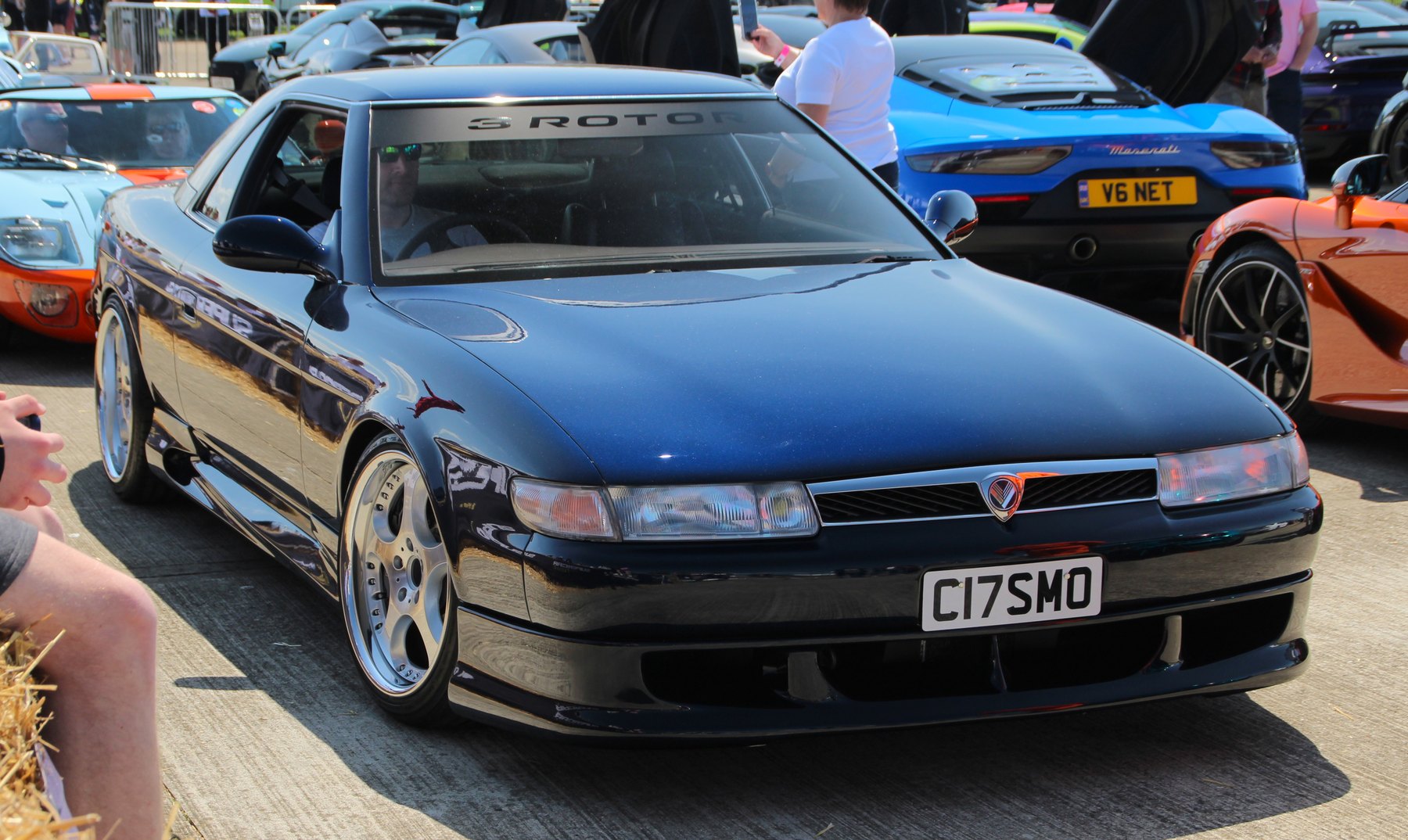
Worth flagging what nobody actually knows, since this is the number you will see repeated most confidently: how many got the 20B. You will find a 60/40 split cited all over the internet, giving roughly 3,550 three-rotor cars, and you will also find figures as low as 2,000 stated just as firmly. Mazda's own published figure is the 8,875 total, with no engine breakdown attached. Anyone quoting you a precise 20B production number is quoting an enthusiast estimate wearing a factory coat, and I would rather say that plainly than pick whichever number flatters the car most.
The market has never known what to do with it, and still doesn't. In Melbourne a 1992 20B sold for AUD 48,000 in December 2025. On Cars & Bids in March 2026, a 1991 20B with about 50,100 miles and a US title stalled at a $16,000 high bid and didn't meet reserve. Broad guides put decent three-rotor cars somewhere in the $20,000-$30,000 band. That is an enormous spread for a car this rare, and the reason is simply that too few change hands to establish what one is worth — every sale is its own data point rather than part of a trend. Every JC Cosmo is now old enough to import into the US under the 25-year rule, and the ones that have come over mostly find out that American buyers price rotaries by RX-7 logic and don't know what to make of an automatic luxury coupe with a dead brand's badge on the nose.
So here is the case for it. The Eunos Cosmo is the most quietly ambitious Japanese car of its generation and the least celebrated, and both facts have the same cause: it arrived at the exact moment its country's confidence broke, wearing a badge that would be gone in six years, with an engine nobody has built since and a gearbox that made enthusiasts stop reading. Mazda would go and win Le Mans outright in June 1991 with a four-rotor 787B, and that is the rotary story everyone tells. The better one is that sixteen months earlier the same company had already put three rotors, two sequential turbos and a satellite navigation system into a road car and put it on sale, and the world was too busy going broke to notice.
Find one. Accept the automatic. It was always going to be a grand tourer, and on that brief it was about fifteen years early.
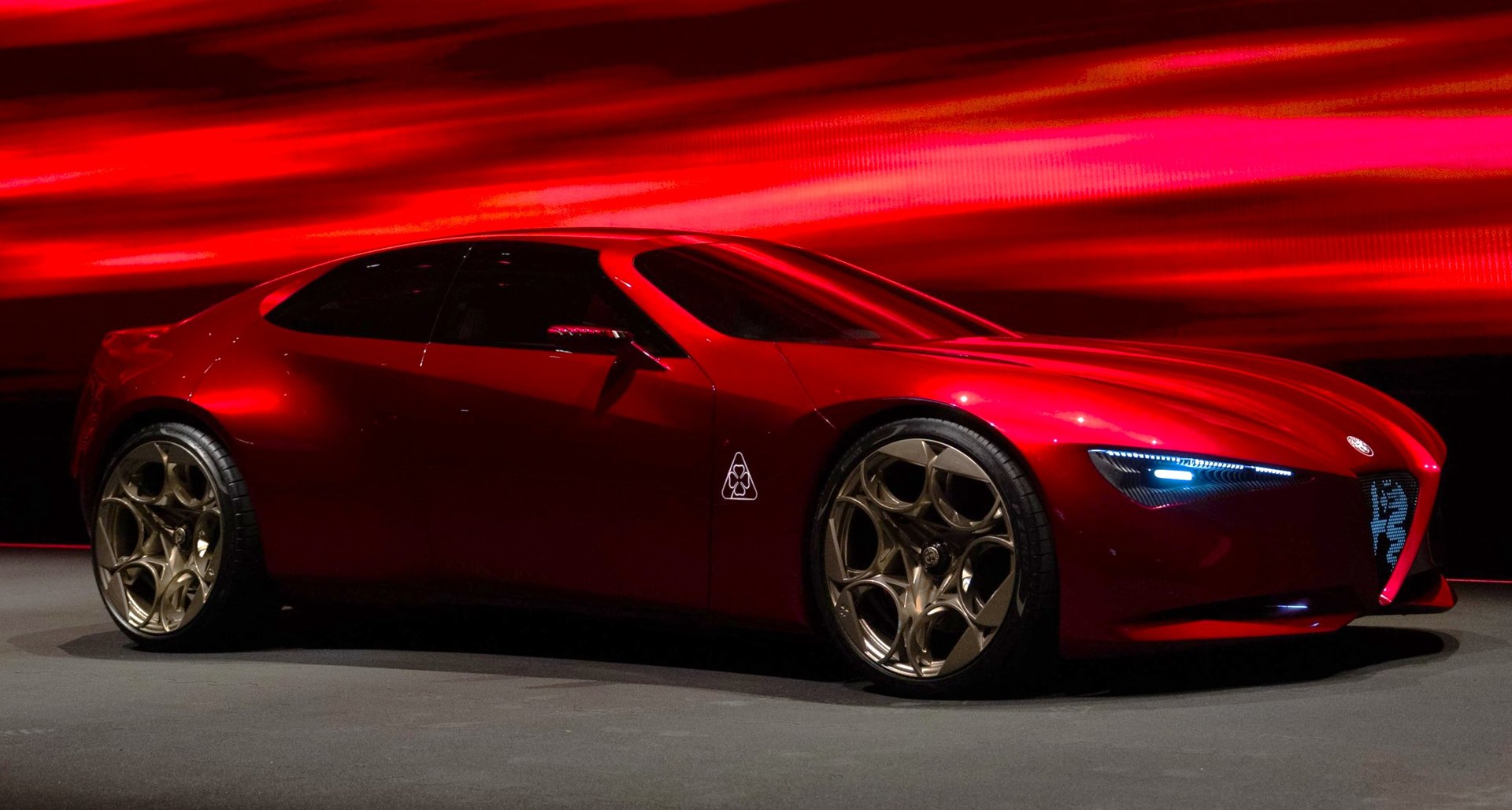
Alfa Romeo's Cuorerosso Ends in a Flat Wall, and That Is the Cleverest Thing About It
The Paris concept is 4.7 metres long, seats four, has no B-pillar and claims a 0.28 drag coefficient. The trick responsible for a good part of that number was worked out in a Stuttgart wind tunnel in 1936.
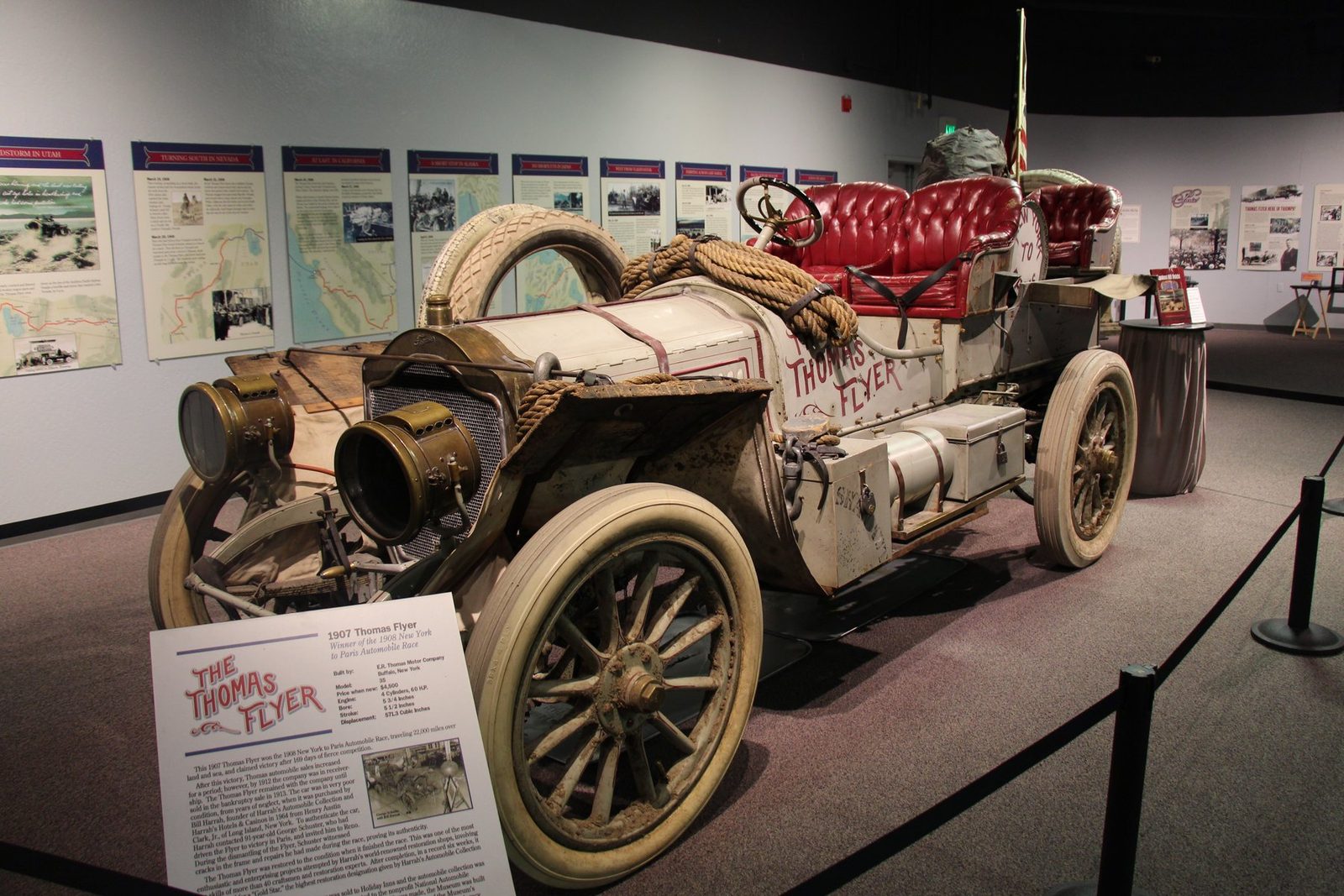
The Impossible Race: How a Buffalo-Built Car Won a Trip Around the World in 1908
Six cars from four nations set out from Times Square to drive to Paris — the long way, through Alaska, Japan, and Siberia. Only three finished, and the winner didn't cross the line first.
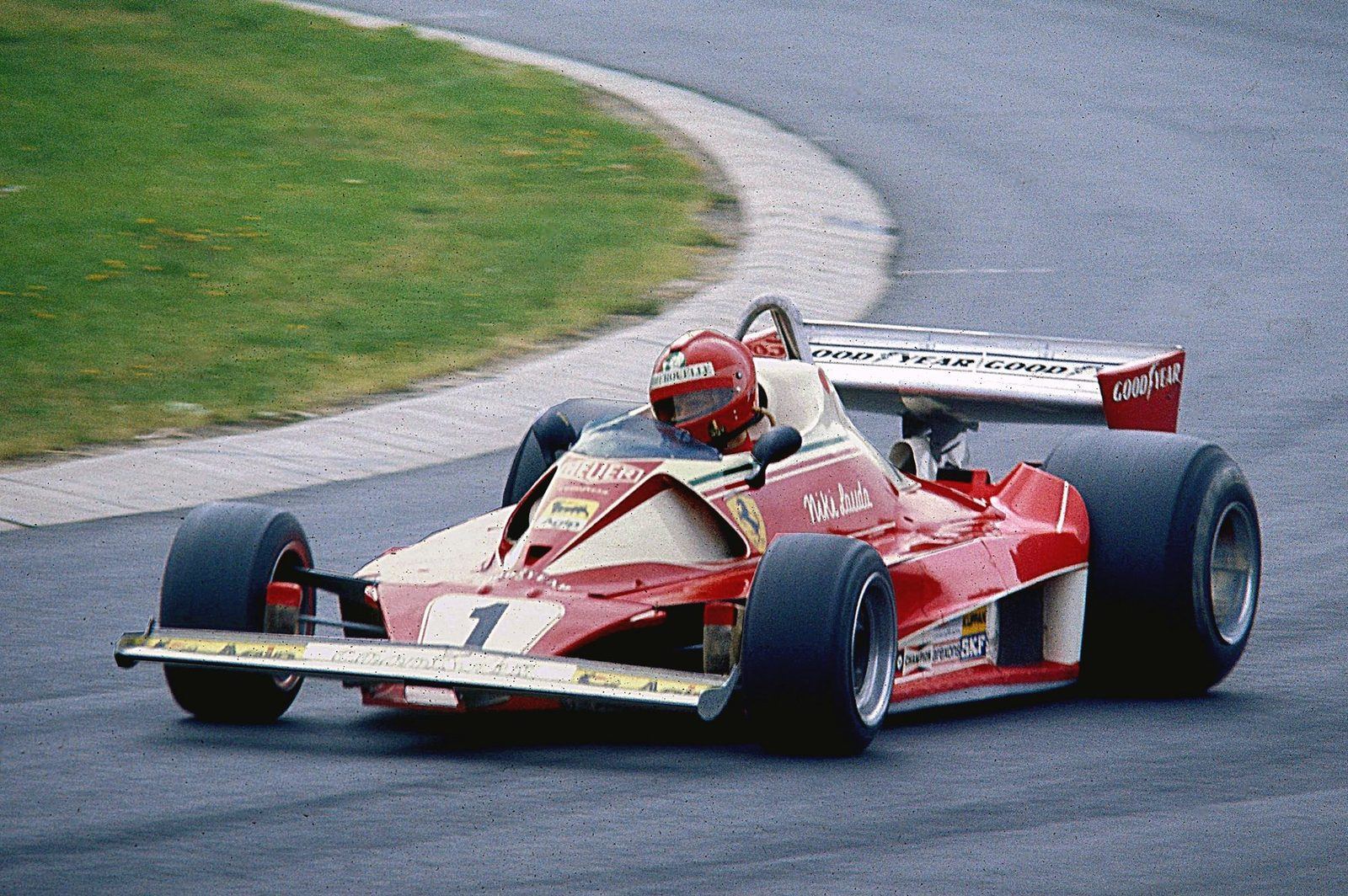
Fifty Years Since Bergwerk: The Crash That Ended Formula 1's Deadliest Circuit
On August 1, 1976, Niki Lauda's Ferrari caught fire on the Nürburgring Nordschleife. He survived, nearly won the title anyway, and the sport never raced a championship round on the full circuit again.