
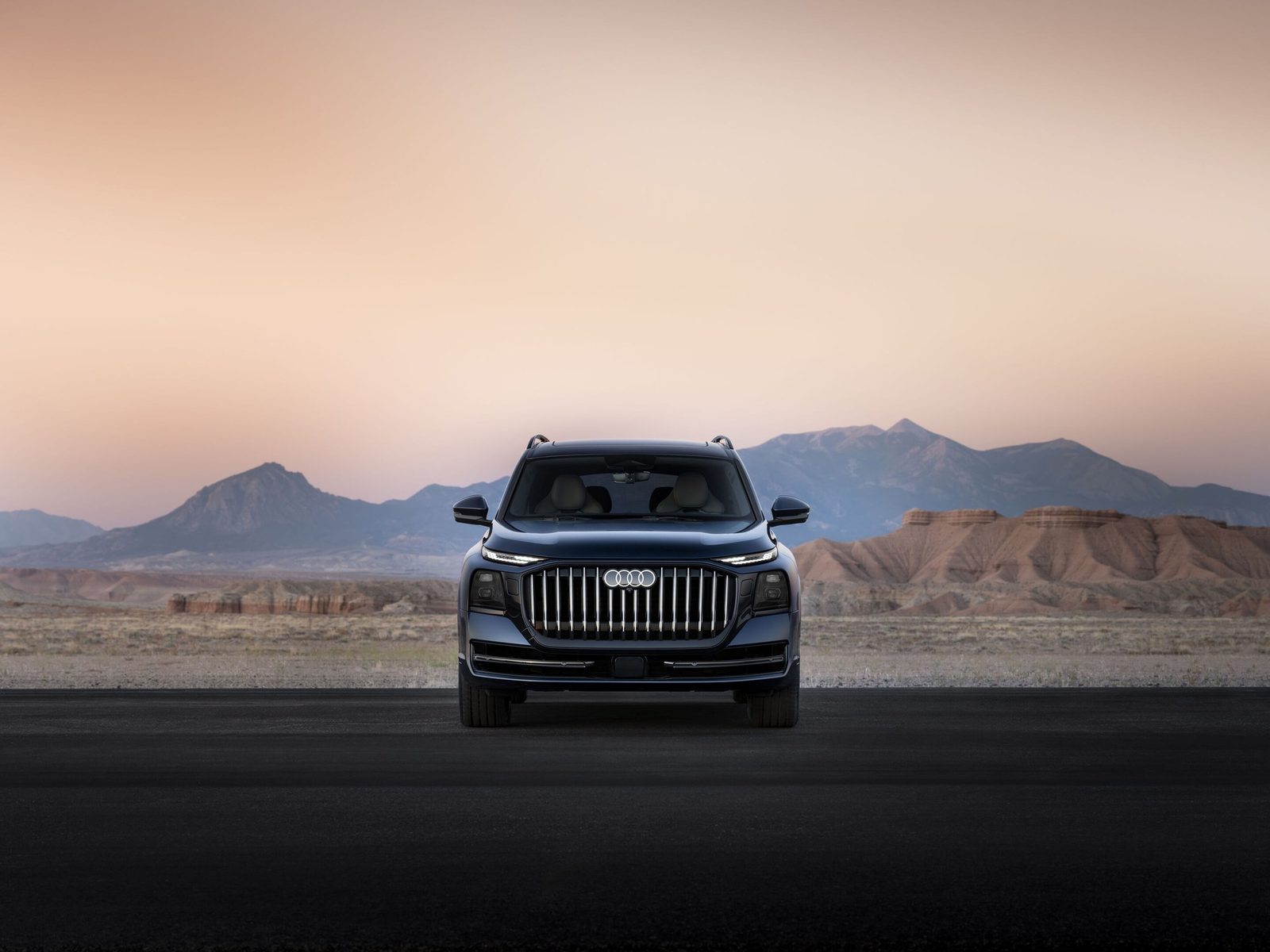
Audi Is Launching Its New Flagship in the US First — Ever. The Reason Is a 591-HP V8 Nobody Else Gets.
The three-row Q9 and its SQ9 performance sibling mark the first time an Audi model has debuted in America before anywhere else on earth, arriving with a US-exclusive twin-turbo V8 as the brand tries to reverse a sales slide made worse by tariffs and the expired EV tax credit.
Audi revealed its new full-size flagship SUV this week, and for the first time in the brand's history, it's launching in the United States before anywhere else in the world — global rollout doesn't follow until 2027. The Q9 is the largest vehicle Audi has ever built: 209 inches long on a 123.5-inch wheelbase, with three rows seating six or seven depending on whether the second row gets a bench or a pair of captain's chairs, and enough third-row space for adults over 5'11" to sit comfortably. Audi of America says the truck was engineered specifically with the American buyer in mind, aimed squarely at the BMW X7, Mercedes-Benz GLS, and Jeep Grand Wagoneer.
The standard Q9 runs a 2.9-liter twin-turbo V6 making 429 hp and 442 lb-ft, good for 0-60 mph in 4.9 seconds, starting at $87,700 before a $1,295 destination charge. The performance SQ9 steps up to a 4.0-liter twin-turbo V8 — 591 hp, 590 lb-ft, 3.8 seconds to 60 — starting at $118,000, and that engine isn't available anywhere else Audi sells cars. "To me, the most emotional [of the available powertrains globally] is definitely the V8 in the SQ9, an engine we only have in the US," CEO Gernot Döllner said. "I'm really happy to have that beautiful engine in the US." Both models use a ZF 8-speed automatic and standard quattro all-wheel drive, with the SQ9 running a rear-biased setup and an electronically controlled locking rear differential.
The tech list is long: Digital Matrix LED headlights with adaptive driving beams get full functionality in the US for the first time, and the curved OLED taillights — a world first for the segment — run 512 individual segments across three clusters with eight selectable display signatures, plus turn signals that project onto the road at all four corners. Inside, there's a standard panoramic sunroof with electronic dimming, dual wireless charging pads, a 22-speaker sound system with seat-vibration and headrest speakers, and a dedicated front-passenger display. Both Q9 and SQ9 are built in Bratislava, Slovakia — not North America — despite the US-first launch.
The timing isn't an accident. Audi's US sales fell 16% in 2025 and another 17% through the first half of 2026, with the first quarter alone down 30% year-over-year; the brand blames tariffs and the expired federal EV tax credit, and unlike BMW or Mercedes, Audi imports its entire US lineup, leaving it more exposed to tariff swings. The Q9's base price undercuts the entry-level GLS, and the SQ9 comes in well below a comparably quick Mercedes-AMG GLS 63 — a pointed pitch at buyers cross-shopping large luxury SUVs right as Audi needs a win. Deliveries start in the fourth quarter of 2026, badged as 2027 models.
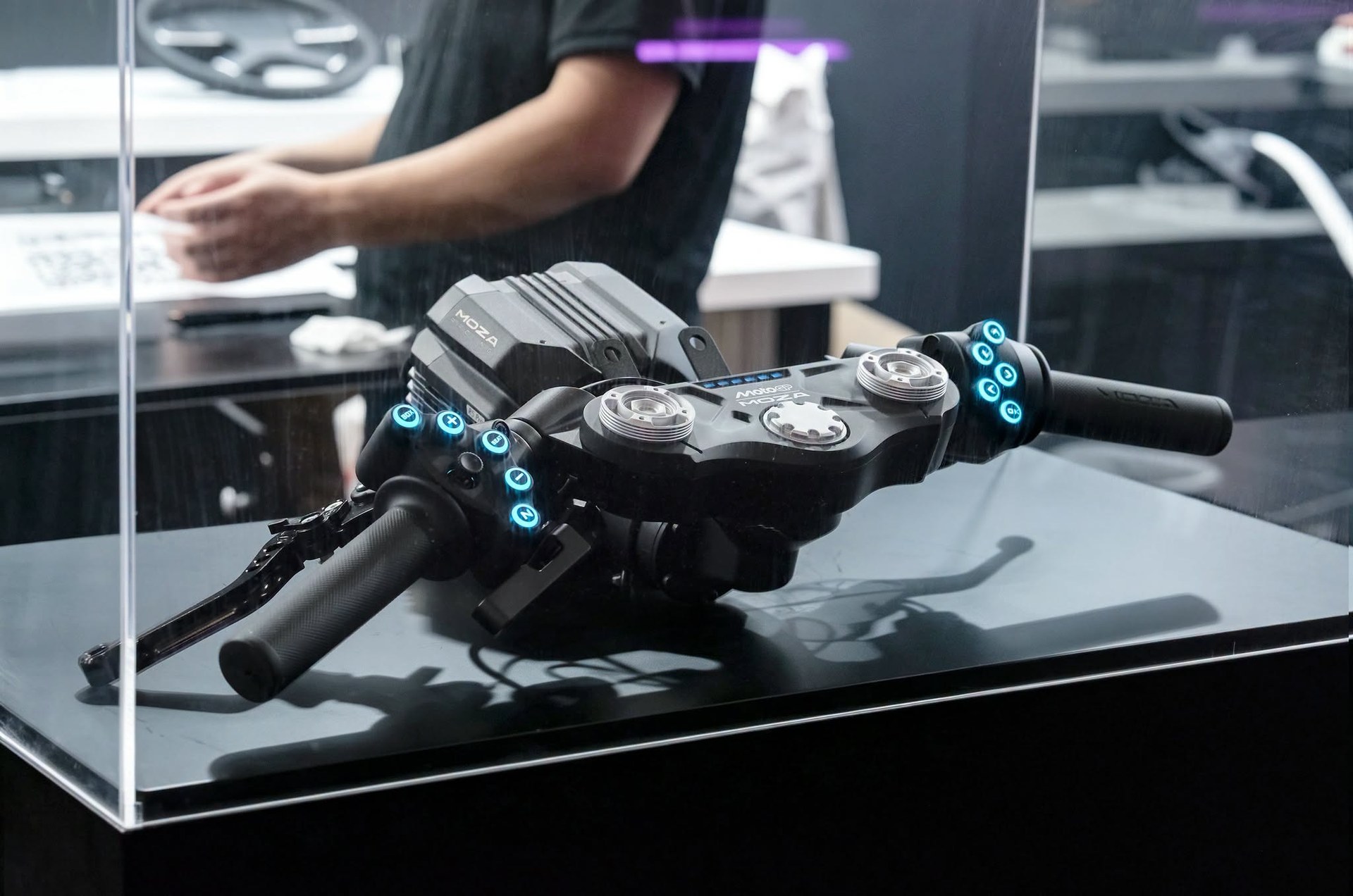
MOZA Brought Four Licensed Wheels to Gamescom. The Thing Worth Watching Was the Handlebar.
Porsche, Ford and two Mercedes wheels made the headlines in Cologne. But the MotoGP-licensed handlebar is the only piece doing something MOZA has never done before — and almost nothing shown has a price.
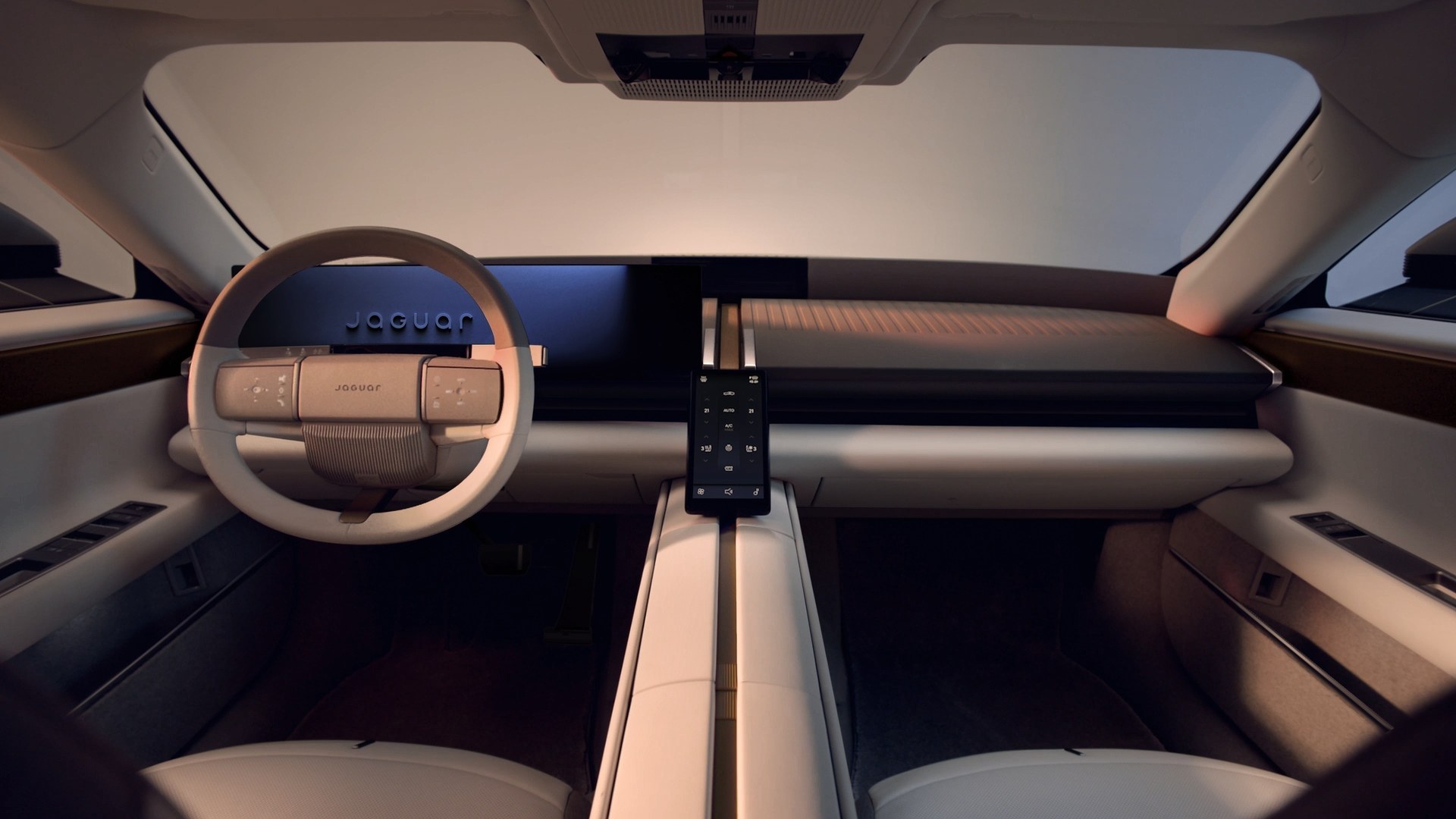
Jaguar Split the Type 01's Cabin Down the Middle
The first interior images of Jaguar's electric four-door GT show a brass-finished spine running end to end, four separate seats, and a dashboard designed to hide most of its technology.
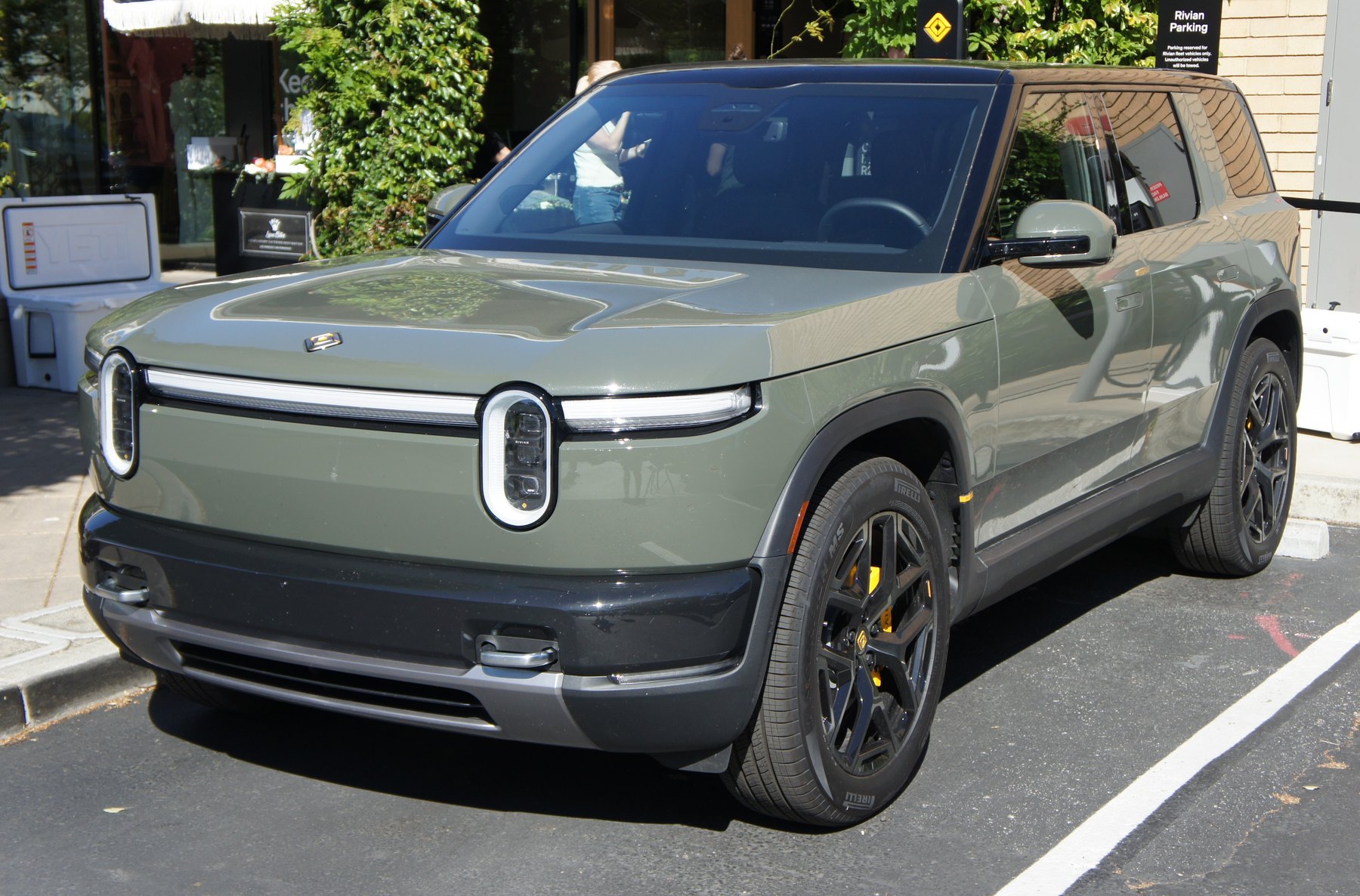
Everybody Loved the Rivian R2. Nobody Has Driven the One That Actually Matters.
The reviews that landed on June 9 were close to unanimous — and every single one of them was of a $57,990 Performance. The $44,990 version Rivian's whole future is riding on doesn't show up until 2027.