
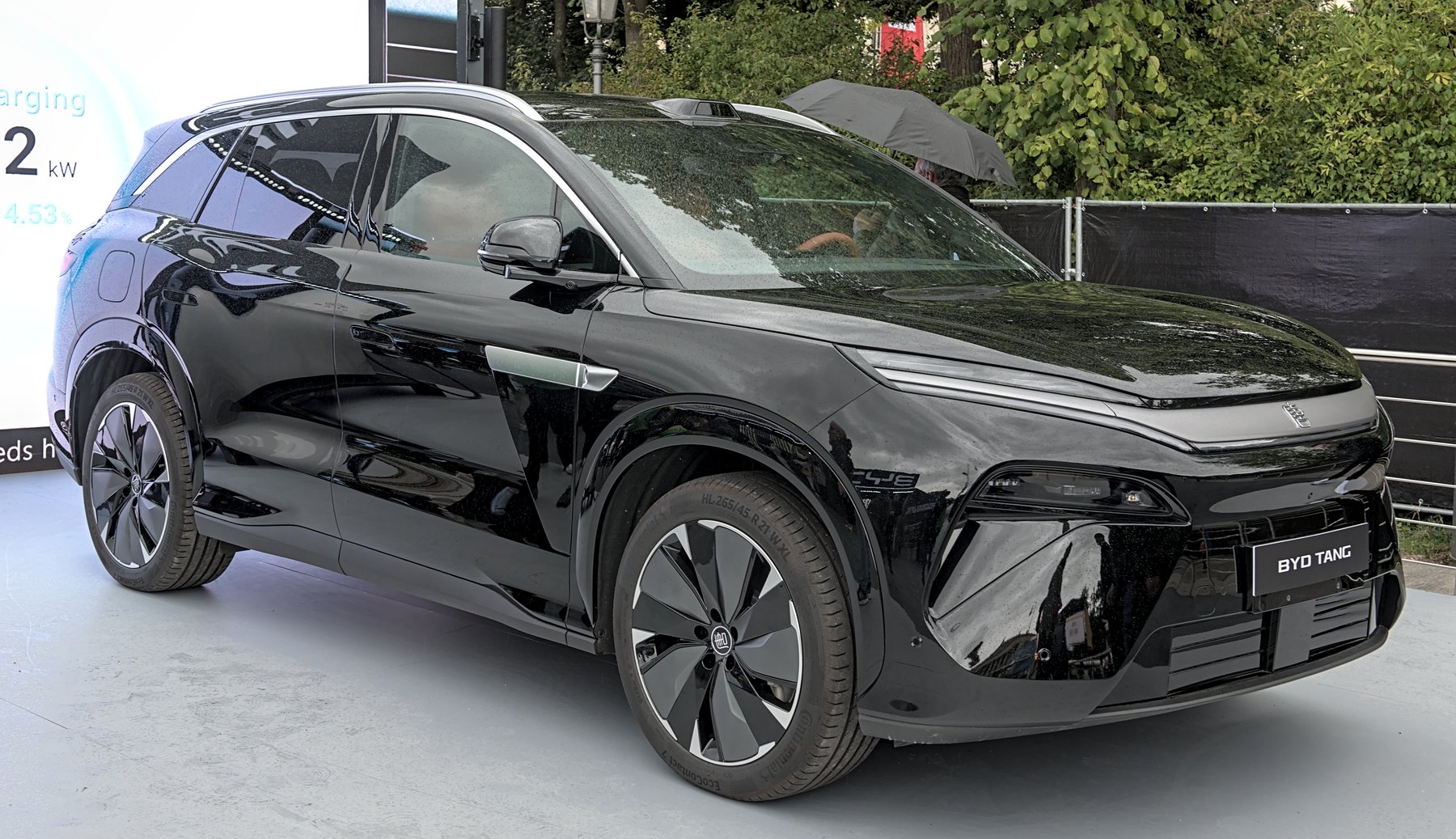
BYD Says Nine Minutes. The Arithmetic Says 670 Kilowatts.
The Atto 8 brings second-generation Blade cells and Flash Charging to Europe in a seven-seat SUV. The battery is the easy part — BYD now has to build 3,000 chargers fast enough to make the number mean anything.
- Model
- BYD Atto 8
- Revealed
- Paris Motor Show, October 2026
- Based on
- BYD Tang L, sold in China
- Battery
- 115 kWh second-generation Blade (LFP)
- Charge 10-70 per cent
- 5 minutes
- Charge 10-97 per cent
- 9 minutes
- Charge 20-97 per cent at -30C
- 12 minutes
- Design (RWD)
- 462 PS (340 kW), 365 Nm, 0-62 mph in 8.0 sec, 405 miles WLTP
- Excellence (AWD)
- 775 PS (570 kW / 764 hp), 775 Nm, 0-62 mph in 4.6 sec, 374 miles WLTP
- Length
- 5,040 mm
- Width
- 1,996 mm
- Height
- 1,760 mm
- Seats
- Seven
- Boot
- 270 litres all rows up, 1,960 litres with the rear two rows folded
- Frunk
- 136 litres
- European on-sale
- First quarter of 2027
- Charging network
- 3,000 BYD Flash Charging stations across Europe by the end of 2027
- Price
- Not announced
BYD used the Paris Motor Show to put its fastest-charging technology into a European showroom car for the first time. The Atto 8 is a seven-seat flagship SUV with a 115 kWh second-generation Blade battery, and the headline figure attached to it is that it charges from 10 to 97 per cent in nine minutes — 10 to 70 per cent in five.
A nine-minute charge is a claim about a charger as much as a car. BYD is the only company that has to build both.
Do the arithmetic on BYD's own numbers and you get a sense of what is actually being claimed. Eighty-seven per cent of 115 kWh is roughly 100 kWh, delivered in nine minutes: an average of about 670 kilowatts sustained across the whole session, including the taper at the top. The five-minute window is steeper still — around 69 kWh in a twelfth of an hour, which averages out near 830 kW. BYD has not published a peak figure for the car in its European release, but averages of that order mean the peak is higher again, and well beyond anything a current European public charger can supply.
Which is the actual story. A charge time is a claim about two things, and BYD is one of very few companies in a position to build both halves. The company says it will install 3,000 Flash Charging stations across Europe by the end of 2027. Until a meaningful number of those exist, the nine-minute figure describes a laboratory relationship between a car and a charger that a European buyer will rarely be standing next to.
The rest of the car is more conventional, and quite large. It measures 5,040mm long, 1,996mm wide and 1,760mm tall, with seven seats in a 2+3+2 layout, 270 litres of boot space with every row up, 1,960 litres with the back two folded, and a 136-litre frunk. Two versions are listed. The rear-drive Design makes 462 PS — 340 kW — and 365 Nm, reaches 62 mph in eight seconds flat and is rated at 405 miles on the WLTP cycle. The all-wheel-drive Excellence makes 775 PS, or 570 kW, and 775 Nm, does the same sprint in 4.6 seconds, and is rated at 374 miles.
Stella Li, BYD's executive vice president, presented it in Paris and described the car as blending the company's latest powertrain with the second-generation Blade battery. That battery is the piece that matters. The first Blade pack made its name on packaging and thermal behaviour rather than raw speed — lithium iron phosphate cells laid out long and flat, structurally part of the pack, cheap and hard to set alight. The second generation keeps the chemistry and goes after charge rate, which is the thing LFP has historically been worst at.
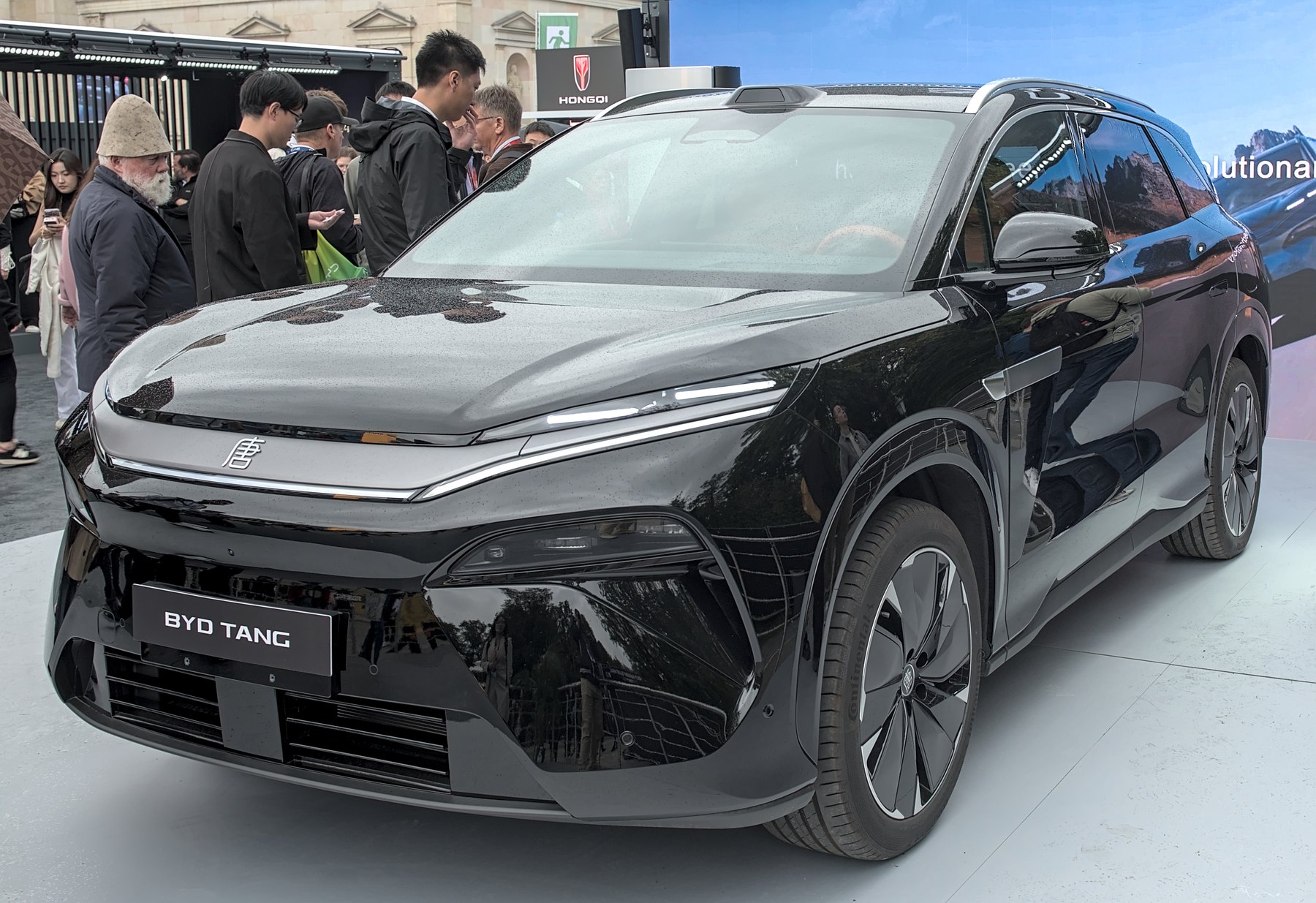
The cold-weather claim is the one worth watching. BYD quotes 20 to 97 per cent in twelve minutes at minus thirty degrees Celsius. LFP is notoriously reluctant in the cold, and a figure like that implies serious pre-conditioning and thermal management rather than a chemistry miracle. It is also, if it holds up in independent testing, more commercially significant in northern Europe than the nine-minute best case.
Underneath the European badge, this is the BYD Tang L, which has been on sale in China for some time — the Atto 8 name is for export. European sales start in the first quarter of 2027. BYD has not announced pricing, and the car will land in a market where everything about Chinese imports is currently a policy question rather than a product one.
Set against the rest of the European market, the pitch is unusually blunt. Most manufacturers are selling range; BYD is selling the elimination of the stop. If the chargers arrive on schedule, a nine-minute refill makes a 374-mile SUV behave like a car that never needs planning at all, and the range figure stops being the number anyone argues about. If they do not, the Atto 8 is a very large, very quick seven-seater with a battery waiting for a socket that does not exist yet.
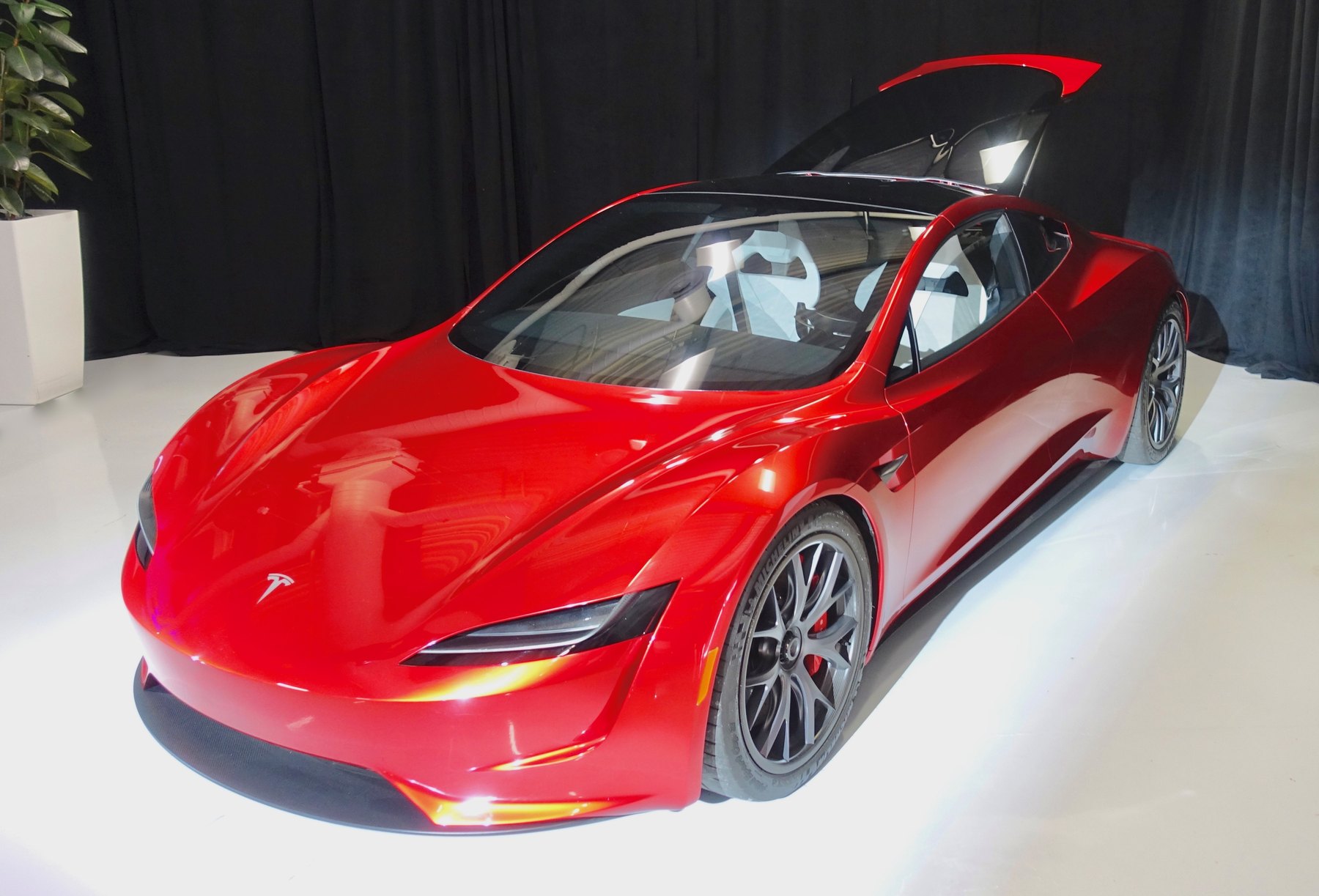
Tesla Showed a Roadster That Does Kickflips. The FAA Says It Isn't an Aircraft, and Nobody Will Say What It Is.
Nine years after taking deposits on a car promised for 2020, Tesla unveiled a four-trim Roadster that drives upside down, flips in mid-air, and carries about five seconds of compressed nitrogen. Production is now 2028. There is still no price.
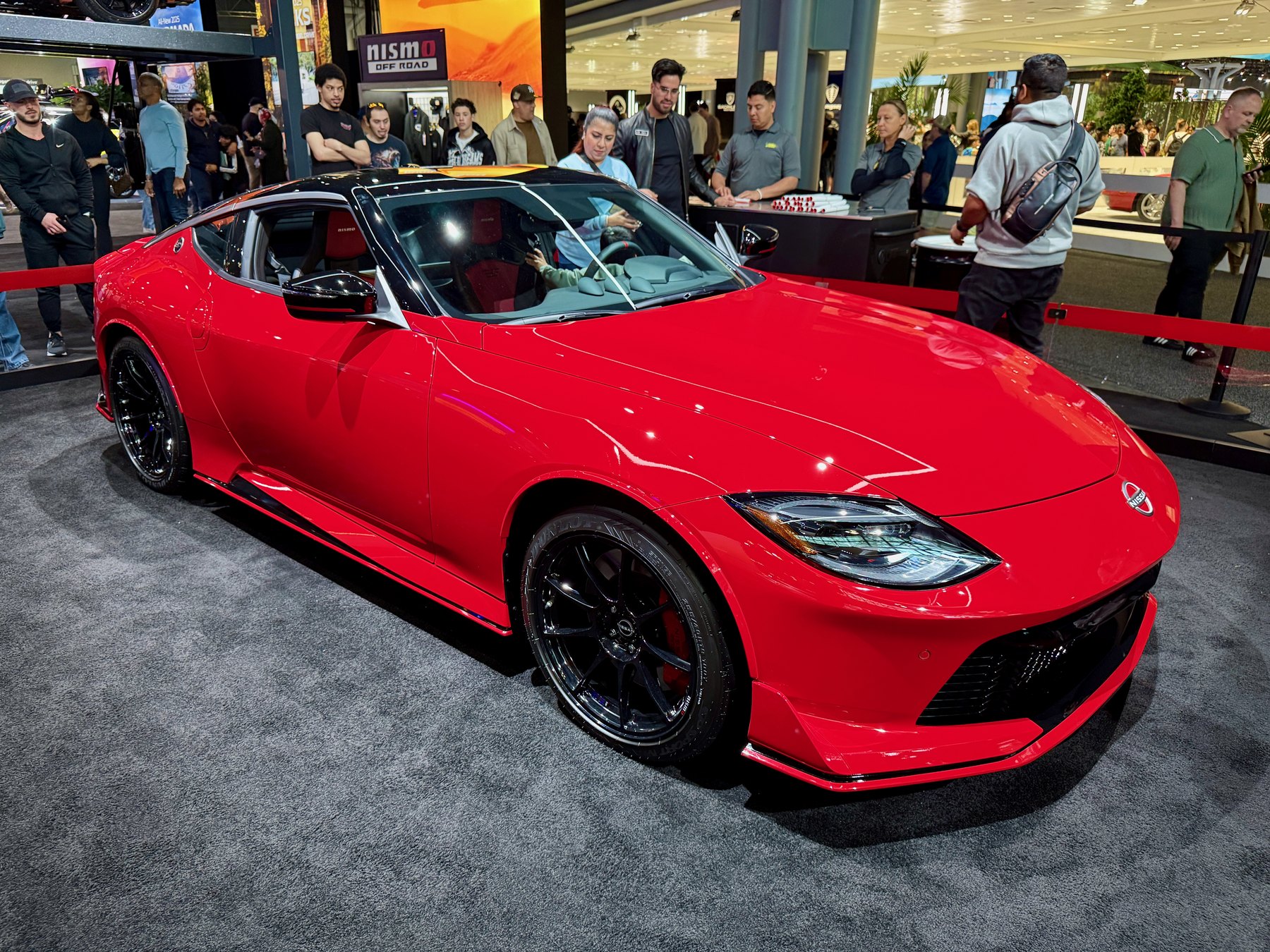
Nissan Finally Put a Third Pedal in the Z NISMO. Then It Made Sure Almost Nobody Can Buy One.
420 horsepower, GT-R brakes, seven percent shorter throws, and no price premium over the automatic. Also: a reported allocation of two or three Zs per dealer for the entire model year, and a manual NISMO build share in the single digits.
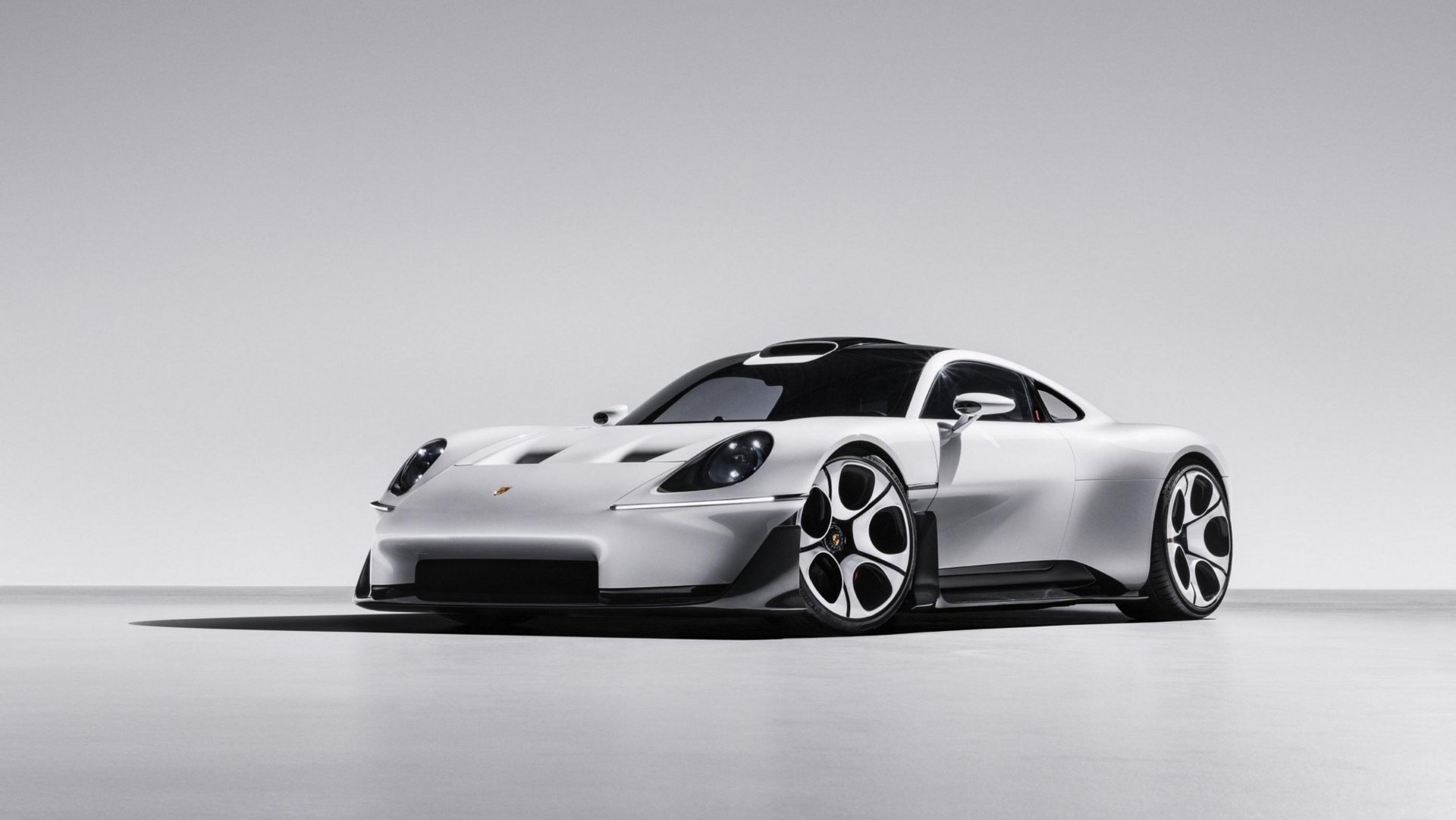
Porsche Puts a Mid-Engined Car Above the 911 — and an Analogue Rev Counter in Front of the Driver
The Mission S vision model landed on a Queens pier on Thursday with five round dials, no fixed centre screen and a confirmed platform above the 911. What Porsche carefully did not say is what sits behind the seats.