
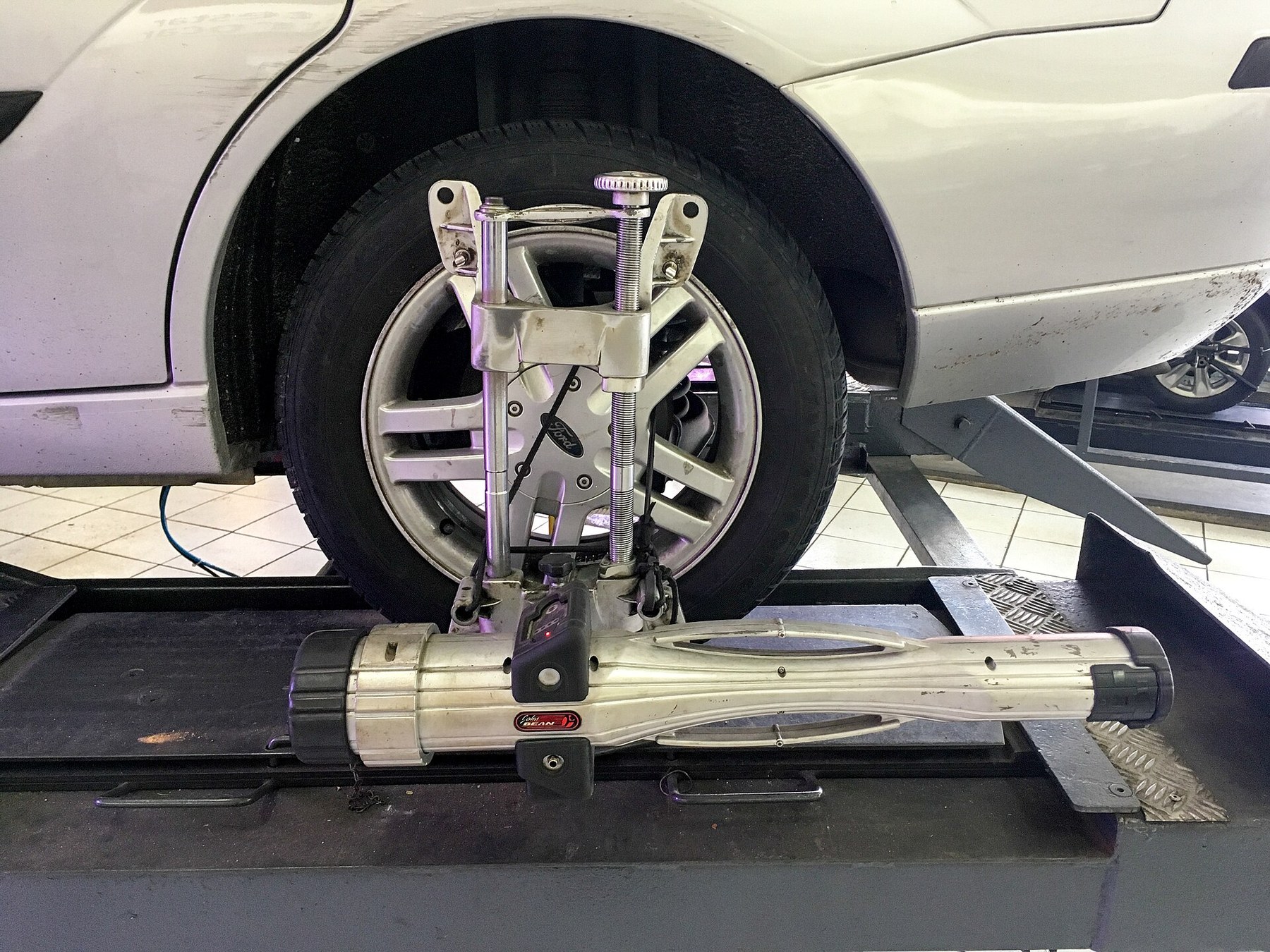
Camber, Caster and Toe: What an Alignment Actually Changes
Three angles, three completely different jobs. One of them eats tyres, one of them decides how the steering feels in your hands, and one of them is mostly invisible until the car starts pulling.
An alignment is sold as one service and it is really three separate adjustments that happen to be made with the same equipment. They are not variations on a theme. Camber, caster and toe are measured from three different viewing angles, they control three different things, and only one of them is primarily responsible for the symptom most people walk into the shop with.
The simplest way to keep them straight is to remember which way you are looking at the car. Camber is what you see standing in front of it. Caster is what you see standing beside it. Toe is what you would see standing on the roof.
Camber is the tilt of the wheel from true vertical, viewed from the front or rear of the vehicle. Tip the top of the wheel outward, away from the car, and that is positive camber. Tip it inward, toward the car, and that is negative camber — the look that stance culture has spent fifteen years exaggerating into the tens of degrees, and that every production car on the road uses a small amount of.
What it does is a trade. Zero camber gives the largest, most evenly loaded contact patch when the car is sitting still and travelling straight, which is why it produces the best straight-line traction and the least tyre wear. But a car does not corner sitting still. Load the outside front tyre in a turn and three things happen at once: the body rolls, which tips the wheel positive relative to the road; the suspension geometry moves the wheel as it compresses; and the tyre's own carcass deflects, rolling the tread away from the pavement and onto the outside shoulder. A degree or two of static negative camber is a pre-payment against all three, so that the tyre arrives at the point of maximum load sitting flatter on the road than it otherwise would.
The cost shows up in the tread. Excessive positive camber wears the outer shoulder faster than the inner; excessive negative camber does the reverse. Extreme settings in either direction visibly shorten tyre life, which is why aggressive static camber is a track-day and show-car decision rather than a commuting one. There is also a steering consequence that catches people out: when camber is unequal from side to side, the car pulls toward the side with the greater positive camber. A car that drifts right is as likely to have a camber mismatch as anything wrong with the tyres.
Whether you can do anything about it depends on what is holding the wheel up. On a double-wishbone layout, camber may be fixed or adjustable depending on how the manufacturer set it up. On a MacPherson strut, it is normally fixed — which is the real reason so many modern cars need an aftermarket camber bolt or plate before they will take a corrective setting at all.
Caster is the one most owners have never heard of and feel constantly. It is the tilt of the steering axis from vertical, viewed from the side of the car — on a double-ball-joint suspension, the line drawn through the upper and lower ball joints. Lean the top of that axis rearward and you have positive caster, which is what essentially every car on sale runs.
The reason is that a steering axis leaning backward intersects the ground ahead of the tyre's contact patch. The contact patch is then trailing behind the point it pivots around, exactly like the front wheel of a bicycle or the castor on a shopping trolley, and a trailing wheel wants to follow the direction of travel. That is where straight-line stability and self-centring come from — the steering wheel returning to centre on its own after a corner is caster doing its job, not a spring somewhere in the column.
It is worth separating caster from trail, because they are related but not the same. Trail is the distance between where the steering axis meets the ground and the point directly below the axle, and it is what produces the steering feel and the returnability. Caster adds damping to that effect. A shopping trolley castor is the limit case: enormous trail, no caster, and the result is a wheel that is stable in direction but will shimmy furiously because nothing is damping it.
More positive caster buys more stability and more self-centring, and charges for it in steering effort, which is why heavy caster settings were rare before power assistance became universal. Racing goes further than road cars do — angles above seven degrees are common with radial tyres — partly for stability and partly for a second effect: a steeply inclined steering axis makes the outside wheel gain negative camber as it is steered into the corner, adding cornering camber exactly when it is wanted without having to run it statically all the time.
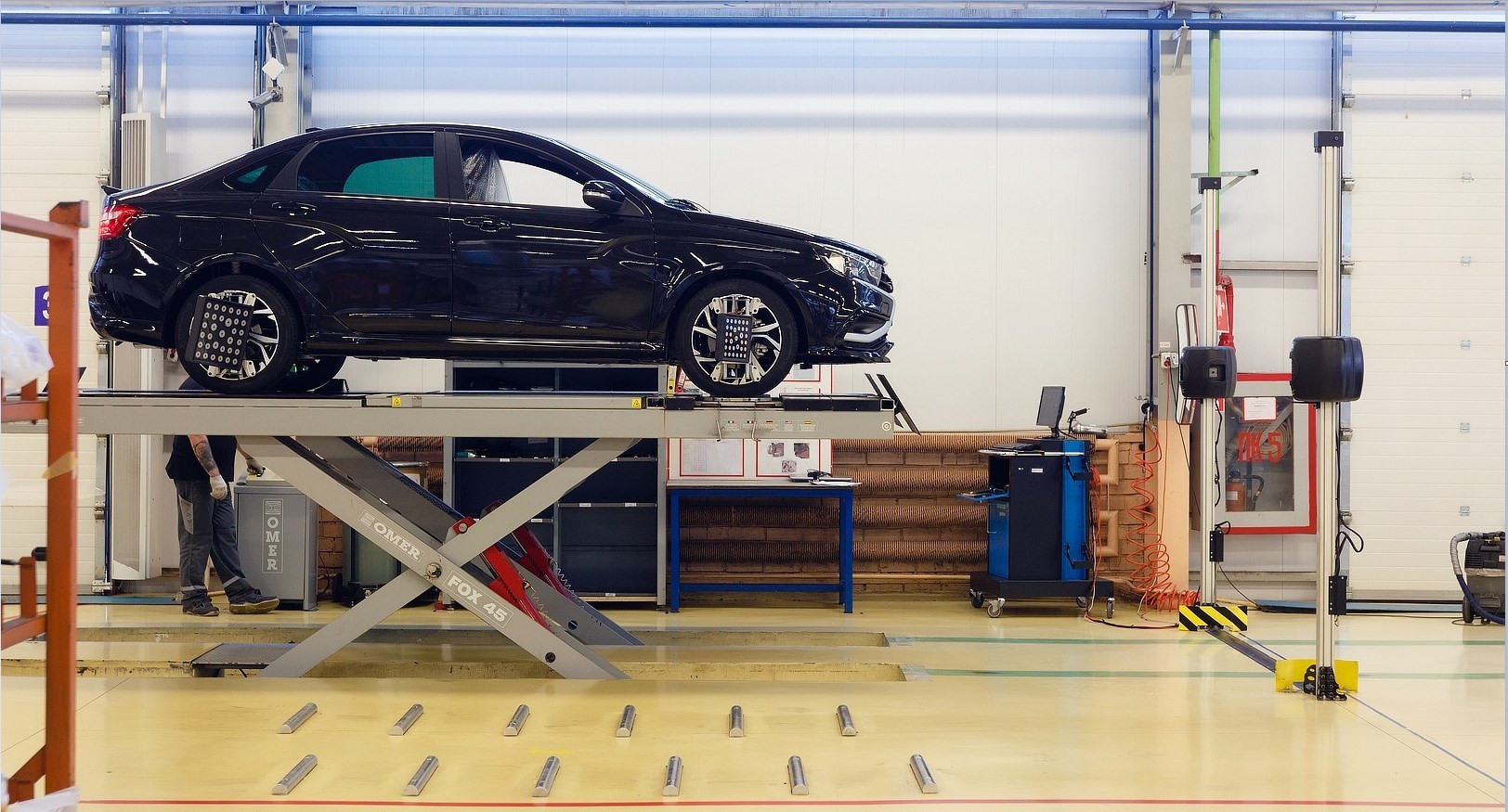
Caster is not a tyre-wear angle unless it is wildly out of specification. What it does instead is show up in handling complaints. Too little caster makes the steering feel unstable and can cause wheel shimmy. Unequal caster side to side makes the car pull toward the side with less positive caster — note that this is the opposite direction from a camber-induced pull, which is one of the few quick diagnostic shortcuts in the whole business.
Toe is how the wheels are aimed, seen from above, and it is the angle that destroys tyres. If the front edges of a pair of wheels point toward each other, that is toe-in; if they point away from each other, toe-out. It can be expressed as an angle in degrees or, traditionally, as a linear measurement across the wheels, though the angle is the better number because it does not change meaning when the wheel diameter does.
A wheel held at a toe angle while the car drives straight is being dragged sideways across the pavement every metre of every journey. The wear pattern it produces is distinctive — a feather edge across the tread, where each tread block is worn down on one side and left sharp on the other — and you can often find it with a palm before you can see it, by running a hand across the tread in both directions and feeling which way is smooth. Zero toe produces the least wear. Toe-in wears the outer edges with feathering toward the inside of the tread; toe-out does the reverse.
The trade here is stability against response. On a rear-wheel-drive car, more front toe-in adds straight-line stability at the cost of some sluggishness turning in, because each front wheel is already generating a small slip angle pointing the car back toward straight. Performance setups often run zero front toe or even a little toe-out, accepting the wandering and the wear in exchange for a front axle that bites the moment the wheel moves. Toe is also the standard tool for cancelling out camber's side effects: a cambered wheel tries to steer itself in the direction it is leaning, and a small opposing toe setting — toe-out against negative camber, toe-in against positive — neutralises the tendency and takes the associated drag and wear back out.
Then there is the angle nobody sells you, which is the rear axle. Thrust angle is the angle between the vehicle's geometric centreline and the direction the rear wheels are actually aimed. When the rear wheels point straight ahead, the thrust line and the centreline are the same thing and the thrust angle is zero. When they do not, the rear axle is quietly steering the car along a line that is not the one the body is pointing down, and the driver compensates without noticing by holding a small permanent steering input.
That is why a four-wheel alignment is a genuinely different service from a front-end alignment, and not just twice as much of it. In a four-wheel alignment, all four wheels are measured and the front wheels are then aligned relative to the thrust line rather than to the body — so the steering wheel ends up straight when the car is actually going straight. Leave the thrust angle uncorrected and the classic symptoms follow: a crooked steering wheel on a straight road, front camber and toe that are correct on the rack and wrong in motion, a pull, and accelerated wear. The fix is rear toe, where the rear suspension design allows rear toe to be adjusted at all — and on plenty of cars it does not, which is a conversation worth having before paying for the service.
A few more numbers appear on the printout that are not adjustments at all, and knowing that saves an argument. Steering axis inclination — the tilt of the steering axis viewed from the front rather than the side — and the included angle, which is simply SAI plus camber, exist to tell a technician whether a part is bent. If camber is out but the included angle is normal, the problem is probably in the adjustment or the mounting; if the included angle is wrong, something in the knuckle or strut is damaged. Setback, where one wheel on an axle sits ahead of the other relative to the chassis, is the same kind of flag, usually pointing to collision damage or very uneven caster. Toe-out on turns, also called the Ackermann angle — the outside front wheel turning through a smaller angle than the inside one, because it is tracing a larger-radius arc — is a designed-in property of the steering linkage and is not adjustable either; if it reads out of specification, something is bent.
Which is the useful thing to carry out of all this. An alignment machine measures a dozen angles and adjusts three. The other nine are a diagnostic language for telling you that the three you want to adjust will not stay where you put them until something underneath gets replaced.
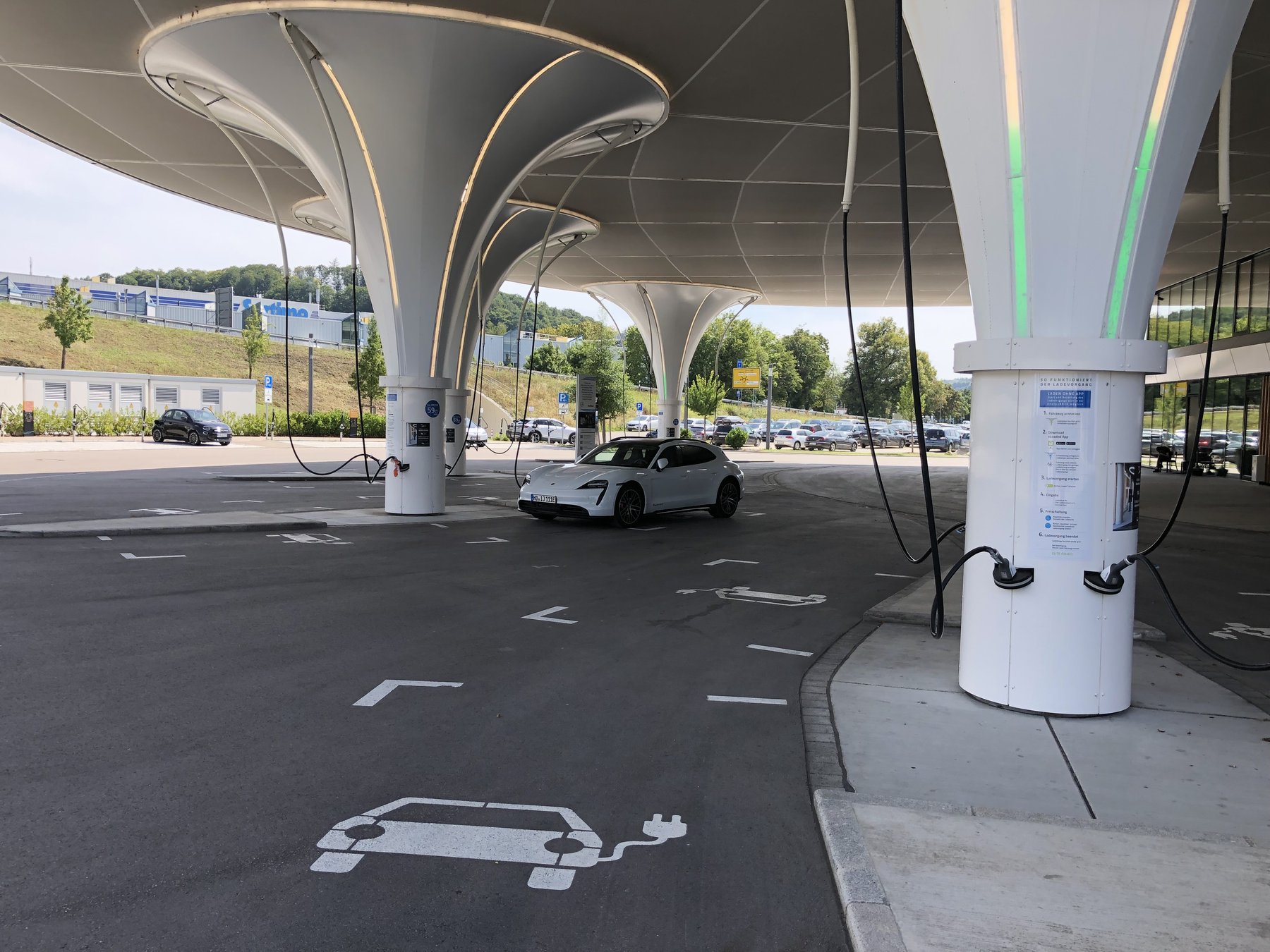
800 Volts Doesn't Make a Car Charge Faster. It Removes the Reason It Couldn't.
Double the pack voltage and you halve the current for the same power — and heat falls with the square of current. That's the entire trick. It still doesn't guarantee you a quick charge, and it quietly creates a compatibility problem nobody advertises.
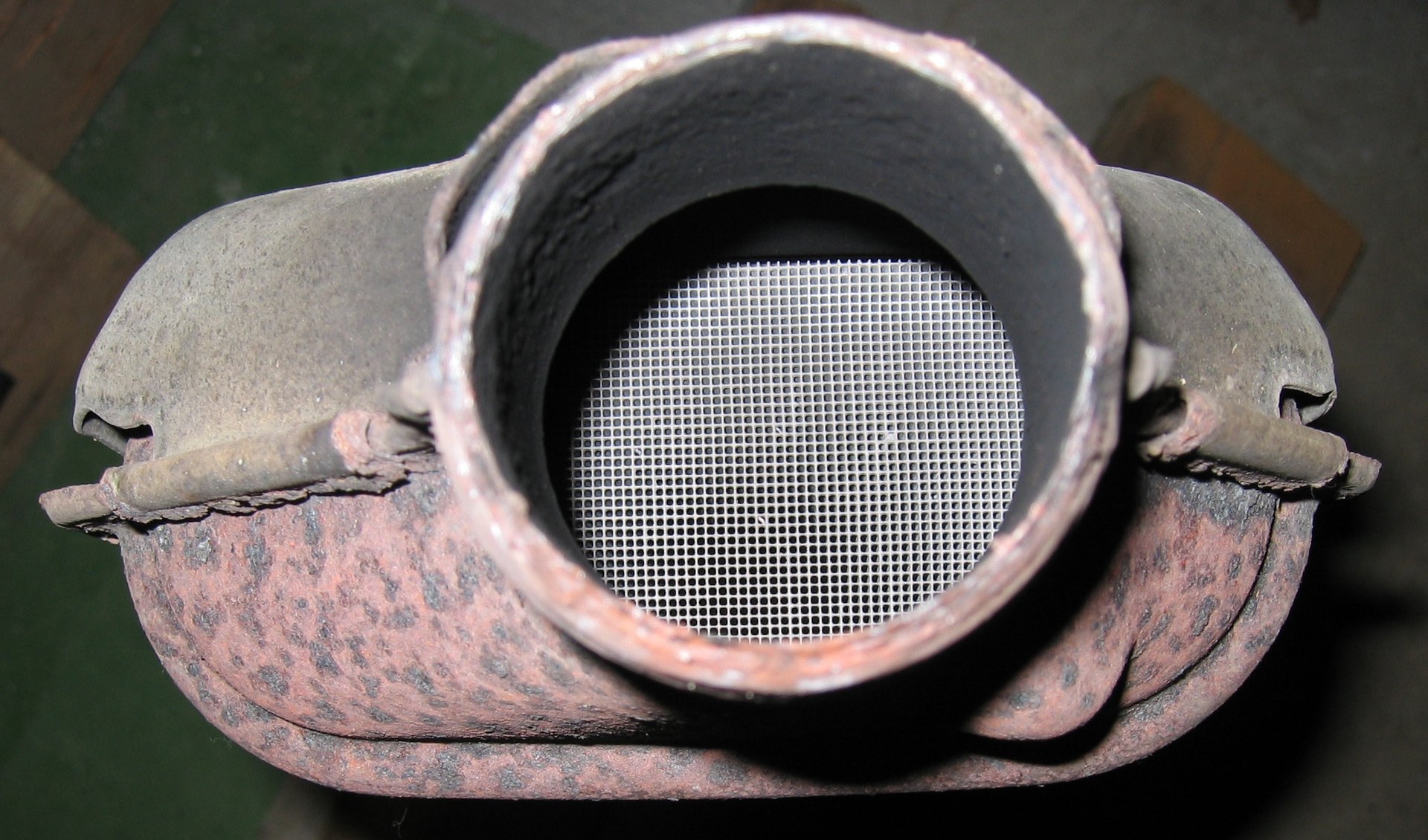
A Catalytic Converter Runs Two Opposite Reactions at Once, and Only Inside a Very Narrow Window
Burning carbon monoxide and unburnt fuel needs oxygen. Stripping nitrogen oxides back to nitrogen needs oxygen taken away. A three-way cat does both in the same brick, which is the whole reason closed-loop fuelling and the oxygen sensor exist.
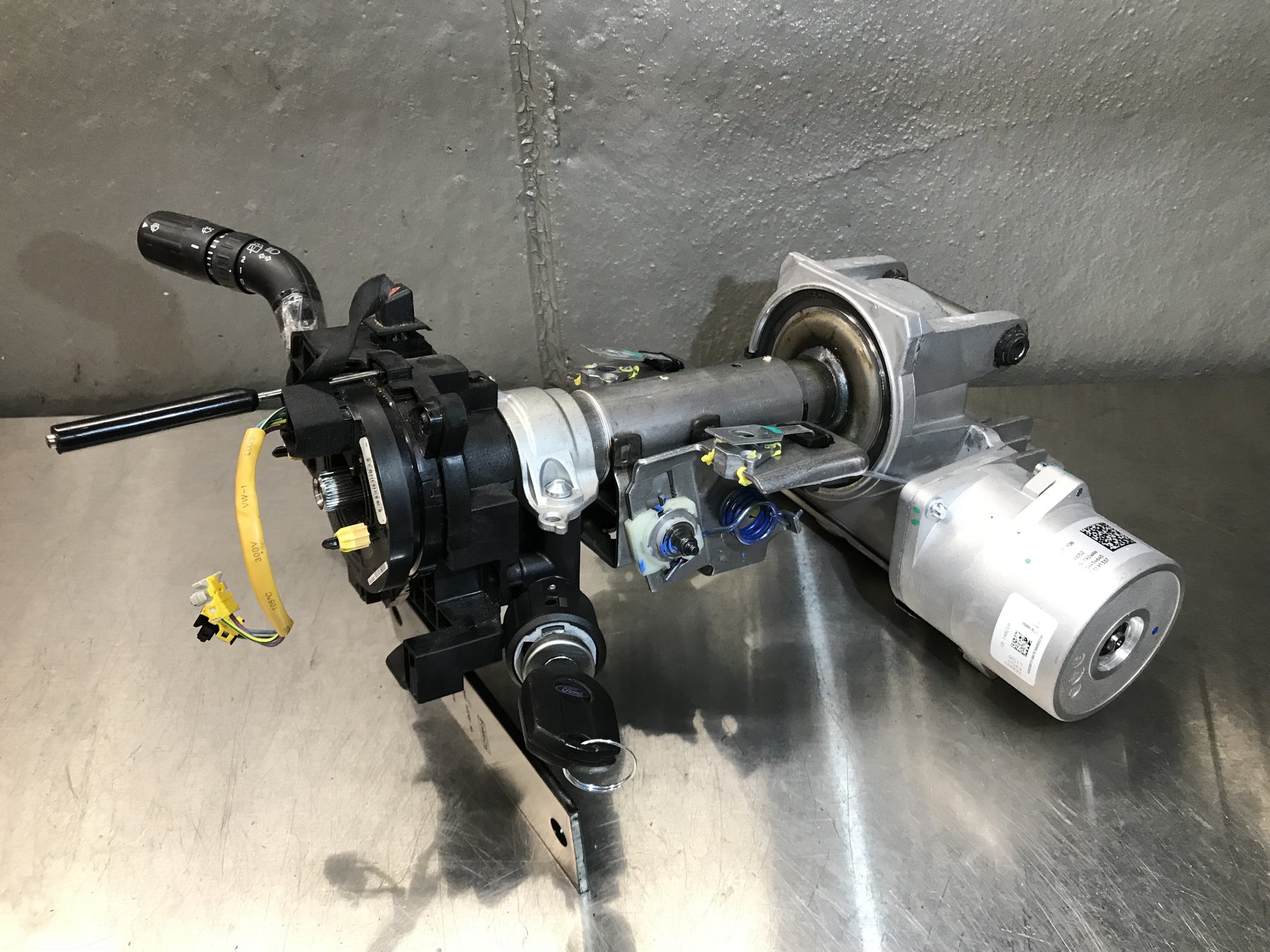
Electric Power Steering Won on Physics. The Missing Feel Was a Tuning Decision.
A hydraulic rack burns engine power whether you are steering or not, and it cannot steer itself — which is why it lost. But "no feel" is not an inevitable consequence of putting a motor in the loop. It is what happens when inertia, friction and software go unaddressed.