
Citroën Brought Back the 2CV in Paris, and Then Declined to Tell Anyone What Is in It
3.76 metres, under a tonne, a roll-back fabric roof and a €15,000 target for 2028. No battery capacity, no range figure, no charging speed. The gap between the two halves of that sentence is the whole story.
- Shown
- Mondial de l'Auto, Paris, press day 12 October 2026
- Length
- 3.76 m
- Kerb weight
- Under 1,000 kg (claimed)
- Roof
- Manual roll-back fabric
- Screen
- 8-inch square
- Wheels
- 18-inch steel
- Battery
- Not disclosed
- Range
- Not disclosed
- Price target
- Around €15,000
- Production
- 2028, European-built
- Variant shown
- 2 CV Fourgonnette Concept
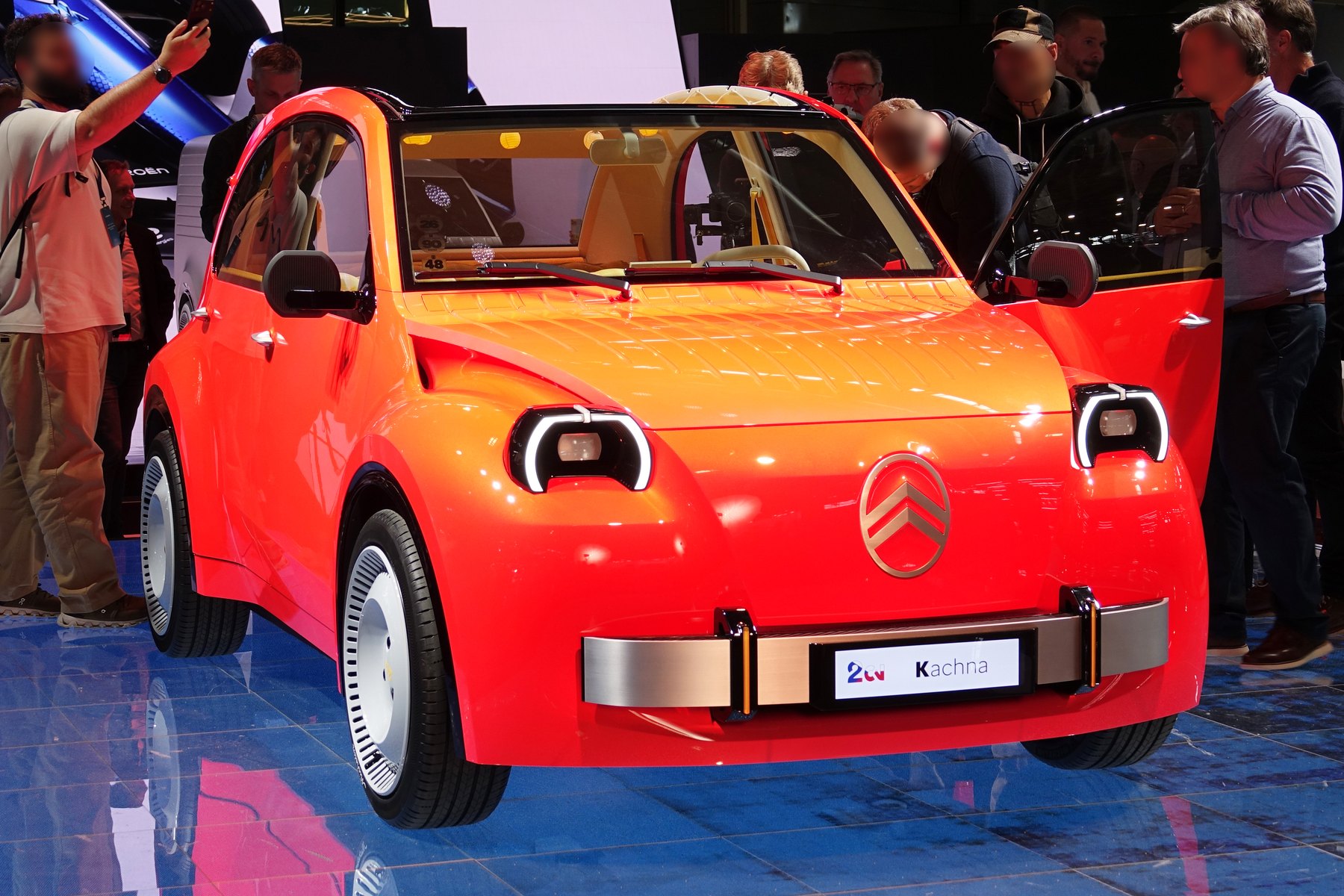
We previewed this show nine days ago on the strength of a teaser and a leak, and the one genuinely unknown car in the building was a Citroën. It is no longer unknown. The 2 CV Concept was revealed on the eve of press day and sat on the Citroën stand at Porte de Versailles from 12 October, finished in a shifting orange-red the brand calls Infra Red, wearing a show plate that reads Kachna — the Czech nickname for the original, and one of roughly a dozen the 2CV picked up across Europe.
Citroën put a number on the price and a year on the calendar, and published nothing at all about the battery. For a car whose entire pitch is cheapness, that is not an oversight.
The shape does the job it was built to do. It is 3.76 metres long, which makes it shorter than the car it is named after, with the corrugated bonnet pressing, the upright glasshouse and the round headlamps all translated rather than copied. The roof is a fabric panel you roll back by hand, exactly as the 1948 car's was, and the bumpers are separate bolt-on units specifically so a parking knock costs one part rather than a painted panel. Citroën's designers have been open that the body uses flat steel and flat glass wherever it can, because flat is cheap.
The claimed kerb weight is under a tonne. That is the number worth holding onto, because in 2026 it is a genuinely unusual figure for anything with a battery in it — Citroën's own e-C3, with the 44 kWh pack, is listed at 1,485 kg. Mass is the thing that drives battery size, which drives cost, which is the entire premise of this car.
Which brings us to what Citroën did not say. There is no published battery capacity. No range figure. No charging speed, no power output, no 0-62 time. For a concept being presented as near-production — the brand says a version of it reaches the market in 2028, built in Europe, at a target of around €15,000 — that is a conspicuous silence, and it is worth being clear about it rather than filling the gap.
Outlets have filled it anyway, and the numbers in circulation are estimates rather than specifications. The reasoning runs that the entry e-C3's 30 kWh lithium-iron-phosphate pack — good for 212 km WLTP in that much heavier car — is the obvious shelf part inside Stellantis, that something this light needs no more of it, and that 20 to 30 kWh would land a real-world range somewhere around 100 to 130 miles. That is a sensible inference. It is not a figure Citroën has stood behind, and a reader deciding whether this car could work for them should treat it accordingly.
The €15,000 is a target, too, and the same caution applies — although Citroën has been consistent about it for months, and the car sits inside Stellantis' broader push for cheap, European-built small EVs. The production site most frequently reported is Pomigliano d'Arco in Italy, the plant that already builds the Fiat Panda. Only European production is officially confirmed.
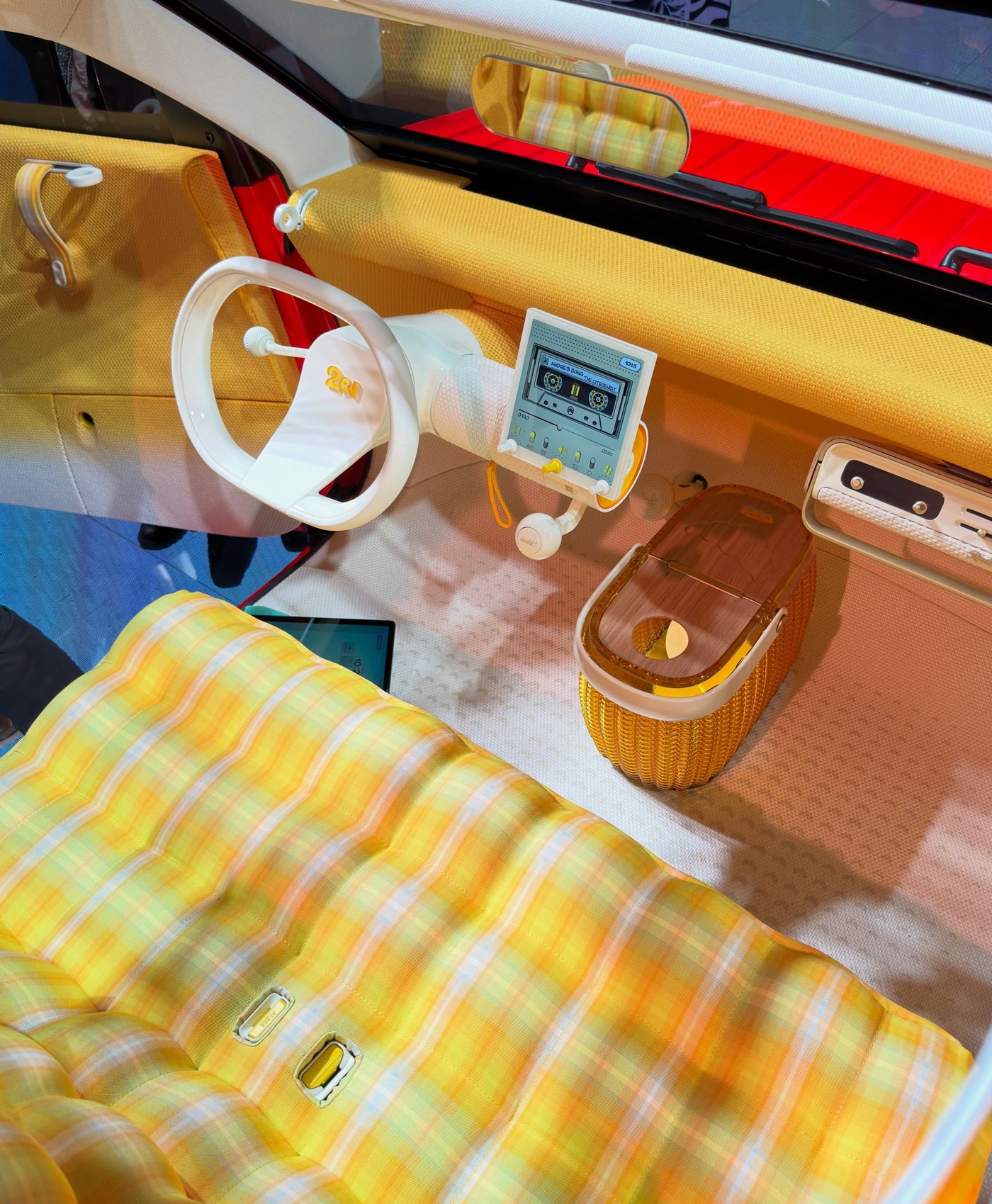
The interior is where the concept is least likely to survive contact with a price list, and also where it is most fun. There is a single fabric bench rather than two seats, built on tubular frames and removable entirely so you can take them out and sit on them. The one-spoke steering wheel and the instrument binnacle are both carried on the steering column, which saves an entire dashboard structure. An eight-inch square touchscreen handles what has to be a screen. Where a centre console would be, there is a basket woven from bio-plastic and wood. A Bluetooth speaker unit detaches and comes with you. The pedals carry a hare and a tortoise.
Some of that is costed design and some of it is a show stand. Removable seats and a column-mounted cluster are real ways to take money out of a car. A 3D-printed wicker basket and tartan upholstery are not. Citroën's design leadership has said the production car will look very similar to the concept, which in concept-car language usually covers the exterior and quietly excludes the Easter eggs.
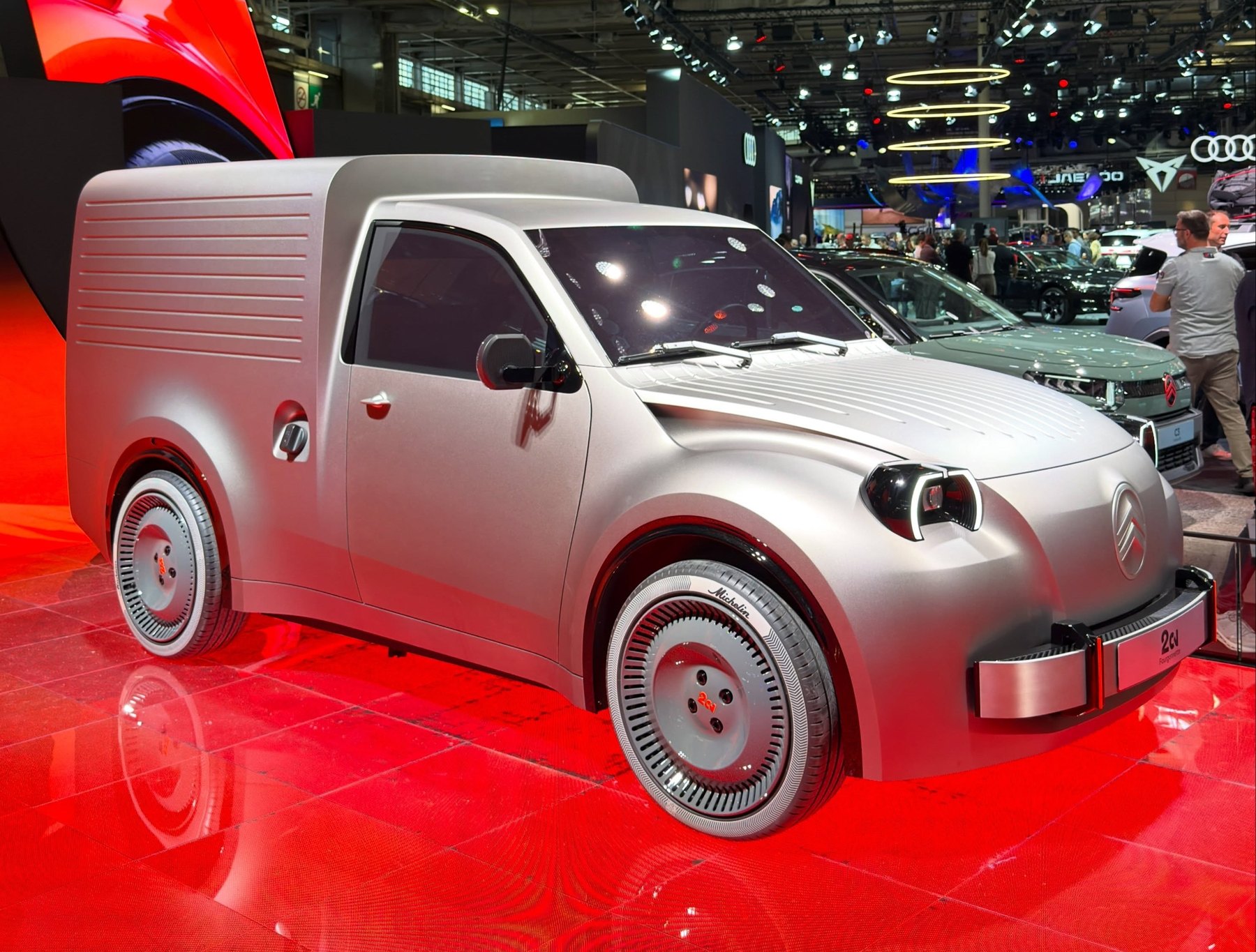
Parked next to it was a second body: the 2 CV Fourgonnette Concept, a silver-grey panel-van take on the same car, with the ribbed high roof and blanked rear quarters of the original Fourgonnette. It is the better-looking of the two, and Citroën has been straightforward that it is a passion project from the design team rather than something previewing a production model in the short term. Enjoy it as a drawing.
The context is what makes any of this matter. This is the show where a third of the exhibiting brands are Chinese and the main hall has filled up with sub-€25,000 electric hatchbacks — Renault's Twingo E-Tech from €19,490, Volkswagen's ID. Polo from €24,995. Citroën's answer is not to match them on specification but to undercut them on ambition: fewer features, less battery, less weight, less money. The 2CV nameplate is the only part of that argument the company has to explain to anyone in France.
Whether it works depends entirely on the numbers Citroën has not published yet. A sub-tonne EV at €15,000 with 100 miles of range is a genuinely new proposition in Europe. The same car at €18,500 with 85 miles is a Dacia Spring with a better haircut. We will find out which one it is well before 2028.
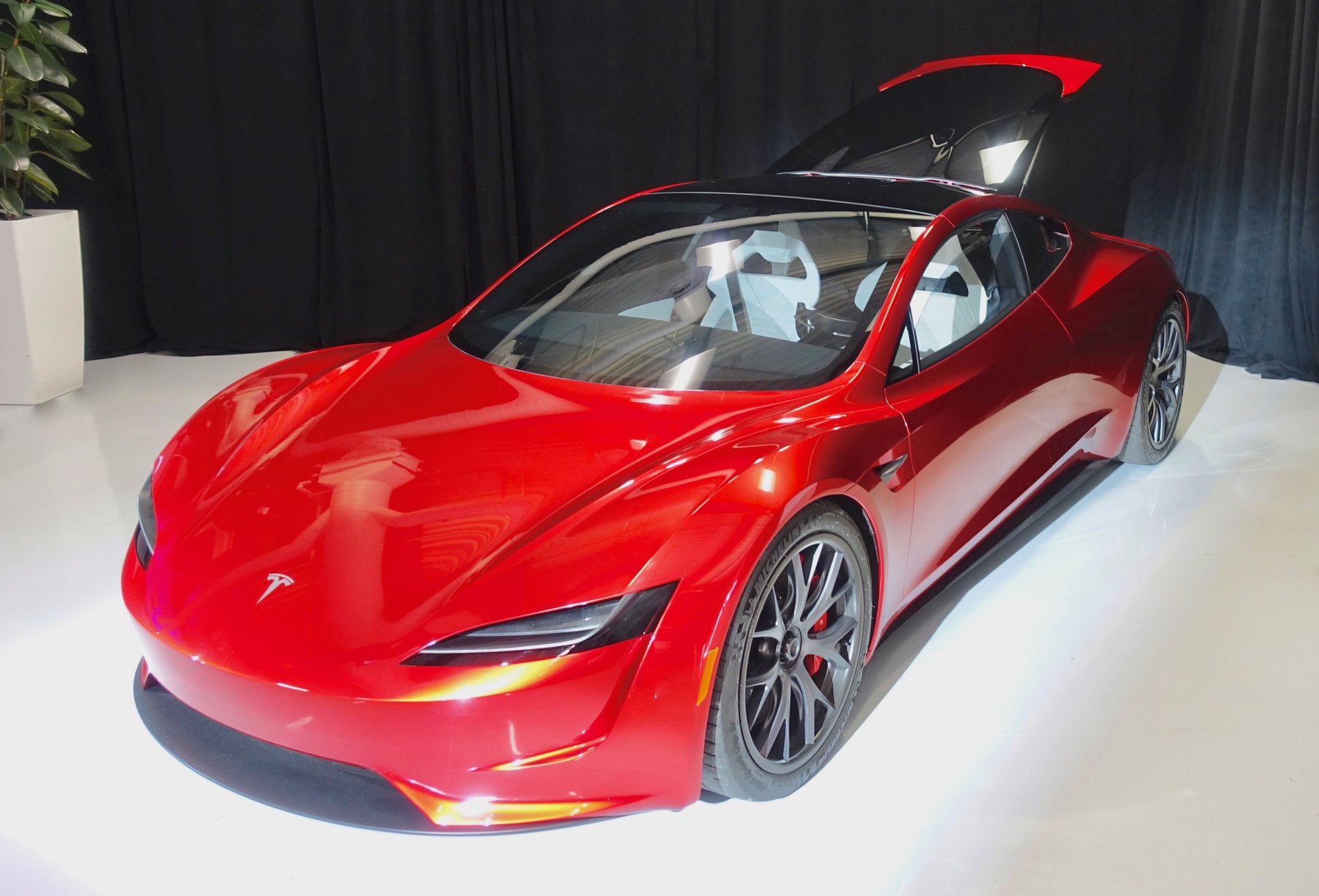
Tesla Showed a Roadster That Does Kickflips. The FAA Says It Isn't an Aircraft, and Nobody Will Say What It Is.
Nine years after taking deposits on a car promised for 2020, Tesla unveiled a four-trim Roadster that drives upside down, flips in mid-air, and carries about five seconds of compressed nitrogen. Production is now 2028. There is still no price.
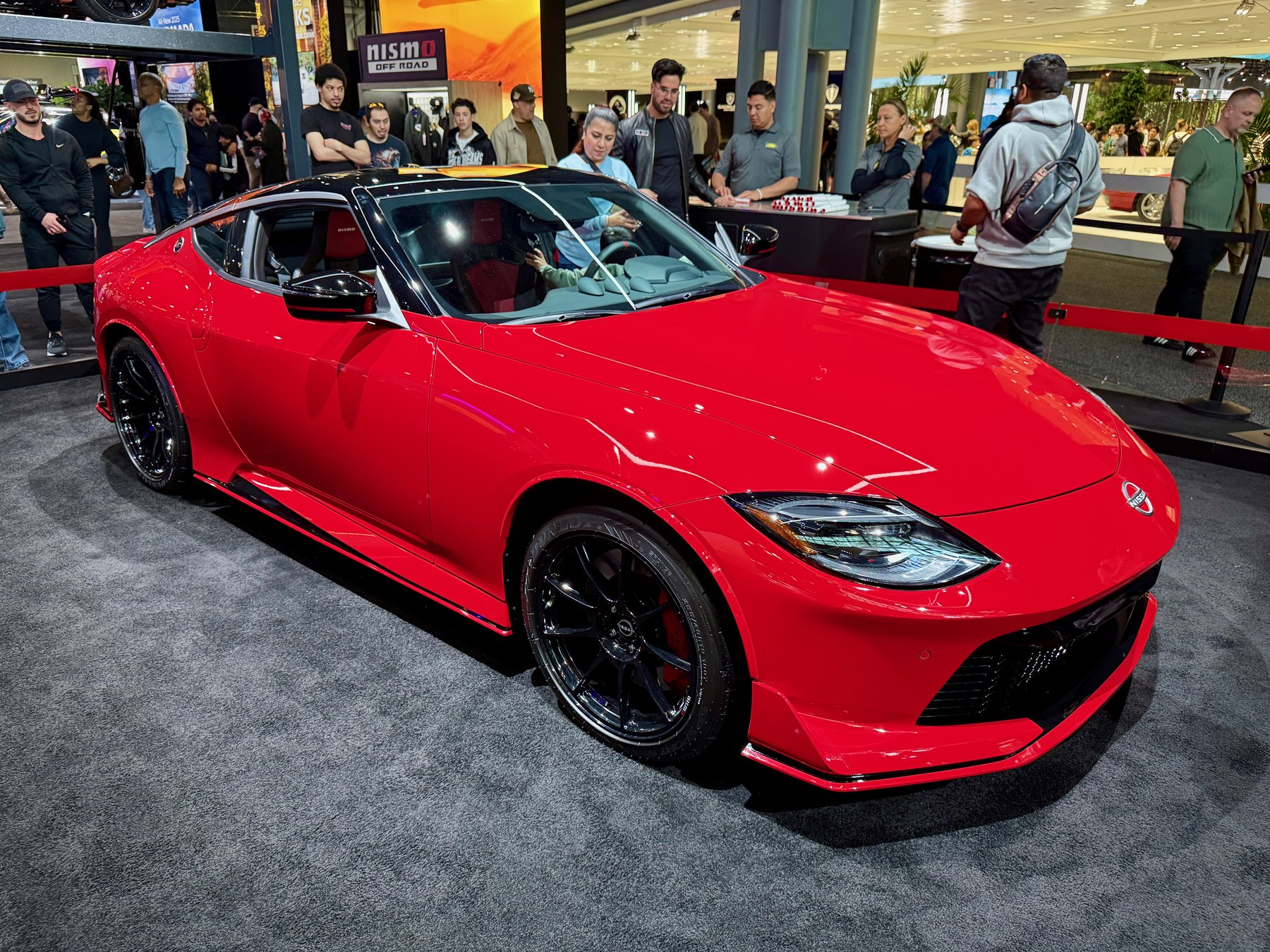
Nissan Finally Put a Third Pedal in the Z NISMO. Then It Made Sure Almost Nobody Can Buy One.
420 horsepower, GT-R brakes, seven percent shorter throws, and no price premium over the automatic. Also: a reported allocation of two or three Zs per dealer for the entire model year, and a manual NISMO build share in the single digits.
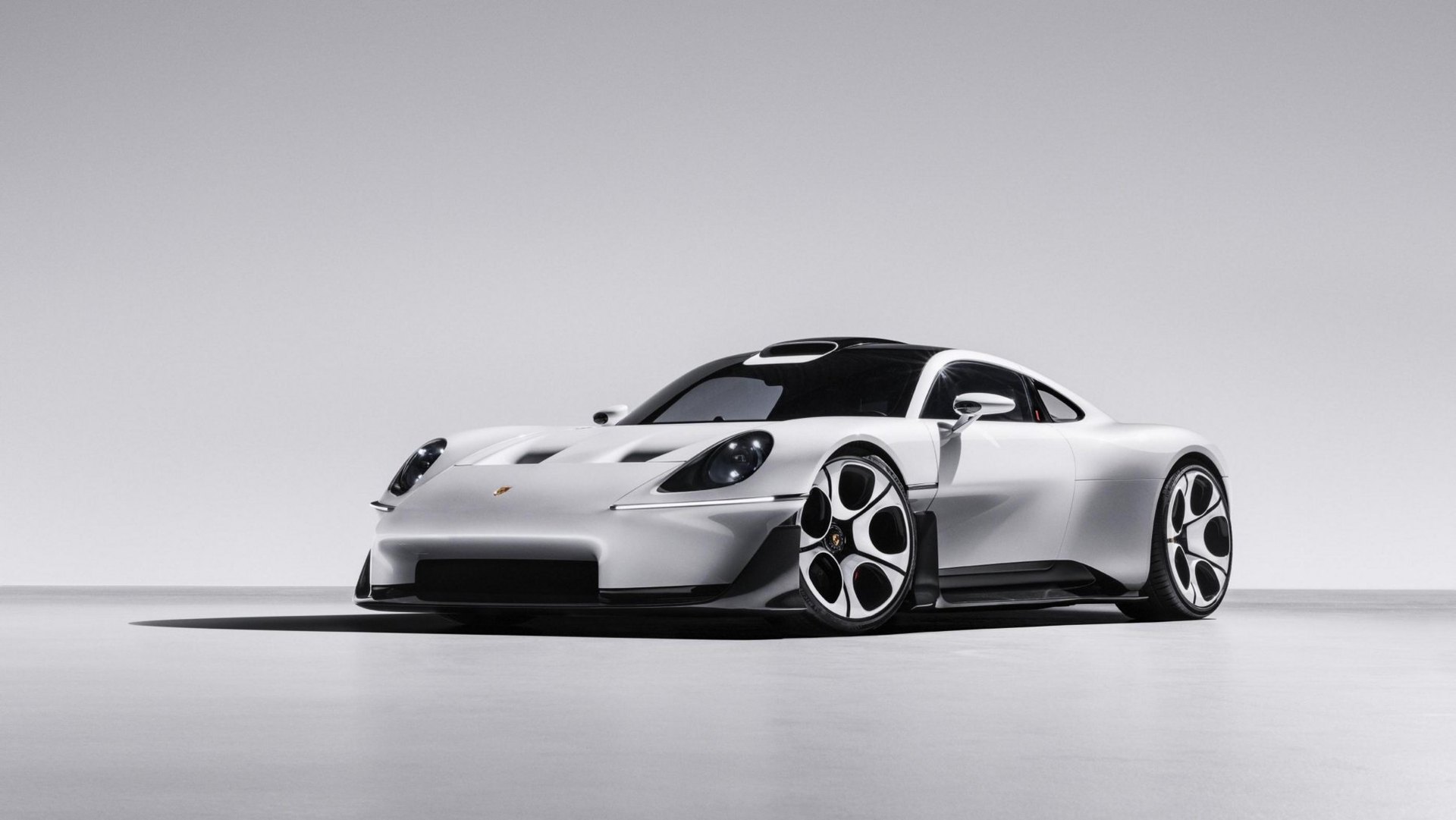
Porsche Puts a Mid-Engined Car Above the 911 — and an Analogue Rev Counter in Front of the Driver
The Mission S vision model landed on a Queens pier on Thursday with five round dials, no fixed centre screen and a confirmed platform above the 911. What Porsche carefully did not say is what sits behind the seats.