
Four-Wheel Steering: Honda Did It in 1987 With a Shaft and a Gear Set, No Computer Involved
Turn the rear wheels the wrong way and a car gets tighter. Turn them the right way and it gets steadier. The hard part has always been knowing which one the driver wants — and Japan answered that question three different ways before anyone else shipped it.
- Honda 4WS announced
- October 1986
- Launched
- Honda Prelude, 1987
- Type
- Fully mechanical, steering-angle-sensing
- Rear angle, small inputs
- Up to about 1.5 degrees in-phase
- Rear angle, full lock
- Up to 5.3 degrees counter-phase
- Neutral point
- Around 230 degrees of steering wheel
- Turning radius
- 4.8 m vs 5.3 m for the two-wheel-steer Prelude
- Nissan HICAS
- R31 Skyline GTS, up to 0.5 degrees in-phase above 30 km/h
- Super HICAS
- R32 Skyline GT-R, 1989, computer-controlled
- Porsche 991 Turbo
- Up to 2.8 degrees, 2013
A car with two steered wheels is a compromise that everyone has simply stopped noticing. The front tyres point where the driver asks; the rears point straight ahead and are dragged through an arc they had no say in. At parking speeds that makes the car turn in a bigger circle than its wheelbase suggests it should. At motorway speeds it means that when you turn the wheel, the car first rotates about its vertical axis and only then starts moving sideways — a lag between asking and receiving that engineers call yaw build-up and drivers just call the car feeling lazy.
Honda considered linking the system to road speed and decided against it. A speed-linked 4WS system, the company concluded, would be too complex to be marketable.
Steering the rear wheels fixes both problems, but not with the same input. The two fixes are opposites.
Turn the rear wheels the opposite way to the fronts — counter-phase — and the car pivots around a point much closer to its middle. The turning circle collapses. A long saloon suddenly parks like a hatchback. Do that at 70 mph and the back of the car swings out from under you, which is exactly as unpleasant as it sounds.
Turn them the same way as the fronts — in-phase — and the car stops rotating and starts translating. Both axles develop cornering force at roughly the same moment, so a lane change happens as a clean sideways movement rather than a yaw followed by a slide. The car feels like it has a longer wheelbase than it does. Do that at parking speed and the turning circle gets worse, not better.
So the entire engineering problem of four-wheel steering is not how to move the rear wheels. It is how to work out which of those two things the driver wants right now. Three Japanese manufacturers arrived at three different answers in the space of about four years, and they got there before anyone else put the idea on a price list.
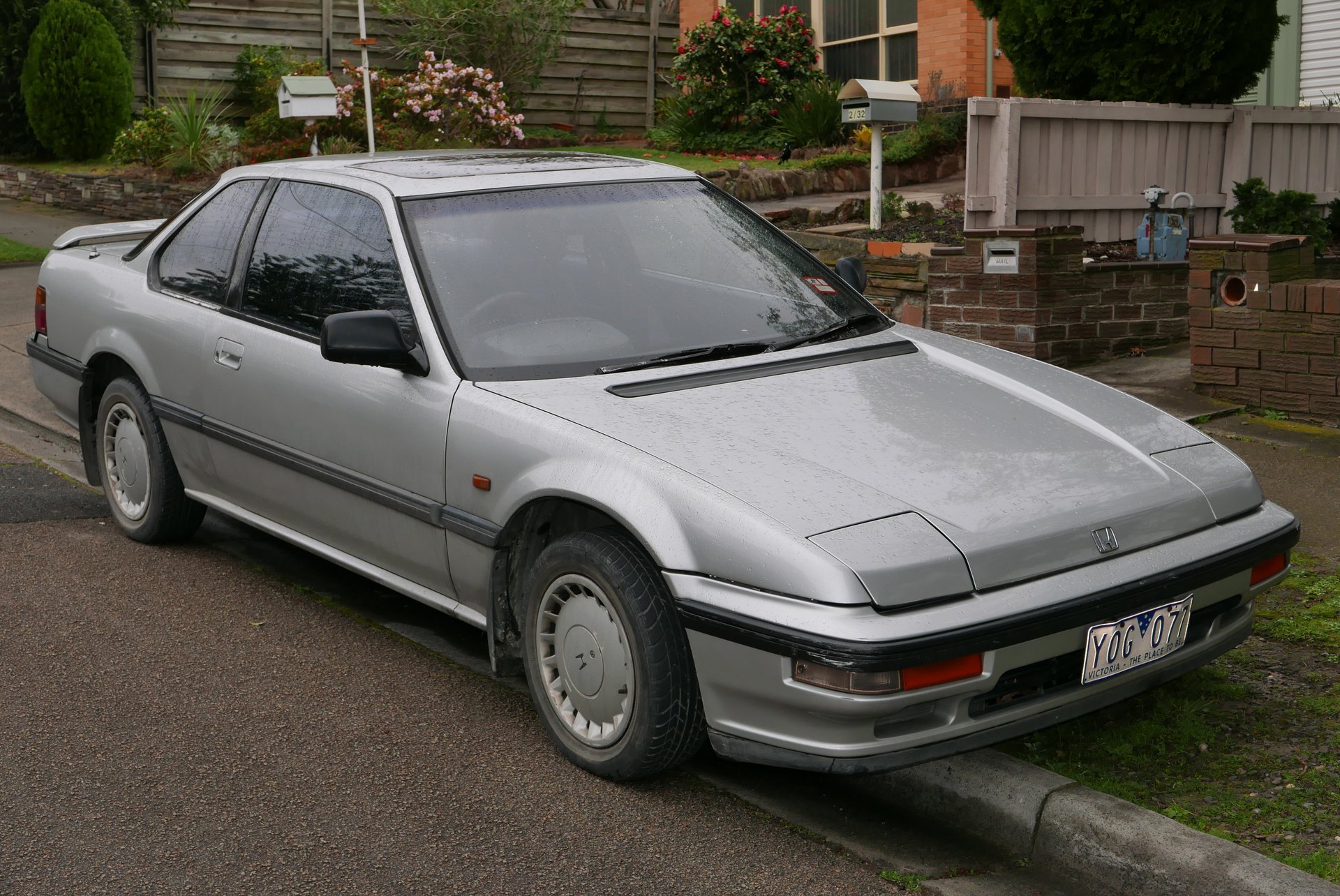
Honda went first and went strangest. The company announced its four-wheel steering system in October 1986 and launched it on the Prelude the following year, describing it as the world's first steering-angle-sensing 4WS system. The important word there is sensing, and the surprise is what did the sensing: nothing electronic. There was no control unit, no speed signal, no actuator. The rear wheels were steered by the steering wheel, through metal.
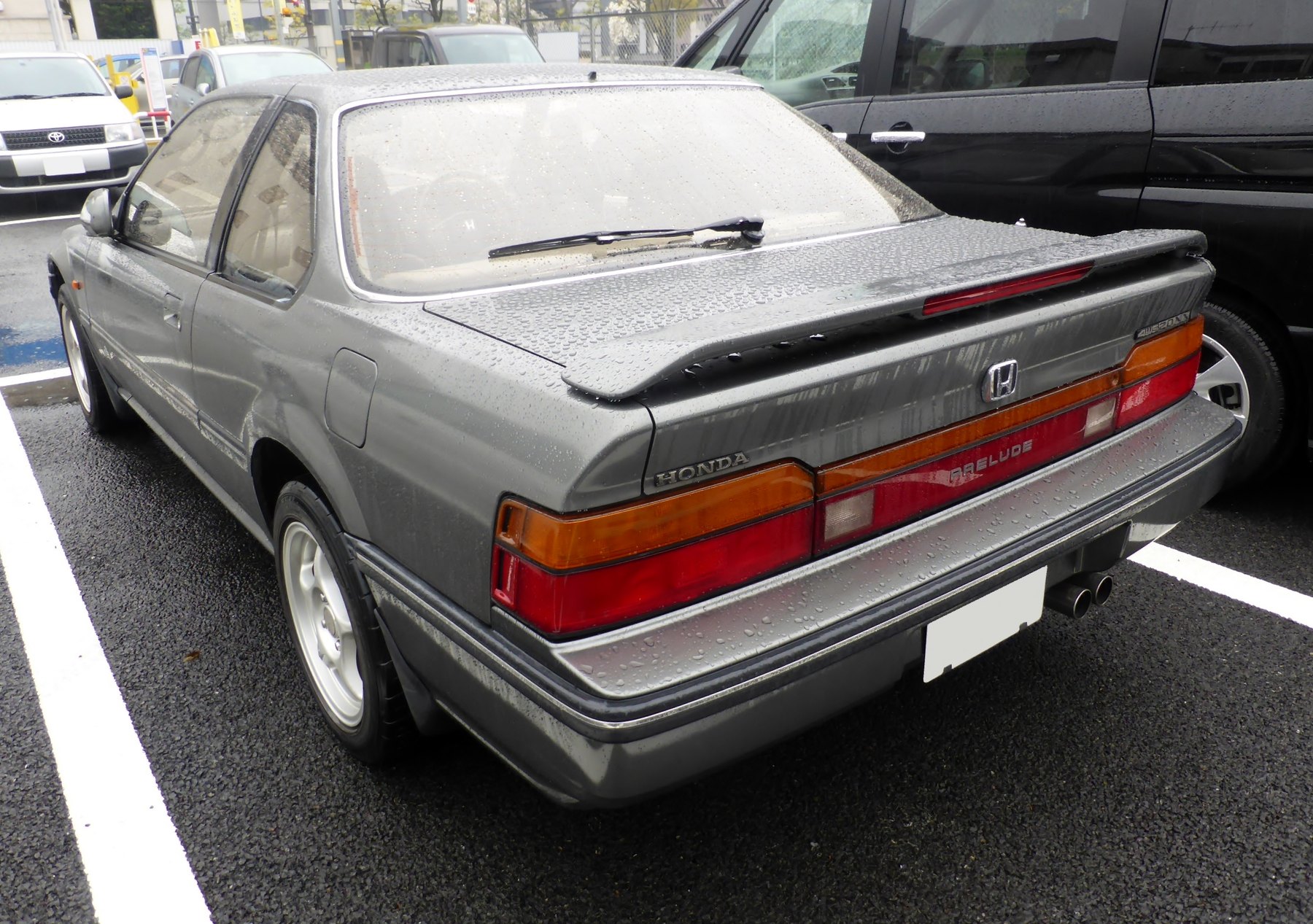
The mechanism is a double crank, and it is genuinely clever. A centre shaft runs the length of the car from the front steering gearbox to a second gearbox at the rear. Inside that rear box, the shaft turns an eccentric shaft — the first crank — which drives a planetary gear running inside an internal ring gear. That planetary gear is the second crank. Because it is both spinning on its own axis and orbiting inside the ring gear at the same time, a point on it traces a path that moves outward, stops, and comes back. A slider and guide convert that path into straight-line motion, which a stroke rod passes to the tie rods and the rear wheels.
What that gets you is a rear steering angle that is a fixed function of how far the steering wheel has been turned, with the direction reversing partway through. For small inputs — up to about ten degrees of steering wheel, which covers essentially all motorway driving — the rear wheels turn in-phase, to a maximum of roughly 1.5 degrees. Keep winding on lock and the rear angle falls back to zero at around 230 degrees. Past that, towards the 450 degrees that is full lock on a car with two and a half turns, the rears swing counter-phase to a maximum of 5.3 degrees. The Prelude's turning radius dropped from 5.3 metres to 4.8.
Honda did consider linking the system to road speed instead, which is the obvious way to do it and the way everybody does it now. The company rejected it on the grounds that a speed-linked system would be too complex to be marketable — a judgement about 1986 electronics and 1986 warranty costs more than about physics. Reading the steering wheel instead of the speedometer is a proxy, and an imperfect one: nothing stops you from applying a quarter-turn at 80 mph. But it is a proxy that needs no sensors, no computer and no power supply, and it fails safe, because when it breaks it stops moving rather than moving wrongly.
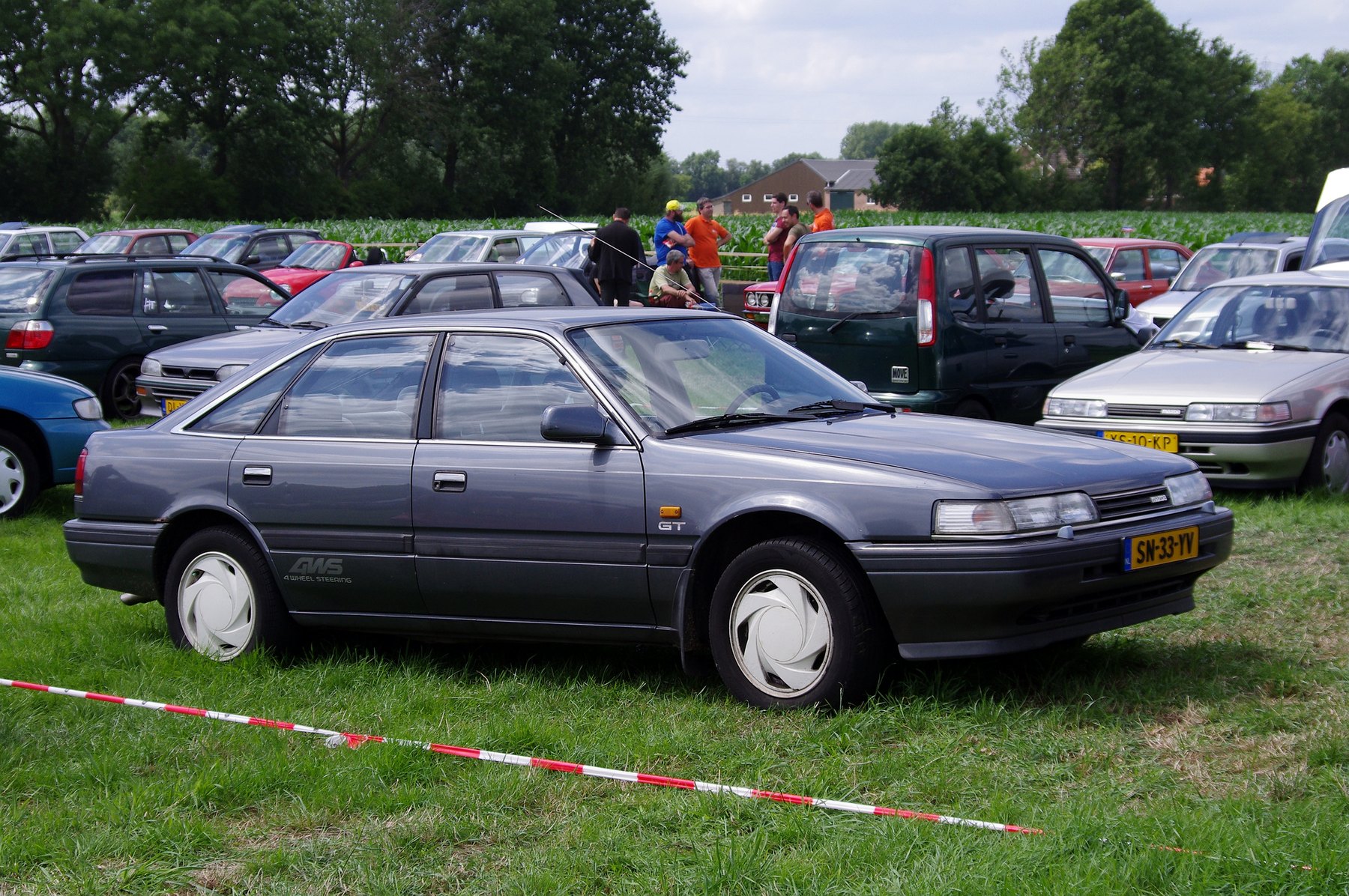
Mazda took the other route. From 1988 the 626 and its MX-6 coupé sibling offered a four-wheel steering option that was electronically controlled and read vehicle speed, turning the rear wheels counter-phase at low speed for manoeuvrability and in-phase at higher speeds for stability. That is the logic every modern system uses. The badge on the door of a 626 GT 4WS is, in engineering terms, a closer ancestor of a current Porsche than the Prelude's mechanical shaft ever was.
Nissan's version started from a completely different question. HICAS — introduced on the R31-generation Skyline GTS in the mid-1980s — was not trying to help anyone park. It was aimed squarely at high-speed stability, and its first incarnation did not really steer the rear wheels at all. Two spring-loaded hydraulic actuators, fed by the power steering pump through regulating valves, pushed against the rear subframe and the semi-trailing arms, deflecting the whole assembly within the give of its own rubber bushings. The result was up to about half a degree of in-phase rear steer, and only above 30 km/h. It was, in effect, a system for controlling suspension compliance rather than for aiming the wheels.
HICAS II, which arrived on the 180SX in 1988, added a proper hydraulic actuator and a rear steering rack to the same idea, and the hardware was capable of up to seven degrees of counter-phase movement. In production cars Nissan limited it to about one degree. The capability was there; the confidence was not.
Super HICAS, from the R32 Skyline GT-R in 1989, is the one worth remembering, because it stopped treating rear steer as a setting and started treating it as a sequence. Given its own control unit rather than a simple speed input, the system would briefly turn the rear wheels counter-phase at the instant of turn-in, then swing them in-phase as the corner loaded up. The counter-phase moment generates a quick yaw response — the car rotates willingly — and the in-phase phase that follows stabilises it before that rotation becomes a problem. It is a deliberate, electronically timed version of the thing rally drivers do with a flick of the wheel. Later versions swapped hydraulics for an electric actuator, and the system went on to the Infiniti Q45t, the 300ZX Turbo and the Laurel.
Then it mostly disappeared, for about two decades, for reasons that had nothing to do with whether it worked. Four-wheel steering adds a rack, an actuator, a control unit and its wiring to the end of the car where weight hurts most, and it adds all of that to the warranty schedule too. The gain is real but modest and hard to put on a window sticker. Meanwhile the problem it was solving got attacked from other directions — stability control could manage yaw with the brakes, and wider tyres and stiffer structures took care of a lot of the rest.
What brought it back was cars getting bigger. Rear-axle steering returned to production in 2013 on the 991-generation Porsche 911 Turbo, varying the rear angle by up to 2.8 degrees with speed: counter-phase below roughly 50 km/h to shrink the turning circle, in-phase above 80 km/h, where Porsche described the effect as lengthening the wheelbase by around 500 millimetres. The 911 GT3 of the same generation used a smaller range, about 1.5 degrees. Since then it has spread across large saloons and heavy electric SUVs — vehicles whose wheelbases have grown past the point where a driver can comfortably place them in a multi-storey car park.
Which is a slightly deflating ending for an idea that arrived on a Honda coupé in 1987. The technology did not come back because enthusiasts missed it. It came back because cars got long enough to need it — and the specific trick the R32 was doing in 1989, rotating the car on turn-in before steadying it, is still the most interesting thing anyone has done with a steered rear axle.
MacPherson Strut vs. Double Wishbone: Why the Cheaper One Won, and What It Actually Costs
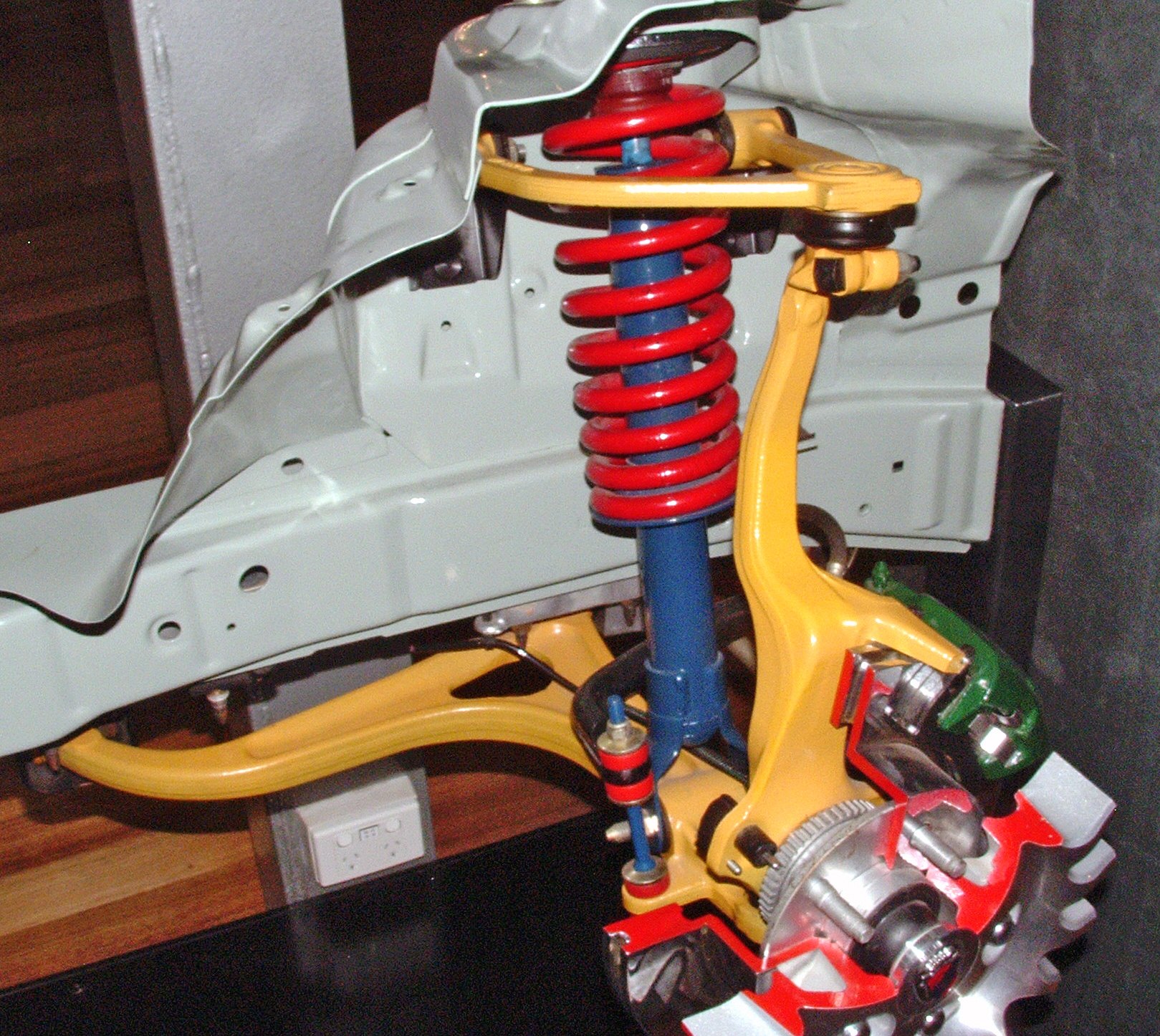
One layout hangs the wheel off a single telescopic leg. The other locates it with two arms and leaves the engineer free to choose how the camber behaves. Almost every car you can buy uses the first, and Porsche spent a whole GT3 generation going the other way.
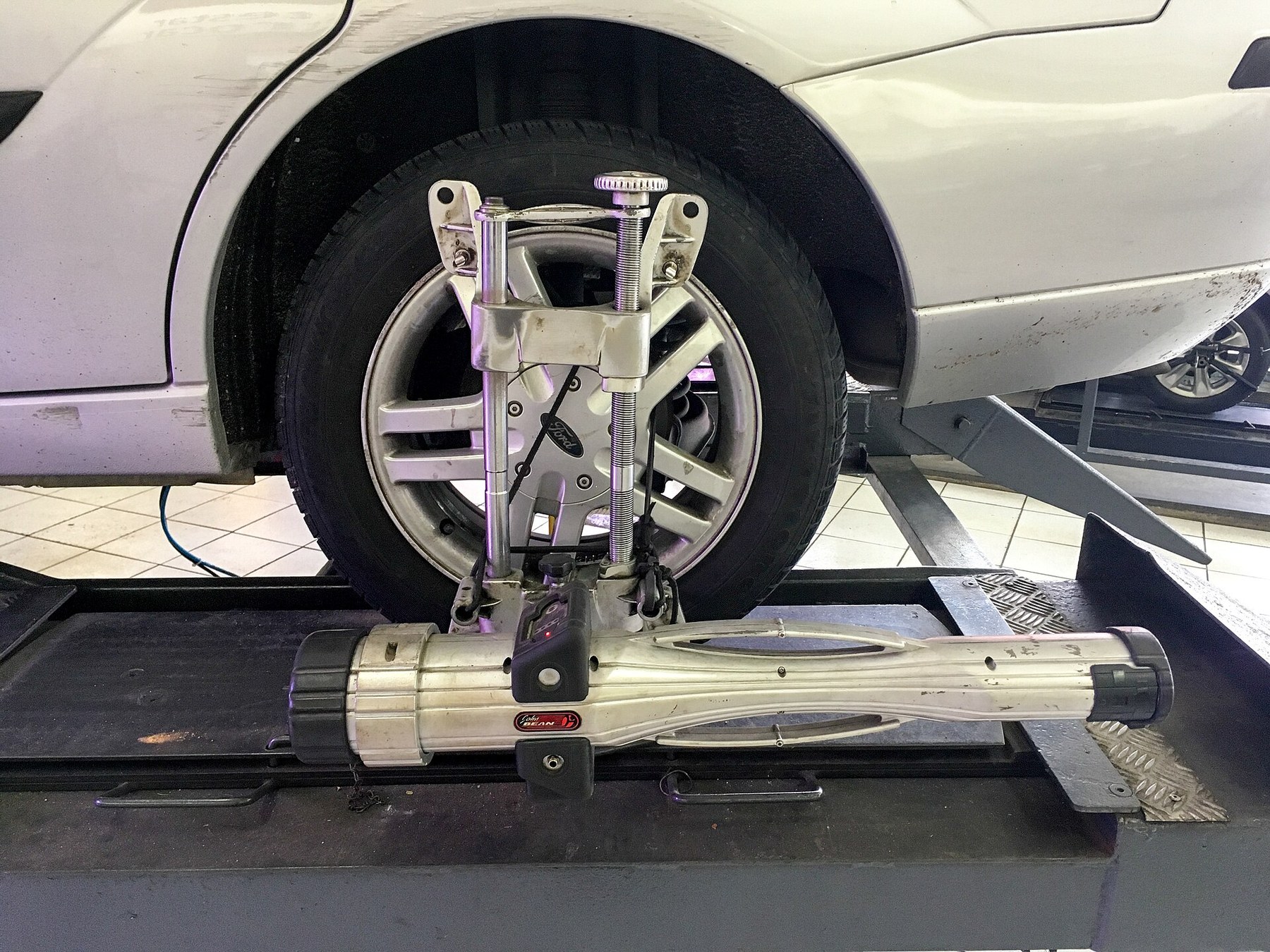
Camber, Caster and Toe: What an Alignment Actually Changes
Three angles, three completely different jobs. One of them eats tyres, one of them decides how the steering feels in your hands, and one of them is mostly invisible until the car starts pulling.
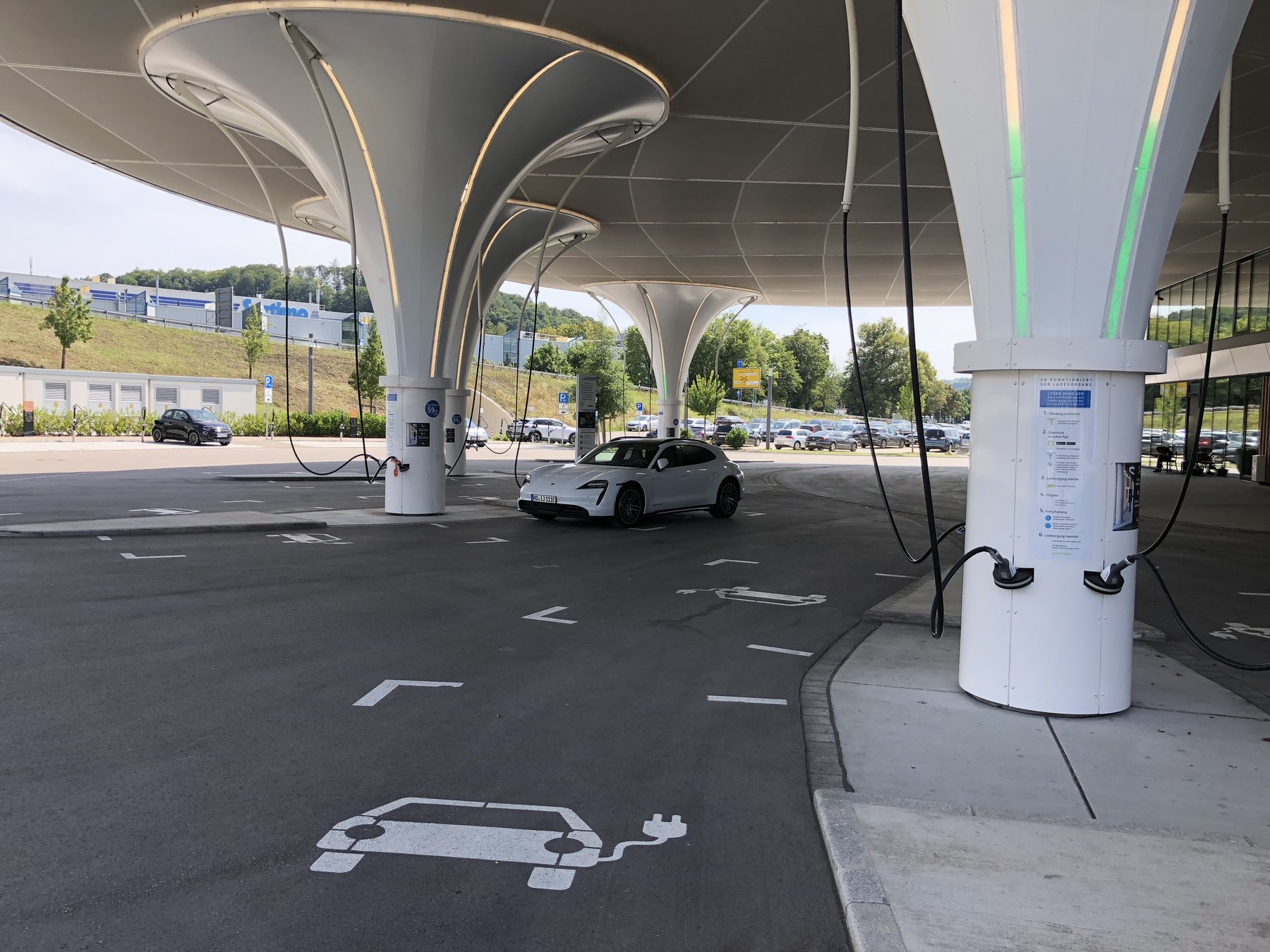
800 Volts Doesn't Make a Car Charge Faster. It Removes the Reason It Couldn't.
Double the pack voltage and you halve the current for the same power — and heat falls with the square of current. That's the entire trick. It still doesn't guarantee you a quick charge, and it quietly creates a compatibility problem nobody advertises.