
MacPherson Strut vs. Double Wishbone: Why the Cheaper One Won, and What It Actually Costs
One layout hangs the wheel off a single telescopic leg. The other locates it with two arms and leaves the engineer free to choose how the camber behaves. Almost every car you can buy uses the first, and Porsche spent a whole GT3 generation going the other way.
- MacPherson strut - invented by
- Earle S. MacPherson
- Developed at
- GM's Chevrolet division, from 1945, for the cancelled Chevrolet Cadet
- Ford patent filed
- January 1949
- First production car
- Ford Consul and Zephyr, shown at the 1950 London Motor Show
- Parts to locate the wheel
- Strut plus one lower arm
- Double wishbone - also called
- Double A-arm, SLA (short-long arm)
- Parts to locate the wheel
- Two arms, spring and damper mounted separately
- Key advantage
- Camber and roll centre chosen independently of the damper
- Key cost
- More parts, more packaging space, more money
- Notable convert to struts
- 2001 Honda Civic, for front-end length and cabin space
- Notable convert to wishbones
- 992-generation Porsche 911 GT3, taken from the 911 RSR
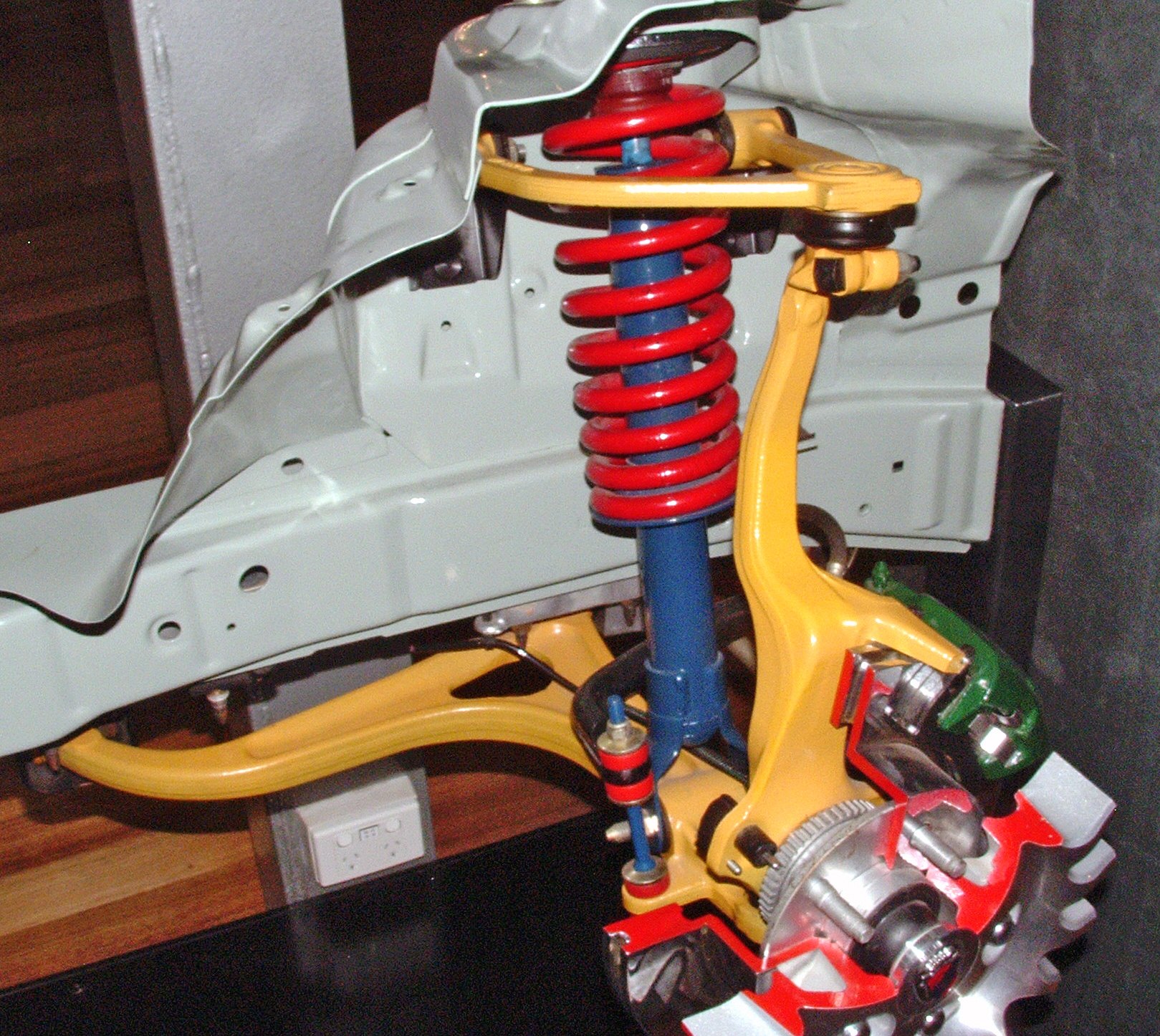
Lift the bonnet of almost any car built in the last forty years and the front suspension will be a MacPherson strut: a single fat telescopic leg running from the top of the inner wing down to the steering knuckle, with a coil spring wrapped around it and one arm at the bottom locating the wheel fore and aft. Lift the bonnet of a racing car, or a Porsche 911 GT3 from the 992 generation on, and there are two arms instead — an upper and a lower wishbone, with the spring and damper hung off one of them. The difference between those two pictures is about forty years of argument between the people who design chassis and the people who sign off on the budget.
A strut cannot move the wheel straight up and down without changing something you would rather it left alone.
Start with where the strut came from, because the history explains the design. Earle S. MacPherson developed it at General Motors from 1945, working on the Chevrolet Cadet, a small post-war car that GM cancelled in 1947 on the grounds that it would not make enough money. MacPherson left for Ford, where he filed the patent that defines the layout in January 1949. The first production application arrived with the British-built Ford Consul and Zephyr, shown at the 1950 London Motor Show. The Ford patent cited earlier design work by Guido Fornaca at Fiat in the mid-1920s, so the idea was not conjured from nothing — but the packaged, manufacturable version of it is MacPherson's.
The trick is that the strut does two jobs. In any independent suspension, something has to locate the top of the wheel and something has to damp its movement. A double wishbone uses an upper arm for the first job and a separate damper for the second. A MacPherson strut makes the damper itself the upper link: the strut body is structural, the knuckle bolts to the bottom of it, and the top of the assembly is bolted into a reinforced tower in the inner wing. One lower control arm handles the rest of the location, and an anti-roll bar usually ties into either the strut or that arm. The line from the top mount down to the lower ball joint is the steering axis — on a strut car, the steering axis and the damper are very nearly the same object.
That buys three things manufacturers care about a great deal. It frees up width in the engine bay, which is why it took over the moment transverse engines and front-wheel drive did. It is cheap, because the whole corner can be built up as a unit on a bench and dropped into the car in one movement. And it has fewer parts to buy, ship, and warranty.
What it costs is control over the geometry. The geometric analysis is unforgiving here: a strut cannot move the wheel vertically without changing the camber angle, moving the wheel sideways, or both. The designer gets far less freedom to pick the camber curve and the roll centre than a wishbone layout would allow, which matters because what you actually want in a corner is for the outside wheel to gain negative camber as the body rolls, keeping the contact patch flat on the road. A well-sorted strut does some of that. A double wishbone does more of it, and keeps doing it all the way into full compression, where a strut's advantage tails off.
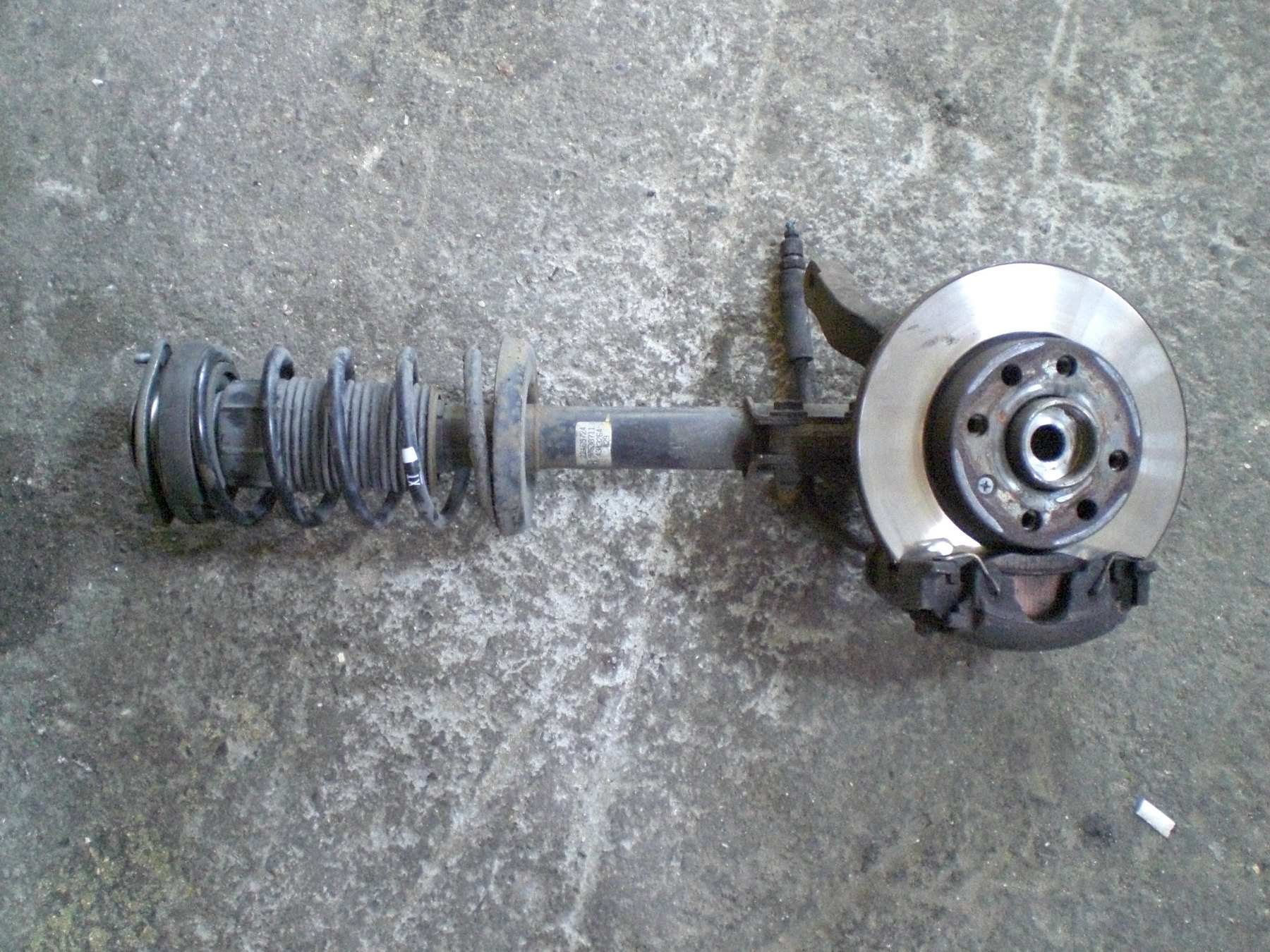
There are smaller penalties too. Because the damper moves with almost the same motion as the wheel, there is very little leverage to break the stiction in the damper seals, which is one reason strut cars can feel brittle over small, sharp inputs. The standard single-pivot strut also tends to run a positive scrub radius, which on a powerful front-drive car shows up as torque steer. And every bump load goes into the top of the inner wing, so the body structure has to be built to take it.
A double wishbone starts from the other end of the problem. Two arms, usually of unequal length — short upper, longer lower, which is why Americans call it SLA for short-long arm — form a four-bar linkage with the body and the upright. Change the lengths, the angles and the mounting points and you change exactly how camber, caster, toe, roll centre height and scrub radius evolve through the travel. The spring and damper do nothing but carry load and control motion; they are not holding the wheel up. The steering arm acts on the upright independently, so the steering axis is defined by the two ball joints rather than by wherever the damper happens to fit. That is the whole pitch: the engineer chooses the behaviour instead of accepting whatever the packaging leaves behind.
The bill is parts, space, weight, money and service time. Two arms, four more bushings, more bracketry, and a corner that needs room both above and below the hub — room that a transverse engine and its driveshafts are already using.
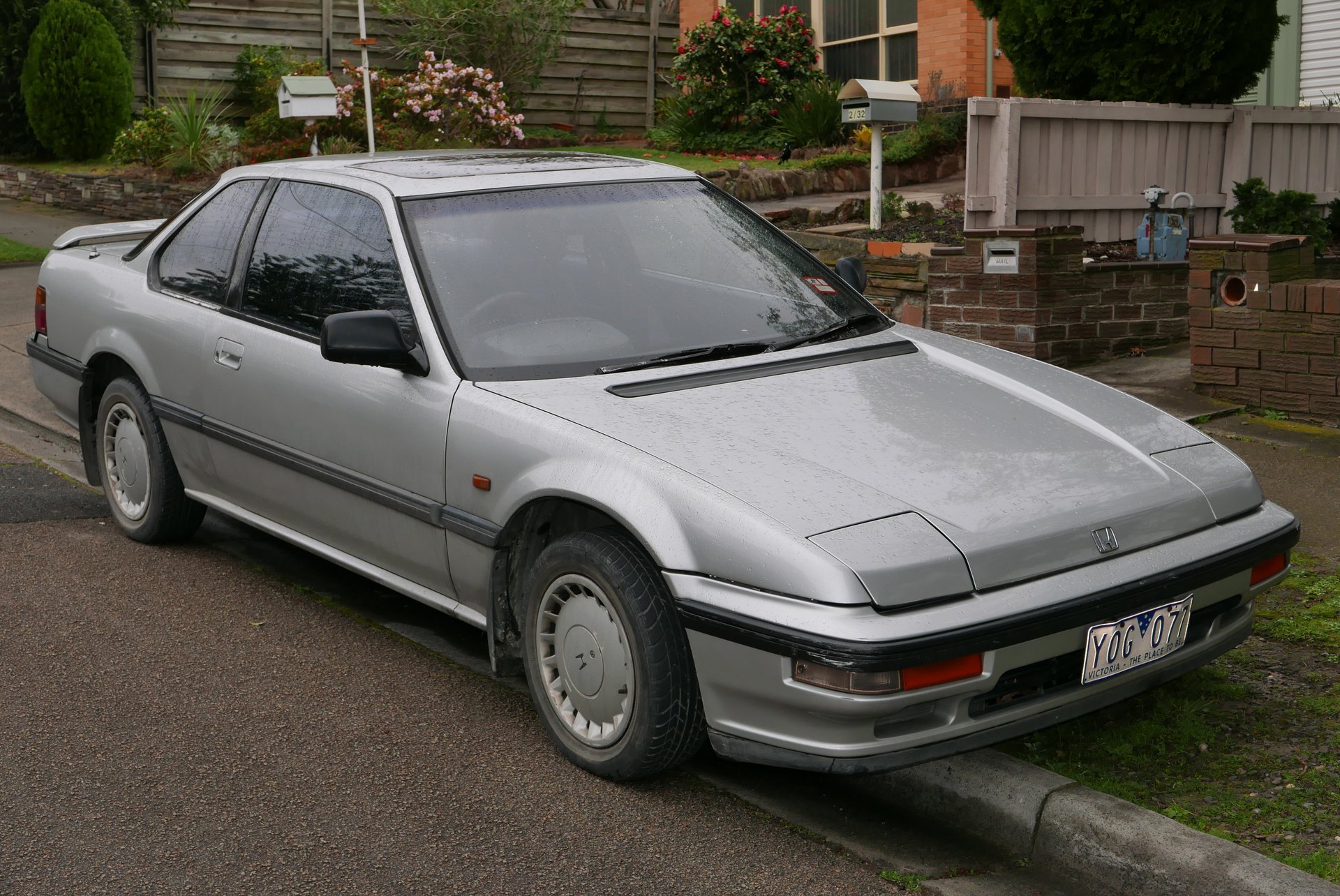
Honda's 2001 Civic is the clearest case of a manufacturer choosing the trade deliberately. The sixth-generation car had double wishbones at the front; the seventh did not. Honda's own chassis release for the 2001 car says the engineers developed a new MacPherson strut front suspension specifically to shorten the front end, and that the goals of a short front overhang with a more spacious cabin and boot required new suspension designs at both ends. The new layout also let them move the steering gearbox to a high-mounted position with tie rods 43 per cent longer than before. The rear kept a double wishbone, redesigned to be compact enough to allow a flat floor. Enthusiasts have been annoyed about the front end ever since, and Honda's reasoning is sitting right there in the press material: it was about the shape of the car, not the shape of the camber curve.
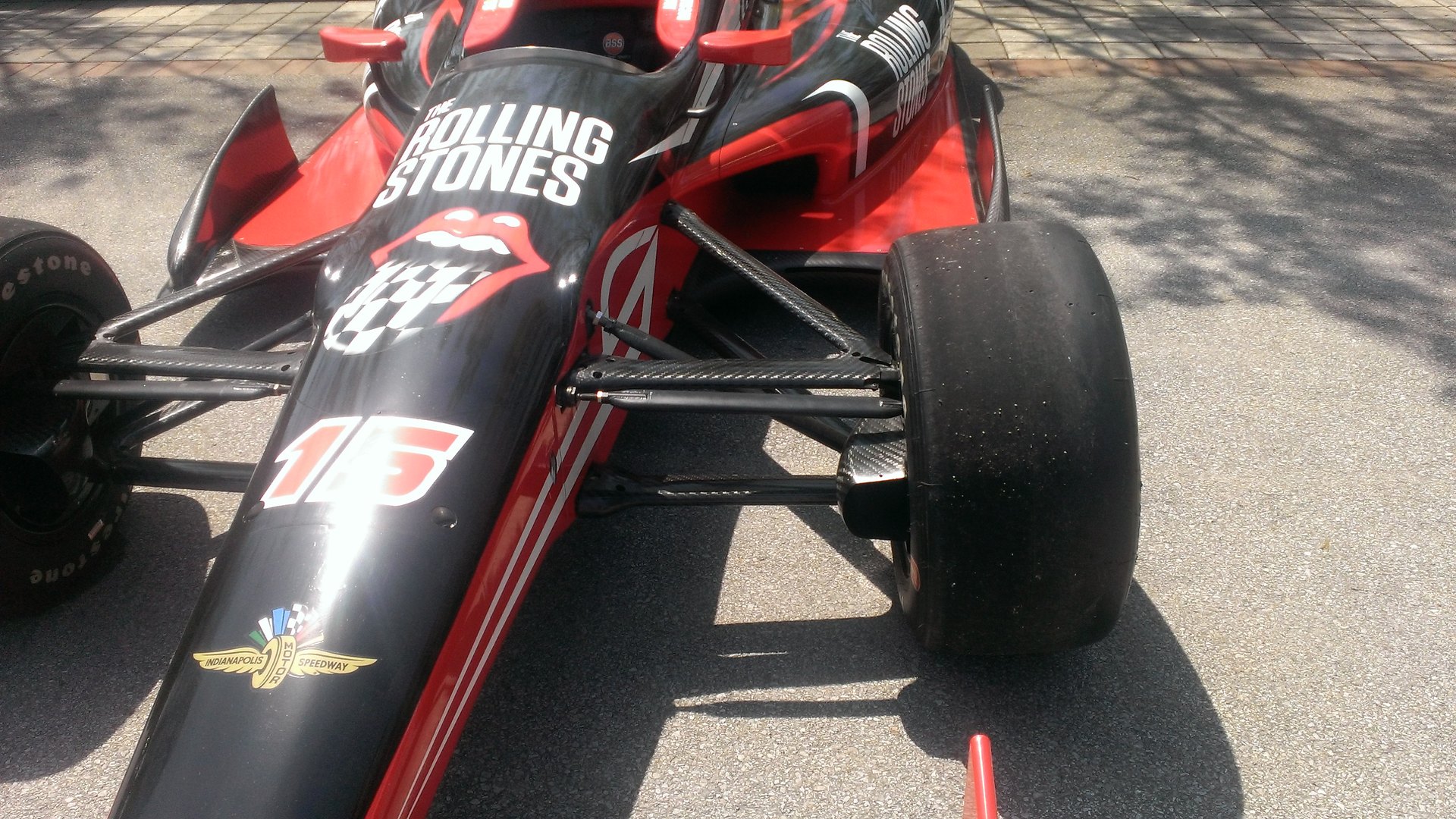
Porsche spent the money going the other way. The 992-generation 911 GT3 was the first series-production 911 with a double-wishbone front axle, a layout Porsche took directly from the 911 RSR and GT3 racing cars, and the reason the company gave was camber control — keeping the contact patch consistent under load in a way the strut front of every previous 911 could not. That is a car where the engineering budget per unit can absorb a pair of forged aluminium wishbones. A Civic is not.
In between the two sit the clever strut variants, which exist precisely because engineers did not want to pay for wishbones on powerful front-drive cars. Ford's RevoKnuckle, GM's HiPer Strut and Honda's dual-axis front suspension all do a version of the same thing: split the steering axis away from the strut itself by adding a second pivot at the knuckle, so the steering axis can be made more upright and the scrub radius pulled in close to the centre of the contact patch. Shrink the scrub radius far enough and torque steer very nearly disappears, which is how 300-horsepower front-drive hatchbacks became a normal thing to sell rather than a thrill ride.
There is also a modern argument running in the strut's favour that has nothing to do with handling: it is easier to engineer a strut car through stringent small-overlap crash tests than a double-wishbone one, because there is less hardware in the path the barrier takes. That is not a detail that shows up in a road test, and it is exactly the sort of consideration that decides what a mass-market car gets.
So the honest summary is not that one layout is good and the other is bad. A strut is a packaging and cost decision that gives up some geometric freedom and, in the standard form, some steering purity. A double wishbone buys that freedom back and charges for it in parts, space and money. The cars that get wishbones are the ones where somebody could justify the invoice: racing cars, where nothing has to clear an engine; sports cars, where the per-unit budget is large; and the occasional saloon where the manufacturer decided the ride and handling were worth it. Everything else gets a strut, and gets it well-developed, because four decades of engineers have spent their careers making the compromise as small as possible.
Four-Wheel Steering: Honda Did It in 1987 With a Shaft and a Gear Set, No Computer Involved
Turn the rear wheels the wrong way and a car gets tighter. Turn them the right way and it gets steadier. The hard part has always been knowing which one the driver wants — and Japan answered that question three different ways before anyone else shipped it.
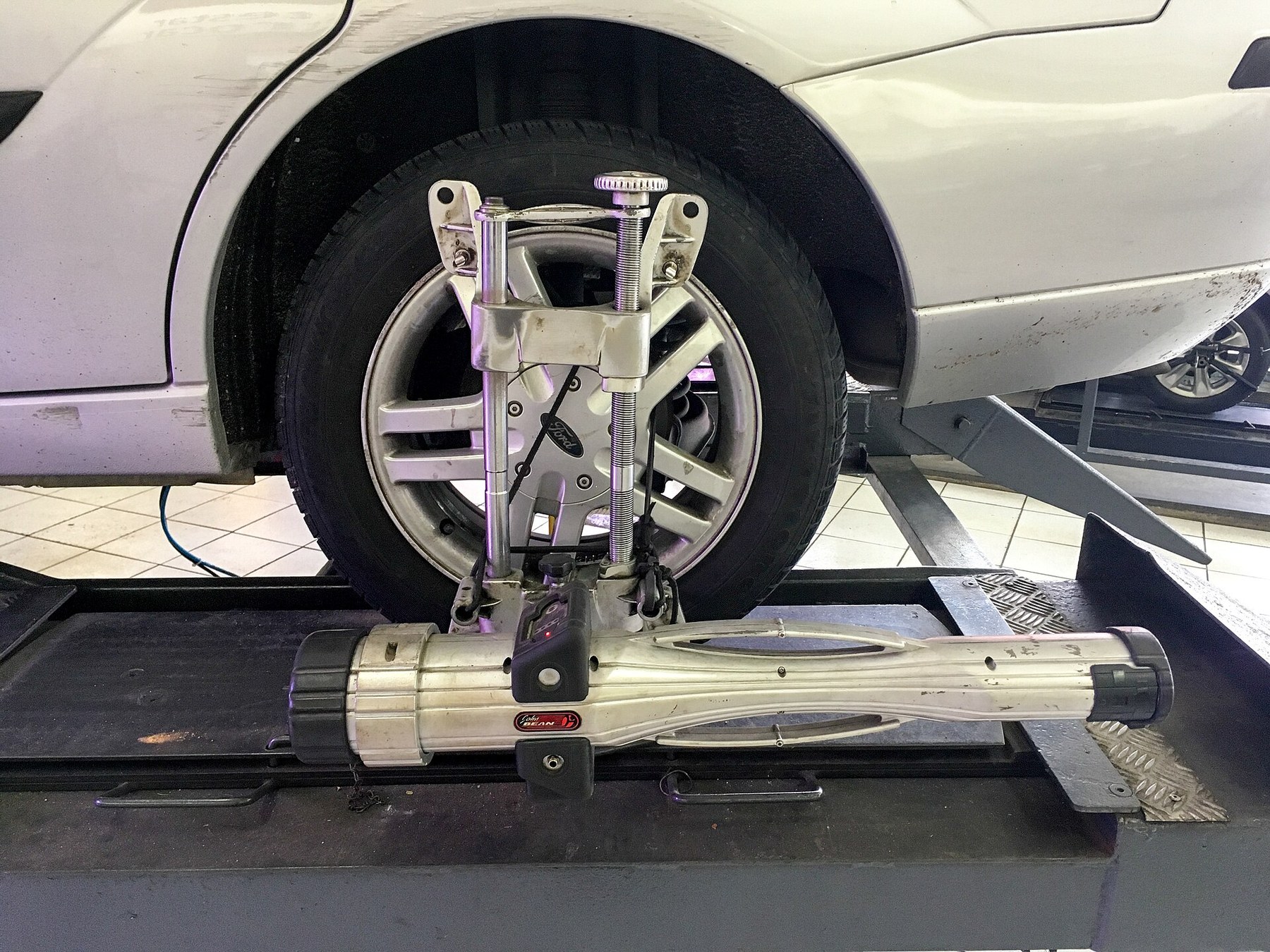
Camber, Caster and Toe: What an Alignment Actually Changes
Three angles, three completely different jobs. One of them eats tyres, one of them decides how the steering feels in your hands, and one of them is mostly invisible until the car starts pulling.
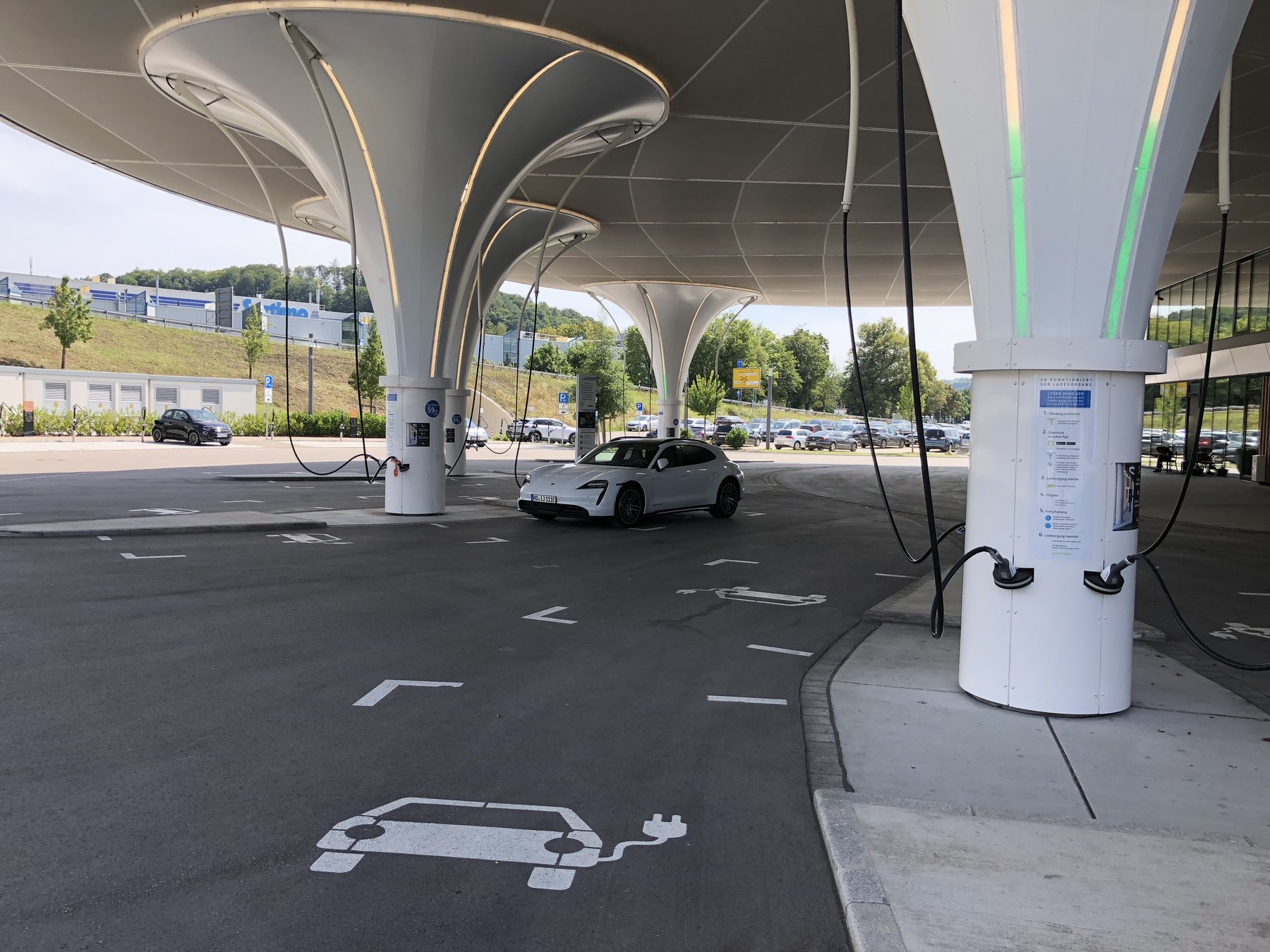
800 Volts Doesn't Make a Car Charge Faster. It Removes the Reason It Couldn't.
Double the pack voltage and you halve the current for the same power — and heat falls with the square of current. That's the entire trick. It still doesn't guarantee you a quick charge, and it quietly creates a compatibility problem nobody advertises.