
The Automatic's Oldest Trick: How a Torque Converter Multiplies Torque With No Gears
It has no gear teeth and nothing that meshes, yet a torque converter can roughly double engine torque off the line. The part doing the work is the one bolted to nothing at all.
A manual gearbox needs a clutch because an engine cannot idle while bolted rigidly to stationary wheels. A torque-converter automatic solves the same problem with no friction disc at all — it lets the engine spin fluid, and lets the fluid spin the transmission. What makes it more than a fancy way of slipping is that it doesn't merely transmit engine torque. Under the right conditions it multiplies it, without a single gear tooth involved.
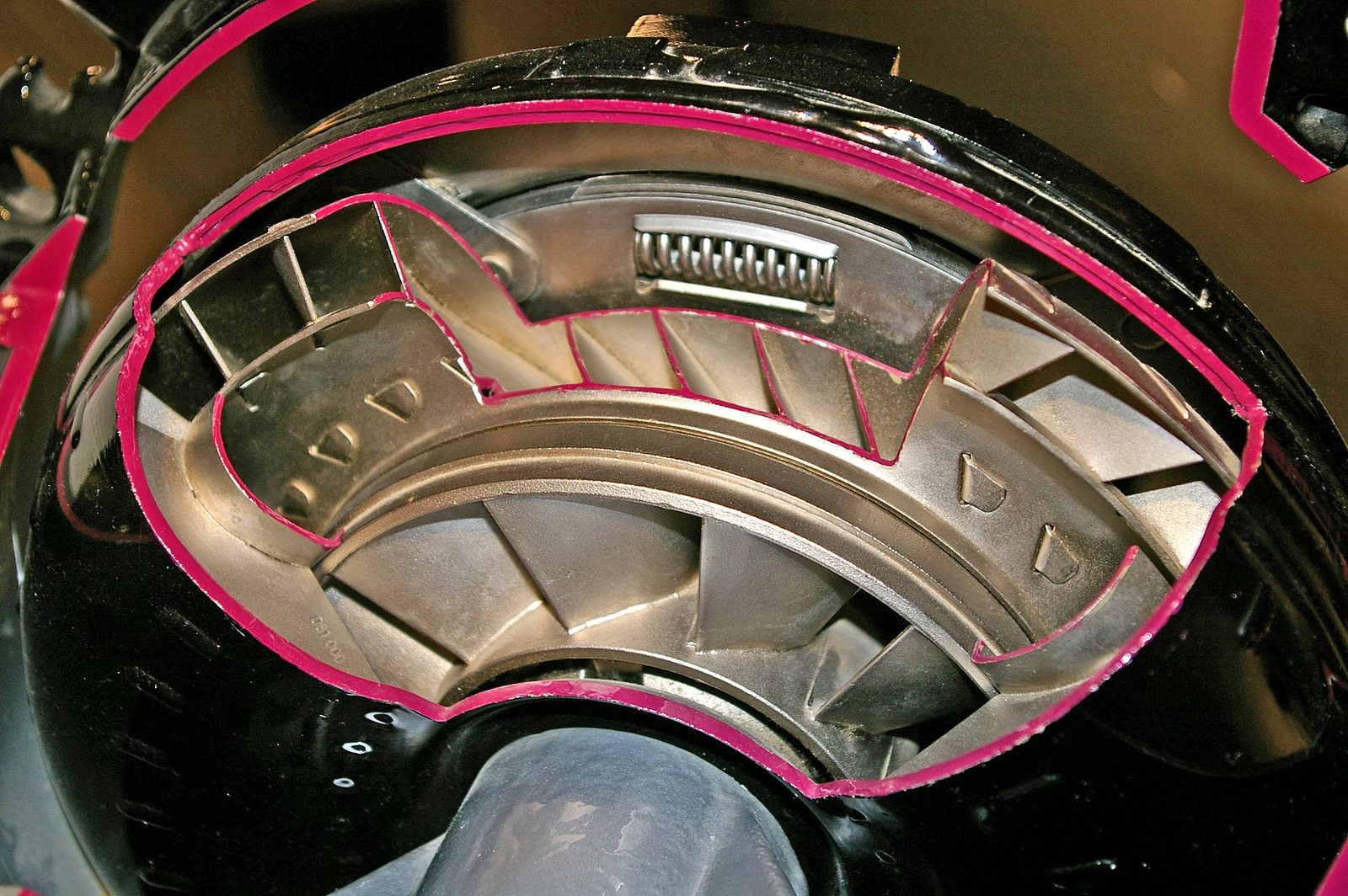
There are three elements that matter inside the doughnut-shaped housing. The impeller, also called the pump, is driven directly by the engine and flings transmission fluid outward as it spins. The turbine sits facing it, takes that moving fluid on its vanes, and drives the transmission's input shaft. If those were the only two parts, you'd have a plain fluid coupling — a design that works, but only ever passes along the torque it was given, never more.
The third element is the stator, and it is the reason the device is called a converter rather than a coupling. The stator sits in the middle, between turbine and impeller, positioned to intercept fluid on its way back from the turbine to the pump. In a two-element coupling, that returning fluid arrives moving against the direction the impeller is turning, fighting it. The stator's curved vanes redirect that flow so it arrives helping the impeller instead of opposing it. Energy that would have been wasted braking the pump gets recycled into driving it, more fluid mass gets thrown at the turbine, and output torque goes up.
The trick is that the stator has to be stationary to do this, and only some of the time. It is mounted on a one-way clutch — a sprag — splined to a fixed shaft in the transmission. At low turbine speed, the returning fluid tries to spin the stator backwards, the sprag locks it against the fixed shaft, and it holds still and redirects flow. That is the torque-multiplication mode. As the turbine speeds up and catches the impeller, the angle the fluid returns at changes, and it starts pushing the stator the other way. The sprag lets go, the stator freewheels along with everything else, and it stops obstructing the flow it no longer needs to redirect.
Two numbers describe the boundaries of that behaviour. Stall is the extreme case: input turning, output held still, maximum slip and therefore maximum multiplication. The ratio at that point is the converter's stall ratio, typically between about 1.8:1 and 2.5:1 in ordinary road cars, though purpose-built units for specialised applications can reach as high as 5:1. The other boundary is the coupling point, reached once the turbine is turning at roughly 90 percent of impeller speed. There, multiplication has essentially ceased and the converter behaves as a simple fluid coupling — which is precisely when the stator freewheels.
This is also where the converter's weakness lives. Its efficiency curve is an arch: zero at stall, climbing through the acceleration phase, then falling away in the coupling phase, where the unit is doing nothing clever and merely slipping. Slip means heat, and heat means fuel burned to no purpose. Cruising down a motorway is exactly the condition where a converter is least useful and most wasteful.
The fix is the lock-up clutch, and it is why modern automatics no longer carry the fuel-economy penalty older ones did. Once the car is up to speed and multiplication is irrelevant, a clutch inside the converter physically clamps the turbine to the impeller housing, turning the whole assembly into a solid mechanical connection. Slip goes to zero and so does the associated loss — a direct 1:1 link between engine and transmission, the fluid along for the ride. Lift off or slow down and the clutch releases, handing the job back to the fluid before the engine can be dragged toward stalling.
Which is the useful way to think about the whole device: a torque converter is a slipping connection that is deliberately most inefficient exactly when slip is most valuable, and which has since been taught to remove itself from the equation the moment it isn't.
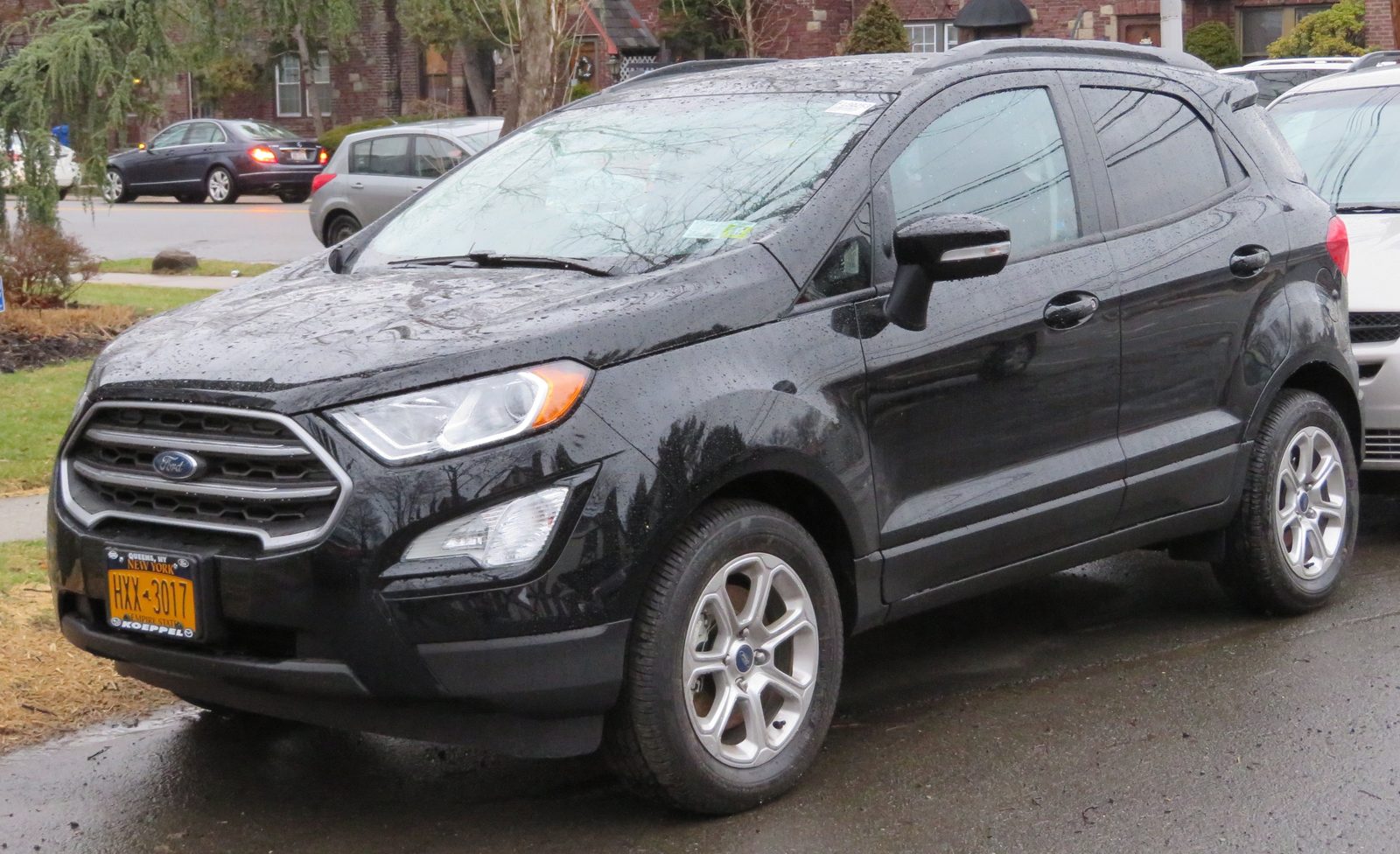
Ford Ran the Timing Belt Through the Oil. Federal Investigators Say the Belt Is Now Starving the Engine.
A belt-in-oil drive is quieter and lower-friction than a chain. NHTSA's new engineering analysis says the 1.0-liter EcoBoost's belt sheds material that clogs the oil pump pickup — and that screen can't be cleaned without pulling the engine.
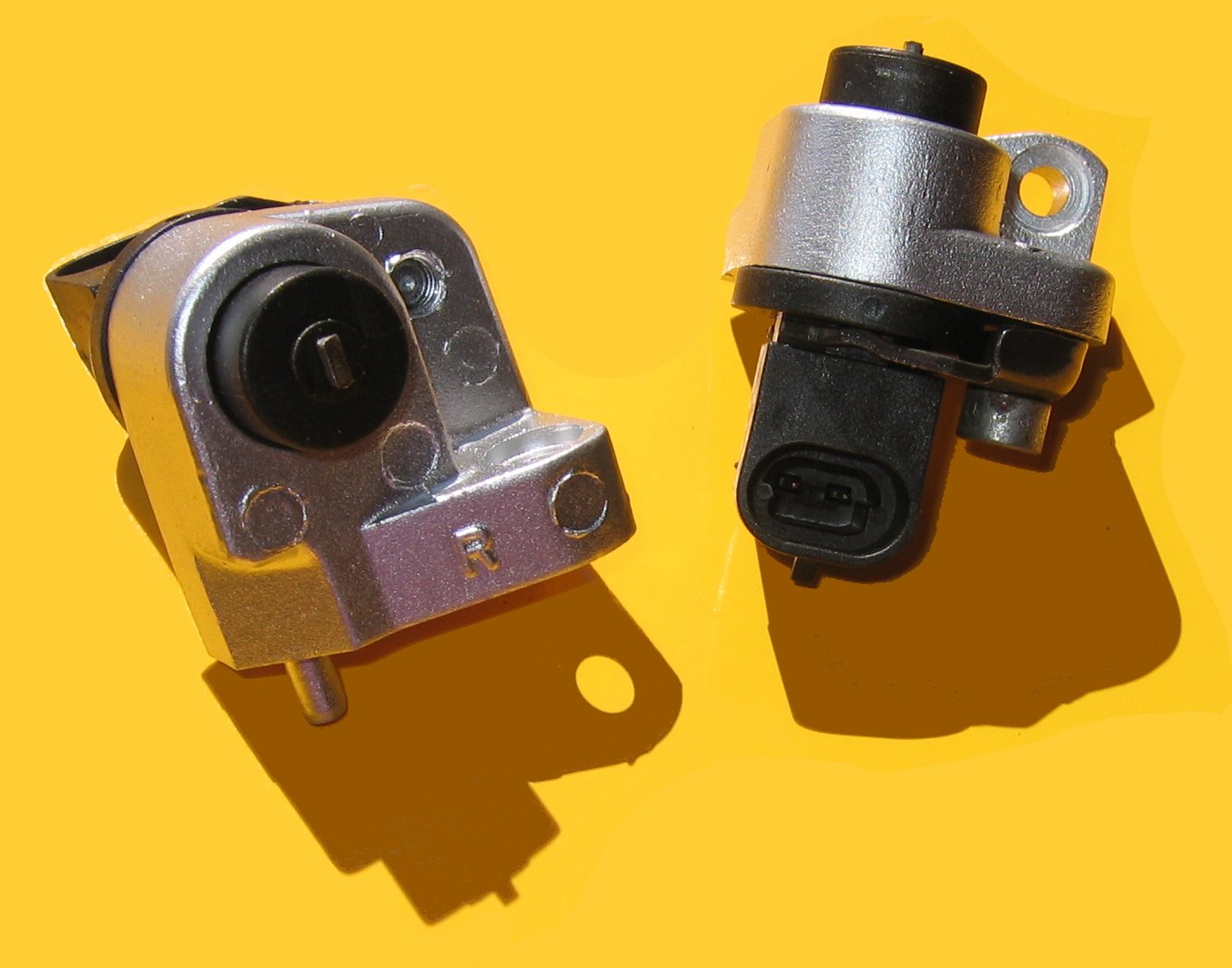
How Electronic Stability Control Reads a Slide and Corrects It Before the Driver Even Feels It
A network of wheel-speed, steering-angle, and yaw sensors checks the car's actual path against the driver's intended one many times a second — and brakes a single wheel to pull it back if the two disagree.
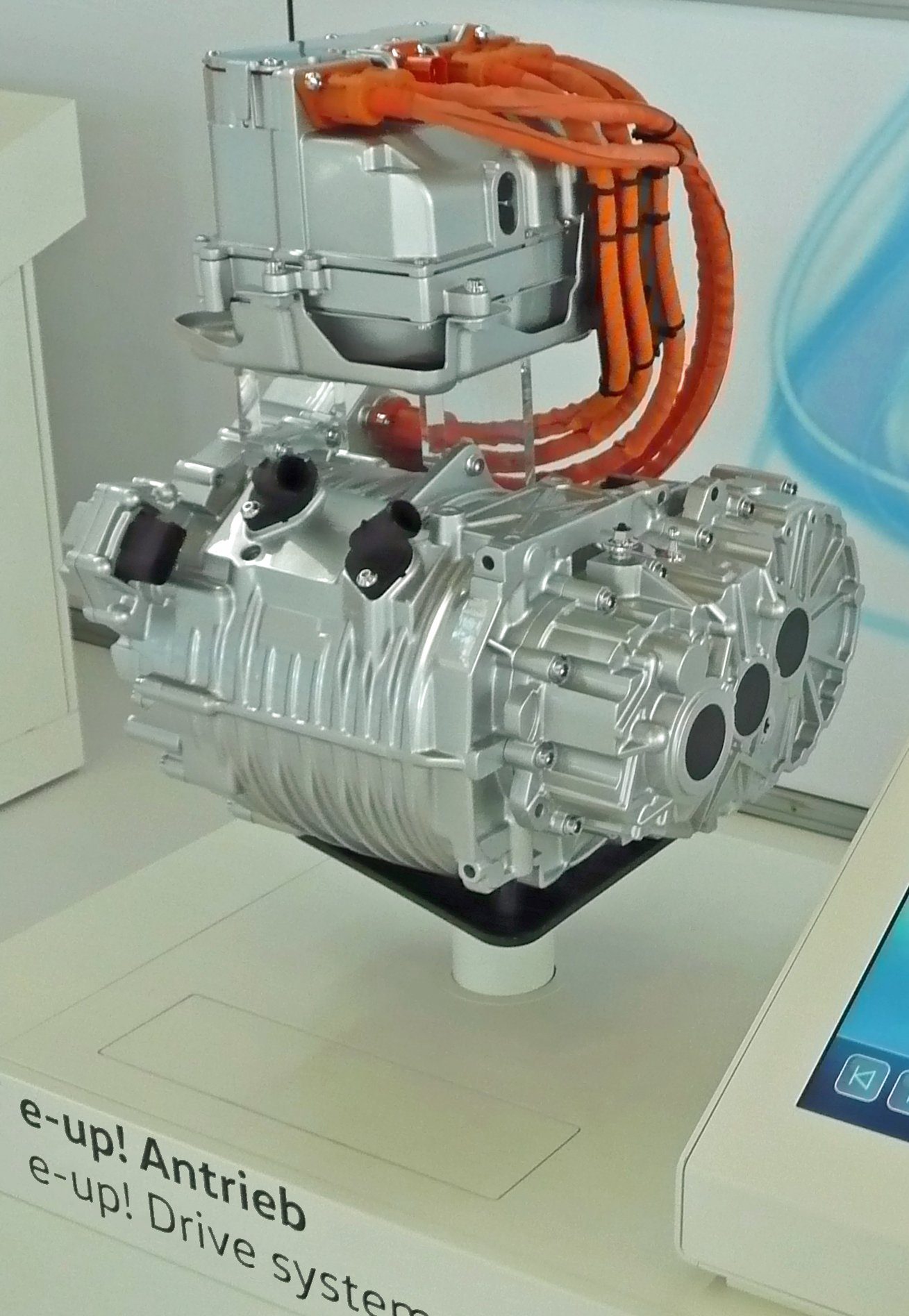
How Regenerative Braking Turns a Drive Motor Into a Generator — And Why It Still Needs Friction Brakes
Lifting off the accelerator in an EV or hybrid doesn't apply a "brake" in the traditional sense — it reverses the motor's job. Here's the mechanism behind that trick, how it's blended with hydraulic brakes to keep the pedal feeling normal, and why one-pedal driving isn't quite what it appears to be.