
Inside the Millisecond Damper: How Adaptive Suspension Reads the Road and Rewrites Itself on the Fly
From magnetized fluid to electronically bypassed oil valves, three very different engineering approaches now let a single damper be soft and stiff within the same second.
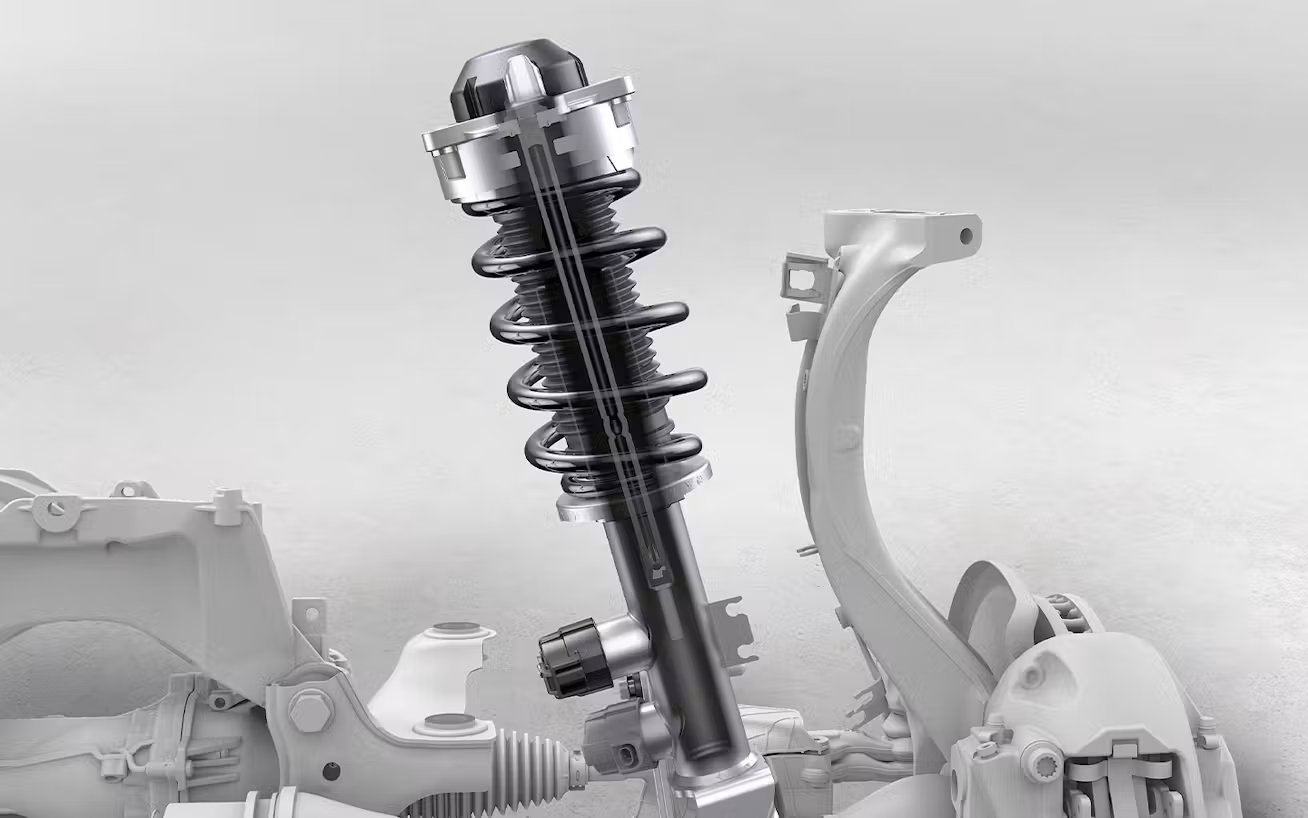
A coilover on a track car and the damper under a Cadillac Escalade solve the same basic problem — controlling how fast a spring is allowed to compress and rebound — but they do it on completely different timescales. A passive damper, the kind found in most coilover kits, has fixed internal valving: a shim stack or orifice sized once, during manufacturing or a trackside adjustment, that determines a single compromise between comfort and body control. Adaptive dampers throw that compromise out. They change their internal resistance to fluid flow continuously, independently at each wheel, based on sensor data read many times a second, so the same corner of the same car can be plush over a pothole and rigid mid-corner a moment later.
The most distinctive approach to this problem is magnetorheological damping, sold by General Motors as MagneRide. Instead of a mechanical valve, the damper piston carries an electromagnetic coil bathed in magnetorheological fluid — a synthetic oil loaded with microscopic iron particles. With no current applied, the fluid flows freely and the ride is soft; energize the coil and the iron particles snap into chain-like structures that resist flow, stiffening the damper almost instantly, with no moving valve parts to wear out. The technology was originally developed by Delphi (its intellectual property is now held by BeijingWest Industries, or BWI Group) and first reached production on the 2002.5 Cadillac Seville STS, with the Corvette following as the first sports car to use it in 2003. Wheel-mounted accelerometers sample road input up to roughly 1,000 times per second, and GM's latest MagneRide 4.0 generation, introduced on the Cadillac CT4-V and CT5-V, is reported to cut damper response time to around 3 milliseconds — about 45 percent quicker than the prior generation.
Porsche and Mercedes-Benz take a more conventional mechanical route that still lands in the same millisecond territory. Porsche's PASM (Porsche Active Suspension Management) uses ordinary hydraulic dampers fitted with an electronically controlled valve — effectively a bypass passage — that opens or restricts to change how easily oil moves between chambers inside the damper. Wheel-mounted accelerometers and body sensors track vertical wheel movement, steering input, braking, and acceleration; a central control unit processes that data and commands each valve individually, letting PASM shift from a comfort-biased map to a Sport or Sport+ map in a matter of milliseconds. Mercedes-Benz's equivalent, Adaptive Damping System (ADS), works on the same electro-hydraulic-valve principle: a steering-angle sensor, body-mounted accelerometers, wheel-speed input from the ABS system, and a brake-pedal sensor feed a control unit that recalculates the ideal damping force for each wheel and signals the valve on each gas-pressure shock accordingly — often working alongside Mercedes' separate AIRMATIC air springs, which handle ride height rather than damping.
A third variant worth noting, because it's frequently and incorrectly lumped in with magnetorheological systems, is Multimatic's DSSV (Dynamic Spool Valve) damper. Rather than a magnetic fluid or a simple bypass valve, DSSV replaces the shim stacks found in a conventional damper with a precisely machined spool valve, whose adaptive version adds a rotating collar with cut windows around the spool to mask and unmask flow paths in real time — reported to adjust damping around 1,000 times per second in its adaptive form. Multimatic supplies this hardware to low-volume performance cars like the Ford GT and Aston Martin One-77, and GM itself has specified Multimatic's adaptive spool-valve dampers, separately from MagneRide, on trucks like the Chevrolet Silverado ZR2. Compared with magnetorheological units, spool-valve dampers avoid the fluid-wear-on-seals issue that can affect MR fluid over time and shed some weight, though they rely on a physically moving mechanical valve rather than a field-controlled fluid.
What unites all three approaches, and separates them from a passive coilover, is closed-loop, per-wheel, real-time control. A track-day coilover is set once and stays that way until someone gets underneath the car with a wrench; an adaptive damper — magnetorheological or valve-based — is re-evaluating its own stiffness dozens to hundreds of times every second the car is moving, using live sensor data rather than a driver's static preference. That's what lets the same production car ride comfortably over broken pavement and then tighten up its body control the instant a driver turns into a corner, without requiring two different cars — or two different sets of shocks — to do it.

Ford Ran the Timing Belt Through the Oil. Federal Investigators Say the Belt Is Now Starving the Engine.
A belt-in-oil drive is quieter and lower-friction than a chain. NHTSA's new engineering analysis says the 1.0-liter EcoBoost's belt sheds material that clogs the oil pump pickup — and that screen can't be cleaned without pulling the engine.
The Automatic's Oldest Trick: How a Torque Converter Multiplies Torque With No Gears
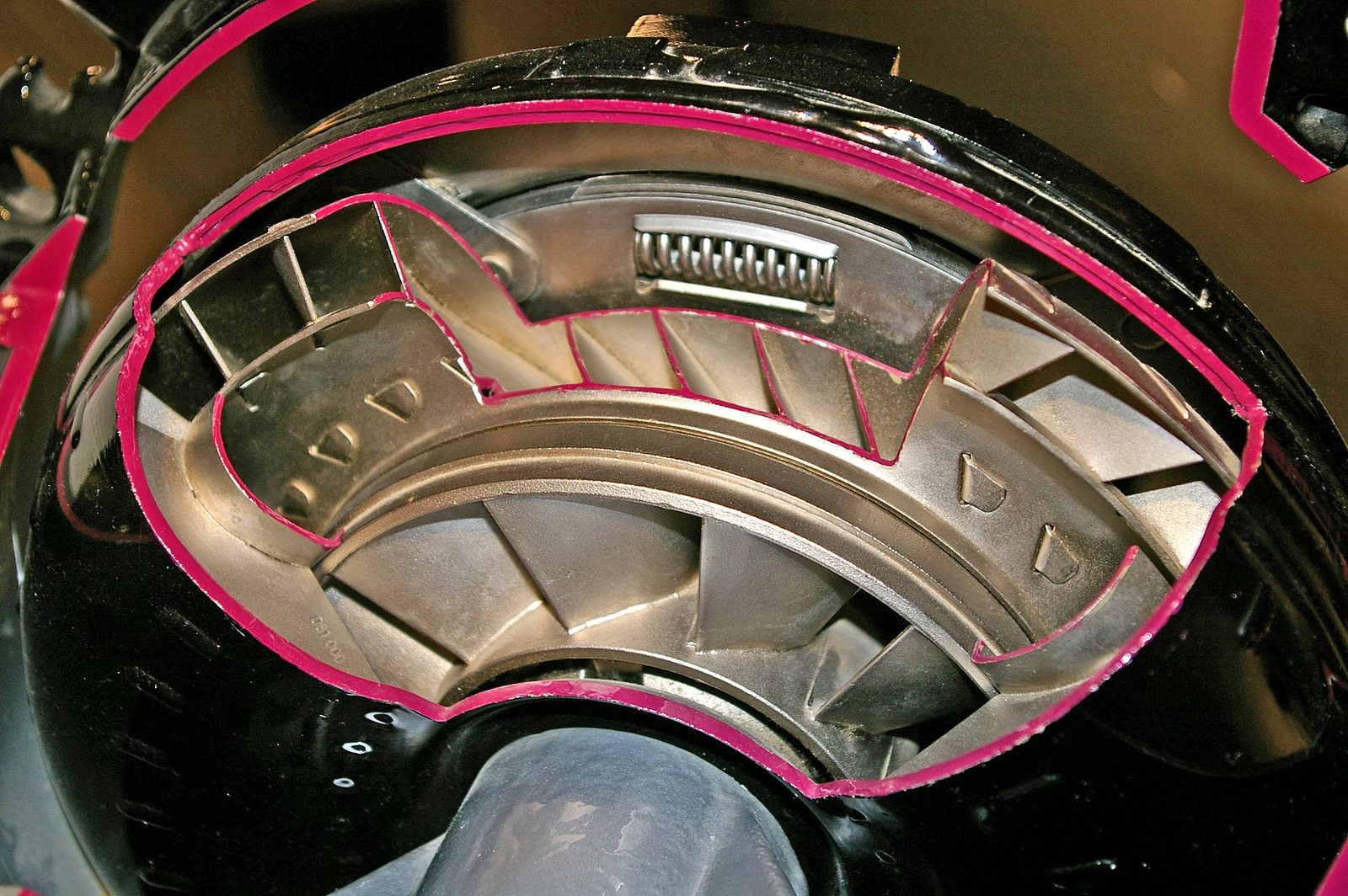
It has no gear teeth and nothing that meshes, yet a torque converter can roughly double engine torque off the line. The part doing the work is the one bolted to nothing at all.
How Electronic Stability Control Reads a Slide and Corrects It Before the Driver Even Feels It
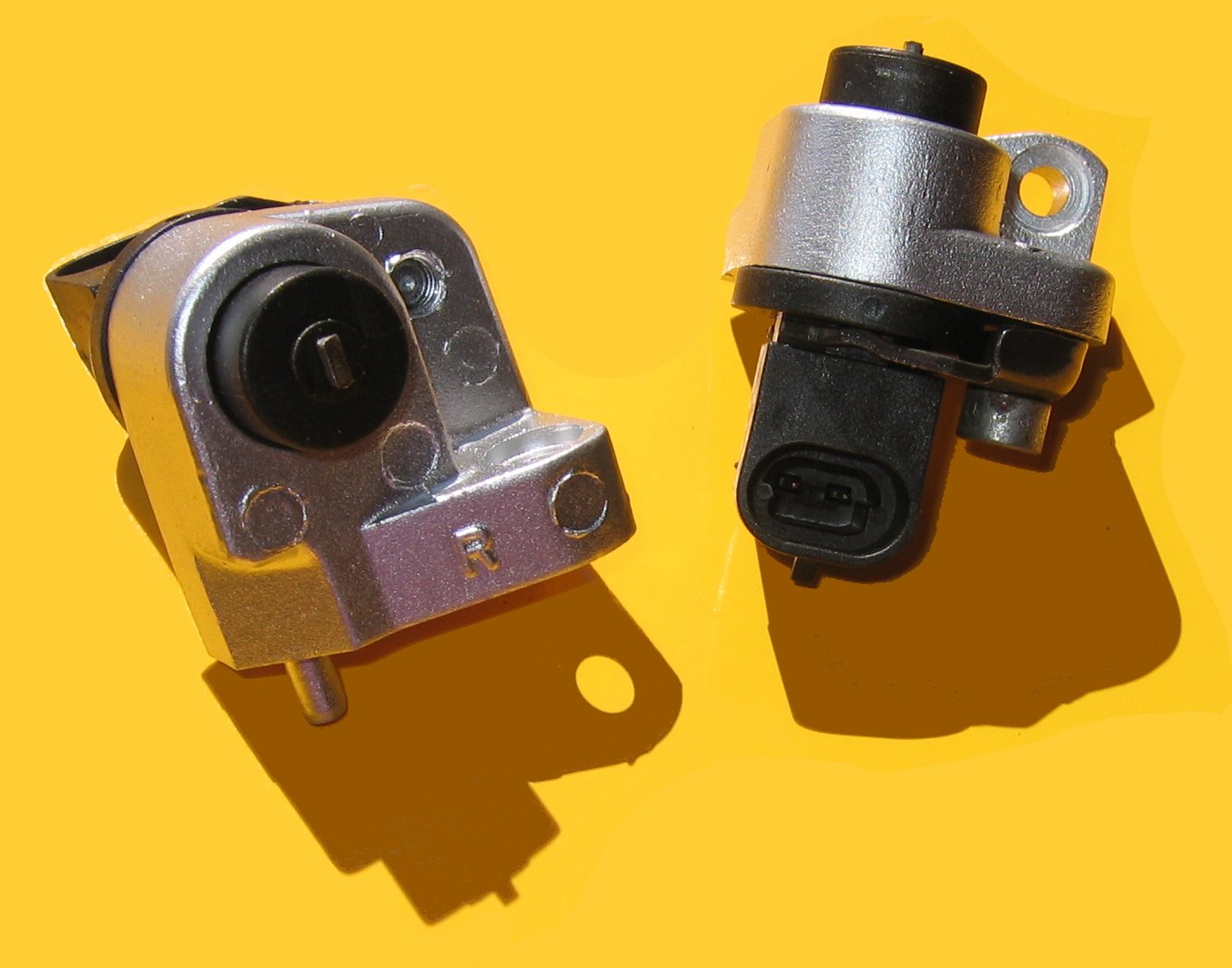
A network of wheel-speed, steering-angle, and yaw sensors checks the car's actual path against the driver's intended one many times a second — and brakes a single wheel to pull it back if the two disagree.