
A Supercharger Doesn't Wait for Exhaust. It's Bolted Straight to the Crankshaft.
A turbocharger scavenges power the engine would otherwise waste as exhaust heat. A supercharger skips that step and takes its power directly off the crank by belt or gear — trading efficiency for boost that's there the instant the engine is turning.
Both a supercharger and a turbocharger do the same basic job — force extra air into the cylinders so the engine can burn more fuel and make more power than it could breathing on its own. Where they part ways is how they get spun. A turbocharger's compressor wheel is driven by a turbine sitting in the exhaust stream, powered by gas the engine was already producing and would otherwise send straight out the tailpipe. A supercharger's compressor is driven mechanically, by a belt, gear, or chain connected directly to the crankshaft, which means it's turning — and making boost — from the moment the engine is running, with none of the delay a turbo needs to build exhaust flow. The tradeoff is that a supercharger is never free: spinning it costs the engine some of its own power, continuously, for as long as it runs, in a way a turbo's exhaust-driven turbine does not.
There are three basic ways to build one. A Roots-type blower — the classic bulging hood-scoop shape — uses two lobed rotors that mesh together without touching, trapping a fixed pocket of air on one side and carrying it around to the outlet with each rotation; it's a simple, durable positive-displacement pump, but a relatively inefficient one, converting only around 40 to 50 percent of the energy put into it into useful boost at high pressure. A twin-screw (or Lysholm) supercharger looks similar from the outside but works differently inside: its two screw-shaped rotors actually shrink the air pocket as it moves toward the outlet, compressing the air internally rather than just relocating it, which pushes efficiency up to 70 to 85 percent, at the cost of tighter manufacturing tolerances and a narrower ideal operating range. A centrifugal supercharger abandons positive displacement entirely — an impeller flings air outward at high speed, and a diffuser converts that velocity into pressure, the same principle a turbocharger's compressor side uses. It's the most efficient of the three at high RPM, but its boost curve builds gradually rather than staying flat, more like a small turbo than a Roots blower.
The mechanically-driven supercharger predates the turbocharger by decades. Gottlieb Daimler received a German patent for supercharging an internal combustion engine in 1885, and Louis Renault patented a centrifugal version in France in 1902. The idea reached production cars in 1923, when Mercedes launched the 1.6-liter 6/25 hp and 2.6-liter 10/40 hp — the first series-produced supercharged road cars — years before anyone put a viable turbocharger on a street car.
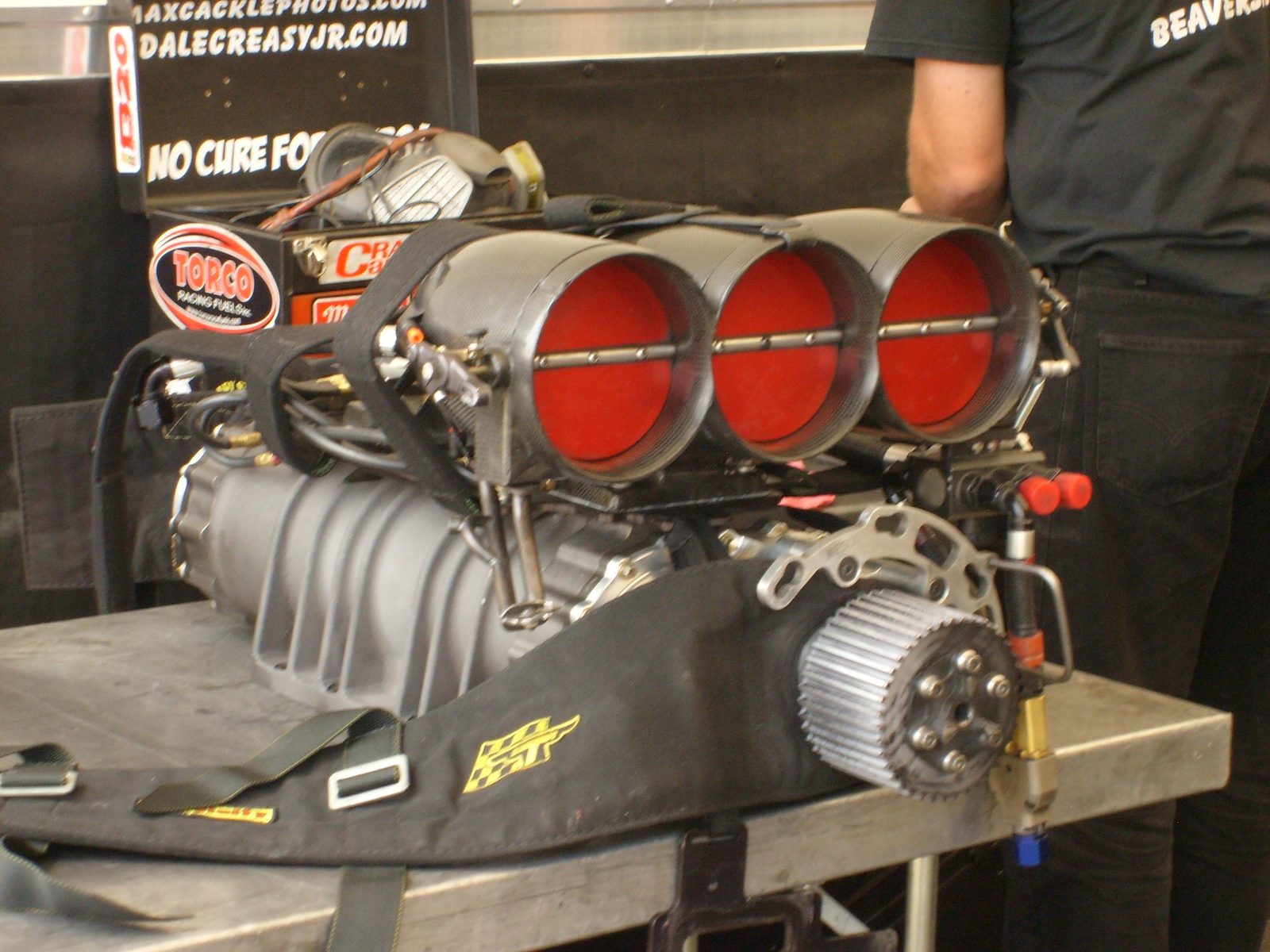
The format's most extreme modern expression is also its most visible: the belt-driven 14-71 Roots blower sitting on top of a Top Fuel dragster's nitromethane-burning V8. The name has nothing to do with displacement — it's inherited from the GM diesel-truck blowers the design descends from, where a 15-inch rotor became a "6-71," a 16-inch rotor an "8-71," and a 19-inch rotor a "14-71." NHRA rules cap manifold pressure on that blower at 65 psi, and just spinning it — no fuel burned, no power made yet — can eat 500 horsepower or more of the engine's own output. That's the tradeoff described above taken to its logical extreme: a Top Fuel car pays an enormous, continuous mechanical toll to run its blower, in exchange for boost that's available the instant the engine turns over, with no lag to wait out on a run that's over in under four seconds.
Ford Ran the Timing Belt Through the Oil. Federal Investigators Say the Belt Is Now Starving the Engine.
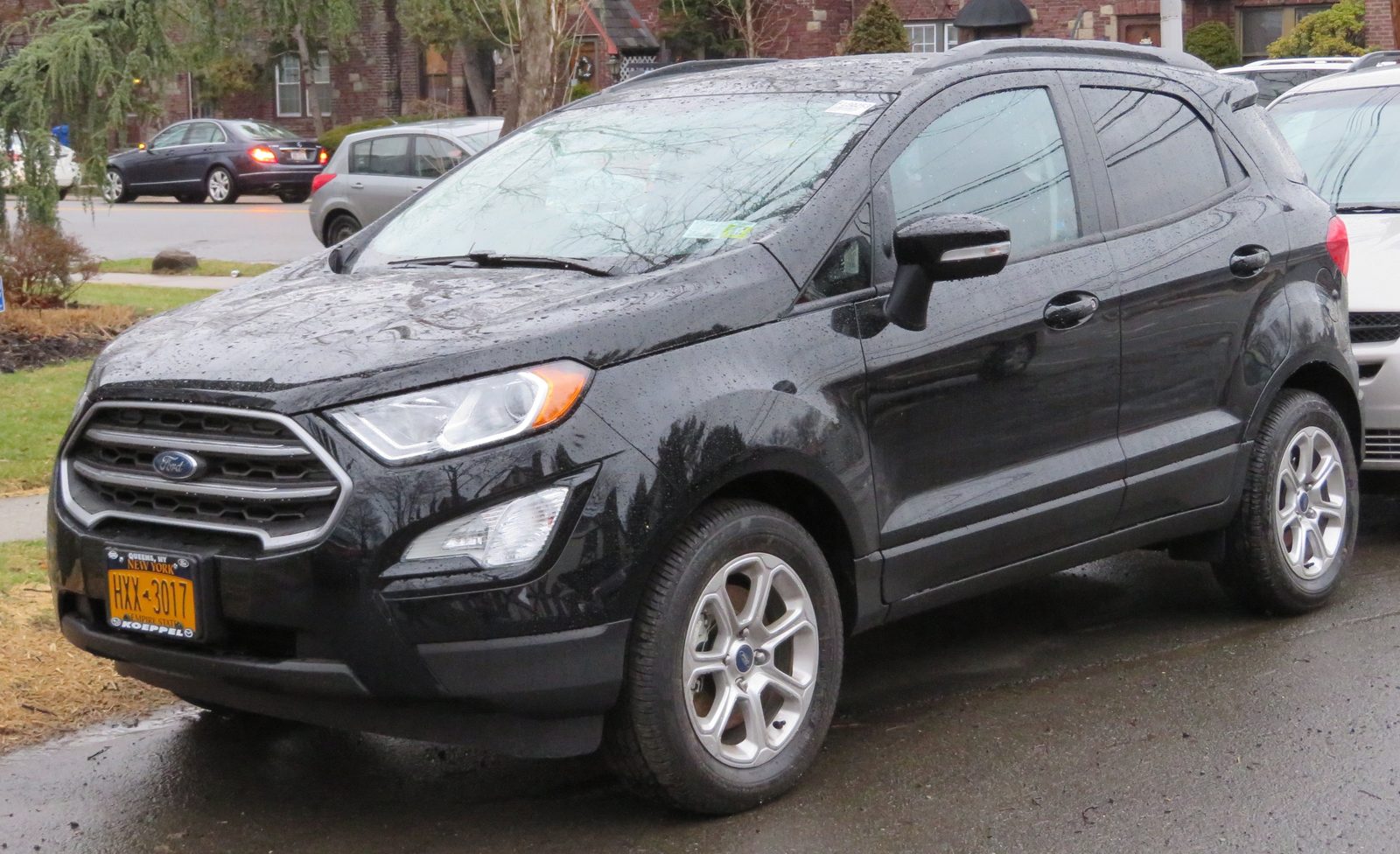
A belt-in-oil drive is quieter and lower-friction than a chain. NHTSA's new engineering analysis says the 1.0-liter EcoBoost's belt sheds material that clogs the oil pump pickup — and that screen can't be cleaned without pulling the engine.
The Automatic's Oldest Trick: How a Torque Converter Multiplies Torque With No Gears
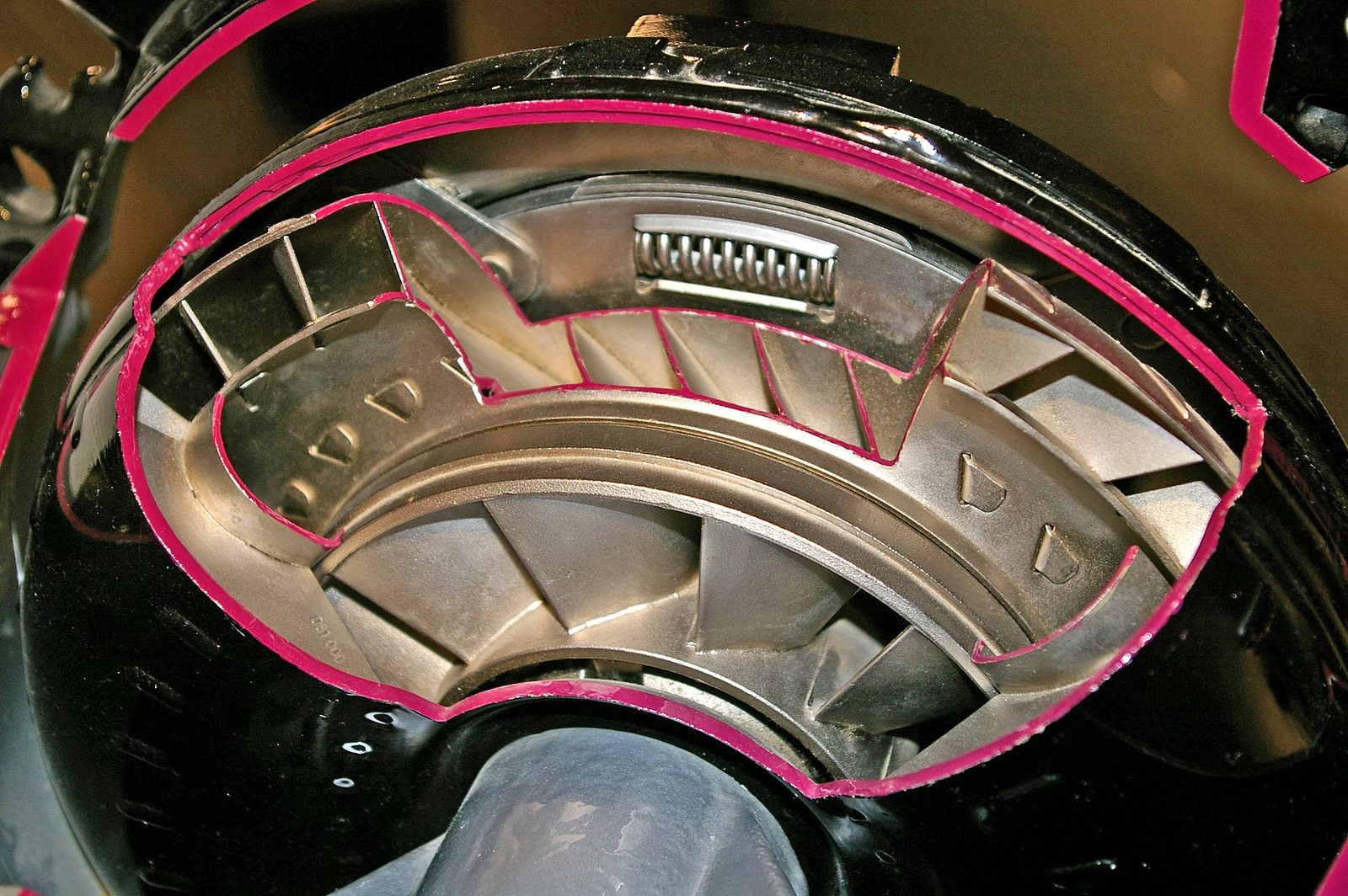
It has no gear teeth and nothing that meshes, yet a torque converter can roughly double engine torque off the line. The part doing the work is the one bolted to nothing at all.
How Electronic Stability Control Reads a Slide and Corrects It Before the Driver Even Feels It
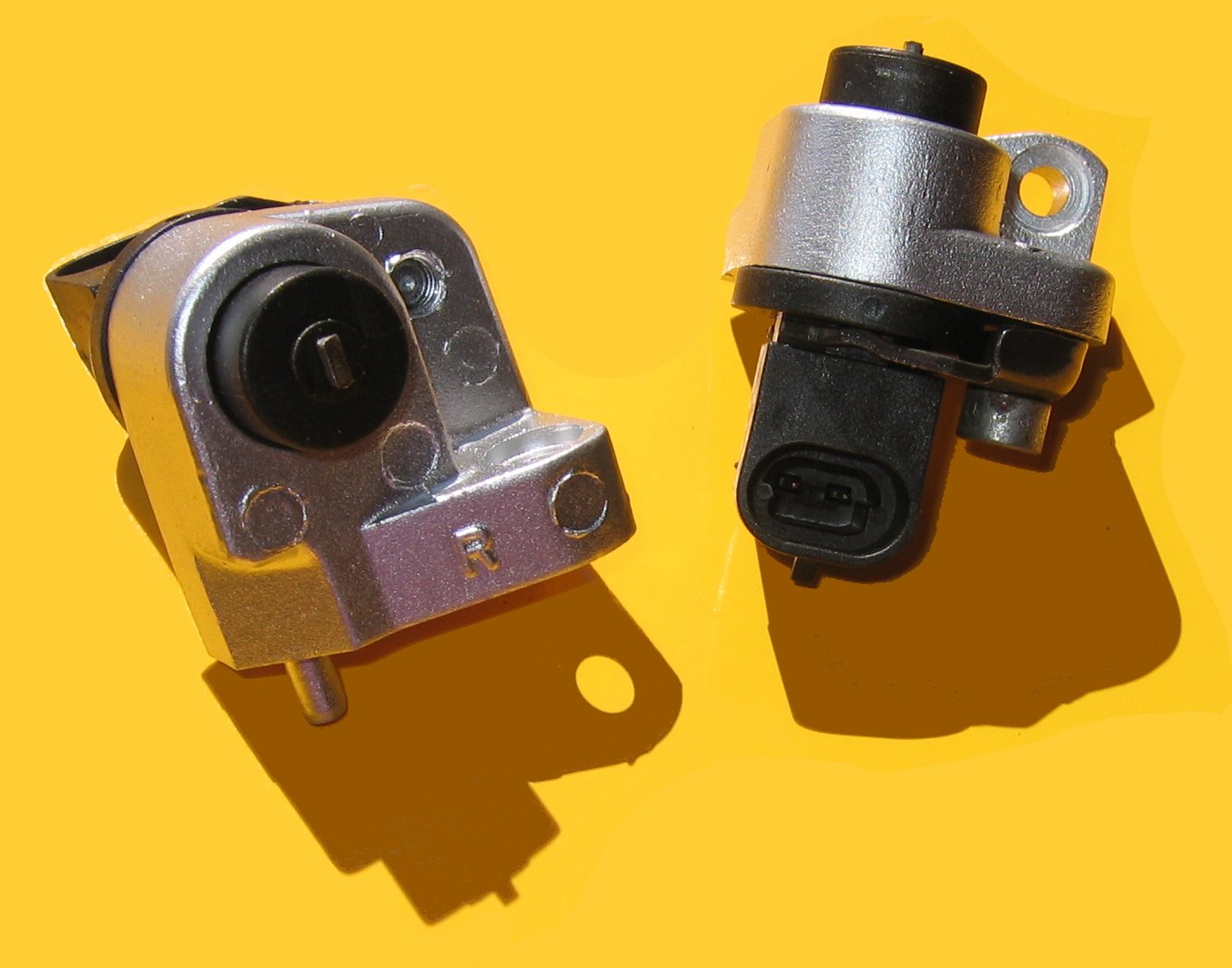
A network of wheel-speed, steering-angle, and yaw sensors checks the car's actual path against the driver's intended one many times a second — and brakes a single wheel to pull it back if the two disagree.