
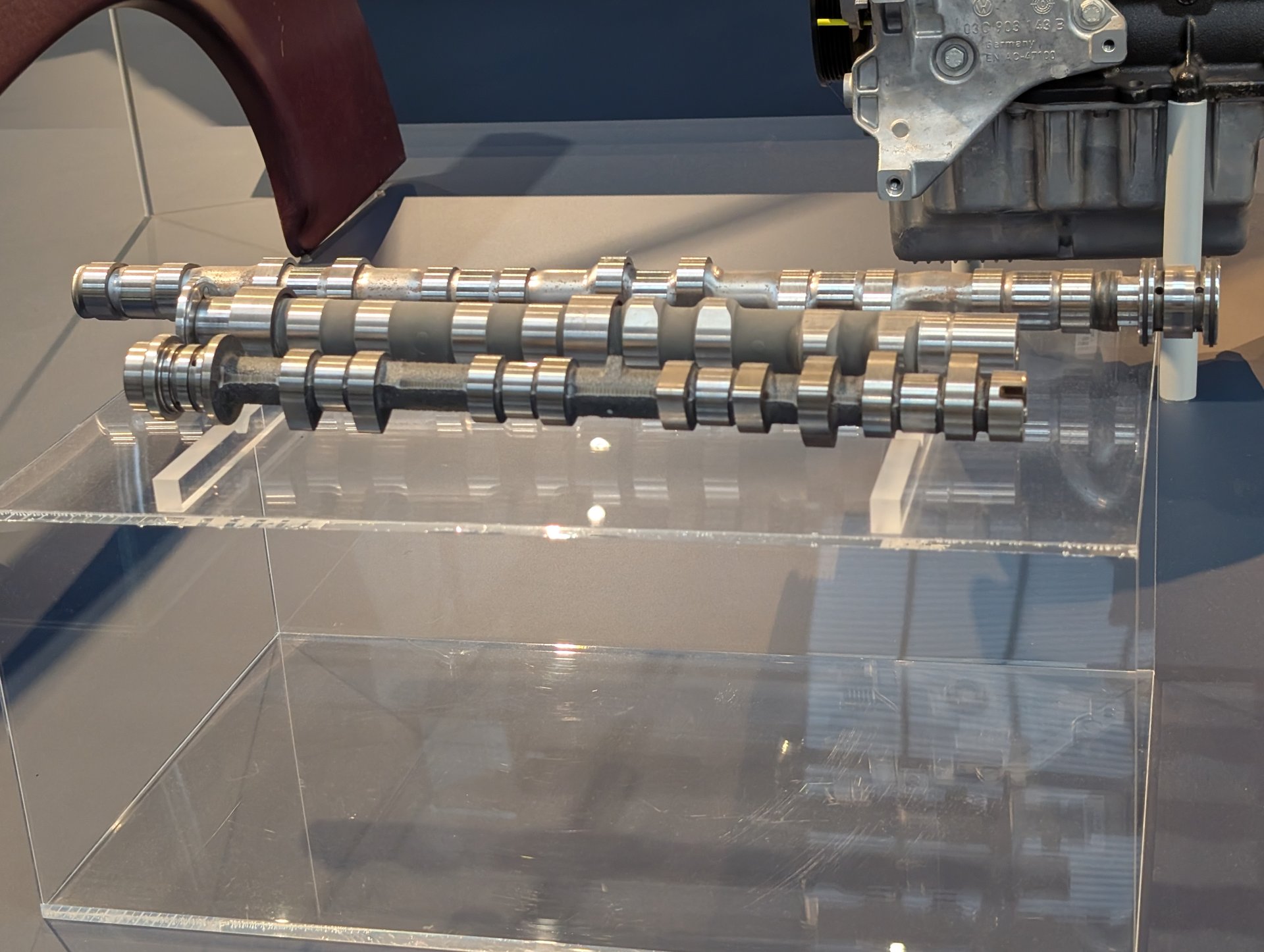
How Variable Valve Timing Actually Works
Every fixed-cam engine is a compromise between idle quality and top-end power. Cam phasers and cam-switching systems are two different ways of refusing to pick one.
A camshaft is a very simple answer to a question that keeps changing. The lobes push the valves open, the timing chain or belt ties the cam to the crankshaft at a fixed two-to-one, and that relationship holds whether the engine is idling in a car park or pulling 7,000 rpm. Which is the problem, because the valve timing that makes an engine idle smoothly and pull cleanly from low rpm is not the valve timing that makes it breathe at the top of the tacho.
The broad rule is this: advancing valve timing improves idle quality and low-rpm torque, and retarding it improves high-end power. Build an engine with one fixed cam and you are choosing a point on that trade-off and living with it everywhere else. A race engine picks top end and idles like a bag of spanners. A commuter engine picks tractability and runs out of breath. Variable valve timing is the refusal to choose.
The dominant way of doing it is cam phasing. A phaser replaces the plain sprocket on the end of the camshaft with a two-part assembly: an outer housing driven by the chain, and an inner rotor splined to the cam itself. The rotor carries vanes that sit in chambers inside the housing. Feed pressurised oil into the chambers on one side of those vanes and the rotor — and the camshaft with it — rotates slightly relative to the housing. The chain is still turning at exactly the same speed. The cam has simply moved its angle.
The oil is directed by an oil flow control valve solenoid, which the engine's control module commands based on load, rpm, temperature and throttle. Typical phasers give a stepless 20 to 30 degrees of adjustment in either direction, which is enough to transform how an engine behaves without touching lift or duration at all. Most of them also contain a locking pin that drops into a hole and pins the phaser at a base position whenever oil pressure is absent, so the engine always starts and idles in a known, safe state.
What does moving the cam actually buy you? Mostly it is a fight over valve overlap — the window where the intake valve has opened before the exhaust valve has fully closed. Advancing the intake cam relative to the exhaust cam lets an engine make more high-rpm power. Retarding the exhaust cam produces an internal exhaust gas recirculation effect, leaving burnt gas in the cylinder to lower combustion temperature and cut oxides of nitrogen. Shifting when the intake valve closes also lets an engine behave as though it has a smaller effective displacement than its physical one, cutting pumping losses — the trick behind the Atkinson and Miller cycle operation that nearly every modern hybrid leans on.
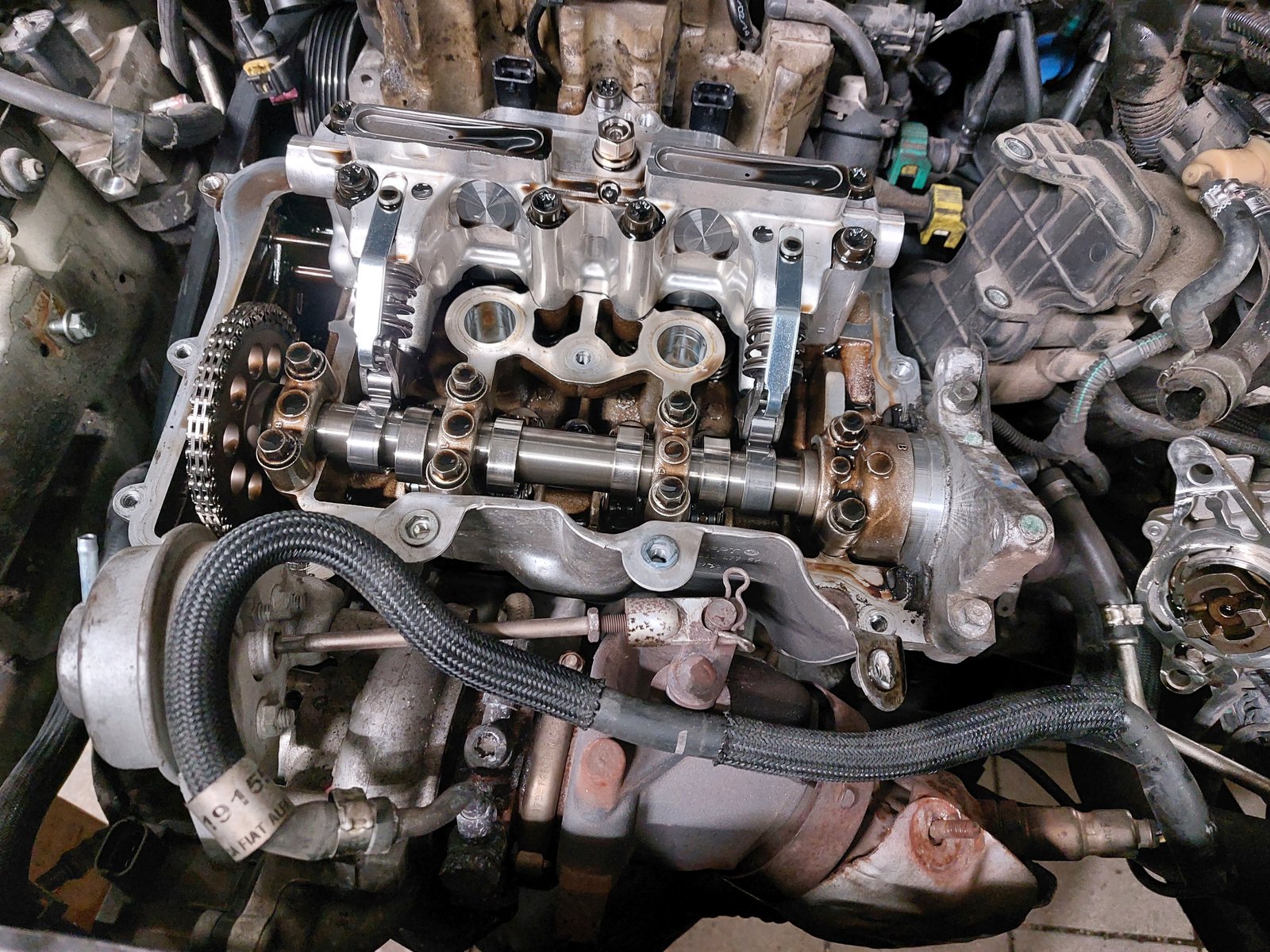
The other family of systems does something different. Honda's VTEC does not rotate the cam; it changes which lobe is in charge. Each pair of valves gets an extra, more aggressive cam lobe and its own rocker arm. Below the switch point that rocker just follows its lobe and does nothing. Above it, a solenoid sends oil pressure to a locking pin that binds the high-rpm rocker to the ordinary ones, so all of them now follow the big lobe — more lift, longer duration, and the step change in character that gave the system its reputation. The control module deliberately switches back at a lower engine speed than it switches on, to stop the engine hunting back and forth at the threshold.
VTEC reached production in 1989 on the Japanese-market Honda Integra XSi, with the 1.6-litre DOHC B16A rated at 160 bhp. But cam-switching and cam-phasing are not rivals so much as different tools, and Honda eventually put both in the same engine: i-VTEC pairs the VTEC lobe-switching with VTC, a continuously variable phaser on the intake camshaft. Honda was not first to variable valve timing in production, either — Alfa Romeo got there in 1980 with a mechanical system on the Spider 2000, and BMW's VANOS followed in 1992.
The newest wrinkle is getting the oil out of the loop entirely. Electric phasers use a small motor inside the phaser to advance or retard the cam, which means they work instantly, work at cold start before oil pressure has built, and hold position precisely regardless of how tired the oil pump is. Elsewhere, concentric camshaft designs — a solid inner shaft inside an outer tube, each carrying its own set of lobes — let a single camshaft vary timing, lift and overlap together. BMW's Valvetronic goes further again, using a variable intermediate rocker to control lift so finely that the throttle plate becomes largely redundant.
The practical consequence for anyone running one of these engines is that a hydraulic VVT system is an oil-pressure system, and it fails like one. Low oil level, the wrong viscosity, or oil dirty enough to plug the phaser's inlet screen will all stop a phaser doing its job, and the control module will set a code in the P0010 to P0025 range when commanded cam position and actual cam position stop agreeing. A rattle at idle on a hot engine that disappears as revs rise is the classic sign of a worn phaser or a worn locking-pin bore. On an engine whose entire breathing strategy is routed through a hydraulic actuator, the oil service interval is not a suggestion.
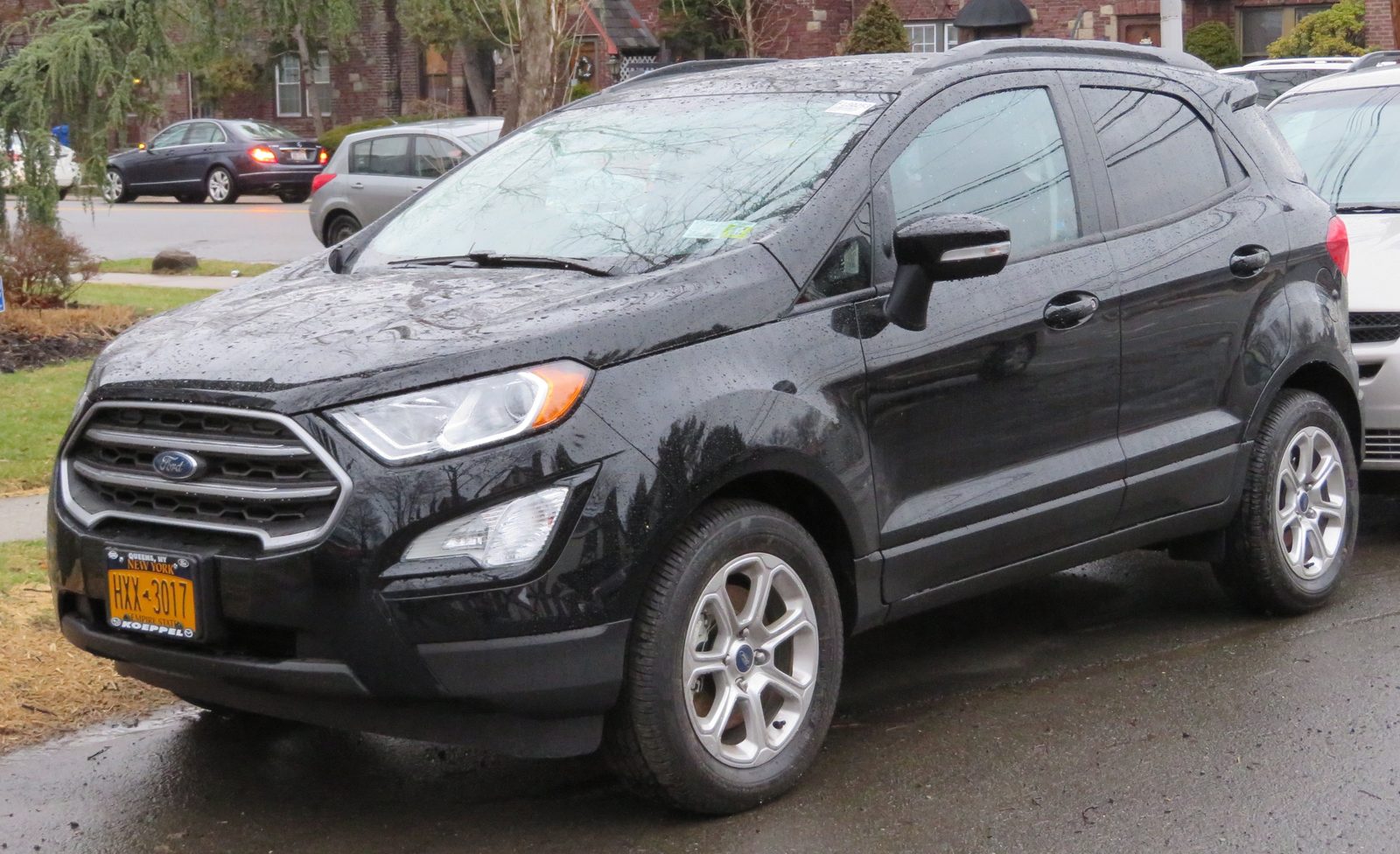
Ford Ran the Timing Belt Through the Oil. Federal Investigators Say the Belt Is Now Starving the Engine.
A belt-in-oil drive is quieter and lower-friction than a chain. NHTSA's new engineering analysis says the 1.0-liter EcoBoost's belt sheds material that clogs the oil pump pickup — and that screen can't be cleaned without pulling the engine.
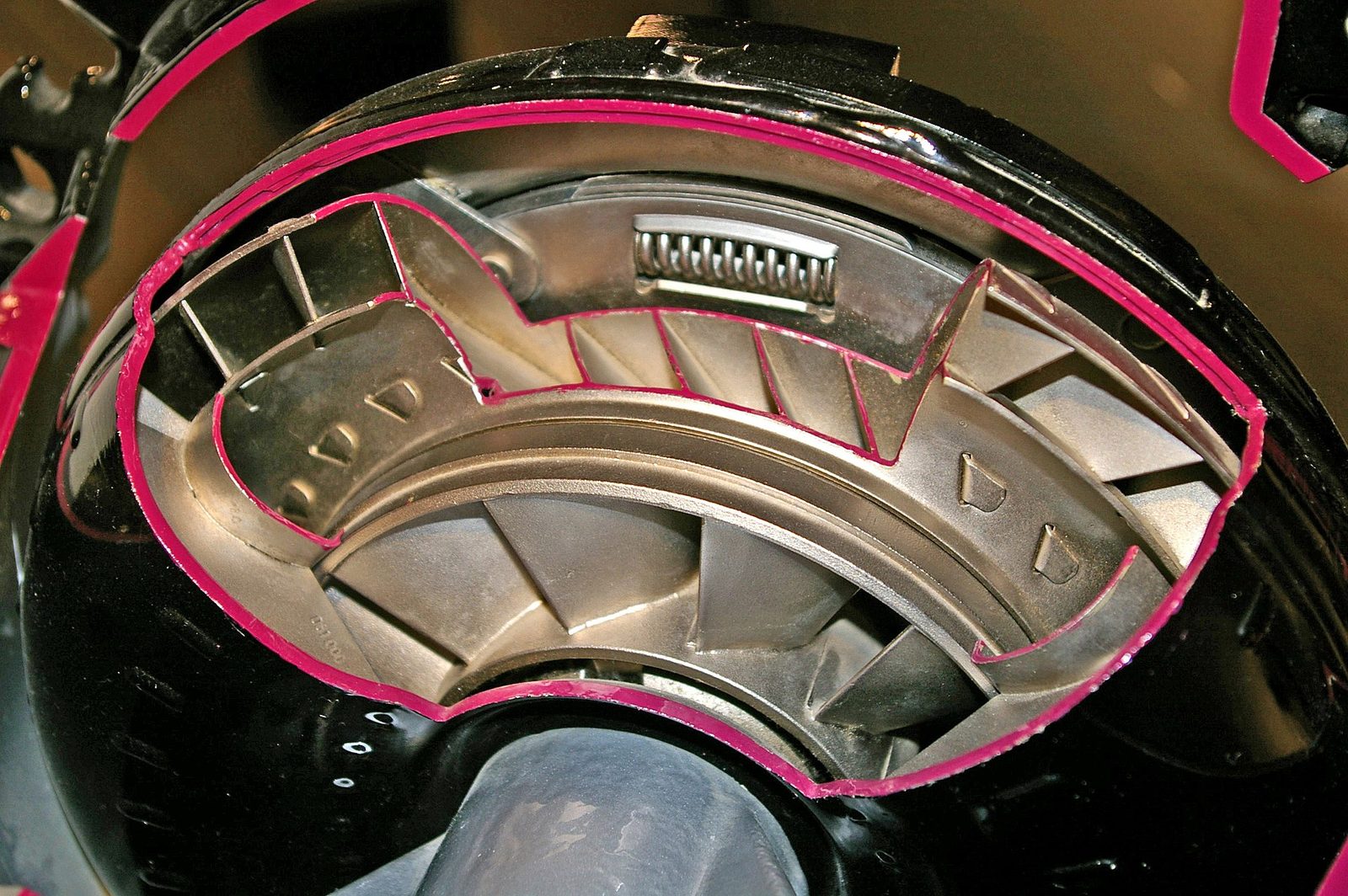
The Automatic's Oldest Trick: How a Torque Converter Multiplies Torque With No Gears
It has no gear teeth and nothing that meshes, yet a torque converter can roughly double engine torque off the line. The part doing the work is the one bolted to nothing at all.
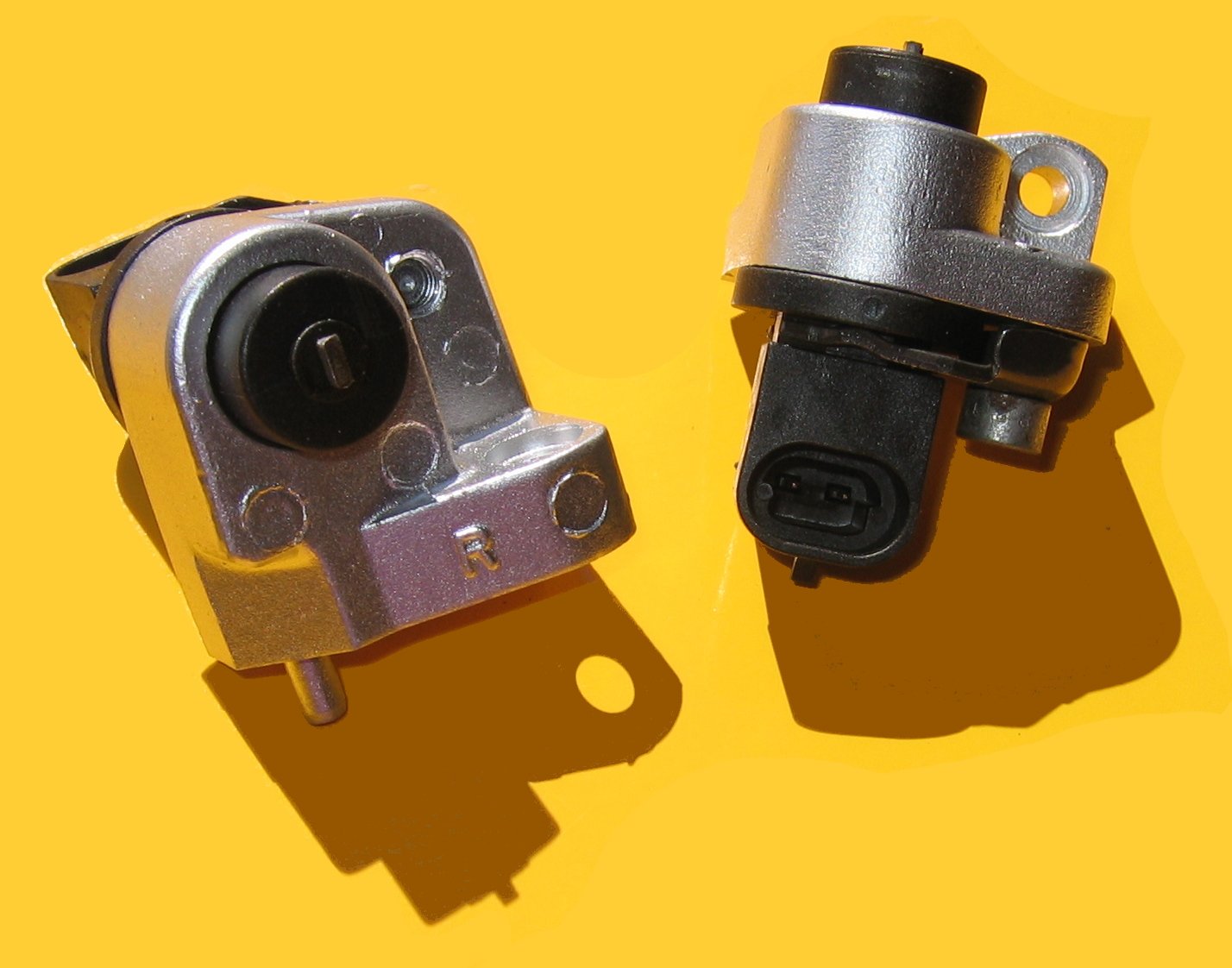
How Electronic Stability Control Reads a Slide and Corrects It Before the Driver Even Feels It
A network of wheel-speed, steering-angle, and yaw sensors checks the car's actual path against the driver's intended one many times a second — and brakes a single wheel to pull it back if the two disagree.