
Kawasaki's New KLR650 Trim Is $400 of Crash Bars, Hand Guards and a Rack
The 2027 KLR650 DF ABS lands at $7,699 in early December with frame sliders fitted as standard. The engine, the frame and the suspension are the ones Kawasaki has been selling since 2022 — which is rather the point.
- Model
- 2027 Kawasaki KLR650 DF ABS
- US MSRP
- $7,699
- Availability
- Early December
- Engine
- 652cc liquid-cooled DOHC single
- Bore x stroke
- 100.0 x 83.0 mm
- Compression
- 9.8
- Power
- 40 hp at 6,000 rpm (ISO 4106)
- Torque
- 39.1 lb-ft at 4,500 rpm
- Fuel system
- DFI with 40 mm throttle body
- Transmission
- 5-speed, chain final drive
- Front suspension
- 41 mm fork, 7.9 in travel
- Rear suspension
- Uni-Trak single shock, 8.0 in travel
- Brakes
- 300 mm front, 240 mm rear, ABS
- Wheels
- 90/90-21 front, 130/80-17 rear
- Seat height
- 34.3 in
- Curb weight
- 471.9 lb
- Fuel capacity
- 6.1 gal
- Colour
- Metallic Flat Raw Graystone
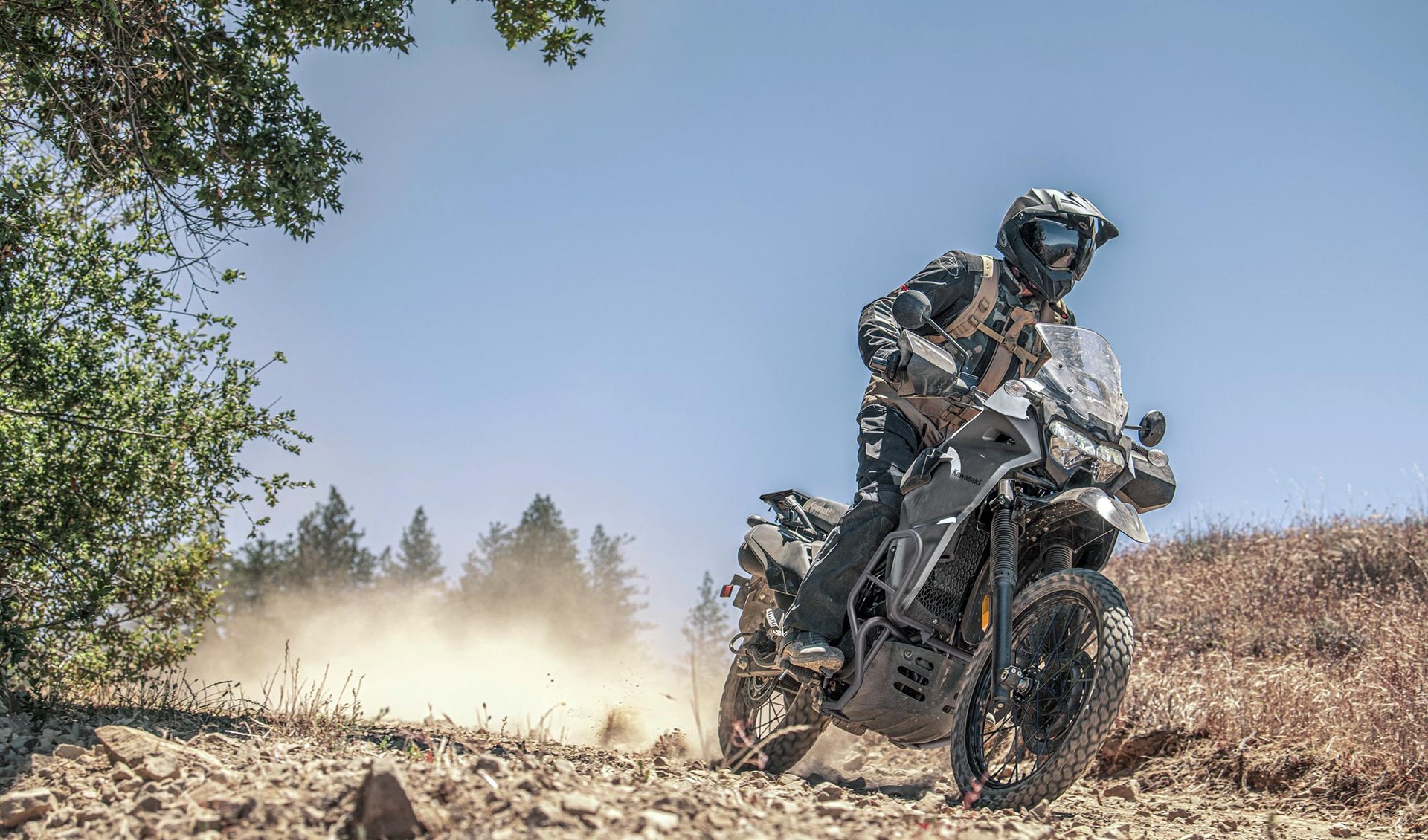
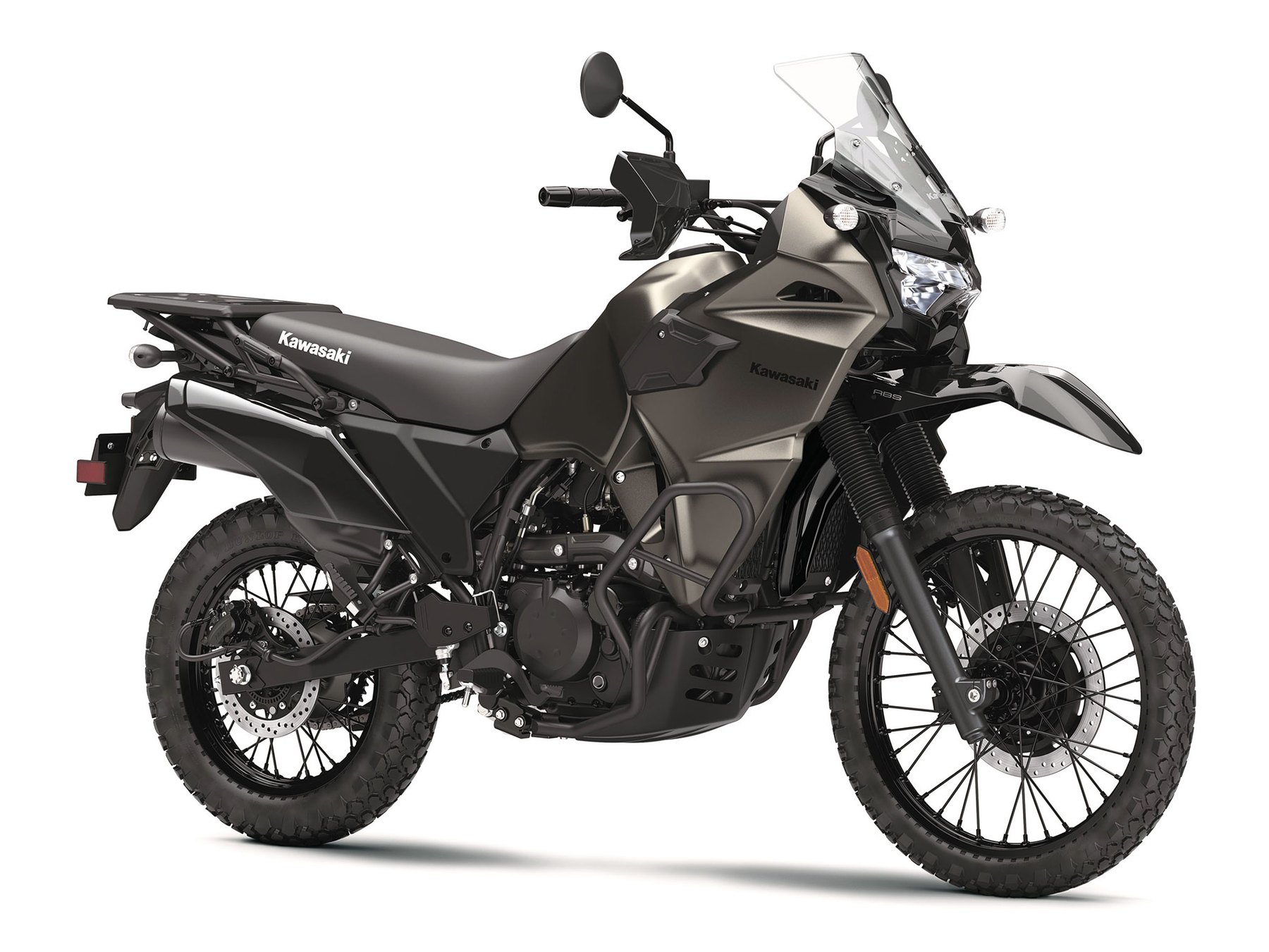
Kawasaki has added a fourth variant to the KLR650 line for 2027. The KLR650 DF ABS — DF for Durable Force — costs $7,699, arrives at US dealers in early December, and comes in one colour, a flat earth-toned grey Kawasaki calls Metallic Flat Raw Graystone. What it is, stripped of the naming, is the existing KLR650 with the accessories most owners fit anyway, bolted on at the factory and blacked out.
Nothing mechanical has changed. The DF is a parts bin assembled at the factory instead of at your kitchen table, and priced accordingly.
The list of what you get for the money is short and entirely physical. Frame sliders are standard, where they are an accessory on the other KLR650s. There are hand guards. There is a large aluminium rear carrier, ready for the matching top case and hard saddlebags from the accessory catalogue, which share a one-key system. The windscreen is the tall two-position adjustable item. The bolts, axle shafts, brake caliper bracket and rear suspension linkage arm are all finished in black.
The list of what has changed mechanically is empty. The engine is the same 652cc liquid-cooled DOHC single, 100.0 x 83.0 mm, 9.8:1, fed by DFI through a 40 mm throttle body, rated at 40 hp at 6,000 rpm and 39.1 lb-ft at 4,500 rpm. Kawasaki footnotes that horsepower figure as measured to ISO 4106 rather than the SAE standard used for cars, which is worth knowing before comparing it to anything else. Five speeds, wet multi-disc clutch, sealed chain.
The chassis is unchanged too: tubular semi-double-cradle frame with an integrated rear section, 41 mm telescopic fork with 7.9 inches of travel, Uni-Trak rear shock with adjustable rebound damping and preload and 8.0 inches of travel, a 300 mm front disc and a 240 mm rear, both with ABS, and the traditional dual-sport wheel pairing of a 21-inch front and a 17-inch rear. Seat height is 34.3 inches, curb weight 471.9 pounds, fuel capacity 6.1 gallons. Ground clearance is 8.3 inches and the wheelbase is 60.6.
That fuel tank is still the reason a lot of people buy this bike rather than something with a modern engine in it. Twenty-three litres on a 652cc single that is not trying to make power is a genuinely long way between stops, and the KLR's other quiet specification — 80 watts of spare generator capacity, at 26 amps — is the one that matters if you intend to run heated grips, auxiliary lights and a charger at the same time. Adventure bikes are frequently short of electricity. This one is not.
Priced against its own family, the DF sits where you would expect. The base KLR650 is $6,999, or $7,299 with ABS; the low-seat KLR650 S matches those two numbers; the fully-equipped KLR650 Adventure ABS, which adds the side cases, lights and engine guard, is $8,199, or $8,299 in the camo scheme. The DF is $400 over the base ABS bike. Whether that is a bargain depends entirely on what Kawasaki charges for frame sliders, hand guards and a rack bought separately, plus the afternoon it takes to fit them.
The nameplate itself has been around since 1987, and Kawasaki leans on that in its own copy for the DF. The run has not been continuous: the carburetted KLR650 reached the end of its life with the 2018 model year and was gone for three seasons before Kawasaki brought it back for 2022 with fuel injection, a reworked frame that integrates the rear subframe, and — to the relief of everyone who had ever read a KLR forum — a revised balancer chain adjuster lever, the part the community spent two decades calling the doohickey and replacing pre-emptively.
There is nothing revolutionary here, and Kawasaki is not pretending otherwise. The DF is a trim level, which is a perfectly honest thing for a motorcycle to be. The interesting part is what it says about who is buying KLR650s in 2026: enough of them are fitting crash protection and luggage racks before the first ride that it made commercial sense to build a version with the armour already on it and the chrome taken off.
Triumph's Cheapest Bonneville Launched Today With Two Different Engines, Depending Where You Live
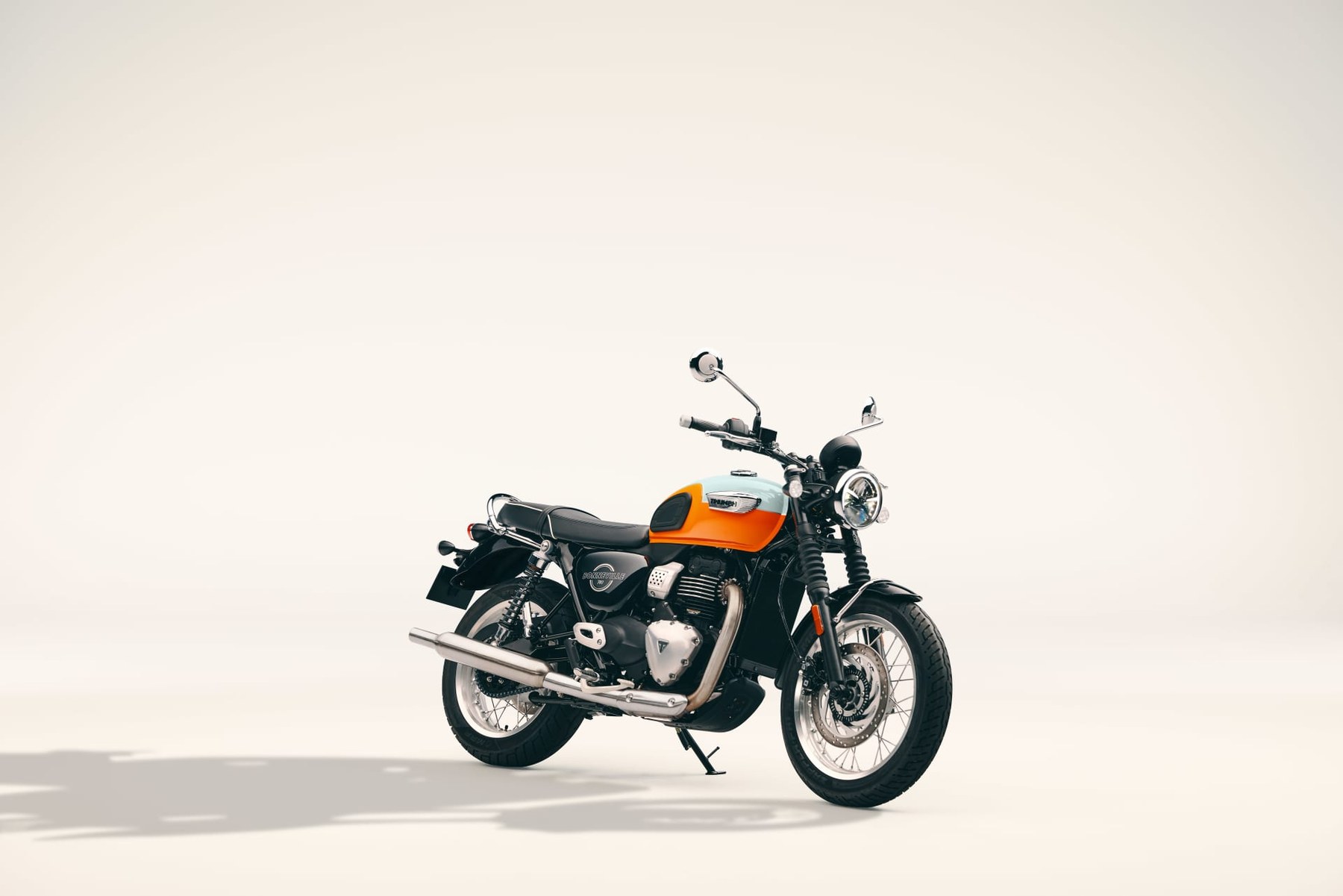
The Bonneville T40 and T40 Black arrive on a "400cc TR Series" single. Triumph's own British spec sheet says 398 cc and 32 PS. Its Indian spec sheet, for a bike that went on sale the same morning, says 350 cc and 29 PS.
Royal Enfield's Himalayan 750: What's Actually Confirmed, and What's Still Just a Spy Shot
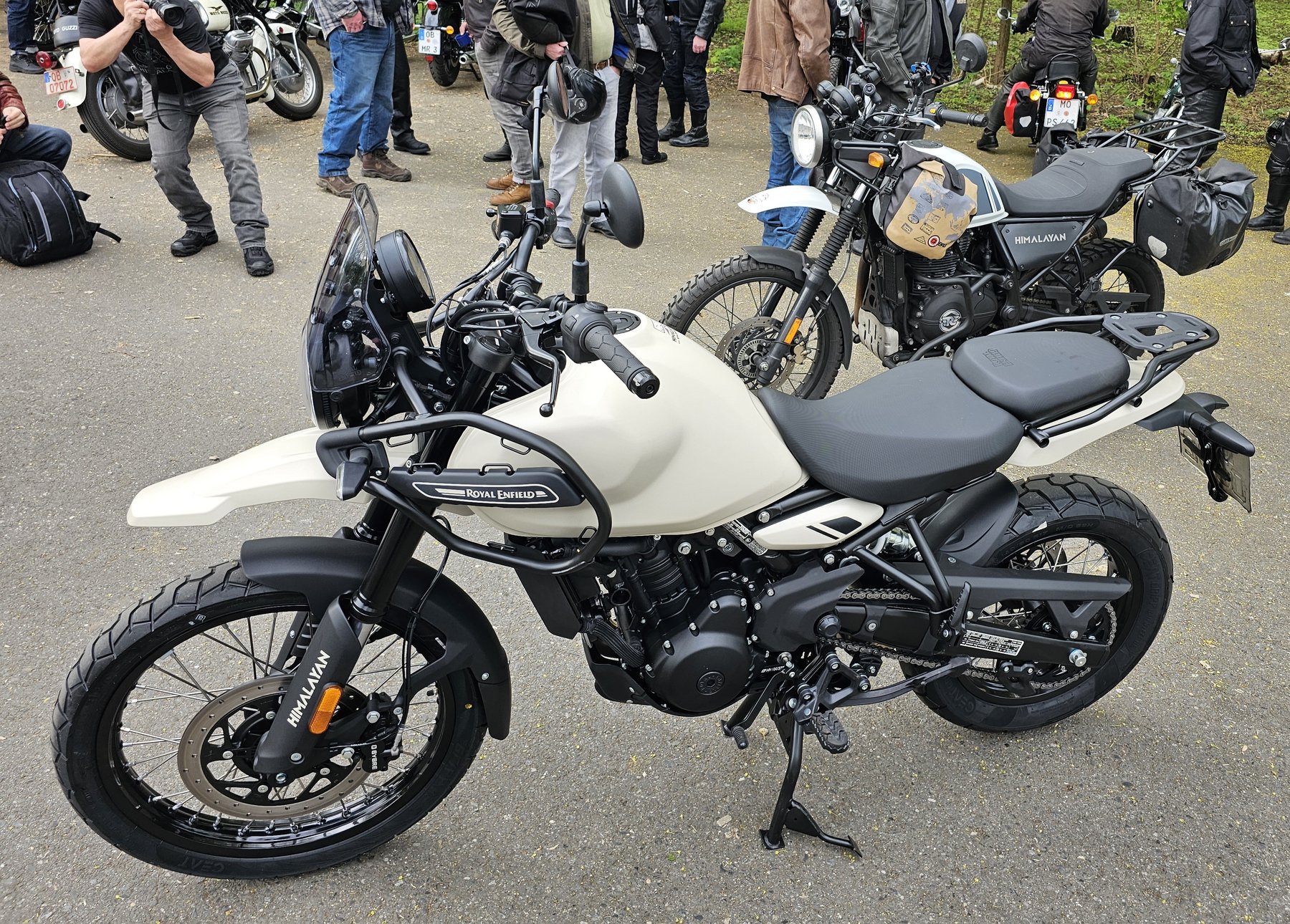
Undisguised bikes badged “750” have been filmed in Uttarakhand, and EICMA opens in a month. But Royal Enfield still hasn't published a single number for this motorcycle — and the 60 hp figure doing the rounds is an estimate, not a spec.
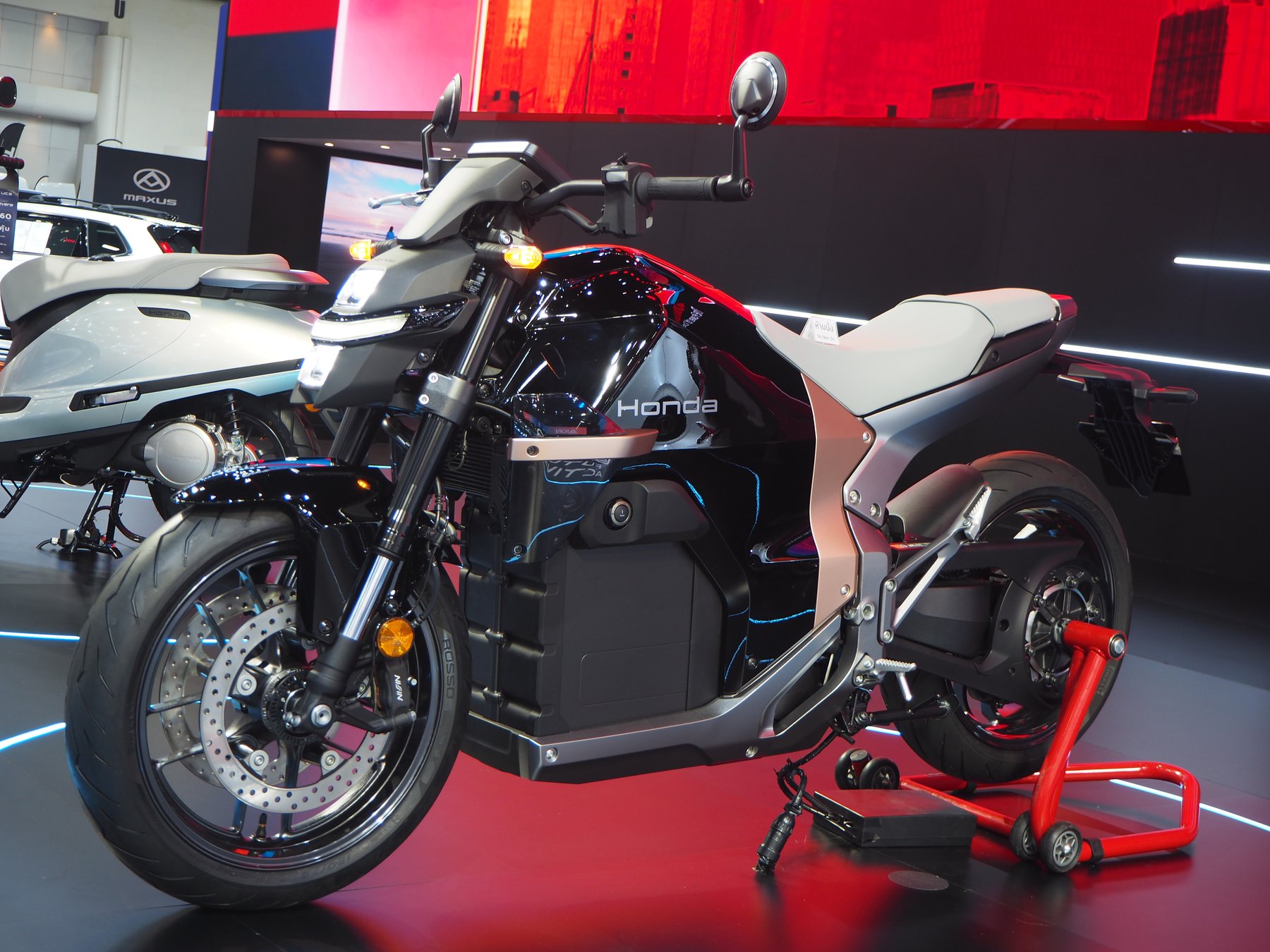
Honda's First Real Electric Motorcycle Carries 9.3 kWh. Here's What That Actually Buys You.
The WN7 is in European dealers now at £12,999, with a peak of 50 kW, a battery case that doubles as the frame, and a claimed 140 km. Honda built the bike well. The arithmetic is the hard part.