
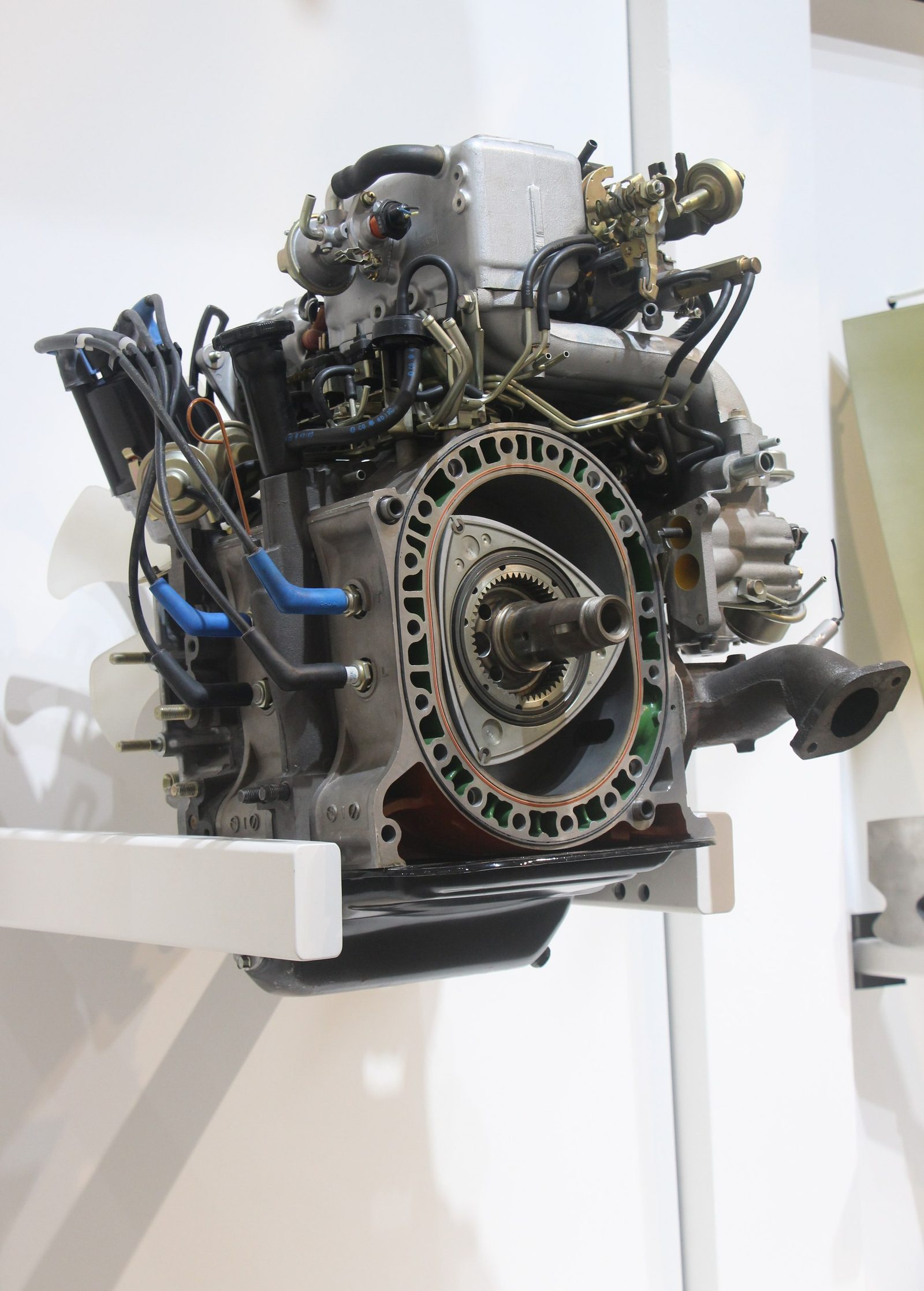
A Wankel Rotary Engine Has Two Moving Parts. A Piston Engine Has Dozens.
No pistons, no connecting rods, no valves, no camshaft — the entire four-stroke cycle happens because a triangular rotor spins inside a housing shaped to make room for it in the right places, at the right times.
A conventional piston engine turns fuel into motion through a chain of parts translating one kind of movement into another: pistons move up and down, connecting rods convert that into a crankshaft's rotation, and a separate camshaft — driven off that same crankshaft — opens and closes valves in time with all of it. Add the valve springs, rockers, lifters, and timing chain or belt needed to keep that chain synchronized, and a typical four-cylinder engine has somewhere in the neighborhood of 30 to 50 moving parts before you count anything bolted to the outside. A Wankel rotary engine does the same job — intake, compression, combustion, exhaust — with two.
Those two parts are a triangular rotor and an eccentric shaft. The rotor isn't a perfect triangle; its sides bow outward slightly, giving it the geometry mathematicians call a Reuleaux triangle. It spins inside a housing shaped like a fat figure-eight, called an epitrochoid, and because the rotor's corners are always in contact with that housing wall while its geometric center orbits off-axis, the three chambers formed between the rotor's flanks and the housing wall are constantly changing size as it turns — squeezing here, expanding there. That size change is the entire engine cycle: intake, compression, combustion, and exhaust chase each other around the housing simultaneously, one in each of the rotor's three faces, on every single rotation.
The eccentric shaft does the job of a crankshaft, but by a different route. The rotor doesn't spin on a fixed center — it orbits around a lobe on the shaft that's offset from the shaft's own rotational axis, the same way a hula hoop moves around a hip without a fixed pivot point. Internal gearing converts that orbiting, off-center motion into pure rotation at the output shaft. The ratio is fixed by geometry: the eccentric shaft turns three times for every one full orbit the rotor makes, which is also why a single-rotor engine fires once per shaft revolution — the same power-pulse frequency as a two-cylinder four-stroke piston engine, from one moving rotor instead of two moving pistons.
The other thing a Wankel doesn't have is valves. Instead of a camshaft opening and closing ports on a timer, intake and exhaust ports are simply cut into the housing wall or the engine's end plates, in fixed positions, and the rotor's own corners sweep past them as it turns — uncovering the intake port to pull in a charge, sealing it off to compress it, then later uncovering the exhaust port to let spent gas escape. What does the sealing between chambers is a set of spring-loaded apex seals, three per rotor, one riding at each corner, pressed continuously against the housing wall the way piston rings seal against a cylinder bore. They're also historically the rotary's weak point — chatter marks worn into early rotor housings by seal wear were the defect that nearly killed the whole concept before metallurgy caught up with it.
Felix Wankel patented an early rotary engine concept in 1934, but the design that actually became useful arrived two decades later: working with NSU in what's now Germany, he got a prototype called the DKM 54 running on February 1, 1957, producing about 21 PS. NSU brought the design to market in the 1964 NSU Spider, and licensed the technology widely — Mazda was the licensee that stuck with it longest and hardest, refining apex-seal durability enough to ship rotary-powered RX-7s and RX-8s for decades after other manufacturers had abandoned the format. The tradeoff that never fully went away is fuel and oil consumption: the same long, thin combustion chamber shape that makes a Wankel compact and smooth-revving also gives it more surface area per unit of combustion volume than a piston bore, which bleeds heat — and efficiency — that a conventional cylinder doesn't lose. It's the reason rotary engines are mechanically simpler and still never won on the one number that decides most engine arguments.

Ford Ran the Timing Belt Through the Oil. Federal Investigators Say the Belt Is Now Starving the Engine.
A belt-in-oil drive is quieter and lower-friction than a chain. NHTSA's new engineering analysis says the 1.0-liter EcoBoost's belt sheds material that clogs the oil pump pickup — and that screen can't be cleaned without pulling the engine.
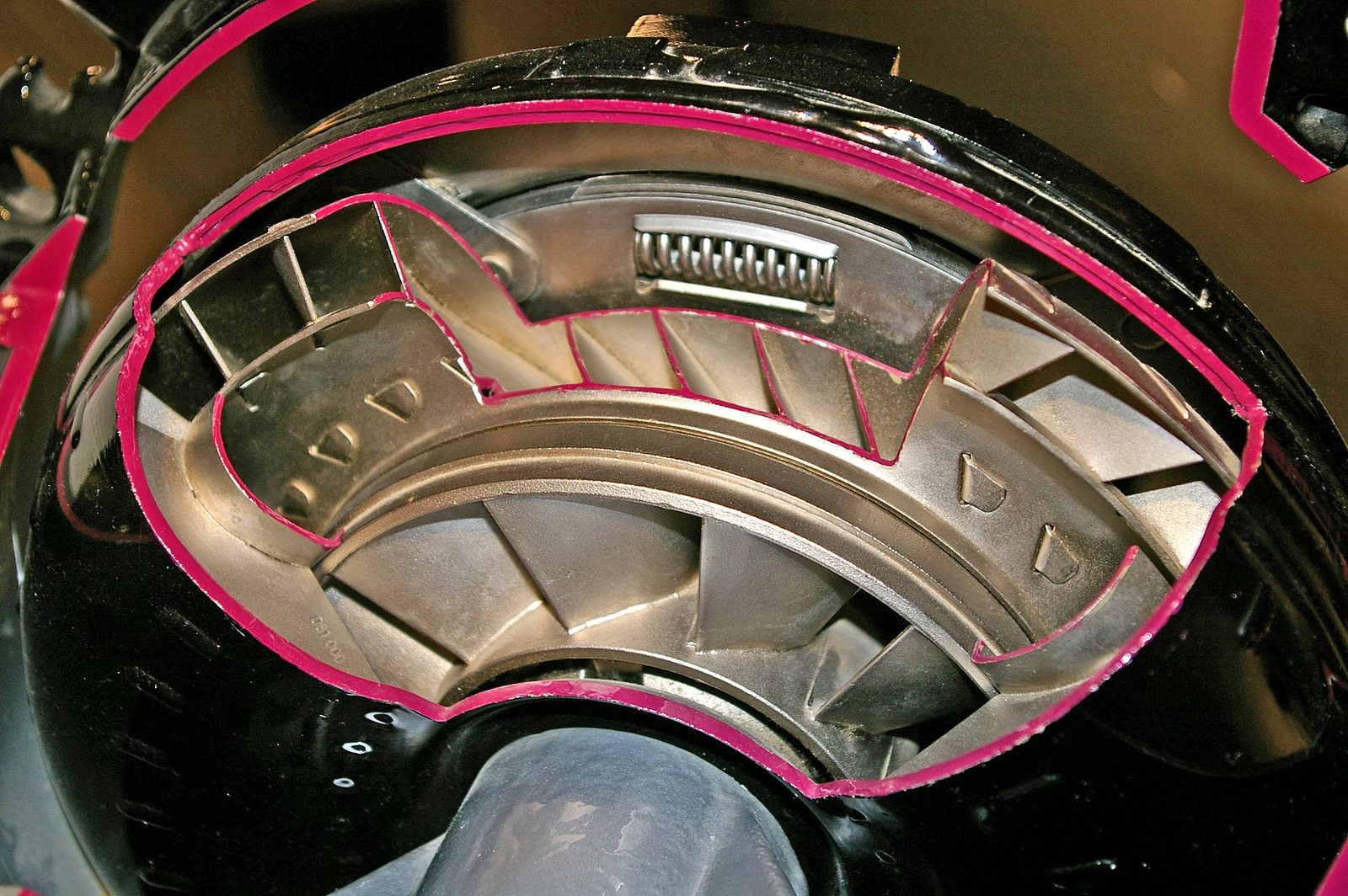
The Automatic's Oldest Trick: How a Torque Converter Multiplies Torque With No Gears
It has no gear teeth and nothing that meshes, yet a torque converter can roughly double engine torque off the line. The part doing the work is the one bolted to nothing at all.
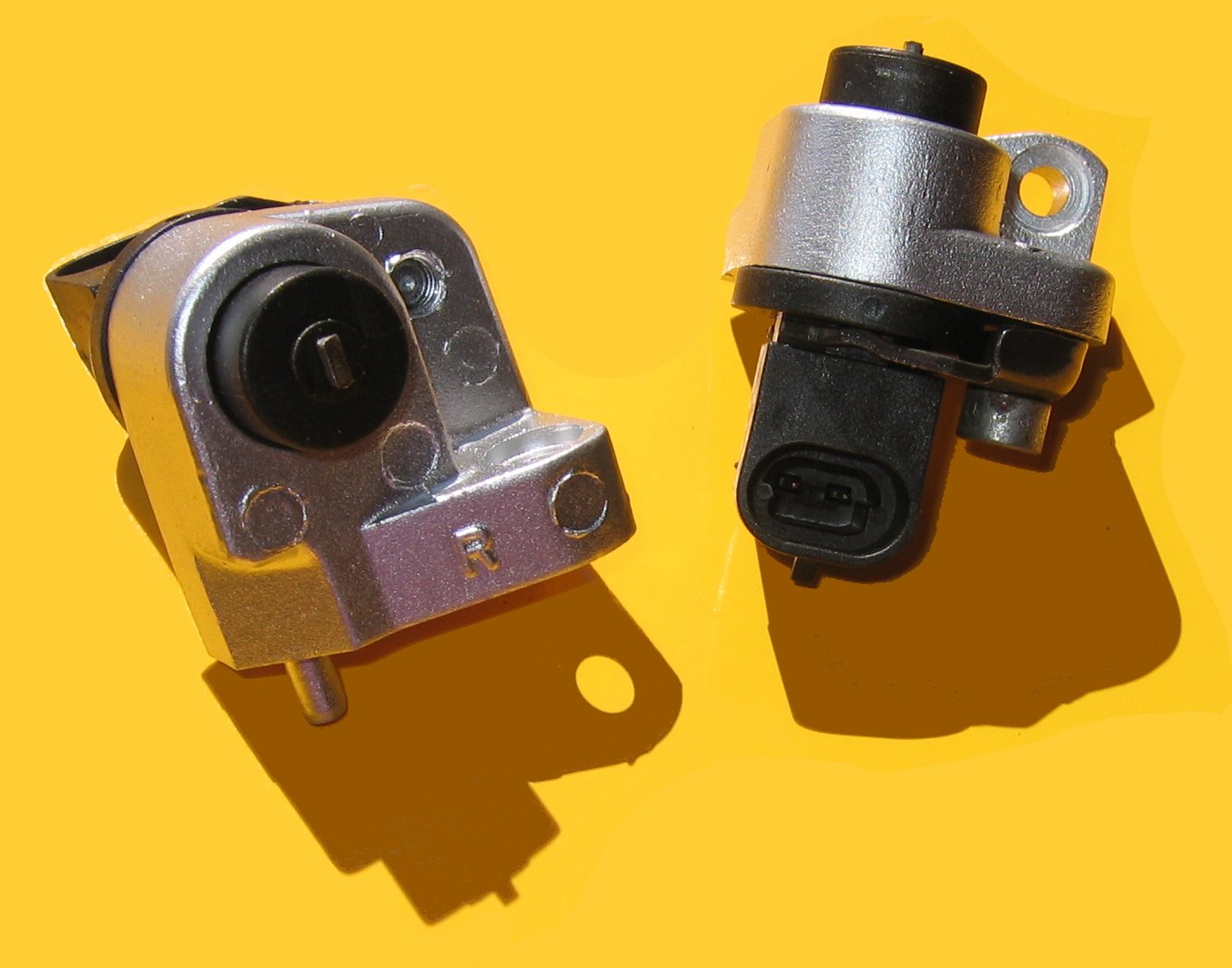
How Electronic Stability Control Reads a Slide and Corrects It Before the Driver Even Feels It
A network of wheel-speed, steering-angle, and yaw sensors checks the car's actual path against the driver's intended one many times a second — and brakes a single wheel to pull it back if the two disagree.